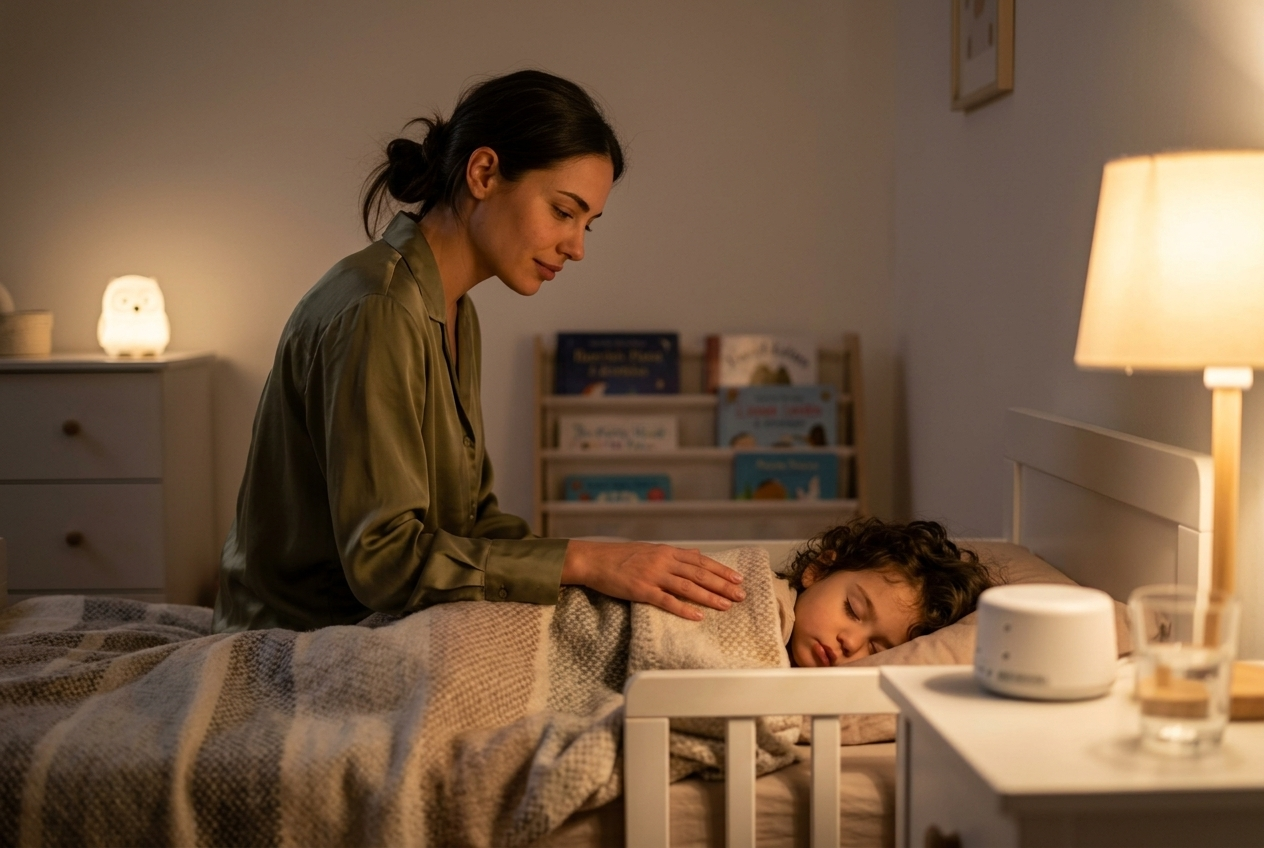
Getting a toddler to bed on time can feel like a nightly standoff. You’ve done the bath, the books, the third request for water, and somehow they’re still wide awake at 9 PM. If that sounds familiar, you’re not alone — bedtime battles are one of the most common complaints among parents of toddlers ages 1 through 4.
What most moms don’t realize is that a toddler fighting sleep isn’t always a discipline problem. Often, it’s a scheduling problem. Their bodies run on a biological clock, and when the schedule is off — even slightly — the whole night unravels. The good news is that small, consistent changes to their daily routine can make a real difference in how quickly they fall asleep and how well they stay asleep.
The 9 tips below pull from current pediatric sleep research and practical strategies that actually hold up in real family life. Whether your toddler takes forever to wind down or wakes up constantly through the night, there’s likely something here that shifts things for the better.
- 1. Set a Bedtime and Stick to It — Yes, Even on Weekends
- 2. Understand Wake Windows
- 3. Create a Predictable Wind-Down Routine
- 4. Dim the Lights Before Bedtime — Not Just in the Bedroom
- 5. Cut Screens at Least One Hour Before Bed
- 6. Time the Nap Carefully
- 7. Use the "Bedtime Pass" for Repeated Night Exits
- 8. Get Outside During the Day — Especially in the Morning
- 9. Try Bedtime Fading If Your Toddler Simply Won't Fall Asleep
- The Nights Will Get Easier — Here's What to Hold Onto
- Frequently Asked Questions
1. Set a Bedtime and Stick to It — Yes, Even on Weekends
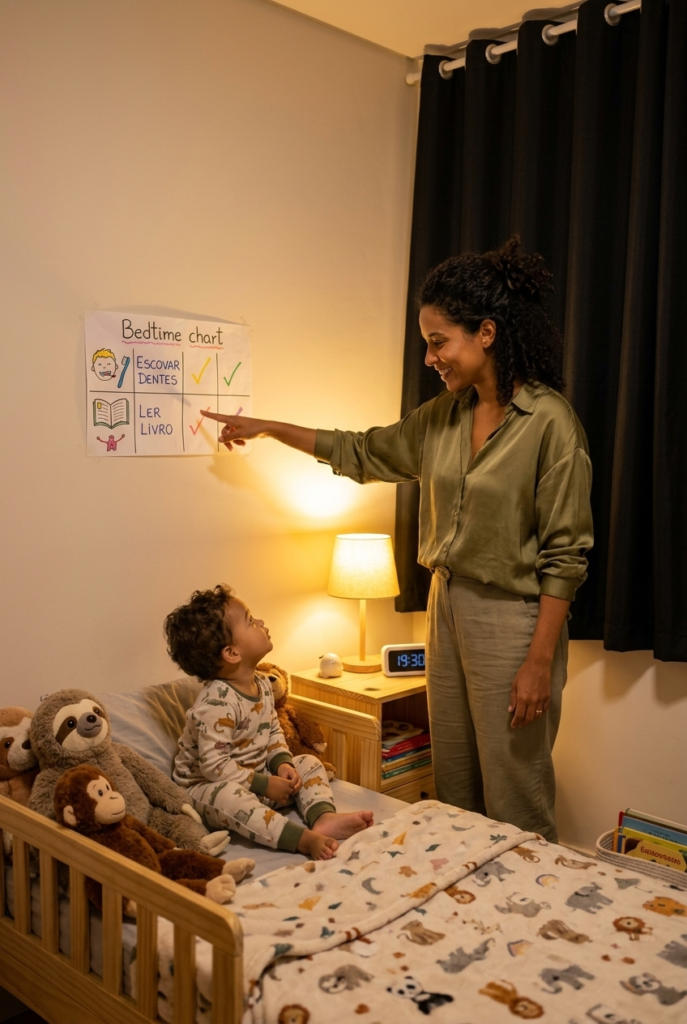
This is the most non-negotiable piece of the puzzle. Research consistently shows that toddlers sleep better when they go to bed and wake up at the same time every day — including weekends. A regular schedule trains their internal clock so their body naturally starts preparing for sleep around the same time each night.
For most toddlers between ages 1 and 3, the sweet spot falls between 7:00 and 8:00 PM. For 4-year-olds, it can stretch to 8:30 or 9:00 PM. The key is choosing a time that works for your family and holding to it. Letting Saturday nights run late might feel harmless, but it shifts their body clock enough to make Monday night a battle all over again.
2. Understand Wake Windows
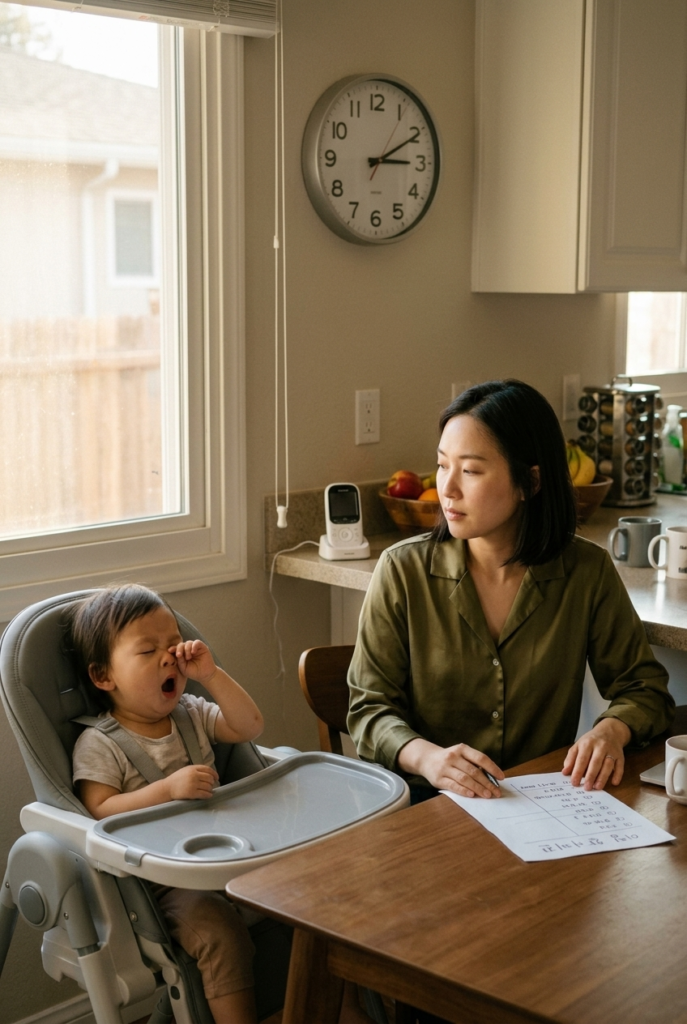
One of the most overlooked reasons toddlers won’t fall asleep at bedtime? They’re either overtired or not tired enough. Wake windows — the amount of time a child stays awake between sleep periods — help you find the right timing.
For toddlers on one nap a day, most need 4.5 to 5.5 hours of awake time between the end of their nap and bedtime. A 2-year-old who wakes from a nap at 2:00 PM should be ready for bed around 6:30 to 7:30 PM. A 3 or 4-year-old with a later nap end time may need closer to 5.5 hours before they’re genuinely tired enough to fall asleep smoothly.
When naps run long or late, bedtime gets pushed back — and the ripple effect can take days to fix. Keeping an eye on these windows gives you more control over the whole day’s rhythm.
3. Create a Predictable Wind-Down Routine

Toddlers thrive on predictability. A bedtime routine that follows the same steps in the same order every single night cues their brain that sleep is coming. It’s a biological signal — not just a comfort habit.
The routine doesn’t need to be elaborate. Most pediatric sleep specialists recommend keeping it to 20 to 30 minutes, with a bath as an optional but helpful addition (the drop in body temperature after a warm bath naturally encourages sleepiness). A solid sequence might look like:
- Dim the lights in the house 30 minutes before bed
- Warm bath
- Pajamas and teeth brushing
- One or two short books
- Goodnight routine and lights out
The order matters as much as the activities. When the same things happen in the same sequence every night, their body starts winding down on autopilot.
4. Dim the Lights Before Bedtime — Not Just in the Bedroom
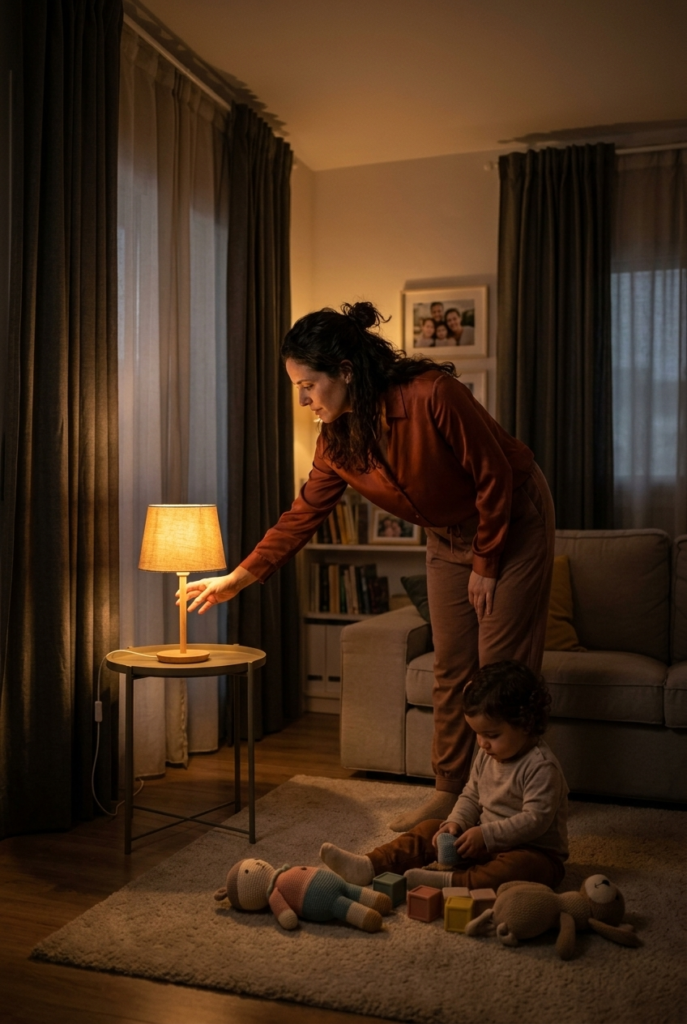
Most parents know to keep the bedroom dark at night, but the hour before bedtime matters just as much. Bright light suppresses melatonin production, which is the hormone that signals to the body that it’s time to sleep. A toddler playing under overhead lights at 7:45 PM is actively working against their own sleep chemistry.
About 30 minutes before you start the bedtime routine, dim the lights throughout the house. Close the curtains. Switch from overhead lighting to lamps. This helps melatonin rise naturally and makes the transition to the bedroom much smoother.
Keeping the sleep environment itself as dark as possible — blackout curtains work well — also prevents early morning light from cutting sleep short.
5. Cut Screens at Least One Hour Before Bed
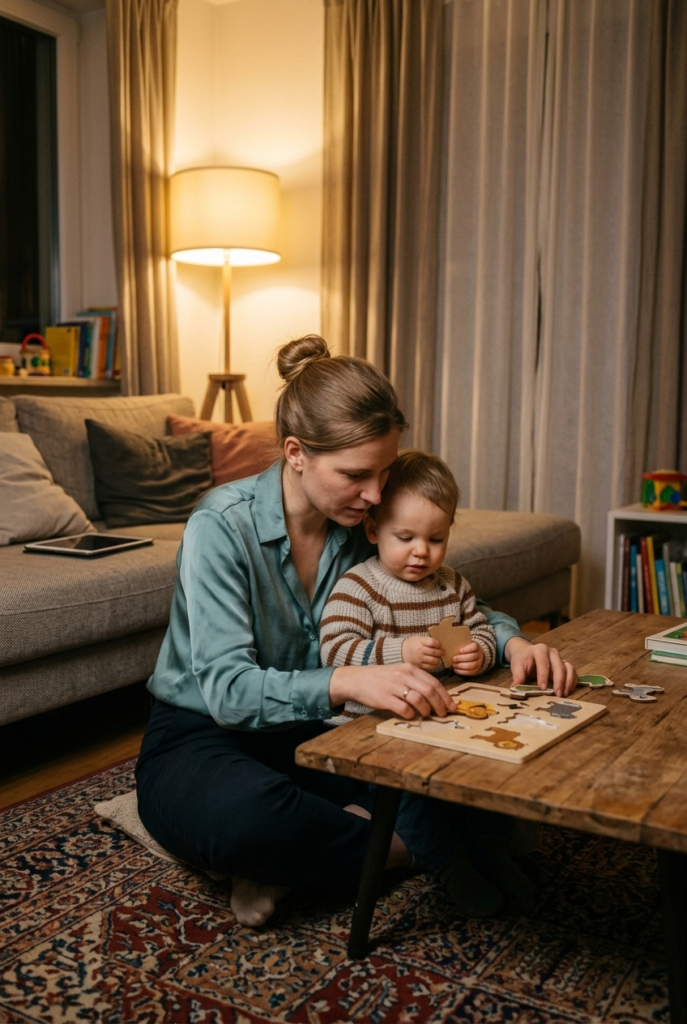
The American Academy of Pediatrics recommends no screens within at least one hour of bedtime for toddlers. The blue light that comes from tablets, phones, and TVs directly interferes with melatonin production — the same hormone responsible for signaling sleepiness.
Beyond the light issue, the content itself tends to be stimulating. Fast-paced cartoons or interactive apps engage the brain in ways that make it genuinely harder to wind down, even after the screen is off.
Replacing screen time with quiet play — coloring, simple puzzles, looking at board books — gives their nervous system a chance to shift gears. If your toddler is used to screen time before bed, expect some pushback in the first few days. Making it a household-wide rule (phones down for everyone) can soften the transition.
6. Time the Nap Carefully

Naps and nighttime sleep are connected in ways that aren’t always obvious. A nap that’s too long or ends too late in the afternoon can push bedtime back significantly — and a child who skips their nap entirely often ends up overtired and paradoxically harder to get to sleep.
Most toddlers between 18 months and 3 years still need one nap per day, typically 1 to 2 hours in length. The goal is to have that nap end by early afternoon — generally no later than 3:00 PM — so there’s enough awake time before the target bedtime.
Signs that a nap schedule needs adjusting include: taking 30 or more minutes to fall asleep at bedtime, waking frequently at night, or early morning waking paired with daytime grumpiness. Small shifts — moving the nap earlier or capping it at 90 minutes — often solve what seems like a nighttime problem.
7. Use the “Bedtime Pass” for Repeated Night Exits
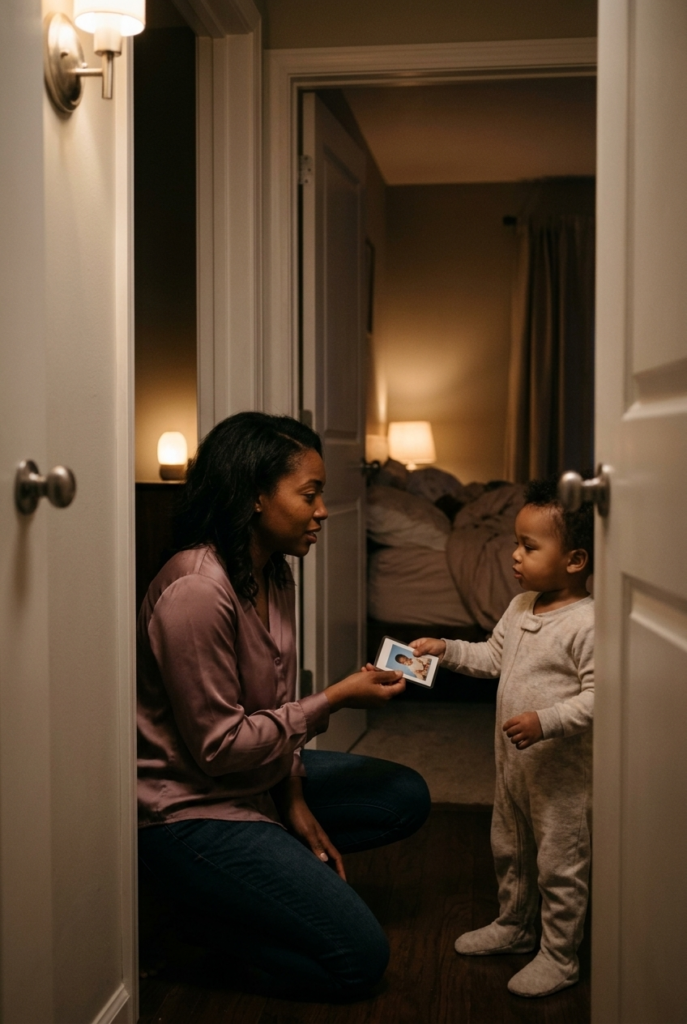
If your toddler has turned bedtime into a revolving door — one more hug, one more drink of water, one more trip to tell you something — a strategy called the bedtime pass can help. A 2013 study published in the Journal of Pediatrics found that giving toddlers one physical card they could “spend” on a single exit from their room significantly reduced bedtime resistance.
Here’s how it works: give your child one card (or a simple laminated pass) each night. They can use it once — to come out for water, a hug, whatever they choose. Once it’s been handed back to you, the door stays closed. Toddlers who know they have the option to leave tend to use it less desperately than those who are simply told no.
It gives them a sense of control, which is exactly what toddlers need to feel safe settling down.
8. Get Outside During the Day — Especially in the Morning

This one surprises most moms, but sunlight exposure during the day is directly tied to how well toddlers sleep at night. Natural light — especially in the morning and mid-morning hours — regulates the body’s circadian rhythm and promotes melatonin production later in the day when it’s actually needed.
A short walk after breakfast, outdoor play at the park, or even just opening the blinds and letting natural light into the house in the morning can make a measurable difference in nighttime sleep quality. Physical activity during daylight hours also helps burn off the energy that would otherwise show up as restlessness at bedtime.
The combination of sunlight in the morning and dimmed light in the evening essentially tells your toddler’s body what time of day it is — and prepares it to sleep when you need it to.
9. Try Bedtime Fading If Your Toddler Simply Won’t Fall Asleep
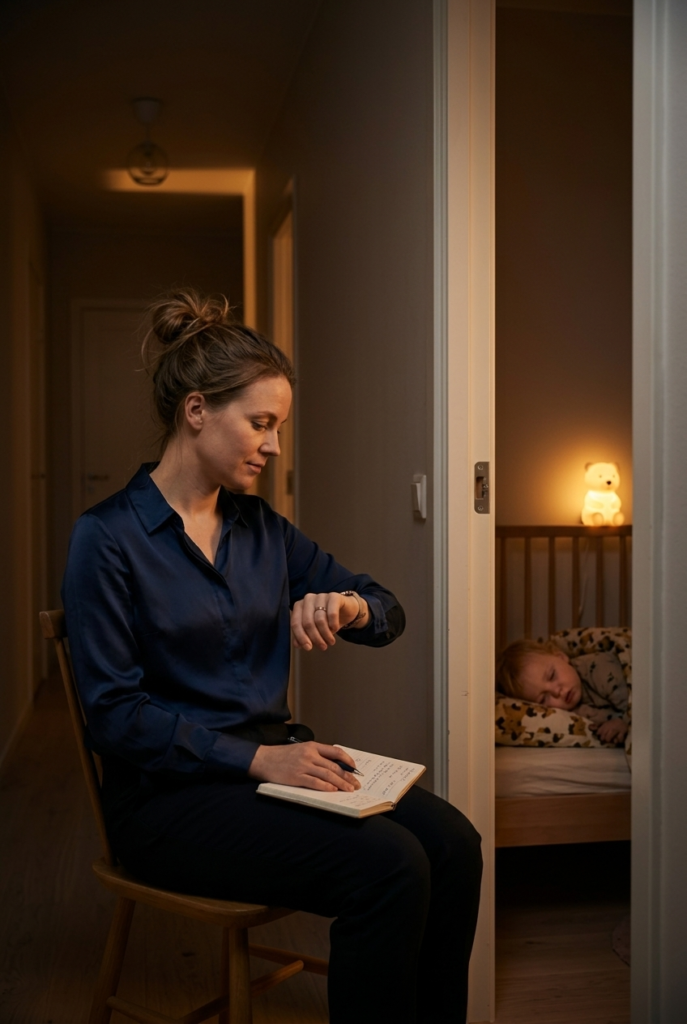
If you’ve set a 7:30 PM bedtime but your toddler lies awake until 9:30 PM every night regardless, the issue may be that their biological sleep time hasn’t shifted yet. Forcing an early bedtime before the body is actually ready often results in long stretches of staring at the ceiling — which creates negative associations with the bedroom.
Bedtime fading is a technique that works with your toddler’s current biological timing instead of fighting it. Start by putting them to bed 15 to 30 minutes after the time they naturally fall asleep — not when you want them to fall asleep. Then, every two to three nights, shift that time 15 minutes earlier until you reach your target bedtime.
Pair this with consistent morning wake times, appropriate nap timing, and low lighting in the evening, and most toddlers begin falling asleep at the target time within two to three weeks. It requires patience, but it’s a gentler approach that produces lasting results — without hours of bedtime battles.
The Nights Will Get Easier — Here’s What to Hold Onto
Sleep doesn’t transform overnight, but the patterns you build right now carry farther than you might expect. A toddler who learns that bedtime is predictable, calm, and non-negotiable becomes a child who genuinely settles down easier — and eventually, a kid who puts herself to bed without much fanfare at all.
Some weeks will still be harder. Regressions happen, travel disrupts routines, and teething does not care about your 7:30 PM target. When those moments hit, staying as close to the routine as possible — even an abbreviated version of it — helps things bounce back faster than starting from scratch. Consistency doesn’t mean perfection; it just means returning to the plan.
You’re not just solving tonight’s bedtime battle. You’re building the habits that set your child up for genuinely good sleep for years ahead. That’s worth every patient, boring, predictable bedtime ritual you can muster.
Frequently Asked Questions
Q: What time should a toddler go to bed?
A: Most toddlers between 1 and 3 years old sleep best with a bedtime between 7:00 and 8:00 PM. Four-year-olds can often stretch to 8:30 or 9:00 PM. The right time depends on when your child wakes up in the morning and how long their nap lasts.
Q: How many hours of sleep does a toddler need?
A: Toddlers between ages 1 and 3 need 11 to 14 total hours of sleep in a 24-hour period, including naps. Most of that — around 10 to 12 hours — should come from nighttime sleep.
Q: Why does my toddler fight bedtime every single night?
A: Common reasons include a schedule that’s slightly off (bedtime too early or too late), too much stimulation in the hour before bed, screen exposure close to bedtime, or a nap that ended too late in the afternoon. Start by reviewing nap timing and the pre-bed routine.
Q: What is wake window and why does it matter?
A: A wake window is the stretch of time a toddler stays awake between sleep periods. Most toddlers on one nap need about 4.5 to 5.5 hours of awake time before bedtime. Getting this window right prevents them from being overtired or under-tired at bedtime.
Q: Is a nightlight okay for toddlers who are afraid of the dark?
A: Yes, but the color matters. Warm-toned lights in red, orange, or yellow are less likely to interfere with melatonin production than white or blue nightlights. Avoid blue-toned nightlights in the bedroom.
Q: Should I let my toddler cry it out?
A: There are several approaches to managing bedtime tears, and there’s no one-size-fits-all answer. Research supports both gradual check-and-console methods and more structured approaches. What matters most is choosing one strategy and applying it consistently rather than switching approaches night to night.
Q: What is bedtime fading?
A: It’s a technique where you start bedtime at the time your toddler naturally falls asleep, then gradually shift it earlier by 15 minutes every two to three nights until you reach your target bedtime. It reduces resistance because you’re working with their biological clock instead of against it.
Q: My toddler keeps coming out of their room after bedtime. What should I try?
A: The bedtime pass method works well for this. Give your child one physical card per night that they can exchange for a single exit — water, a hug, or whatever they need. Once the card is used, the room stays closed. Studies show this reduces repeated exits and decreases bedtime anxiety.
Q: When should I be concerned about my toddler’s sleep?
A: Talk to your pediatrician if your toddler consistently takes more than 30 minutes to fall asleep, snores loudly, or has sleep problems that last longer than 6 weeks without improvement despite a consistent routine.