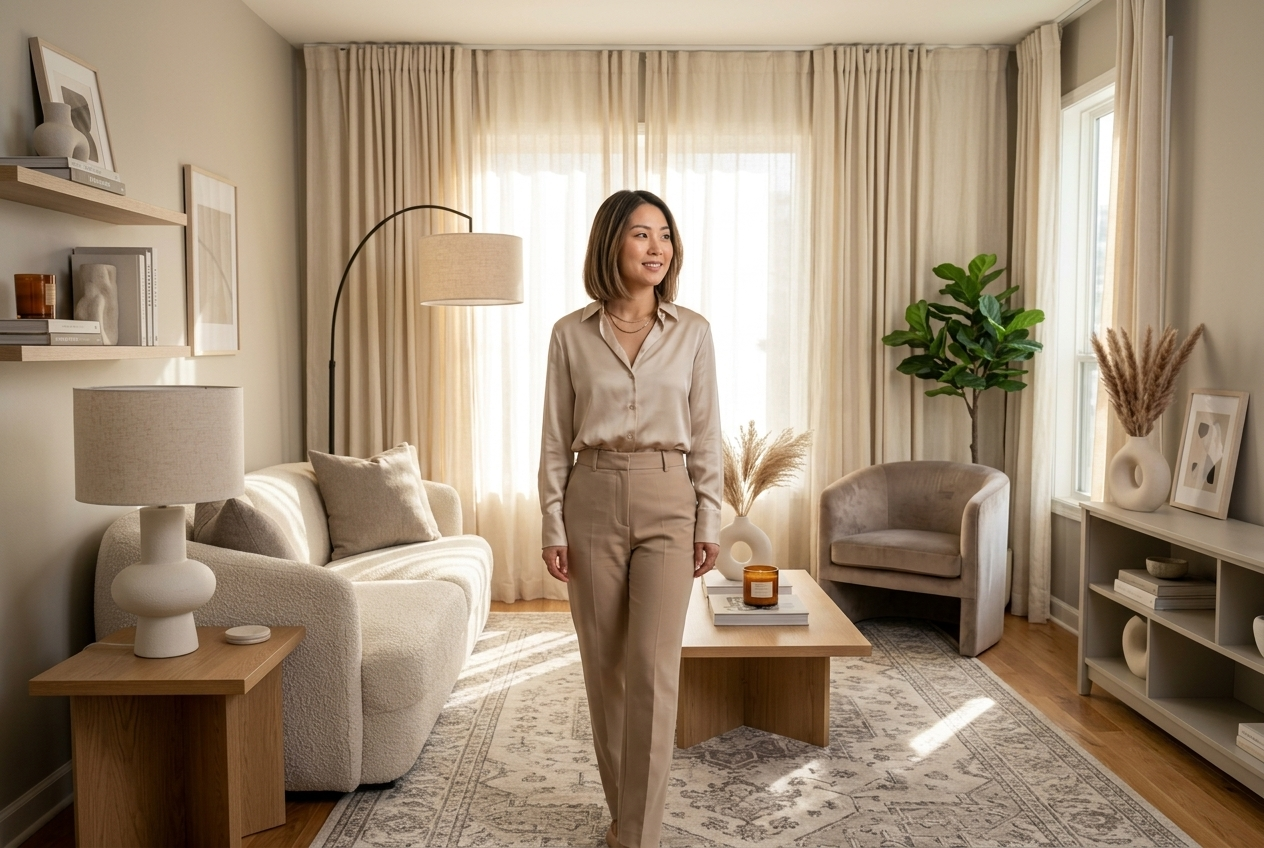
You don’t need a renovation budget or a designer on speed dial to make your apartment look like it belongs in a magazine. The truth is, most spaces that feel expensive share very specific design choices — choices that have nothing to do with how much money was actually spent. It’s about proportion, intention, and knowing which details the eye picks up on first.
A lot of women assume that a space looking cheap comes down to size. But a small apartment that’s thoughtfully decorated will always feel more polished than a large one that’s been randomly filled. Square footage isn’t the deciding factor — composition is.
What follows are 12 decor moves that interior designers consistently rely on to give any apartment that pulled-together, luxurious feel. Some cost very little. Others are a single Saturday afternoon project. All of them work.
- 1. Hang Curtains at Ceiling Height
- 2. Invest in One Statement Piece of Furniture
- 3. Add Crown Molding or Wall Trim
- 4. Layer Your Lighting
- 5. Use a Large Area Rug (and Size It Correctly)
- 6. Declutter and Edit Ruthlessly
- 7. Incorporate Texture in Layers
- 8. Choose a Cohesive Color Palette
- 9. Use Mirrors Strategically
- 10. Bring in Real (or High-Quality Faux) Plants
- 11. Swap Out Hardware and Switch Plates
- 12. Hang Art with Intention
- Small Changes, Big Results
- Frequently Asked Questions
1. Hang Curtains at Ceiling Height
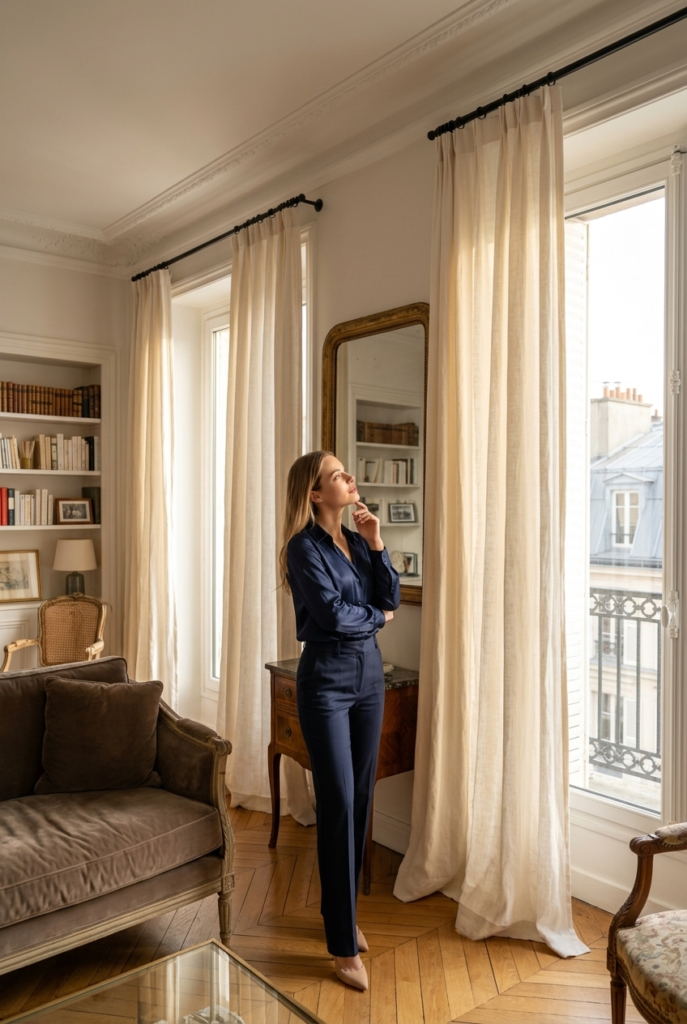
This is probably the single fastest way to make a room feel taller and more upscale. Most people hang curtains just above the window frame, which cuts the room off visually and makes ceilings feel low. Instead, mount the rod as close to the ceiling as possible and let the panels fall all the way to the floor.
Floor-to-ceiling drapes add a sense of grandeur that’s hard to replicate any other way. Choose a solid linen, velvet, or cotton in a soft neutral, and the effect is instant.
2. Invest in One Statement Piece of Furniture
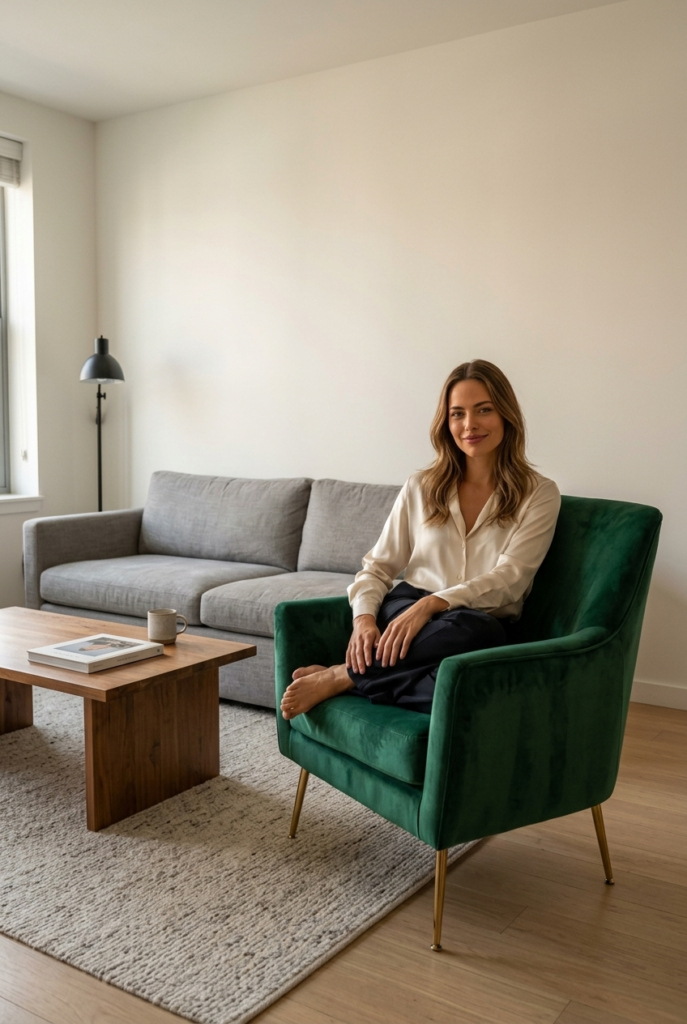
Rather than filling every corner with mid-range pieces, pick one item to be the anchor of the room and spend a little more on it. This is what designers mean when they talk about quality over quantity. A velvet accent chair, a solid wood coffee table with clean lines, or a sculptural side table signals that the whole space was curated — even if everything else came from a thrift store.
Dominique Bonet, Lead Designer at LD&D, put it plainly: in smaller spaces, every item is magnified. One well-made piece will always carry more visual weight than five forgettable ones.
3. Add Crown Molding or Wall Trim
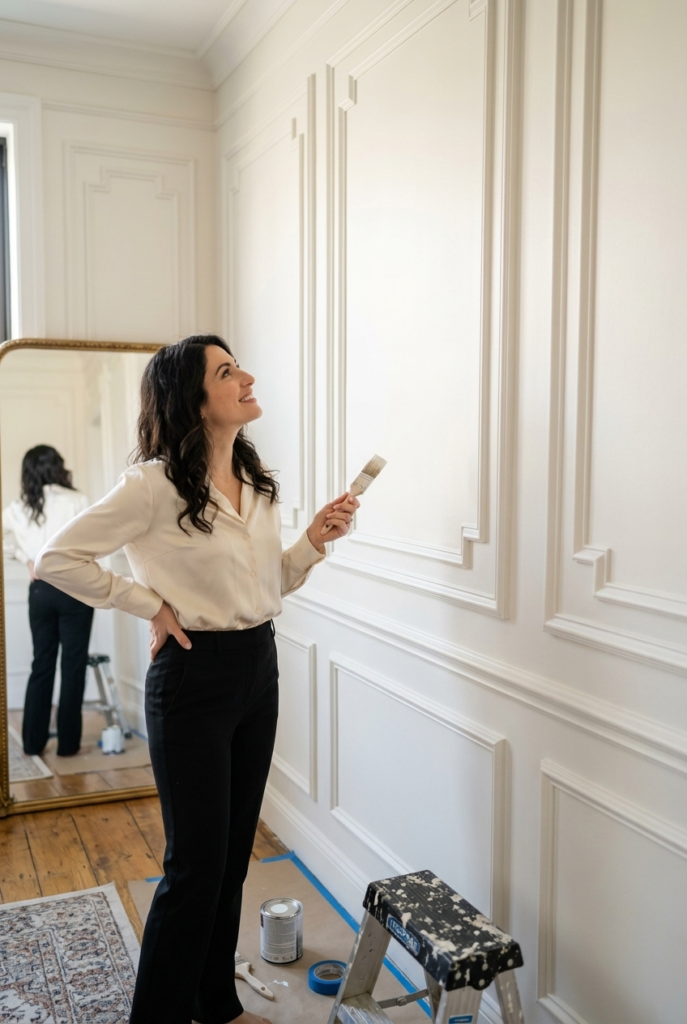
Architectural detail is what separates a builder-grade apartment from a space that feels custom. Crown molding, chair rails, or even simple picture frame molding applied directly to the walls costs very little at a home improvement store and can be installed over a weekend.
Once painted the same color as the wall, trim gives the room depth and character that no amount of furniture can replicate. It looks intentional. It looks finished. And it photographs beautifully, which is always a sign that something reads as high-end.
4. Layer Your Lighting
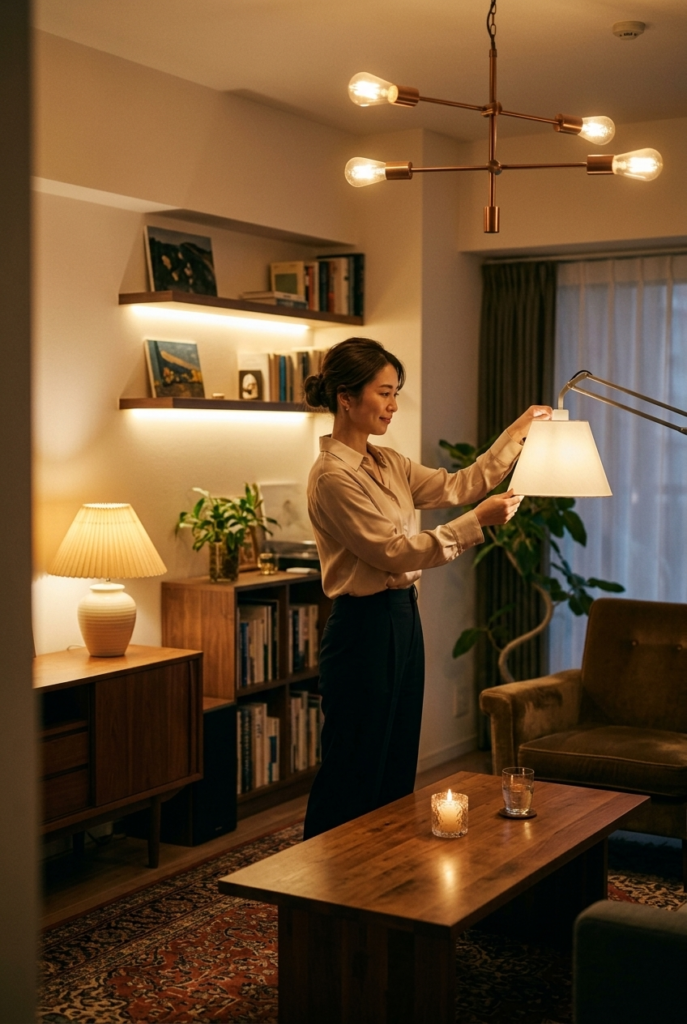
Overhead lighting alone makes any space feel flat and institutional. Rooms that feel expensive almost always have multiple light sources working together — a floor lamp in one corner, a table lamp on a console, candles or LED strips under shelving, and possibly a statement pendant or sconce.
Statement fixtures are one of the biggest design trends heading into 2026, with designers specifically calling out sculptural floor lamps and architectural sconces as replacements for the purely functional lighting most apartments default to. A single interesting fixture — even a secondhand chandelier repainted with metallic spray — can completely shift the feel of a room.
5. Use a Large Area Rug (and Size It Correctly)
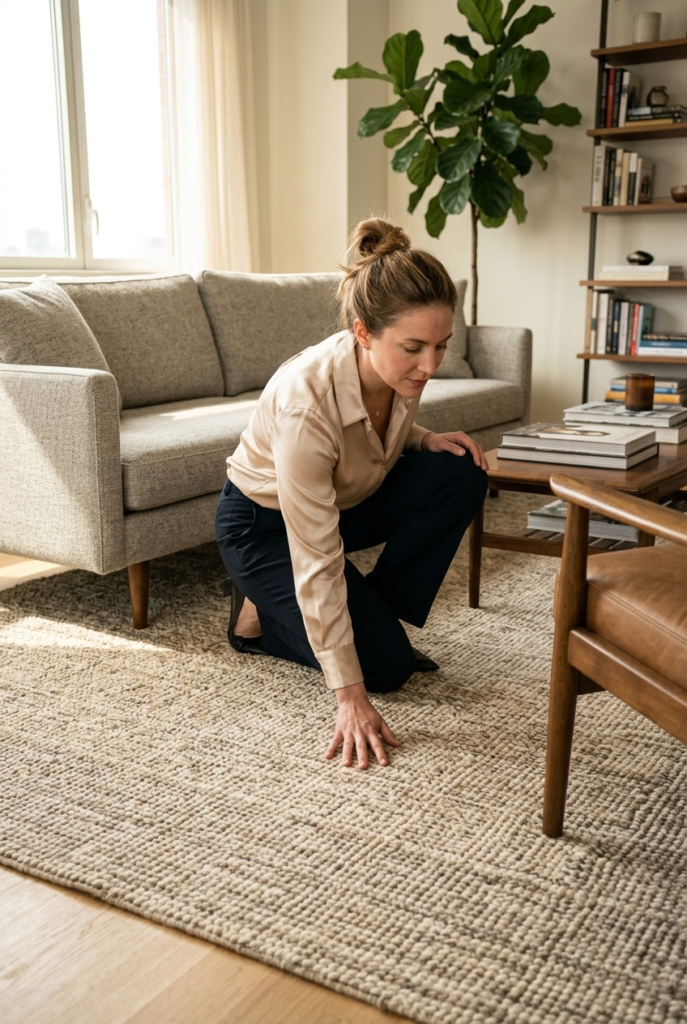
An undersized rug is one of the most common decorating mistakes, and it immediately makes a room look unfinished. The rug should be large enough that all the main furniture legs sit either on it or just off the edge of it. This grounds the furniture arrangement and gives the space a sense of cohesion.
Go for natural materials when possible — jute, wool, or a flatweave cotton in a textured pattern. These read as more expensive than synthetic options and hold up better over time.
6. Declutter and Edit Ruthlessly
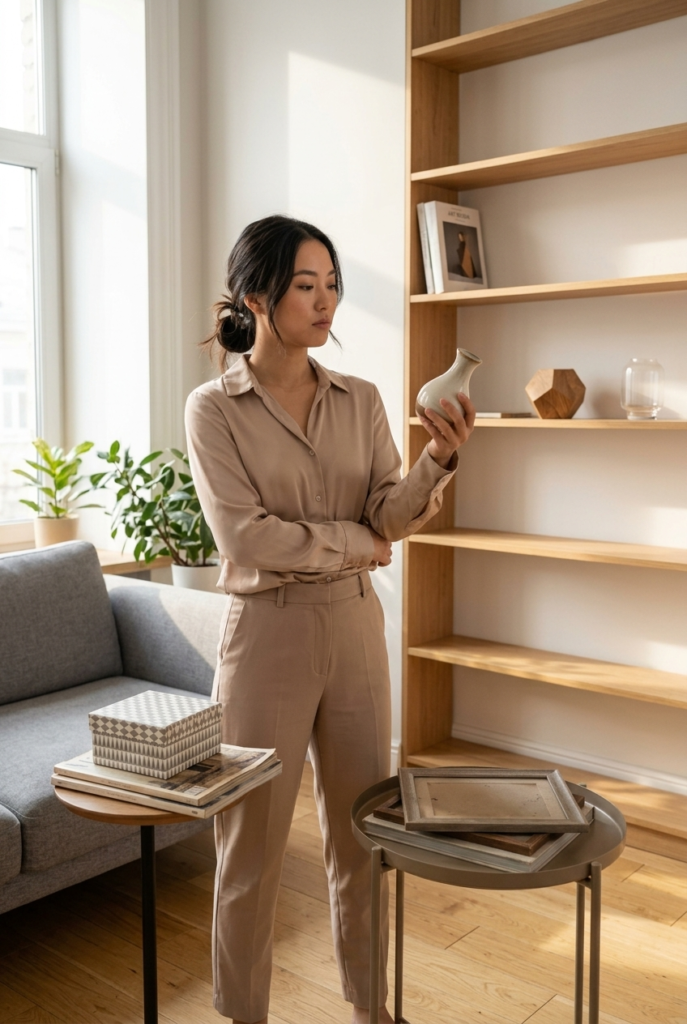
Clutter is the enemy of luxury. Rooms that feel expensive tend to have breathing room — surfaces that aren’t overcrowded, shelves that aren’t packed to capacity, and a general sense that everything present was chosen deliberately.
This doesn’t mean the space needs to look sparse or cold. It means editing. Keep what you love and what serves a purpose. Remove what’s just there because it ended up there. Negative space is not wasted space — it’s what lets the pieces you’ve chosen actually be seen.
7. Incorporate Texture in Layers
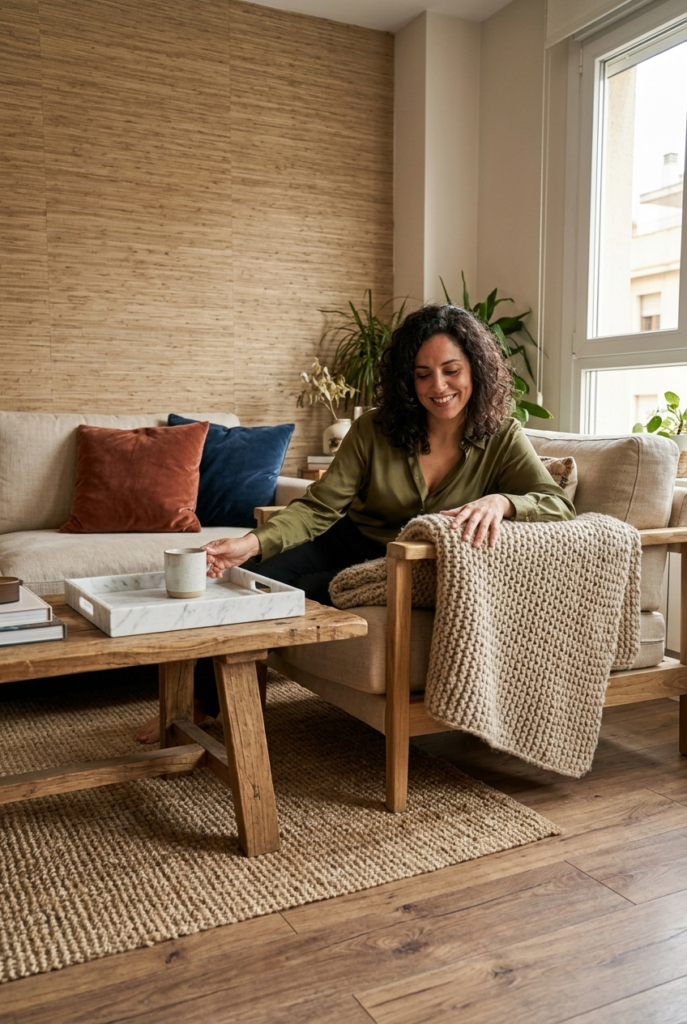
Flat, single-material rooms feel one-dimensional. Spaces that feel rich and layered tend to mix textures — a linen sofa with a chunky knit throw, a smooth marble tray on a rough wood table, a grasscloth wallpaper panel behind velvet cushions.
Luxury apartment design in 2025 has moved heavily toward what designers call “material layering” — the idea that tactile variety creates depth and warmth that no single material can achieve on its own. You don’t need expensive materials to pull this off. You need contrast.
8. Choose a Cohesive Color Palette
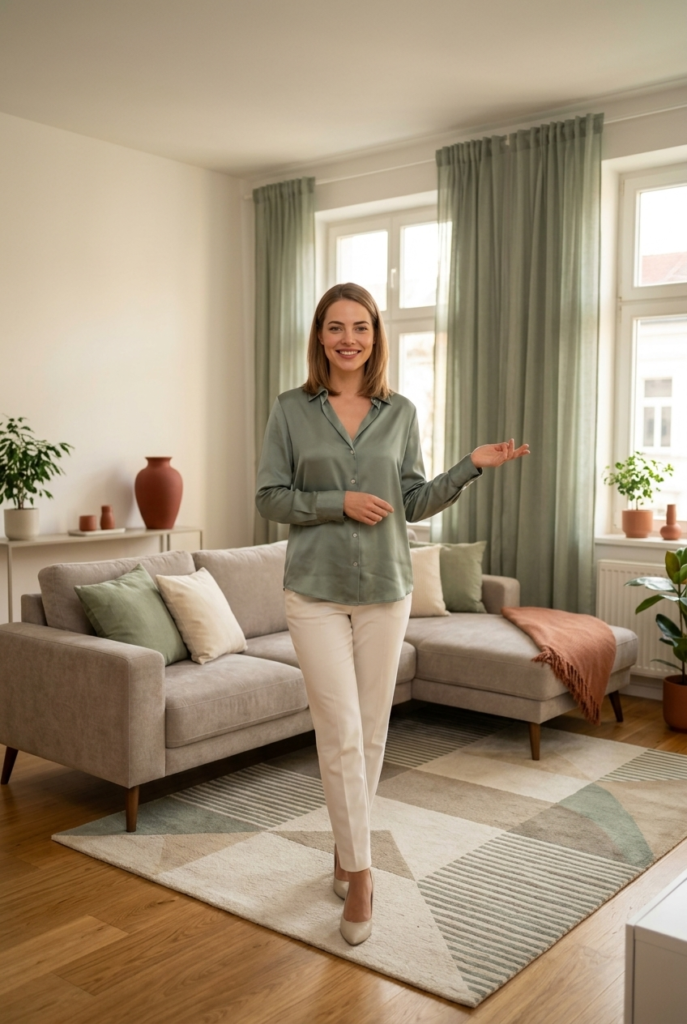
Random color combinations are one of the clearest signs that a space wasn’t designed with intention. Apartments that feel expensive typically stick to a tight palette — usually three to four colors that repeat throughout the space in varying proportions.
A good starting point is two neutrals (like warm white and soft greige), one mid-tone (dusty sage, terracotta, or slate blue), and one darker accent used sparingly. This kind of consistency makes a space feel considered, even when the individual pieces aren’t particularly special.
9. Use Mirrors Strategically
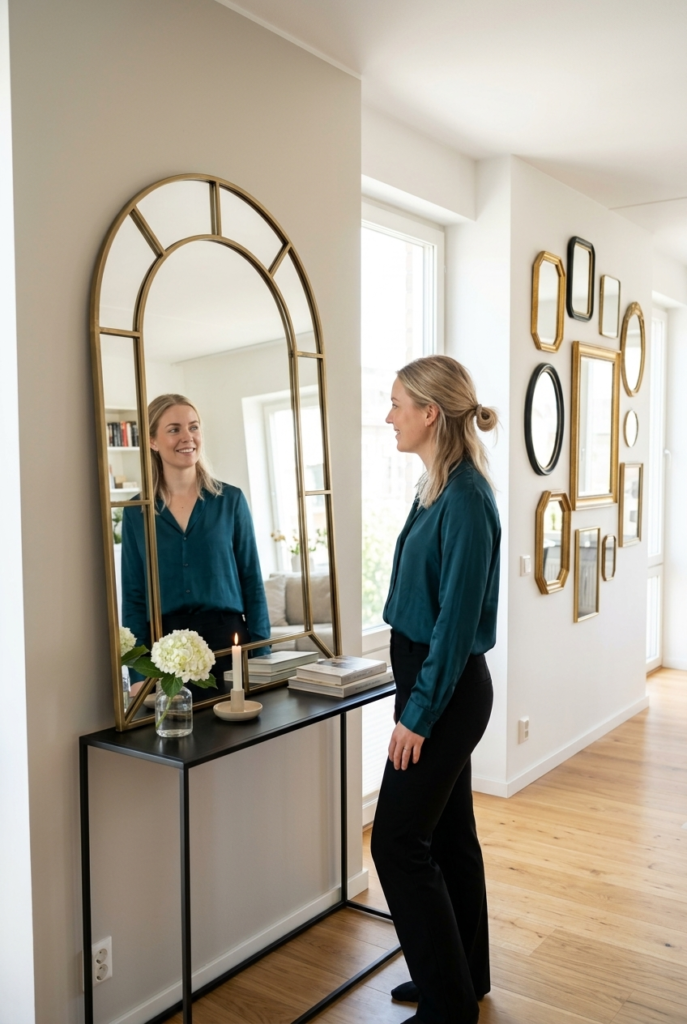
A well-placed mirror does two things at once: it reflects light, which makes the room feel brighter and more open, and it adds a visual element that reads as intentional decor. A large floor mirror leaning against a wall, a statement arch mirror above a console, or a cluster of smaller mirrors in varied frames — all of these add dimension to a space without taking up any square footage.
Art Deco-style mirrors with interesting shapes are particularly effective at making a room look styled rather than just furnished.
10. Bring in Real (or High-Quality Faux) Plants
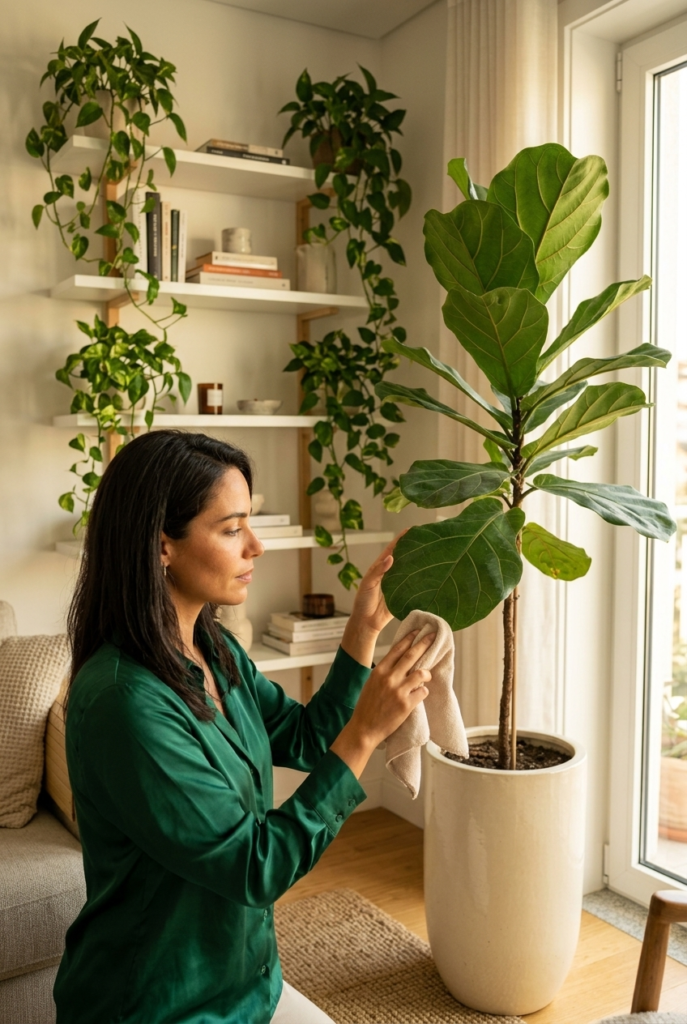
Greenery is one of the most effective and affordable ways to make a space feel alive and curated. Plants add color, texture, and a sense of care that empty surfaces simply don’t have. A large fiddle-leaf fig or monstera in a ceramic pot can anchor an entire corner of a room. Smaller trailing plants on shelves add softness.
If you travel often or don’t have great light, high-quality faux plants have improved dramatically and can be convincing when placed thoughtfully. The key is choosing realistic varieties and avoiding anything that looks obviously artificial.
11. Swap Out Hardware and Switch Plates
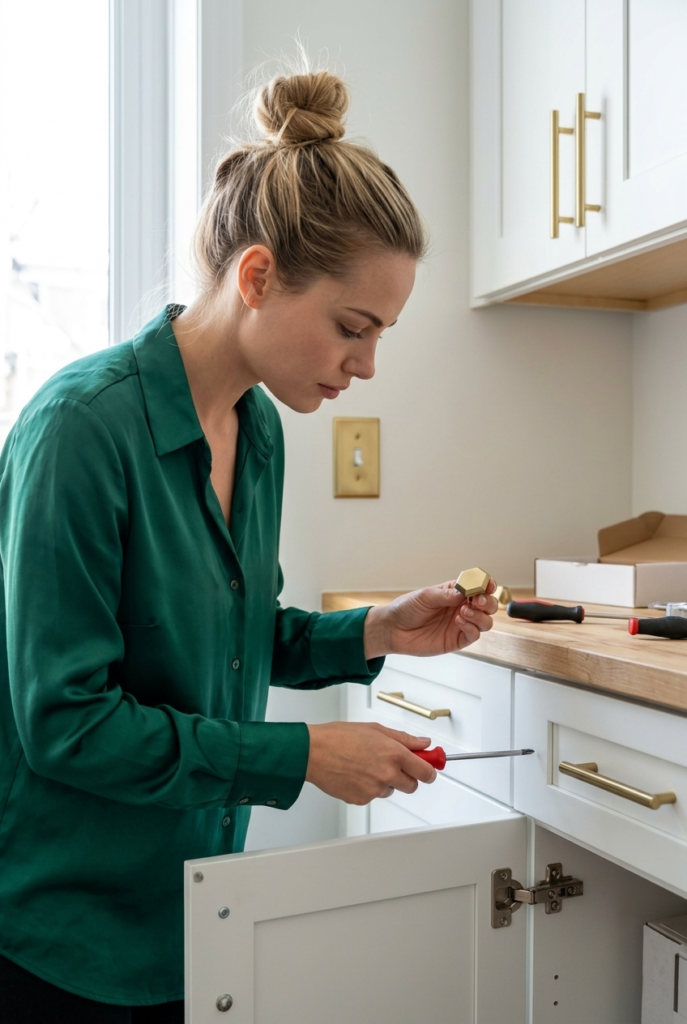
Cabinet knobs, drawer pulls, door handles, and even light switch covers are the small details that most people overlook — but they’re exactly the kind of thing that separates a space that feels finished from one that feels generic.
Brushed brass, matte black, and unlacquered brass are all strong choices right now and work with almost any palette. Replacing outdated hardware in a kitchen or bathroom takes less than an hour and costs very little, but the visual difference is significant. Updated switch plates in matching metal finishes add another layer of polish that most guests won’t consciously notice but will subconsciously feel.
12. Hang Art with Intention
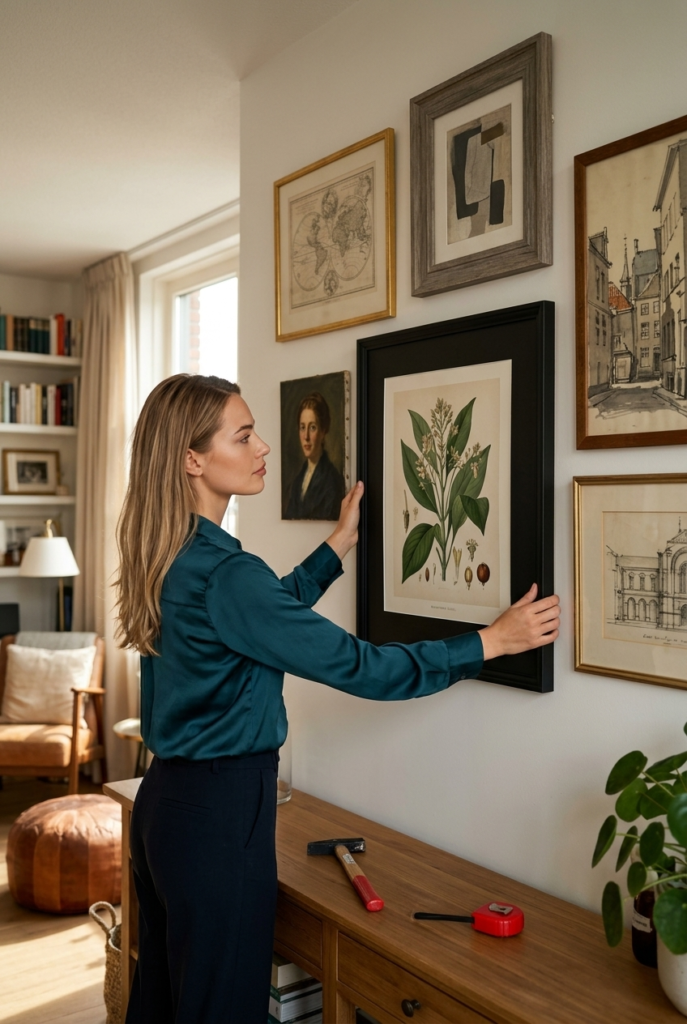
Bare walls make a space feel temporary. But art hung incorrectly — too high, too small, or scattered without logic — can look worse than nothing. The standard rule is to hang art so the center point is at eye level, roughly 57 to 60 inches from the floor. For gallery walls, lay out the arrangement on the floor before committing to any holes.
Mixing pieces from different eras and origins gives a room a collected, worldly feel rather than something that was bought as a set. A large-scale print in a simple frame, a piece of vintage art from an estate sale, or even an oversized botanical illustration can all serve as a focal point. The frame matters almost as much as the art itself — a wide matte white or black frame makes almost anything look gallery-worthy.
Small Changes, Big Results
None of these ideas require a contractor or a significant budget. What they require is attention — to scale, to proportion, to how materials and colors interact with each other. That’s really what makes a space feel expensive: not the price tags, but the evidence of thought.
Start with one or two of these and see how the room shifts. More often than not, the changes that make the biggest difference are the ones that seem almost too simple to matter — a curtain rod moved six inches higher, a rug that finally fits the furniture, a lamp added to a dark corner. The cumulative effect is a space that feels like it was put together with care, which is exactly what expensive really means.
Frequently Asked Questions
Q: Do I need to spend a lot of money to make my apartment look expensive? A: Not at all. Many of the most effective changes — like hanging curtains at ceiling height, swapping out hardware, or editing clutter — cost very little. The biggest difference comes from thoughtful choices, not big budgets.
Q: What’s the most impactful single change I can make? A: Ceiling-height curtains are consistently cited by designers as the fastest way to transform a room. They make ceilings feel taller, windows feel grander, and the overall space feel much more polished.
Q: How do I choose the right rug size? A: The general rule is that the front legs of your main furniture should sit on the rug, or all legs should be fully on it. An undersized rug makes a room feel unanchored, while a properly sized one ties everything together.
Q: What colors make an apartment look more expensive? A: Neutral palettes — warm whites, soft greiges, muted sage, dusty blues, and terracotta — tend to read as more intentional and elevated than bright or mismatched color combinations. Keeping the palette to three or four cohesive tones throughout the space makes the biggest difference.
Q: Is it better to have fewer, higher-quality pieces or more affordable ones? A: Fewer, better pieces will almost always make a space feel more luxurious. One well-made accent chair or a solid wood coffee table signals quality and intention in a way that a room full of mid-range furniture simply doesn’t.
Q: How do I make a room feel less cluttered without getting rid of things I love? A: Edit surfaces first — counters, shelves, and tabletops. Keep only the items that are either functional or genuinely beautiful. Store everything else. Empty space isn’t wasted; it’s what lets your chosen pieces breathe.
Q: What kind of lighting makes the biggest difference? A: Layered lighting — combining a floor lamp, table lamp, and ambient or accent lighting — makes a much bigger difference than any single overhead fixture. Adding a statement pendant or sculptural sconce is one of the most effective ways to make a room feel designed rather than just lit.
Q: Does plant size matter for decor? A: Yes. One large plant in a ceramic or textured pot tends to make more impact than several small ones scattered around. A sizeable fiddle-leaf fig, monstera, or olive tree can anchor an entire corner and adds a sense of life that no decorative object can quite replicate.
Q: How should I hang art to make it look more intentional? A: Hang the center of each piece at roughly 57 to 60 inches from the floor. For a gallery wall, plan the arrangement on the floor before putting anything up. Consistent, simple frames — wide matte white or black — make a big difference in how finished the wall looks.