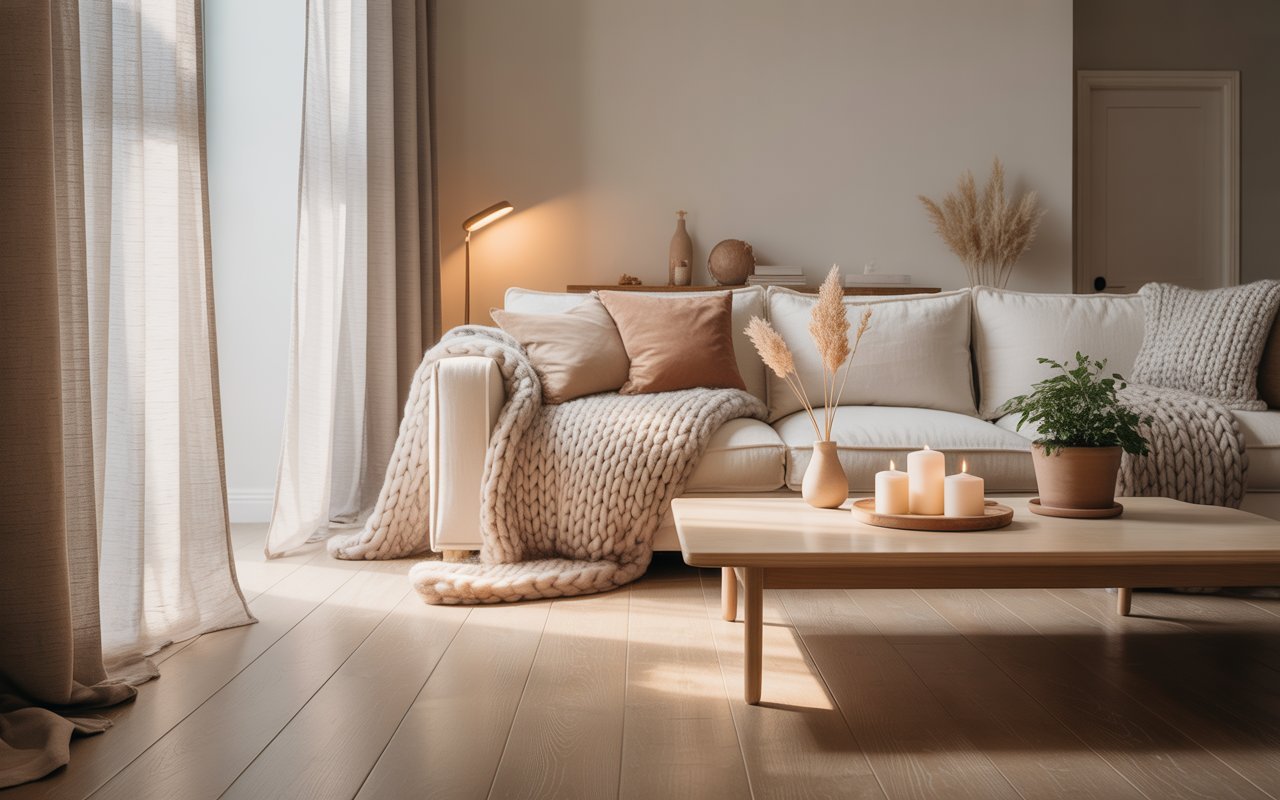
There’s a reason so many first-time homeowners are drawn to the clean, calm look of Nordic interiors. After years of renting spaces that never quite felt like theirs, the idea of a home that’s serene, purposeful, and genuinely beautiful without trying too hard is incredibly appealing. Scandinavian design delivers exactly that — and it does it in a way that’s easier to pull off than most people think.
At its core, this style is built on two ideas that come straight from Nordic culture. The first is hygge (pronounced “hoo-gah”), a Danish and Norwegian concept centered on coziness, warmth, and the pleasure of simple moments — a candle lit on a rainy afternoon, a chunky knit throw on the couch, the glow of a lamp by your favorite reading chair. The second is lagom, a Swedish word meaning “just the right amount.” Not too much, not too little. Balance in everything. These aren’t decorating trends. They’re a philosophy about how a home should feel to live in.
What makes this style so well-suited to first-time homeowners is how low-pressure it actually is. You don’t need an enormous budget or a full renovation. You need a clear sense of what to keep, what to remove, and how to layer warmth into a space that’s already stripped back. The 12 ideas below cover everything from color choices to furniture, lighting, and the small details that pull a room together.
- 1. Start With a White or Off-White Base
- 2. Let the Light In
- 3. Choose Light Wood for Floors and Furniture
- 4. Declutter Before You Decorate
- 5. Add Warmth With Layered Textiles
- 6. Bring in Natural Elements
- 7. Invest in One or Two Quality Furniture Pieces
- 8. Use Contrast Thoughtfully
- 9. Create a Cozy Reading Nook
- 10. Keep the Kitchen Functional and Clean
- 11. Design a Bedroom That Feels Like a Retreat
- 12. Add Candles — Lots of Them
- A Home That Finally Feels Like Yours
- Frequently Asked Questions
1. Start With a White or Off-White Base
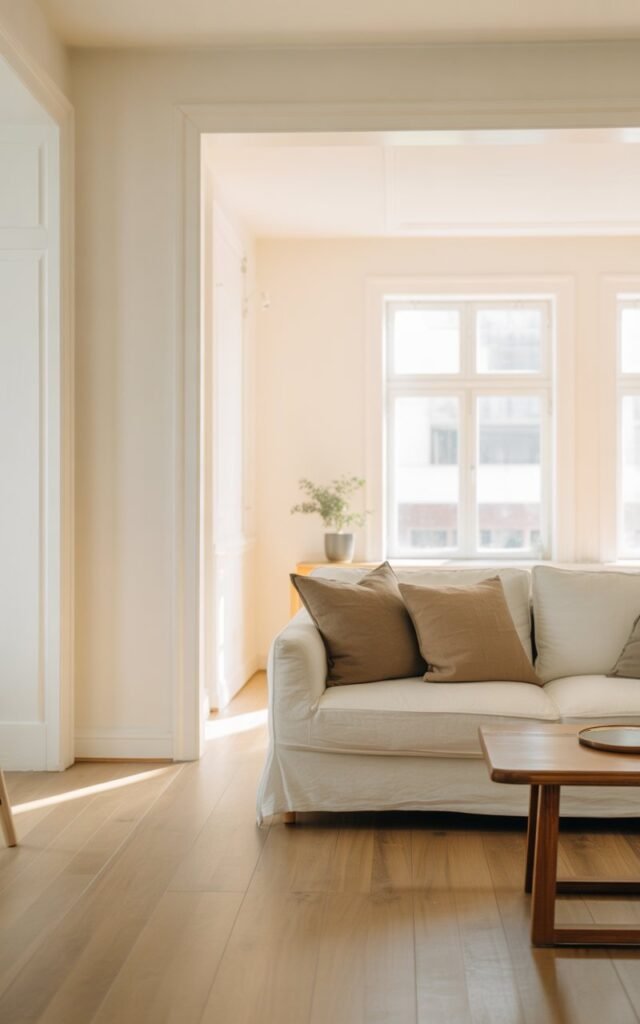
The foundation of nearly every Nordic interior is a neutral wall color — most often a crisp white, soft off-white, or pale warm gray. These tones do something specific: they make rooms feel larger and brighter, and they reflect natural light rather than absorbing it. In countries where daylight is limited for months at a time, this wasn’t just an aesthetic choice — it was a practical one.
For first-timers, this is actually good news. A neutral base is forgiving. It works with almost any furniture you already own, and it gives you the freedom to add color later through textiles and decor without committing to a full repaint.
2. Let the Light In
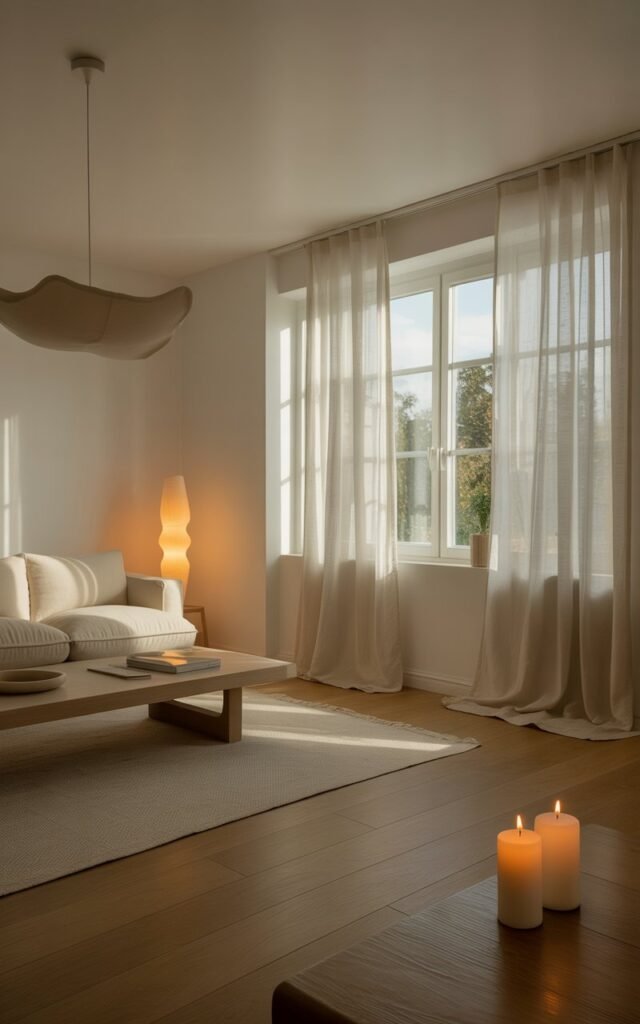
Maximizing natural light is one of the most defining characteristics of this design style. Keep window treatments minimal — sheer linen curtains or simple roller blinds in white or cream are ideal. If you have the option, avoid heavy drapes that block daylight entirely.
For evenings, layer your lighting. A statement ceiling pendant for overall brightness, a couple of table or floor lamps for warmth, and candles for atmosphere. That combination — bright when you need it, soft when you don’t — is how Nordic homes stay cozy through long winter nights.
3. Choose Light Wood for Floors and Furniture
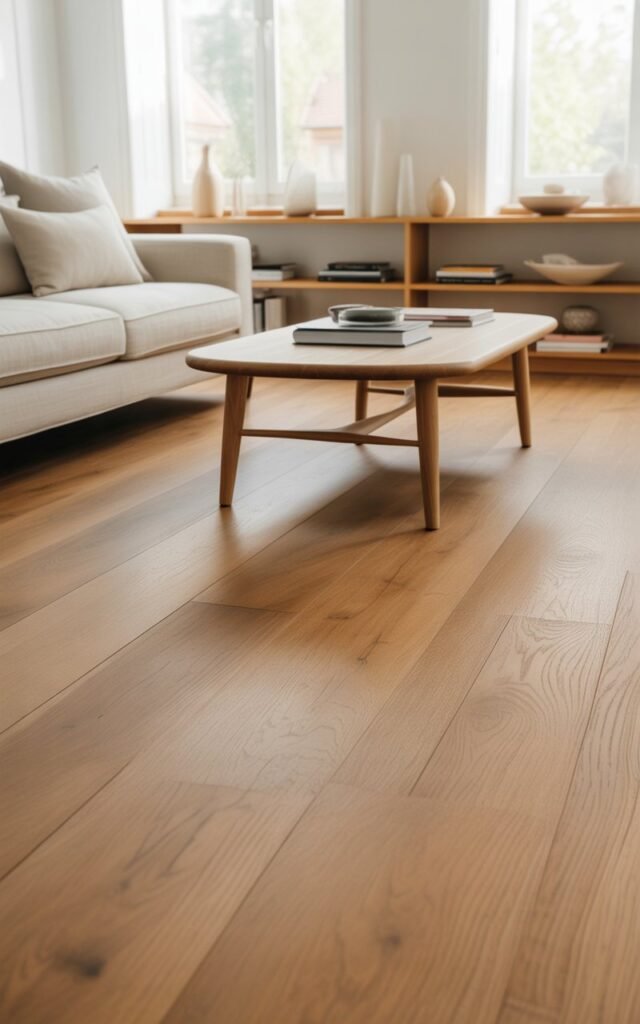
Light-toned wood is practically a signature of the style. Oak is the most common choice, showing up in flooring, furniture legs, shelving, and cabinetry. It adds warmth without weighing a room down, and it pairs seamlessly with white walls and neutral textiles.
If new flooring isn’t in the budget, focus on furniture. A light oak coffee table, a simple wooden dining bench, or open wood shelving can shift the entire feel of a room. You don’t need to replace everything — just introduce the material in a few intentional places.
4. Declutter Before You Decorate
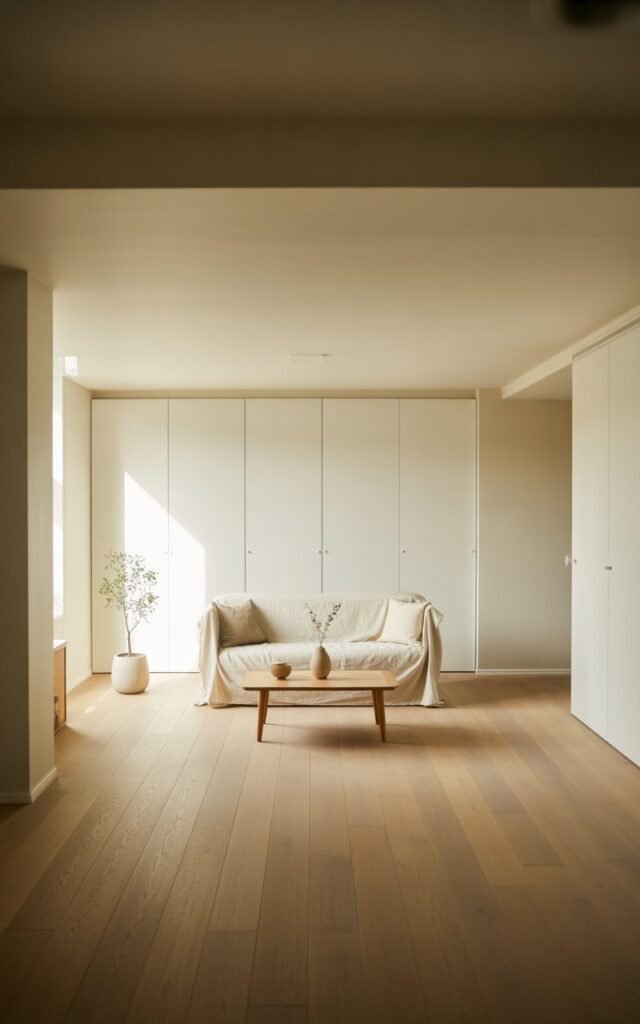
This one sounds obvious, but it’s the step most people skip. Scandinavian interiors are defined by what isn’t there as much as what is. The lagom approach asks you to keep only what you need and what genuinely makes you happy — not as a harsh minimalism, but as a way of preventing visual noise that makes a space feel stressful.
Go room by room. Clear surfaces. Find storage for things that don’t need to be on display. What’s left behind will feel intentional rather than accidental.
5. Add Warmth With Layered Textiles
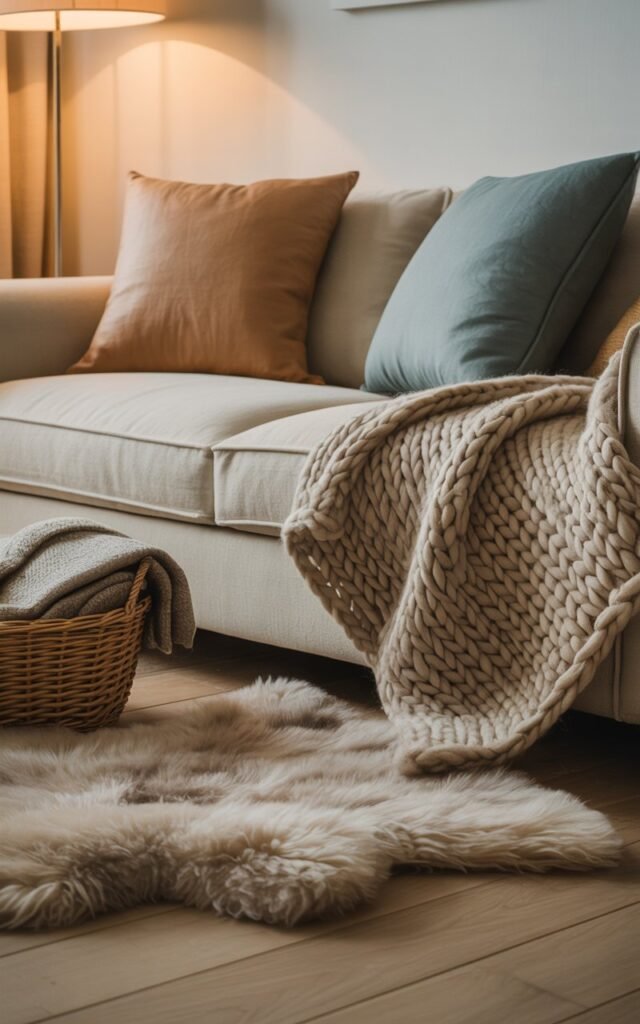
This is where hygge really comes to life. Wool throws, linen cushions, sheepskin rugs, chunky knit blankets — these are the materials that make a minimalist space feel genuinely livable rather than cold. Layer them on sofas, drape them over armchairs, and stack them in baskets within easy reach.
The texture mix matters. Smooth linen paired with a rough-weave rug and a soft knit throw creates depth without clutter. Stick to a tight color palette — creams, oatmeal, warm grays, and the occasional dusty blue or sage green — and the layers will feel cohesive rather than chaotic.
6. Bring in Natural Elements
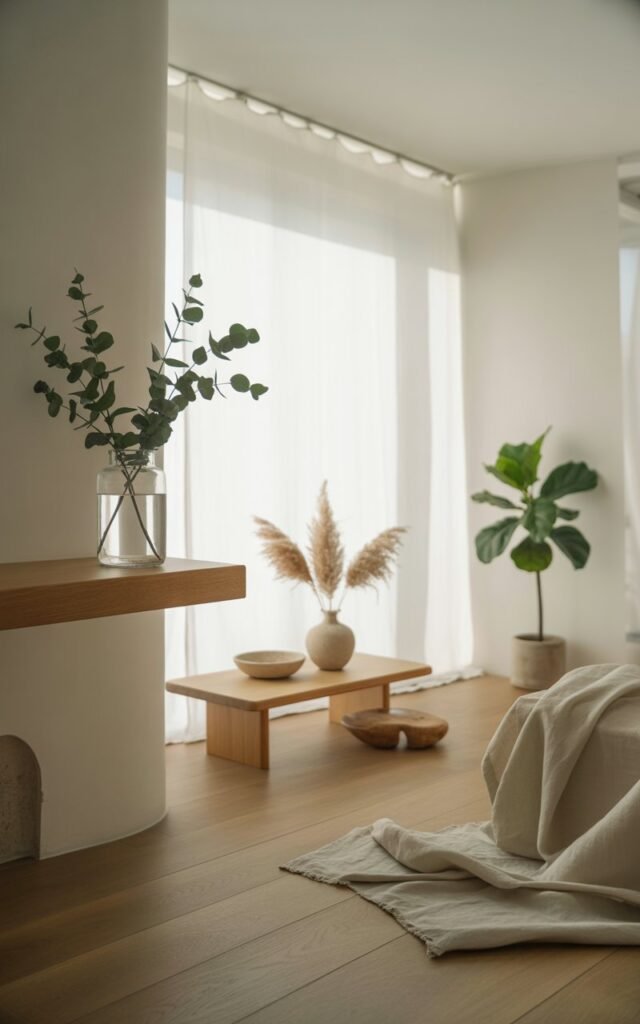
Connecting to nature is central to Nordic design. This doesn’t require anything elaborate. A few ceramic vases with dried grasses. A wooden bowl on the kitchen counter. Stone coasters. A cluster of eucalyptus in a simple glass jar. Indoor plants — particularly low-maintenance ones like pothos, snake plants, or a fiddle leaf fig — add life and a touch of green that grounds a space.
The goal is to make the indoors feel like a quiet extension of the outside world, not a retreat from it.
7. Invest in One or Two Quality Furniture Pieces
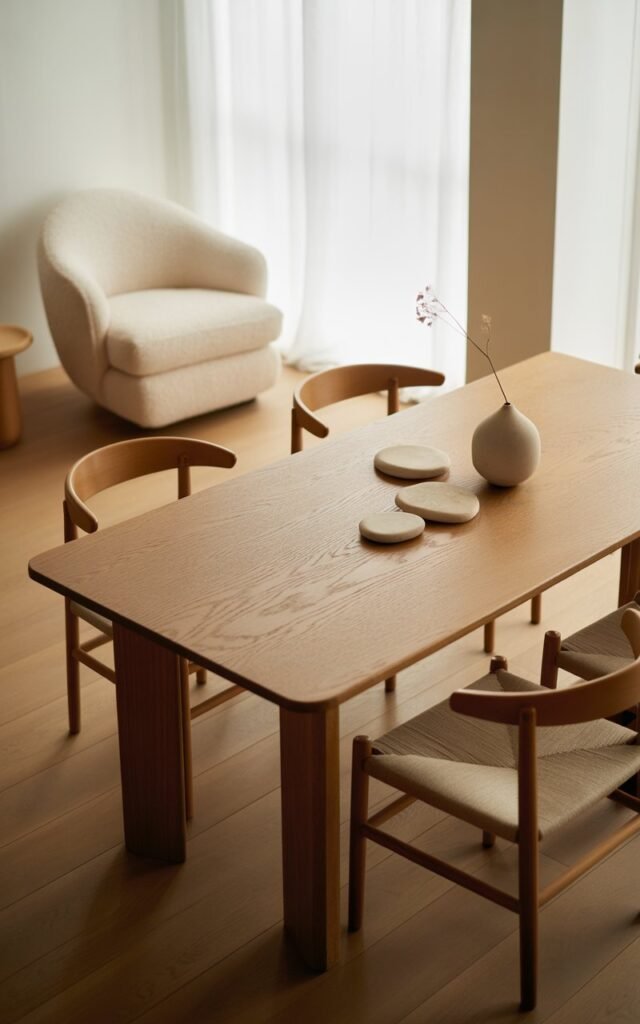
Scandinavian design has always had a strong tradition of craftsmanship — the idea that furniture should be well-made, functional, and worth keeping for decades. For first-time homeowners, this is worth thinking about strategically. Rather than filling a room quickly with inexpensive pieces, choose one or two items that are genuinely well-made: a solid wood dining table, a well-constructed sofa in a neutral linen or boucle, a quality armchair.
These anchor pieces set the tone for everything else in the room. They also tend to look better with age, which fits perfectly with a style that values things that last.
8. Use Contrast Thoughtfully
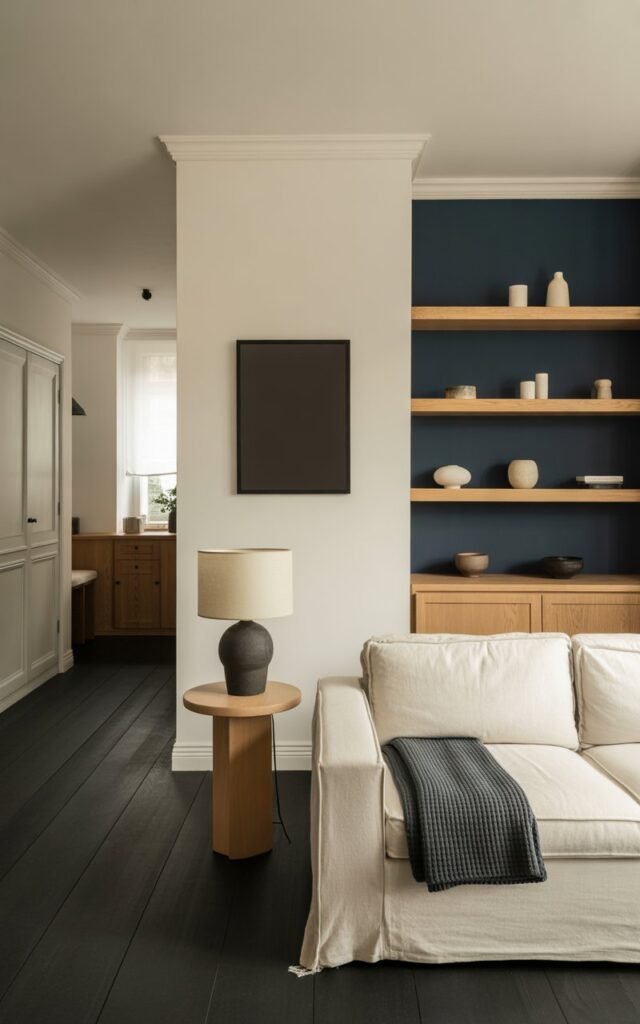
One of the most visually interesting tricks in Nordic interiors is the pairing of light and dark. White walls with a dark wood floor. A cream sofa with a charcoal wool throw. Light oak shelving against a deep navy accent wall. The contrast creates depth and prevents a neutral palette from feeling flat.
It doesn’t require bold moves — even small shifts work. A dark picture frame on a white wall, black hardware on kitchen cabinets, or a dark ceramic lamp on a light side table. These moments of contrast are what give the style its graphic quality without overcomplicating anything.
9. Create a Cozy Reading Nook
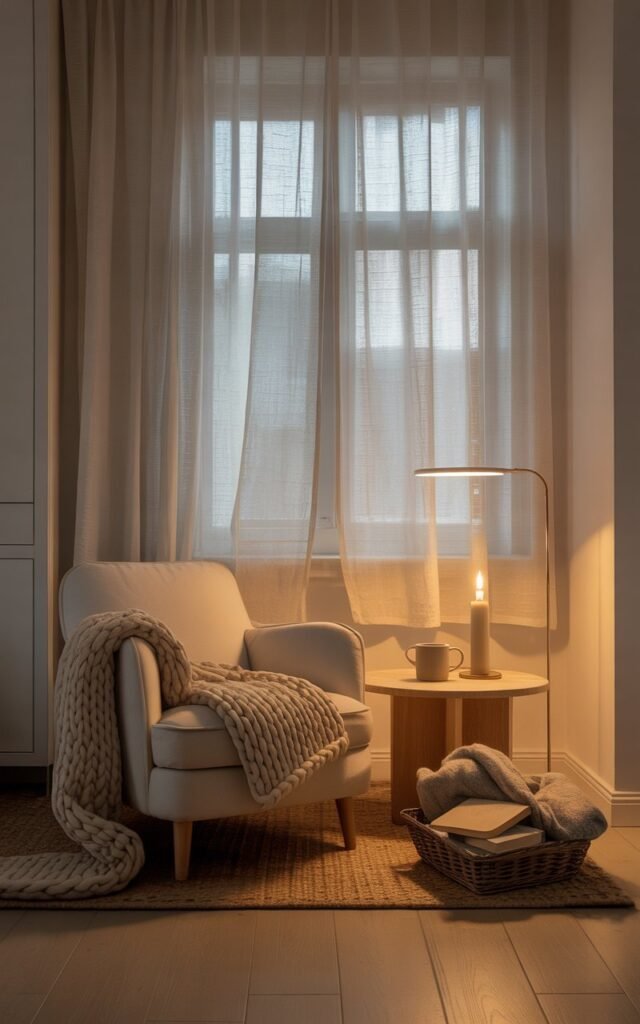
The hygge lifestyle prizes moments of quiet comfort, and a dedicated reading corner is one of the most satisfying ways to build that into a home. It doesn’t need a lot of space. A well-placed armchair near a window, a small side table for a drink or a candle, a floor lamp with warm light — that’s all it takes.
Add a soft rug underneath and a basket of books or throws nearby, and the corner becomes the kind of spot you actually look forward to retreating to at the end of the day.
10. Keep the Kitchen Functional and Clean
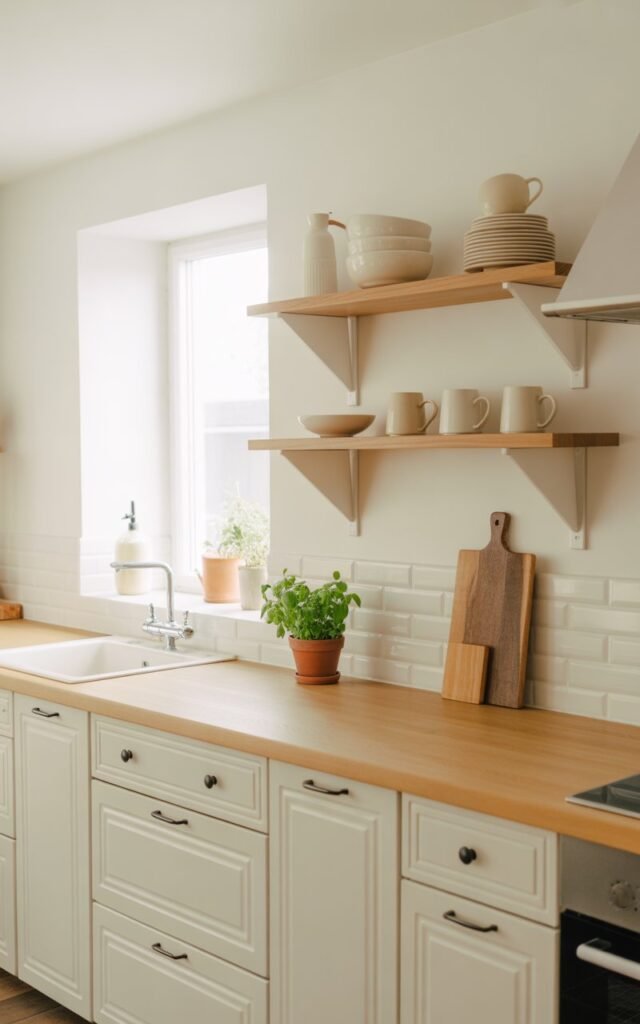
Nordic kitchens are typically simple, organized, and free of unnecessary clutter on the countertops. Open shelving is a common feature — displaying only what’s used regularly, like a few mugs, a wooden cutting board, or everyday dishes. Everything else goes behind closed doors.
If your kitchen has upper cabinets, consider removing a few to create open shelving. Paint remaining cabinets in a warm white or soft gray. Add simple hardware in matte black or brushed brass. These relatively small changes can shift the entire character of the space.
11. Design a Bedroom That Feels Like a Retreat
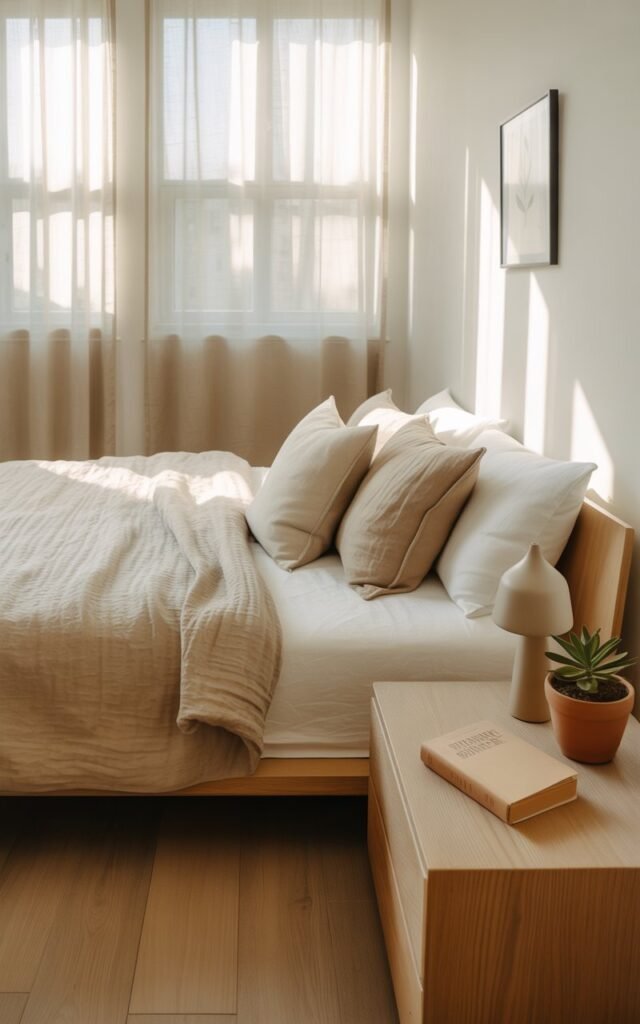
The Scandinavian bedroom prioritizes sleep and calm above everything else. That means a low-profile bed with clean lines, bedding in soft neutral tones — linen in particular — and very little on the walls beyond one or two carefully chosen pieces.
Blackout curtains are practical for sleep quality but can feel heavy. The solution many Nordic-inspired rooms use is a sheer curtain layered behind a simple linen panel, so the room can be flooded with light during the day and completely dark at night. Keep nightstand surfaces clear except for a lamp, a book, and perhaps a small plant.
12. Add Candles — Lots of Them
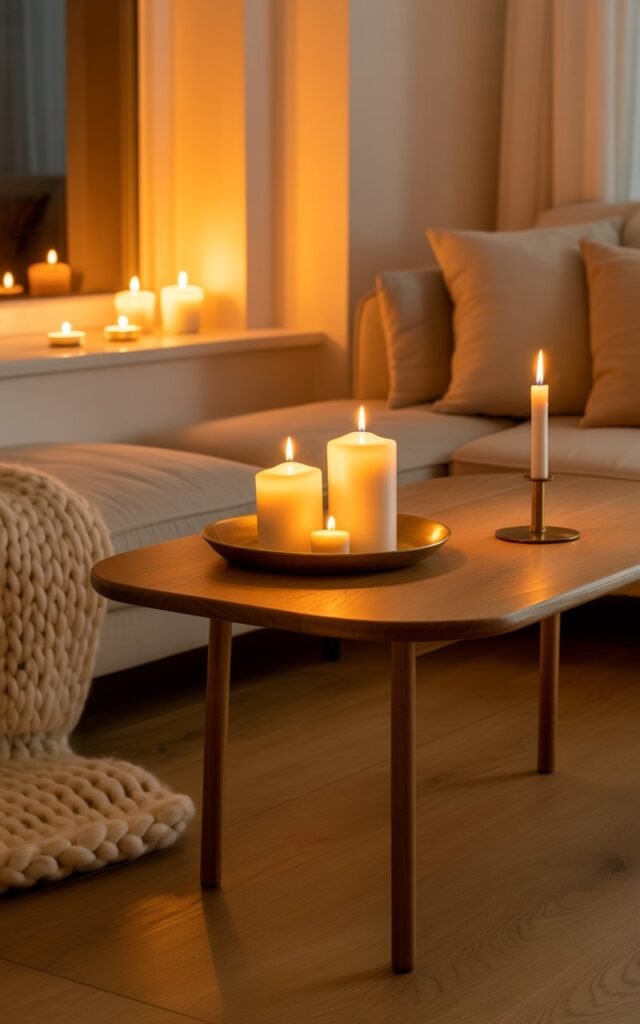
It sounds simple because it is. Candles are among the most characteristic elements of hygge living. They’re affordable, they transform the atmosphere of any room within minutes, and they work in every season. Group white pillar candles on a tray, place tea lights on window sills, and use a simple brass or concrete candleholder on a dining table.
The warm, flickering light they produce is something no overhead fixture can replicate. For first-time homeowners trying to make a new space feel like home quickly, candles are the easiest and most effective place to start.
A Home That Finally Feels Like Yours
What draws so many women to this style isn’t just the way it looks in photos — it’s the way it feels to actually live in. A Scandinavian-inspired home is calm without being cold, minimal without being stark, and practical without sacrificing beauty. It’s a style that works for real life, which is exactly what a first home needs to be.
Start with the basics: clear a surface, let in some light, add a wool throw. You don’t have to do everything at once. The lagom approach was never about perfection — it was always about finding what’s just right for you, in your space, on your terms.
Frequently Asked Questions
Q: Do I need to follow every one of these ideas to get a Scandinavian look?
A: Not at all. Even applying three or four of them — like neutral walls, light wood accents, and layered textiles — will shift the feel of a room significantly. Start with what fits your space and budget, and build from there.
Q: What colors work as accents in a Nordic-inspired home?
A: Dusty blues, sage greens, warm terracotta, and soft mustard yellow all work well. The key is to use them sparingly — in cushions, a rug, or a single ceramic piece — rather than on walls or large furniture.
Q: What does hygge mean in practice for a home?
A: Hygge is about creating an atmosphere of warmth and ease. In a home setting, that usually means soft lighting, comfortable seating, cozy textiles, and the kind of sensory details — like candles or the smell of something baking — that make a space feel lived-in and welcoming.
Q: Is Scandinavian design expensive to achieve?
A: It doesn’t have to be. The style actually favors simplicity over excess. A few quality pieces matter more than a full room of new furniture. Decluttering costs nothing, and small additions like candles, plants, and a linen throw are very affordable ways to shift the atmosphere of a room.
Q: What kind of flooring works best for this style?
A: Light oak hardwood is the most common choice, but light-toned engineered wood or even pale-colored tile work well too. The goal is a floor that reflects light and doesn’t compete visually with the rest of the room.
Q: How do I add texture without making a room feel cluttered?
A: Stick to a consistent color palette across your textiles — creams, grays, and warm whites — and vary the material rather than the color. A smooth linen cushion next to a chunky knit throw next to a woven basket creates interest without chaos.
Q: Can I apply these ideas to a small apartment?
A: The style was originally designed for small homes in northern climates, so yes — it actually works particularly well in compact spaces. Light walls make rooms feel larger, multi-functional furniture maximizes utility, and the clutter-free approach prevents small rooms from feeling cramped.
Q: What plants work best for a Nordic-inspired interior?
A: Low-maintenance options are ideal: snake plants, pothos, rubber plants, and fiddle leaf figs are all commonly used. Place them in simple ceramic or terracotta planters to keep the look grounded and natural.
Q: How important is lighting to this style?
A: Very. Nordic countries deal with months of limited daylight, so lighting is taken seriously. The combination of natural light during the day, layered artificial lighting in the evening, and candles for atmosphere is what gives these spaces their signature warm-yet-bright quality.