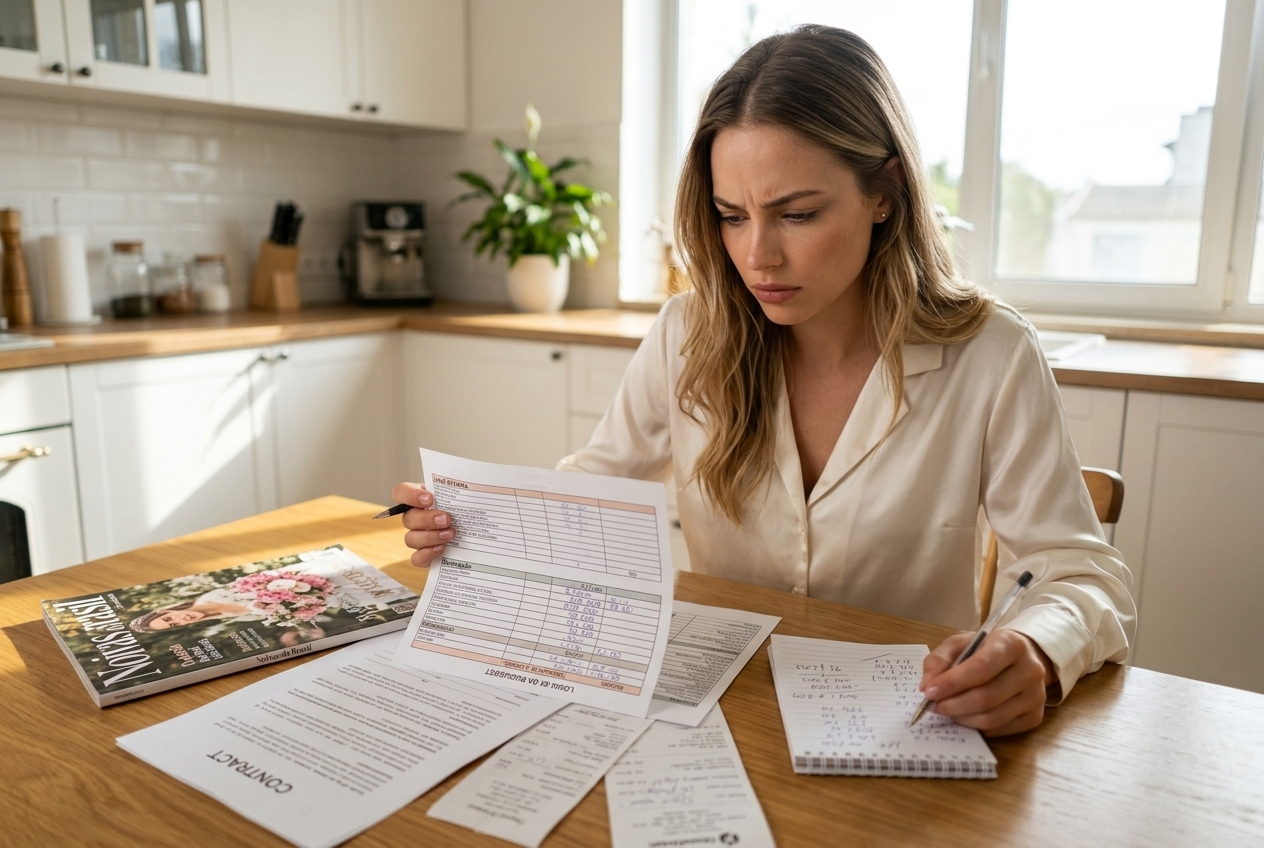
Planning a wedding is genuinely thrilling — until the quotes start rolling in. The flowers cost more than you thought. The venue alone eats half your savings. Then comes the dress, the photographer, the DJ, the cake, and suddenly you’re staring at a number that feels completely impossible. You’re not imagining it. According to Zola, the average wedding in 2025 cost around $36,000, up from $29,000 just two years prior.
What makes this harder is that most women go into wedding planning with no real framework for the money. They fall in love with a venue before locking down a total budget. They say yes to add-ons without knowing how much margin they have. A LendingTree survey found that 67% of newlyweds in 2025 took on debt to pay for their weddings — and nearly a quarter of those couples were still paying it off two years later. Sixteen percent said money disagreements after the wedding had them thinking about divorce. That’s not a fun way to start a marriage.
The good news is that a clear, structured breakdown changes everything. There are specific rules — not suggestions, rules — that keep spending organized, priorities straight, and debt out of the picture. These 11 principles are what financially smart brides actually follow.
- 1. Set the Total Number Before You Look at Anything
- 2. Allocate 40–50% to Venue and Catering First
- 3. Lock In 10–15% for Photography (and Don't Move It)
- 4. Use the 50/30/20 Framework as Your Starting Map
- 5. Keep Entertainment at 8–12% of Total Budget
- 6. Build a 10% Buffer Before You Spend Anything
- 7. Treat the Guest List as a Financial Decision, Not Just a Social One
- 8. Put Flowers and Décor at No More Than 8–10%
- 9. Cap Attire at 5–8% — Total, Not Just the Dress
- 10. Read Every Vendor Contract for Fees Before Signing
- 11. Decide Early What You're Prioritizing — Then Protect It
- What Smart Spending Looks Like on Your Wedding Day
- Frequently Asked Questions
1. Set the Total Number Before You Look at Anything

This sounds obvious, but most women skip it. They schedule venue tours, fall hard for a space that’s $8,000 over budget, and then spend the next six months trying to make the math work from the wrong starting point.
The rule is simple: before you contact a single vendor, before you open a single inspiration board, sit down with your partner and agree on a hard ceiling for total spending. Add up what you have in savings, what family members have genuinely committed to contributing (not hinted at — confirmed), and what you’re willing to put on a card with a plan to pay it off fast. That total is your budget. Everything else gets built around it, not the other way around.
2. Allocate 40–50% to Venue and Catering First

These two categories will always take the biggest slice of the budget, and fighting that reality causes more overspending than almost any other mistake. Venue and catering costs are directly tied to guest count, meaning they scale fast. Industry planning standards consistently put venue and catering together at 40–50% of total spending.
On a $30,000 budget, that’s $12,000–$15,000 for the venue rental and food combined. If you’ve been eyeing a venue that charges $8,000 just for the space plus a $100-per-head catering minimum with 120 guests, that’s $20,000 right there — which means you’d be overspending on one category before you’ve booked anything else. Know your venue and catering cap before you start touring.
3. Lock In 10–15% for Photography (and Don’t Move It)

Photography and videography are the only thing left from your wedding day once it’s over. The flowers are gone, the food is eaten, the dress goes into a box. The photos stay with you for decades. Yet this is consistently one of the first places women try to cut.
Most experienced planners recommend putting 10–15% of the total wedding budget toward photo and video coverage. On a $35,000 budget, that means $3,500–$5,250. Going below that range in major metro areas usually means sacrificing quality in ways that will genuinely bother you five years from now. This is one of the few categories where holding firm on the percentage actually protects you.
4. Use the 50/30/20 Framework as Your Starting Map

The 50/30/20 rule has been adapted from personal finance into wedding planning — and it works surprisingly well as a starting framework. Here’s how the breakdown goes:
- 50% goes to venue, catering, and rentals (tables, linens, glassware)
- 30% covers photography, entertainment, attire, flowers, and décor
- 20% handles everything else — invitations, transportation, favors, the marriage license, and if you’re including it, the honeymoon
This structure doesn’t work perfectly for destination weddings or very small elopements, but for a traditional event with 75–150 guests, it’s a solid map. The value of this framework is that it stops you from putting too much into one area and discovering too late that you’ve left almost nothing for everything else.
5. Keep Entertainment at 8–12% of Total Budget
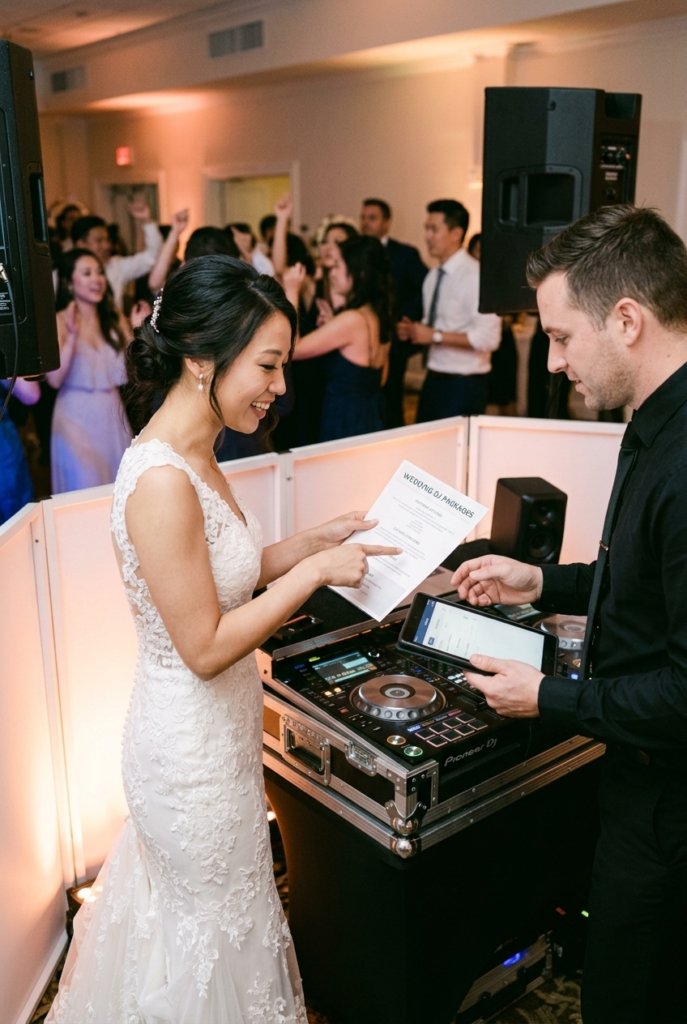
Entertainment is one of the categories that tends to creep — especially once you start comparing DJ packages versus live bands, or adding photo booths, late-night snacks, and other upgrades. A live band alone can run $5,000–$15,000 in larger cities, which blows most budgets entirely if you’re not watching the percentage.
The standard planning allocation for entertainment (DJ or band) is 8–12% of the total budget. For a $30,000 wedding, that’s $2,400–$3,600. A good DJ in most markets can absolutely be found in this range. If music is your top priority and you want a live band, adjust this percentage intentionally — but reduce something else proportionally, rather than just hoping it all averages out.
6. Build a 10% Buffer Before You Spend Anything

Hidden costs are not rare surprises. They are standard, predictable, and guaranteed to appear. Service charges at most catering operations add around 22% on top of the per-head price. Vendor meals are required by most vendor contracts — feeding your photographer, DJ, and planner adds up when there are ten vendors on-site. Cake cutting fees, corkage charges, overtime charges, gratuity, alterations for the dress (which can run $300–$800 on their own) — none of these usually show up in the initial quote.
The standard advice from planners is to hold back 10% of the total budget specifically for these costs. On a $30,000 wedding, that means keeping $3,000 untouched until the final invoices arrive. Women who skip this buffer are the ones who end up charging unexpected amounts to credit cards at the last minute.
7. Treat the Guest List as a Financial Decision, Not Just a Social One

Every person you add to the guest list adds cost across multiple categories simultaneously — catering, venue size requirements, invitations, favors, seating, and transportation. If catering runs $100 per head, removing 15 guests saves $1,500 on food alone, before accounting for the other categories that scale with headcount.
A practical tool that wedding planners recommend: build a draft list with your partner, then go through it together and mark a star next to anyone you’d genuinely be sad not to have there. If someone doesn’t get a star from either of you, they’re a candidate for removal. It’s a clear-headed way to make what is often an emotional and socially complicated decision. Cutting a guest list by 20 people can save more than almost any other single budget move.
8. Put Flowers and Décor at No More Than 8–10%

Flowers are consistently one of the top spending regrets among brides after the wedding. A Novi Financial survey from 2025 found flowers and décor at the top of the list of post-wedding financial regrets. The reason is usually that floral budgets expand gradually — a statement arch here, a cocktail-table centerpiece there — and the total climbs without anyone making a clear decision to increase it.
The standard allocation is 8–10% of the total budget. On a $30,000 wedding that’s $2,400–$3,000. To stay within it, put the flower money where it shows up in photos: the bridal bouquet, the ceremony backdrop, and the head table. Arrangements on cocktail tables, bathroom counters, and the gift table are the easiest places to scale back without the change being visible in any of your pictures.
9. Cap Attire at 5–8% — Total, Not Just the Dress

This percentage covers everything in the attire category: the wedding gown, alterations, veil, shoes, accessories, hair and makeup for the day, and the trial session. On a $35,000 budget, 5–8% means $1,750–$2,800 for all of it combined.
The dress itself averages $1,500–$3,000 in 2025, and when you add alterations, accessories, and beauty services, the category can balloon fast. Women who find gowns at sample sales or through bridal resale platforms often report saving 50–80% off retail, which makes it much easier to stay in range while still wearing something they love. The goal isn’t a cheap dress — it’s a dress that fits within a percentage that keeps everything else intact.
10. Read Every Vendor Contract for Fees Before Signing

One of the most consistent patterns behind wedding debt is not overspending on the obvious categories — it’s getting caught by fees buried in the fine print of vendor contracts. A few to watch for specifically:
- Service charges that add 20–22% to catering invoices (this is not a tip — it goes to the venue)
- Overtime fees charged by the hour if the reception runs long
- Corkage fees if you bring your own wine or champagne to a venue that allows it
- Mandatory gratuity for on-site staff that appears on the final invoice
- Cake cutting fees charged per slice, sometimes as high as $3–$5 per person
Reading contracts carefully before signing — and asking vendors directly about any mandatory fees not listed in the initial quote — is the single most reliable way to avoid being surprised by charges that can add thousands to the final total.
11. Decide Early What You’re Prioritizing — Then Protect It

A budget breakdown doesn’t mean spending the same percentage on everything. It means understanding the percentages, choosing which category matters most to you, and then adjusting the others accordingly — intentionally.
Some women care most about the food experience. Others want incredible music or a once-in-a-lifetime venue. Whatever it is, name it early, increase the allocation for that category, and then make conscious reductions somewhere else before vendor bookings begin. The women who stay out of wedding debt aren’t the ones who spent the least — they’re the ones who decided what mattered most and stopped trying to maximize everything simultaneously.
What Smart Spending Looks Like on Your Wedding Day
A budget breakdown is really just a set of agreed-upon decisions made before the emotional pull of vendor meetings sets in. Every item on the list above is a guardrail — something in place so that when you’re standing in a beautiful venue or looking at a floral proposal you love, you know exactly how much room you actually have.
Most weddings that end in financial regret weren’t planned by irresponsible women. They were planned by women who didn’t have a structure in place early enough. The numbers don’t have to be scary or rigid — they just have to exist before the first deposit goes down. Start with a total, break it into categories, hold the buffer, and you’re already ahead of the majority of couples planning a wedding right now.
Frequently Asked Questions
Q: What percentage of a wedding budget should go to the venue? A: Venue and catering together typically take 40–50% of the total budget. This is the largest single category, and it scales directly with guest count, so the venue decision and the guest list decision need to happen at the same time.
Q: How much should a bride set aside for hidden costs? A: A 10% buffer held in reserve before any vendor booking is the standard recommendation. This covers service charges, gratuities, vendor meals, overtime fees, alterations, and other costs that rarely appear in initial quotes.
Q: Is it possible to have a wedding under $20,000 in 2025? A: Yes. The national average is around $36,000, but the median cost — which reflects what most couples actually spend — is closer to $10,000, according to a SoFi survey. Keeping the guest list small, choosing a non-traditional venue, and skipping add-on services are the most effective ways to stay under $20,000.
Q: How do I decide where to spend more and where to cut back? A: Name the one or two categories that matter most to you before you book anything. Allocate a larger percentage to those and reduce the others proportionally. The 50/30/20 framework is a helpful starting map that you can adjust based on your own priorities.
Q: What are the most common wedding budget regrets? A: Overspending on flowers and décor is consistently at the top. Brides also frequently regret not reading vendor contracts carefully enough (leading to surprise fees), letting the guest list grow too large, and not keeping a buffer for unexpected costs.
Q: Should wedding photography be one of the last places to save money? A: Generally, yes. Photography and videography are the only tangible products left after the wedding day ends. Most planners recommend allocating 10–15% of the total budget here, and brides who cut significantly below that range often report dissatisfaction with their images later.
Q: How much does the guest list actually affect the total cost? A: More than most brides expect. Every additional guest adds to catering, venue capacity, invitations, favors, seating, and sometimes transportation. Removing 20 guests can realistically save $3,000–$5,000 or more depending on the catering rate, making the guest list one of the highest-impact budget decisions available.
Q: What’s the best way to handle vendor contracts to avoid extra charges? A: Ask every vendor directly about fees not listed in the initial quote — service charges, overtime, corkage, mandatory gratuities, and cake cutting fees are the most common ones to clarify. Never sign a contract without reading every line and asking about anything that isn’t immediately clear.