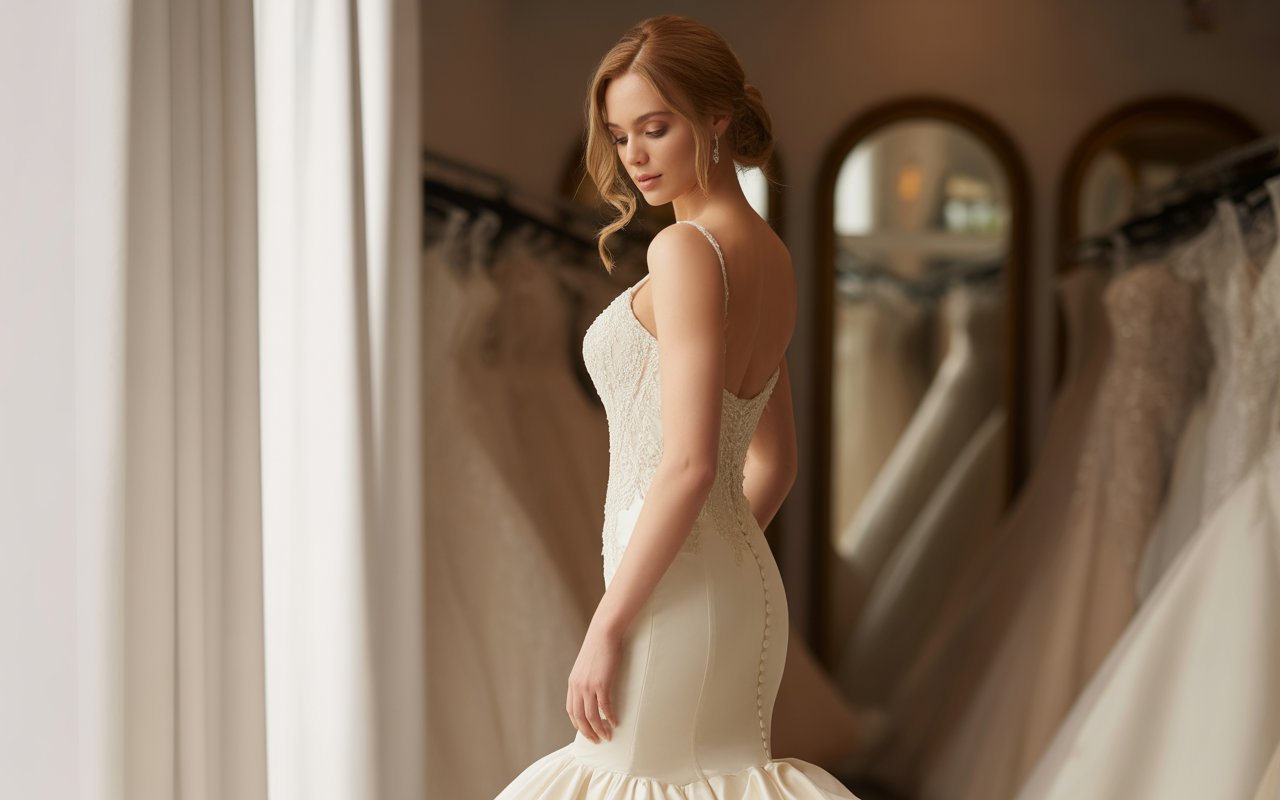
Having an hourglass shape is one of the more fortunate situations to be in when dress shopping. Your bust and hips are roughly the same width, and your waist pulls in noticeably between them. That natural symmetry means most silhouettes already work in your favor — you’re not trying to create the illusion of curves, you actually have them.
That said, not every gown will show them off equally well. Some styles will make your proportions look incredible. Others will flatten or hide exactly what makes your figure so striking. The difference usually comes down to where the dress fits, where it skims, and where it lets go.
The styles below are the ones bridal experts consistently point to as the most flattering for this shape. Whether you’re going for something sleek and minimal or full-on romantic and dramatic, there’s a cut here that will work for you.
- 1. Mermaid
- 2. Trumpet
- 3. Fit-and-Flare
- 4. Sheath
- 5. Corset-Bodice Gowns
- 6. A-Line With a Fitted Bodice
- 7. Ball Gown
- 8. Ruched or Draped Gowns
- 9. Off-the-Shoulder Silhouettes
- 10. V-Neck Gowns
- 11. Lace Overlay Gowns
- 12. Minimalist Crepe Gowns
- What You'll Look Like When You Find the Right One
- Frequently Asked Questions
1. Mermaid
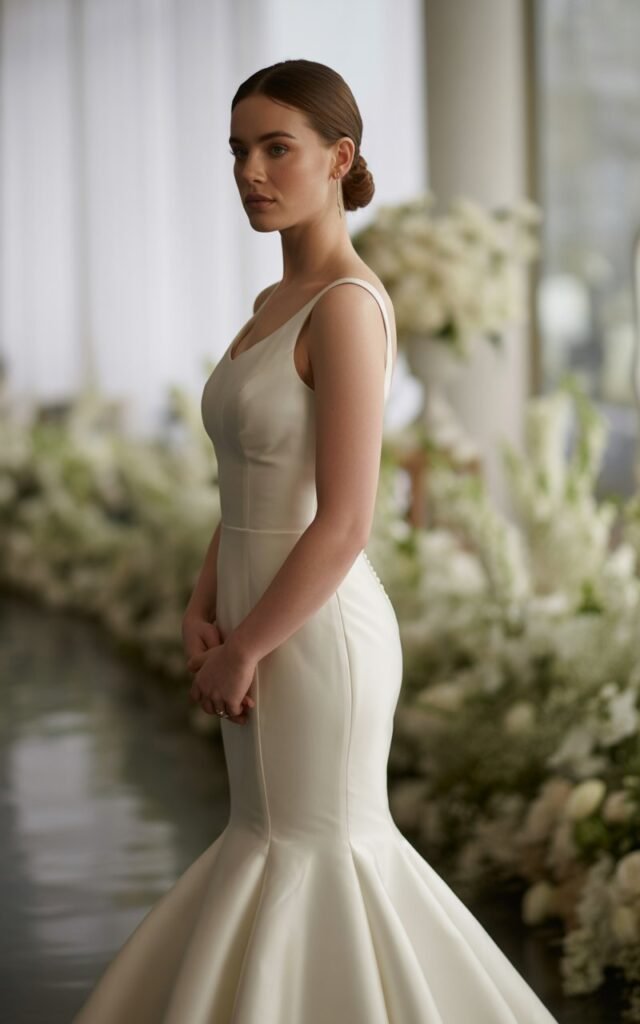
The mermaid silhouette is, hands down, the most talked-about style for curvy brides. It follows the body closely from the chest all the way down through the thighs, then fans out below the knee in a flare that creates real visual drama.
For an hourglass figure, this cut does exactly what it should — it traces your shape without adding bulk, and the flare at the bottom adds a theatrical finish that photographs beautifully. Look for versions with vertical seaming along the sides, as those lines draw the eye from top to bottom and make the whole figure look longer and leaner. Mikado, crepe, and matte satin are all solid fabric choices here; they hold their shape and move with the body rather than fighting it.
2. Trumpet
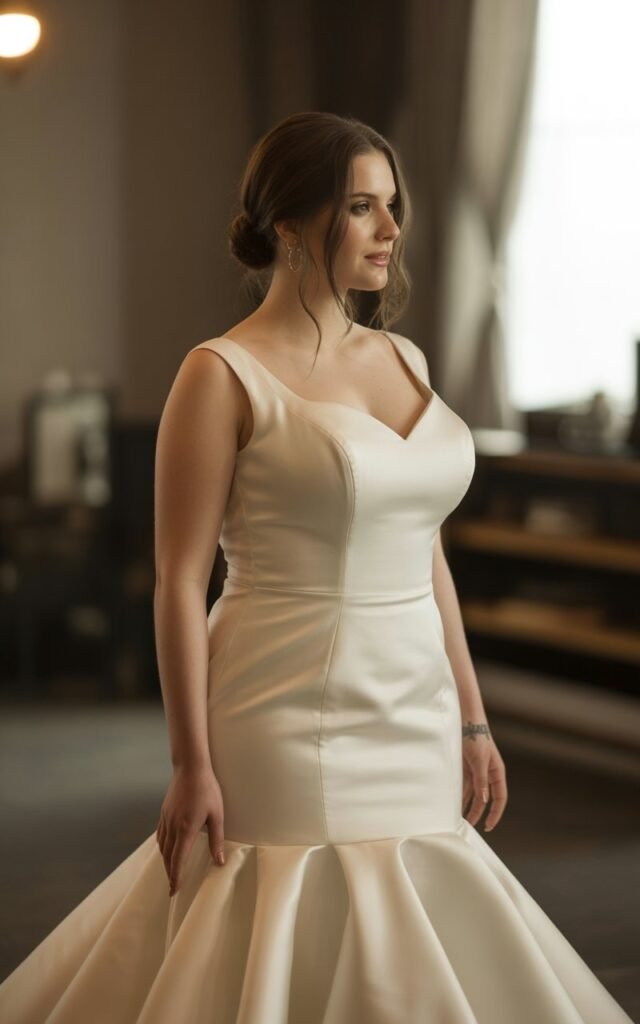
The trumpet gown is close relatives with the mermaid, but with one key difference: the skirt flares out higher up, typically around the mid-thigh rather than just below the knee. That means there’s more volume sooner, giving the silhouette a fuller, more romantic quality while still showing off the natural shape of the hips.
This works particularly well for brides who love the idea of a fitted gown but want a little more ease of movement during the reception. The flare gives you room to walk, dance, and actually enjoy the evening without feeling locked in. Trumpet gowns also tend to pair beautifully with sweetheart or V-necklines, both of which complement a well-proportioned bust.
3. Fit-and-Flare
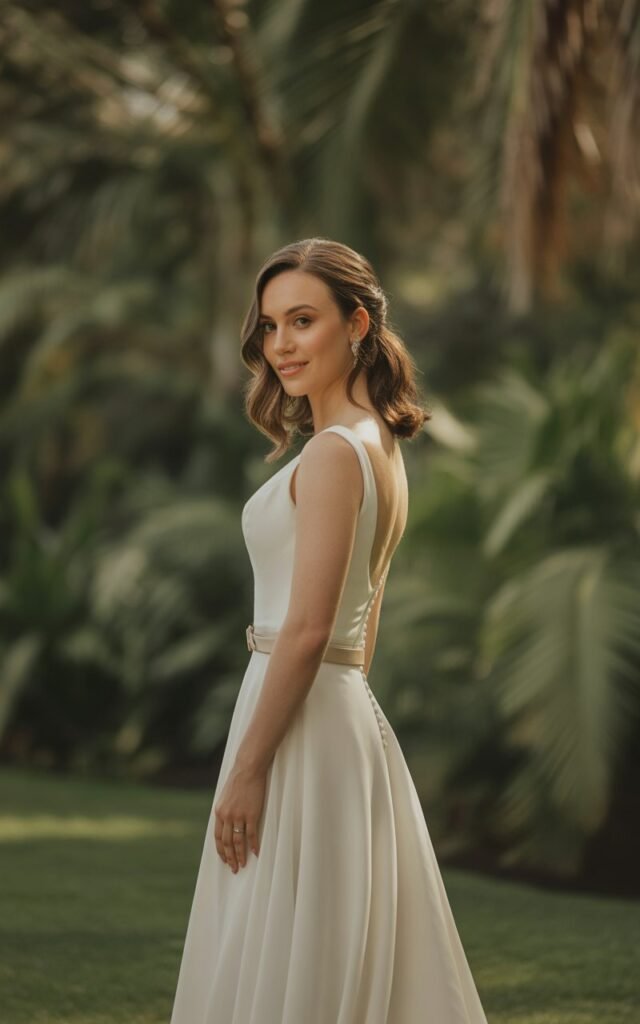
If the mermaid feels too form-fitting and the ball gown feels too voluminous, the fit-and-flare is often the sweet spot. It’s fitted through the bodice and hips, but the skirt begins to flare out from the waist rather than the knee — giving the gown a softer, more A-line quality while still highlighting the waist.
This is one of the most versatile cuts for hourglass brides because it works across a wide range of wedding styles, from garden ceremonies to black-tie affairs. It also suits a range of comfort levels: you’re not in a skintight gown, but you’re not swimming in fabric either. A cinched waist with a belt or sash detail adds definition and keeps attention focused on your smallest point.
4. Sheath
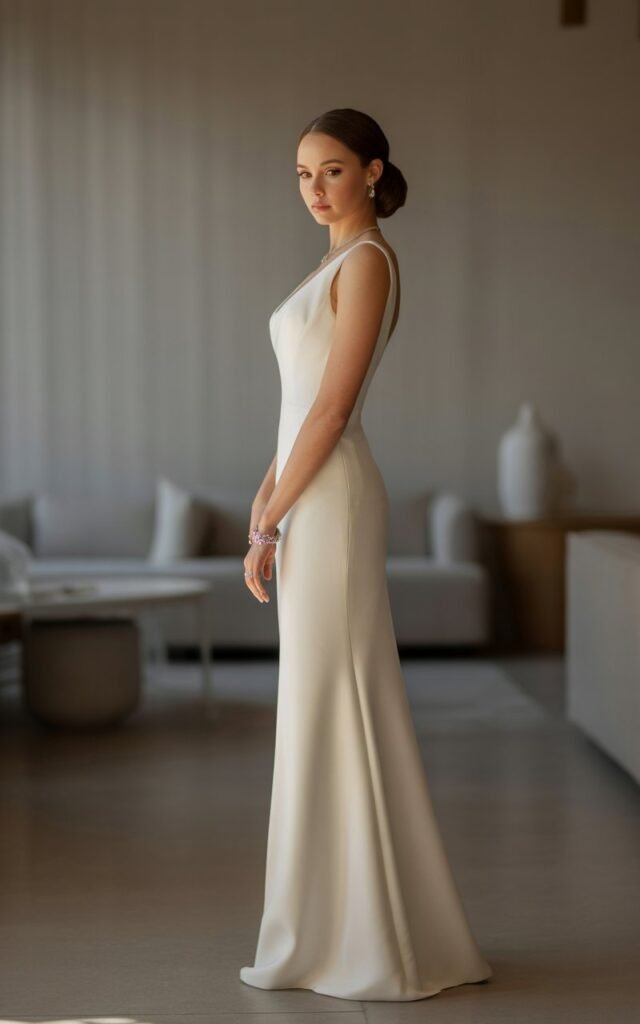
The sheath is one of the most minimal silhouettes in bridal fashion — no flare, no volume, just a clean line that skims the body from neckline to hem. For women who want something sleek, modern, and understated, this is a strong option.
It works best for hourglass figures when the fabric has a slight stretch or drape — think crepe, stretch satin, or jersey. These materials move with the body and allow the gown to follow natural curves without pulling or gaping. Avoid stiff, structured fabrics in a sheath, as they can create tension across the hips and give the gown a boxy look instead of a fluid one.
The sheath also tends to be a good choice for civil ceremonies, destination weddings, or any event where a full bridal gown might feel like too much. It’s clean, confident, and genuinely elegant.
5. Corset-Bodice Gowns
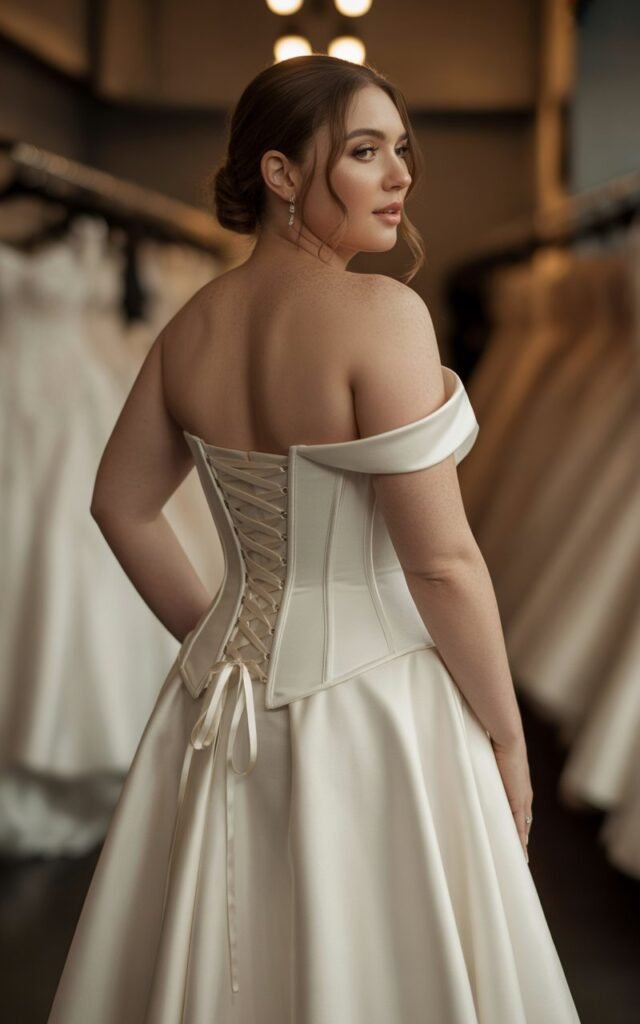
Whatever silhouette you choose, adding a corset bodice can make a significant difference. A corset is structured with boning and lacing at the back, giving the waist visible definition and the bust strong support. For an hourglass figure, this kind of structured bodice emphasizes the waist even more than a standard fitted bodice would.
Corset styles also offer a practical advantage: they’re adjustable. If your weight fluctuates between your first fitting and the wedding day, a laced corset back is easier to alter than a zipper closure. Many bridal boutiques now carry gowns with corset backs in almost every silhouette — mermaid, fit-and-flare, ball gown — so this isn’t a style in itself so much as a feature worth specifically requesting.
6. A-Line With a Fitted Bodice
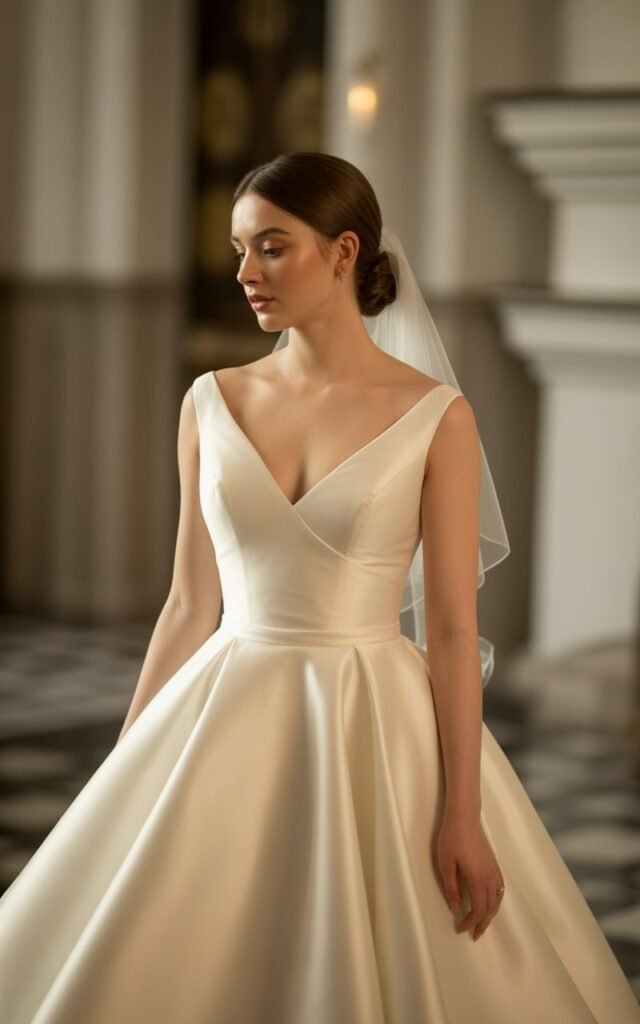
The A-line is sometimes written off as a basic choice, but the right version of it can be genuinely stunning on a curvy frame. The key is finding one with a truly fitted bodice — not one that hangs loosely from the chest, but one that nips in at the waist before the skirt flows out.
That fitted-to-flowing transition is what makes the A-line work for this body type. It shows the waist, hints at the hips, then lets the skirt do its own thing from there. It’s one of the more comfortable options for a long wedding day, and it reads as classic and timeless rather than trendy.
7. Ball Gown
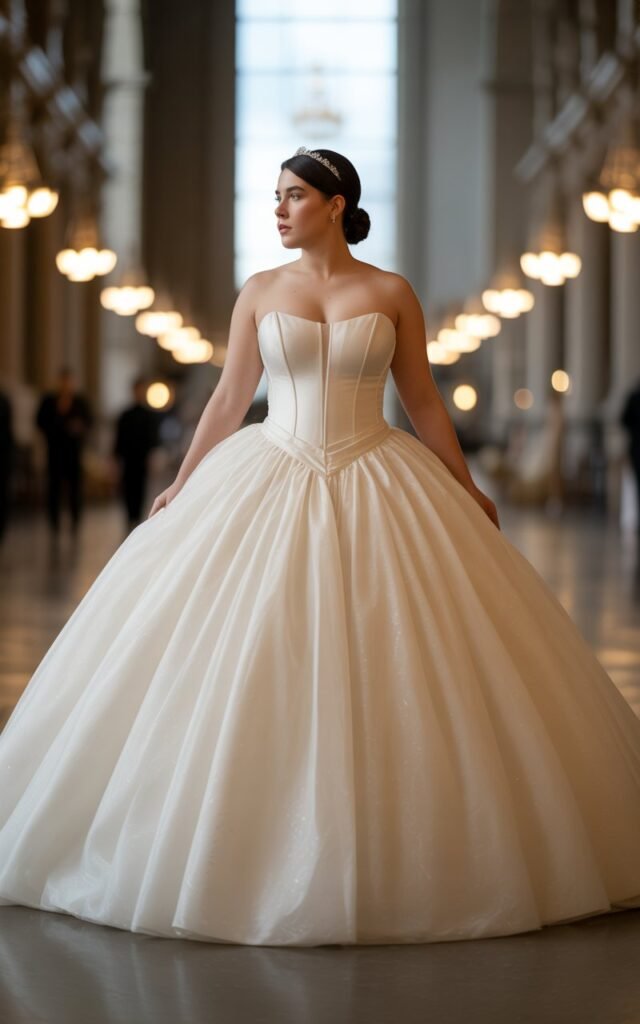
Yes, the ball gown can absolutely work for an hourglass figure — with one condition. The bodice needs to be fitted. A ball gown with a fitted, structured bodice and a full, voluminous skirt creates a dramatic waist-to-skirt contrast that plays up the proportions of this shape beautifully.
The trick is not to let the skirt overpower the top. Look for versions with waist seaming, a dropped waist, or a sash detail that keeps the eye focused on your middle before the skirt sweeps out. Princess-style ball gowns with vertical princess seams running through the bodice are especially flattering, as they create a long, clean vertical line through the torso.
8. Ruched or Draped Gowns
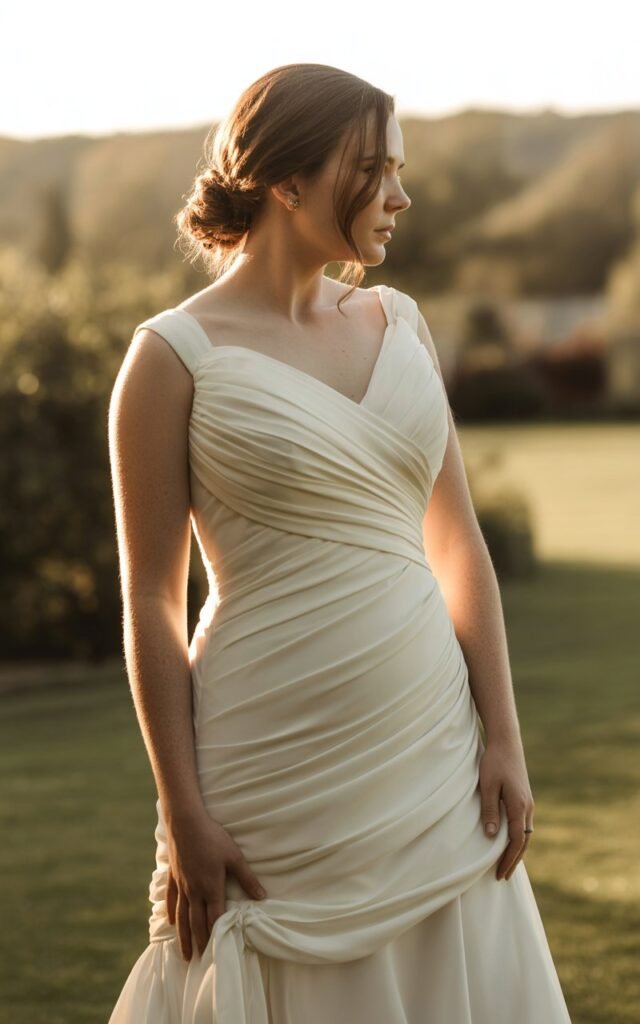
Ruching — that gathered, pleated fabric treatment you see across the bodice or hips of many bridal gowns — is one of the most flattering details for a curvy figure. It adds texture and visual interest while also disguising any areas you’re less confident about, and it flows naturally over curves without pulling tight.
Draped gowns, which feature fabric that falls in soft folds across the bodice or skirt, create a similar effect. Both styles photograph exceptionally well because they add dimension and movement that plain, flat fabric simply can’t. Chiffon and soft crepe are the most common fabrics for draped styles and tend to be some of the most comfortable options for warmer-weather weddings.
9. Off-the-Shoulder Silhouettes
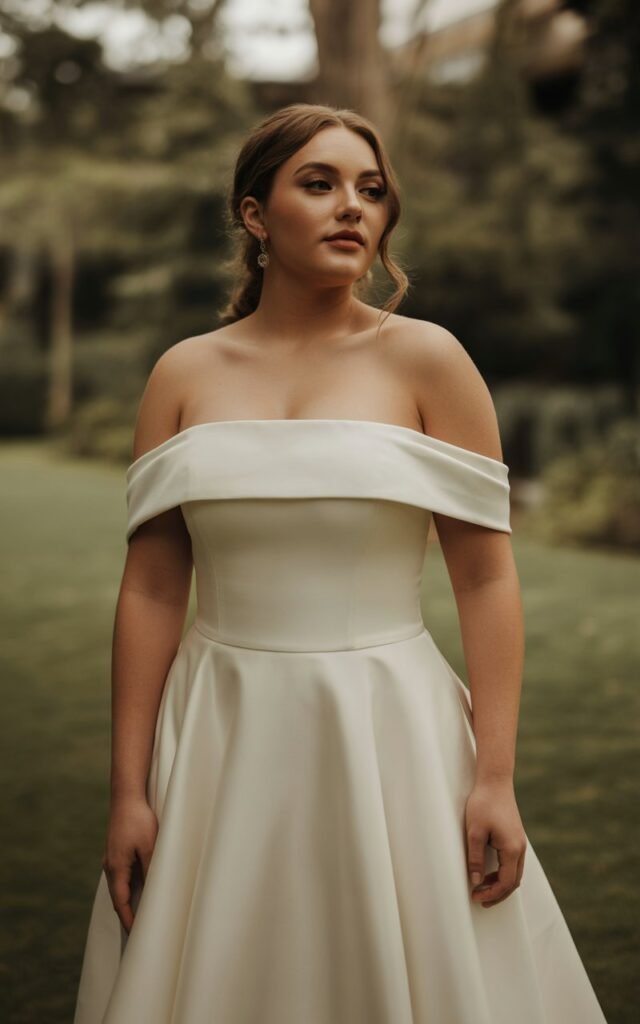
This is less about the skirt shape and more about what’s happening at the top — and for hourglass brides, the neckline matters just as much as the silhouette.
An off-the-shoulder style, whether it features a straight band of fabric or soft draped sleeves, draws attention to the collarbone and shoulders while keeping the chest area covered. It creates a horizontal line across the top of the bodice that balances out the width of the hips. The result is a look that feels romantic and feminine without leaning too heavily on the curves themselves.
This neckline pairs well with virtually any skirt style: mermaid, A-line, fit-and-flare — all of them. If you have beautiful collarbones and want something that feels a little more covered than a sweetheart or strapless neckline, off-the-shoulder is worth trying on.
10. V-Neck Gowns
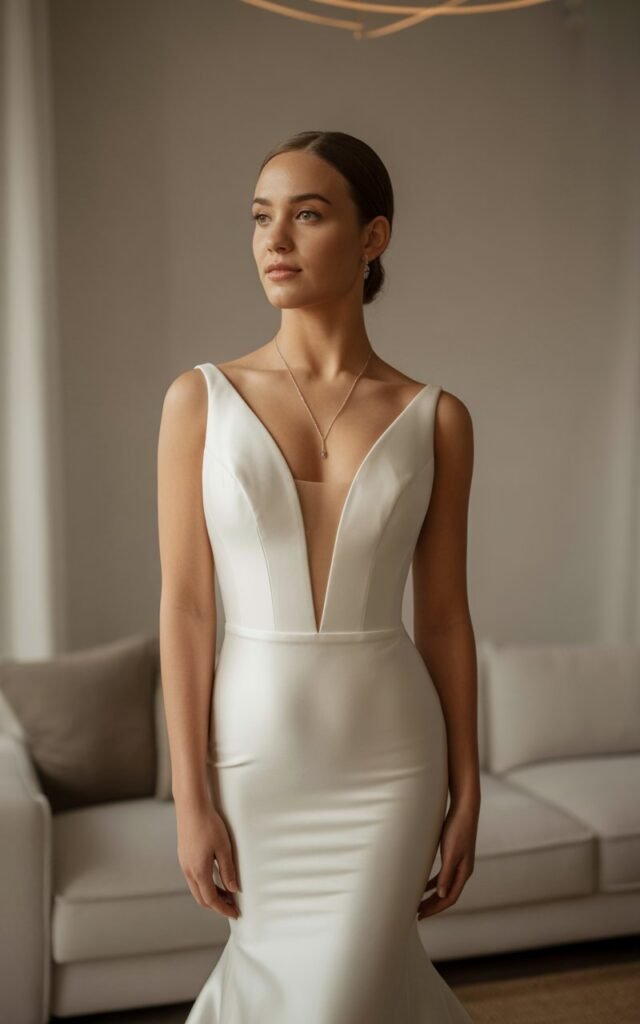
The V-neckline is one of the most universally flattering cuts in bridal fashion, and for women with a well-proportioned bust, it’s particularly effective. The downward point of the V draws the eye toward the center of the body, creates the visual impression of a longer neck and torso, and lets the natural shape of the chest speak for itself without needing embellishment.
A deep V can be bold and modern. A more modest V achieves a similar effect with a little more coverage. Either way, pair it with a fitted bodice and you have a combination that consistently reads as elegant, confident, and genuinely flattering on this body type.
11. Lace Overlay Gowns
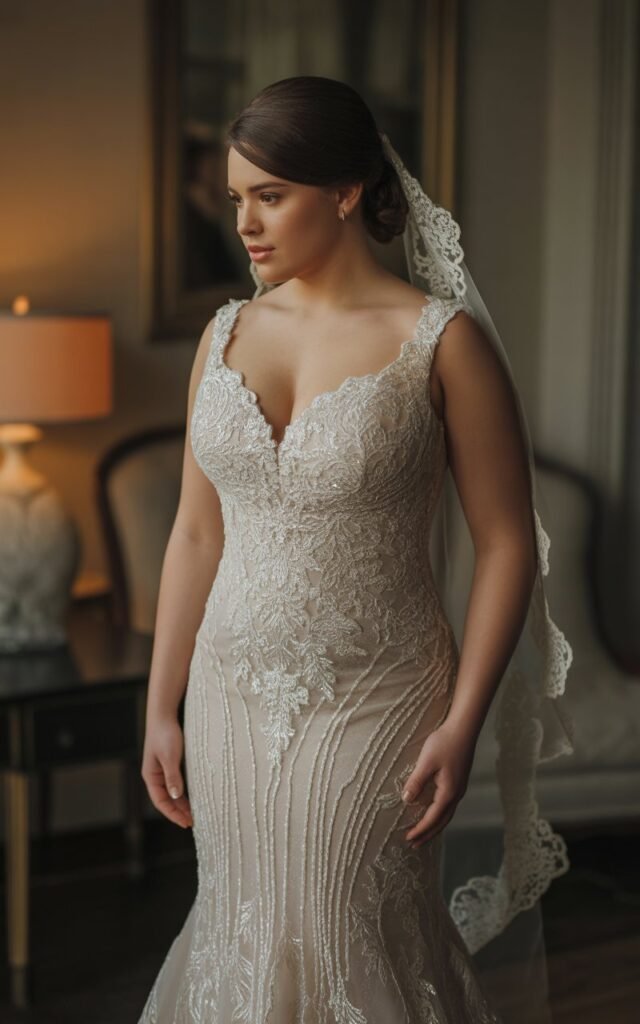
Lace is never going out of style in bridal fashion, and for curvy brides, the right lace can add extraordinary texture and detail without adding visual weight. The key is how the lace is applied.
Allover lace that runs from bodice to hem, particularly when it follows the seams of a fitted gown, creates beautiful vertical lines that elongate the figure. Lace appliqués scattered across a mermaid or fit-and-flare gown add dimension and a sense of movement. Corded lace with a slight shimmer, the kind often seen on high-end bridal gowns, photographs with particular richness. Avoid heavily beaded lace concentrated at the widest points of the body, as it can draw the eye in the wrong direction — keep the embellishment focused at the neckline and bodice instead.
12. Minimalist Crepe Gowns
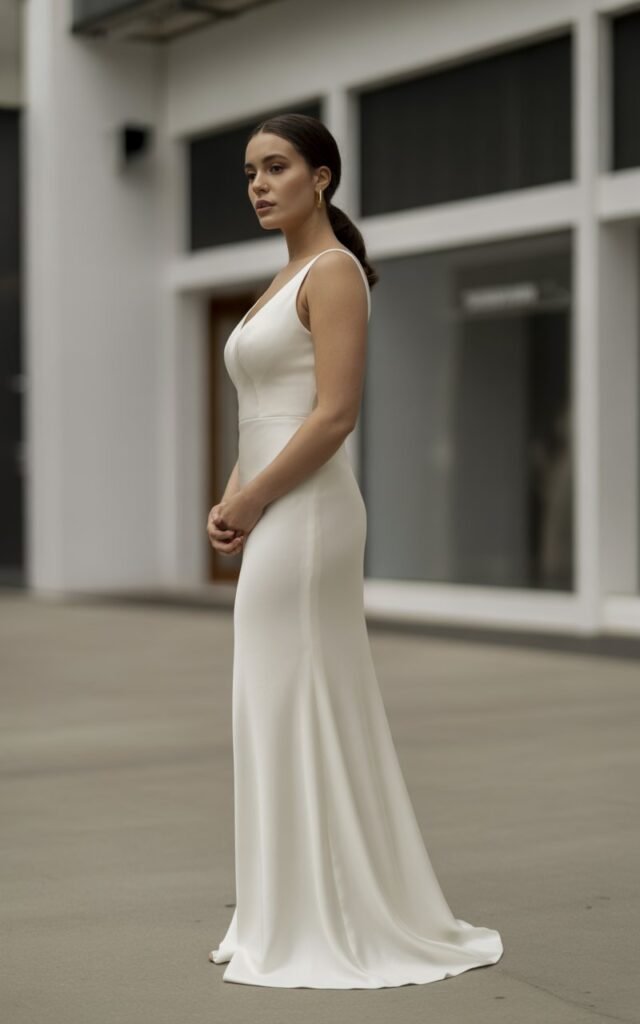
For brides who want nothing to do with lace, tulle, or ruffles, the clean lines of a crepe gown are worth serious consideration. Crepe is a smooth, matte fabric with a slight texture and a natural drape that follows body contours without clinging or pulling. On an hourglass figure, it creates a sleek, polished look that feels more editorial than traditional.
This style tends to be especially popular for modern, non-traditional ceremonies — rooftop weddings, gallery spaces, city hall vows followed by a dinner party. A well-cut crepe gown with a defined waist, a V or sweetheart neckline, and minimal ornamentation can be one of the most striking things a bride walks down the aisle in. The simplicity is the point.
What You’ll Look Like When You Find the Right One
There’s a specific moment that happens in nearly every bridal appointment — you try something on and something just clicks. The proportions are right. The waist looks exactly as small as it is. The fabric falls the way fabric is supposed to fall. That moment is what all of this dress shopping is working toward, and for a woman with an hourglass figure, it tends to come more readily than she expects.
The styles above all share one common thread: they work with your proportions rather than against them. Whether you go for a statement-making mermaid, a minimal crepe gown, or something with corset boning and cascading lace, the most important thing is that it fits correctly at the waist. Get the waist right, and the rest of the gown will fall into place.
Frequently Asked Questions
Q: What exactly counts as an hourglass figure?
A: An hourglass figure is one where the bust and hips are roughly equal in width, and the waist is noticeably narrower — typically by at least 25%. The actual measurements don’t matter as much as the ratio between them.
Q: Is the mermaid gown really the best choice for curvy brides?
A: It’s one of the most recommended, yes — but it’s not the only one. The mermaid works beautifully because it follows the natural curve of the body, but a fit-and-flare, trumpet, or even a well-cut A-line can be just as flattering depending on your preferences and comfort level.
Q: What fabrics work best for this body type?
A: Fabrics that drape or have a slight stretch tend to work best. Crepe, matte satin, jersey, and chiffon all move naturally with the body. Stiff fabrics like organza or heavily structured taffeta can pull across the hips and create a less flattering fit.
Q: Should I avoid ball gowns?
A: Not at all. A ball gown with a fitted, structured bodice can look stunning on an hourglass figure. The key is making sure the bodice cinches at the waist before the skirt flares out. A ball gown that hangs loosely from the chest is the style to avoid.
Q: Which neckline is most flattering?
A: Sweetheart, V-neck, and off-the-shoulder necklines are consistently recommended. They draw attention upward, complement the chest, and balance out the width of the hips. Strapless works well too, particularly with a mermaid or fit-and-flare skirt.
Q: What dress styles should an hourglass bride avoid?
A: Column and straight-cut sheath styles (in stiff fabrics) can obscure your waist and make your figure look boxy. Empire-waist gowns, where the seam sits just below the bust, typically eliminate the waist entirely and work against this body type.
Q: Does lace work for curvy brides?
A: Yes, when used the right way. Allover lace that runs along vertical seams flatters and elongates. Avoid heavy beading or embellishment concentrated at the hips, as it adds visual weight in areas you may not want to emphasize.
Q: Do I need a corset-back gown?
A: Not necessarily, but it’s worth trying. Corset backs add definition to the waist, offer strong bust support, and are easier to adjust than zipper closures. Many brides with curvy figures find them both more flattering and more comfortable for a long wedding day.
Q: How important are alterations for this body type?
A: Very. Off-the-rack gowns are rarely cut to accommodate the proportional differences between bust, waist, and hips in an hourglass figure. Budget for alterations from the start, and work with a seamstress experienced in bridal gowns. A perfectly altered dress always looks better than a perfect dress that doesn’t quite fit.