
If you’ve ever spent 45 minutes cooking a balanced dinner only to watch your child push every vegetable to the edge of the plate and ask for plain crackers instead, you’re in very familiar company. Anywhere from 8% to 50% of children are considered picky eaters, which means this is one of the most common parenting challenges there is — not a personal failing on your part.
The hard part isn’t just the stress at the table. Nearly half of the average daily calories consumed by young people have no nutritional value, according to the Centers for Disease Control and Prevention. That gap between what kids eat and what their growing bodies need is real, and it’s worth taking seriously. Kids are growing, learning, and developing at such a fast pace that having a balanced diet genuinely matters.
The good news is that there are tested, practical ways to close that gap without turning every meal into a power struggle. The following tricks are grounded in child nutrition research and pediatric feeding advice — things that actually move the needle over time.
- 1. Stop Expecting One Try to Be Enough
- 2. Offer New Foods at Snack Time, Not Dinner
- 3. Let Them Play With Food — Seriously
- 4. Divide the Responsibility at the Table
- 5. Eat the Food Yourself — Out Loud
- 6. Change the Shape, Texture, or Preparation — Not Just the Food
- 7. Involve Kids in the Kitchen
- 8. Keep the Table Pleasant — Not Educational
- 9. Keep a "Safe Food" on Every Plate
- 10. Limit Snacking Between Meals
- The Patience Part Is the Actual Work
- Frequently Asked Questions
1. Stop Expecting One Try to Be Enough
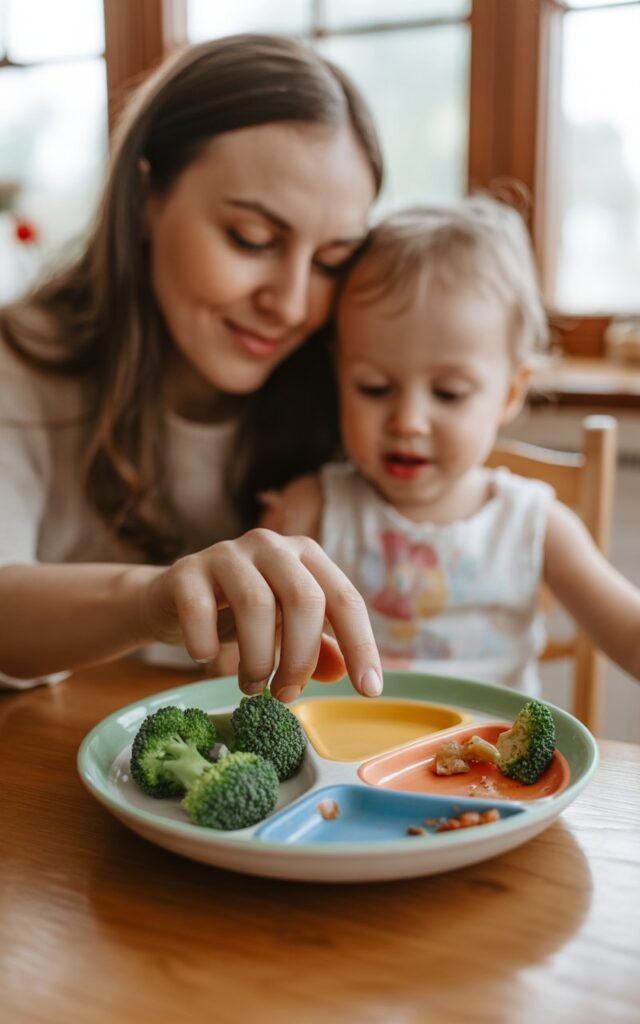
This is probably the most important thing to know, and most parents aren’t aware of it. Research shows children may need to see or try a new food 10 to 15 times before accepting it. Some research puts that number even higher — up to 18 exposures or more.
That’s not a sign that your child is being difficult. It’s just how their palate develops. The instinct to quit offering broccoli after it gets rejected twice is understandable, but it’s also exactly what stalls progress. Keep putting it on the plate, without pressure, and trust the process.
2. Offer New Foods at Snack Time, Not Dinner

Dinner is already high-stakes — everyone’s tired, hungry, and not exactly in problem-solving mode. That’s not the best moment to introduce something unfamiliar.
Snack time is low-pressure and low-stakes. One way to reduce the pressure of trying new foods at the dinner table is to offer them at snack time in a smaller portion. A few slices of cucumber on a plate with something your child already loves is far less threatening than a full serving next to the mashed potatoes they’re already eyeing suspiciously.
The smaller context also means a bad reaction won’t ruin the whole meal.
3. Let Them Play With Food — Seriously

Playing with food gets a bad reputation at the table, but contact with food is actually a form of learning. An exposure includes tasting a food, but also playing with it. Opportunities to touch, smell, squish, see, and feel a new food are valuable exposures that, over time, increase the likelihood that a child will accept it.
Let her poke the mango. Let him smell the spinach and make a face. These interactions count. They’re building familiarity with textures, smells, and appearances — all the things that make a food feel “safe” to a child’s brain.
Strong evidence supports occupation-based interventions involving taste exposure, including making foods into small pieces, offering unfamiliar food at snack times, and using praise. Even touching a food without eating it moves kids in the right direction.
4. Divide the Responsibility at the Table

One of the most widely respected frameworks in pediatric feeding comes from dietitian and family therapist Ellyn Satter, whose Division of Responsibility model has been applied in clinical settings for decades. The parent’s job is to decide what, when, and where food is offered. The child’s job is to decide whether or not to eat, and how much.
This sounds simple, but the shift it creates is significant. When a mom stops pressuring her child to finish the green beans and instead just keeps serving them consistently, the tension around food drops — and ironically, pressuring children to eat can cause them to dislike those foods even more.
You set the table. They decide what goes into their mouth. That’s the deal.
5. Eat the Food Yourself — Out Loud

Kids watch everything you do, especially at the table. Food is more readily accepted in young children when others around them are eating the same type of food. This kind of modeling positively highlights the enjoyment of those foods.
This doesn’t mean performing enthusiasm like you’re in a commercial. It means eating the salad alongside them, talking about what it tastes like, and not making a big deal out of it. If you quietly skip the vegetables yourself every night, that registers too.
Role modeling by eating vegetables, fruits, and novel foods is one of eight evidence-based strategies pediatric experts recommend for families dealing with picky eating.
6. Change the Shape, Texture, or Preparation — Not Just the Food
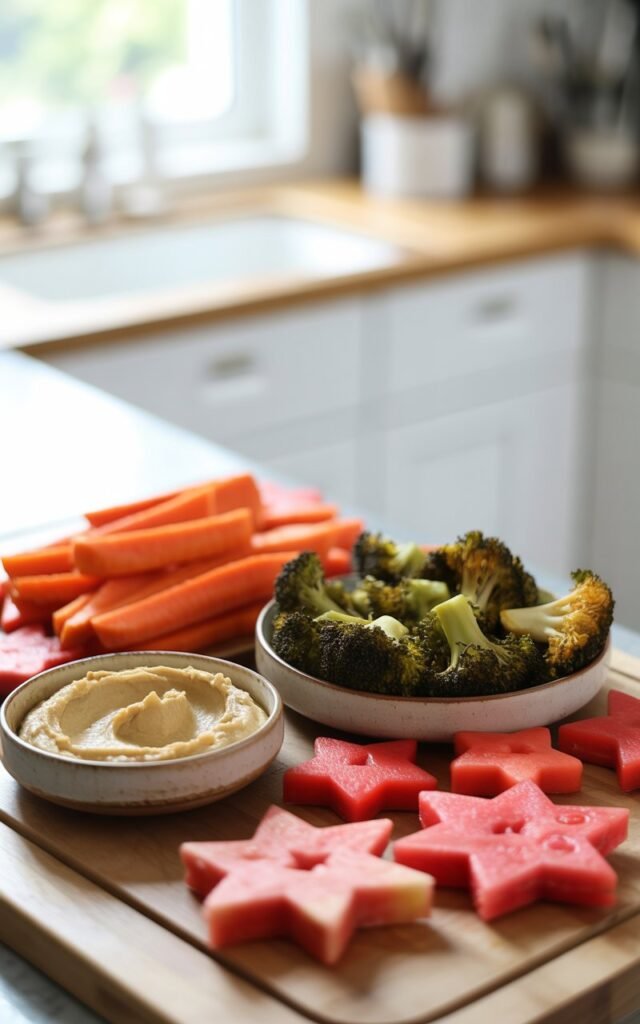
A child who refuses roasted carrots might eat them raw with hummus. A kid who won’t touch steamed broccoli might actually enjoy it when it’s roasted until slightly crispy. These aren’t different foods nutritionally — but to a child’s senses, they might as well be.
There is moderate evidence supporting flavor changes and changing the form of vegetables as effective interventions for picky eating. So before giving up on a food entirely, try it a different way. Cookie cutters that turn watermelon into stars, blending spinach into a smoothie, or serving sweet potato as fries instead of cubed — the nutritional payoff is the same, but the sensory experience is completely different.
7. Involve Kids in the Kitchen

There’s something about having a hand in making food that changes a child’s relationship with it. Children learn about food and get excited about tasting it when they help make meals. Let them add ingredients, scrub veggies, or help stir.
Even a three-year-old can wash strawberries or tear lettuce leaves. Older kids can measure, pour, and mix. Encourage your child to use three of their five senses — smell, touch, and taste — as you prepare food together. That kitchen time counts as food exposure, and it builds buy-in. Kids are genuinely more willing to taste something they made.
Take them grocery shopping too. Letting a child pick between two types of apples or choose which bell pepper color to bring home gives them a small, real stake in what ends up on the plate.
8. Keep the Table Pleasant — Not Educational

Mealtime lectures about vitamins or “why carrots are good for your eyes” can backfire. They signal that eating this food is a chore with a lesson attached. Maintaining a positive, non-pressuring mealtime atmosphere is one of the core evidence-based strategies for families with picky eaters.
Enjoy each other while eating family meals together. Talk about what family members did during the day, what made you laugh, or what you did for fun. Turn off the TV and keep phones away from the table.
When mealtimes feel relaxed and social rather than evaluative, kids eat better. The pressure lifts, and the food becomes less of a battlefield.
9. Keep a “Safe Food” on Every Plate
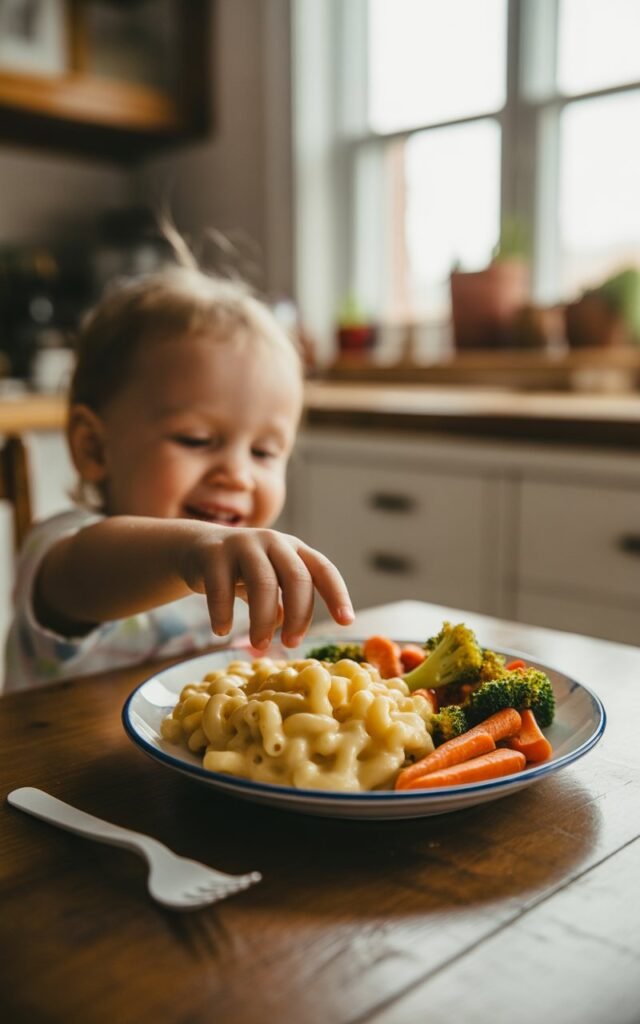
This one is practical and often overlooked. Serve a food you know your child will usually eat alongside whatever else you’re serving. That way, if your child isn’t eating dinner, you at least know they had some good choices available.
This approach removes the panic. When you know there’s something familiar on the plate, you can stay calm about the rest. And staying calm matters — children pick up on mealtime anxiety, and it makes them warier of the unfamiliar foods you’re hoping they’ll try.
The goal isn’t to cater exclusively to what they want. It’s to make sure the table feels safe enough for them to even consider something new.
10. Limit Snacking Between Meals

This one seems counterintuitive but makes a real difference. Limiting snacks and high-calorie beverages between meals is one of the consistently recommended strategies for helping children approach mealtimes with more openness.
A child who grazes on crackers and juice all afternoon isn’t hungry at dinner — which means there’s no internal motivation to try the unfamiliar food on the plate. A child who comes to the table genuinely hungry is far more likely to experiment.
This doesn’t mean withholding food. Structured snack times with a defined end point — rather than all-day grazing — set kids up to actually be ready to eat when a meal is served.
The Patience Part Is the Actual Work
Feeding a picky eater is less about finding the magic trick and more about showing up consistently without turning every meal into a negotiation. The research keeps pointing to the same thing: repeated, low-pressure exposure over time is what actually changes a child’s food acceptance. Not force, not rewards, not hiding every vegetable in a brownie.
That said, a few smart moves at the table — keeping things calm, involving kids in food prep, accepting that some nights they’ll eat the noodles and skip everything else — can make this phase a lot easier to get through. Most children outgrow the pickiest period as they get older. Your job is to keep the options varied, the pressure low, and the table a place they actually want to be.
Frequently Asked Questions
Q: How many times do I need to offer a new food before my child tries it?
A: Research suggests children may need to be exposed to a new food anywhere from 10 to 18 times before accepting it. An exposure doesn’t have to mean tasting — smelling, touching, or even just seeing it on the plate counts.
Q: Is it okay to hide vegetables in my child’s food?
A: Blending spinach into a smoothie or adding pureed zucchini to sauce can help with overall nutrition in the short term. However, it doesn’t teach a child to actually like or accept those foods on their own. Most pediatric feeding experts recommend pairing hidden veggies with direct, low-pressure exposure to the whole food as well.
Q: Should I make my child finish everything on their plate?
A: No. Forcing a child to finish food can backfire and actually increase dislike for those foods. A widely supported approach is for parents to control what is offered and when, while children get to decide whether and how much they eat.
Q: My child only eats about five foods. Is that normal?
A: Very selective eating with a very short list of accepted foods can be a sign of something beyond typical picky eating, especially if it’s accompanied by strong reactions to textures, gagging, or significant stress around food. It’s worth talking to your pediatrician if you’re concerned.
Q: Does family dinner actually make a difference?
A: Yes. Children who eat meals at a shared table, where other people are eating the same foods, are more likely to try new things over time. Seeing adults and siblings eat a variety of foods is one of the most consistent predictors of expanded food acceptance in kids.
Q: Can smoothies help with nutrition during the picky eating phase?
A: They can be a helpful bridge. Blending fruits with Greek yogurt or adding spinach to a fruit smoothie is a practical way to get nutrients in without a power struggle. They work best as a supplement, not a replacement for offering whole foods regularly.
Q: Will my child ever outgrow picky eating?
A: Most children do. Picky eating peaks in the toddler and preschool years and tends to ease as kids get older and have more food experiences. Consistent, pressure-free exposure is the most reliable way to support that process.
Q: Is it okay if my child skips a food group at a meal?
A: Yes, within reason. Children’s appetites and preferences shift from meal to meal. Most kids balance out their intake over the course of a week, even if individual meals look lopsided. What matters more is the overall pattern and the variety you continue to offer.
Q: When should I talk to a doctor about picky eating?
A: Reach out to your pediatrician if your child is losing weight, refusing nearly all foods, showing signs of nutritional deficiency, gagging or vomiting frequently at meals, or if mealtimes are causing serious stress for your family on a regular basis.