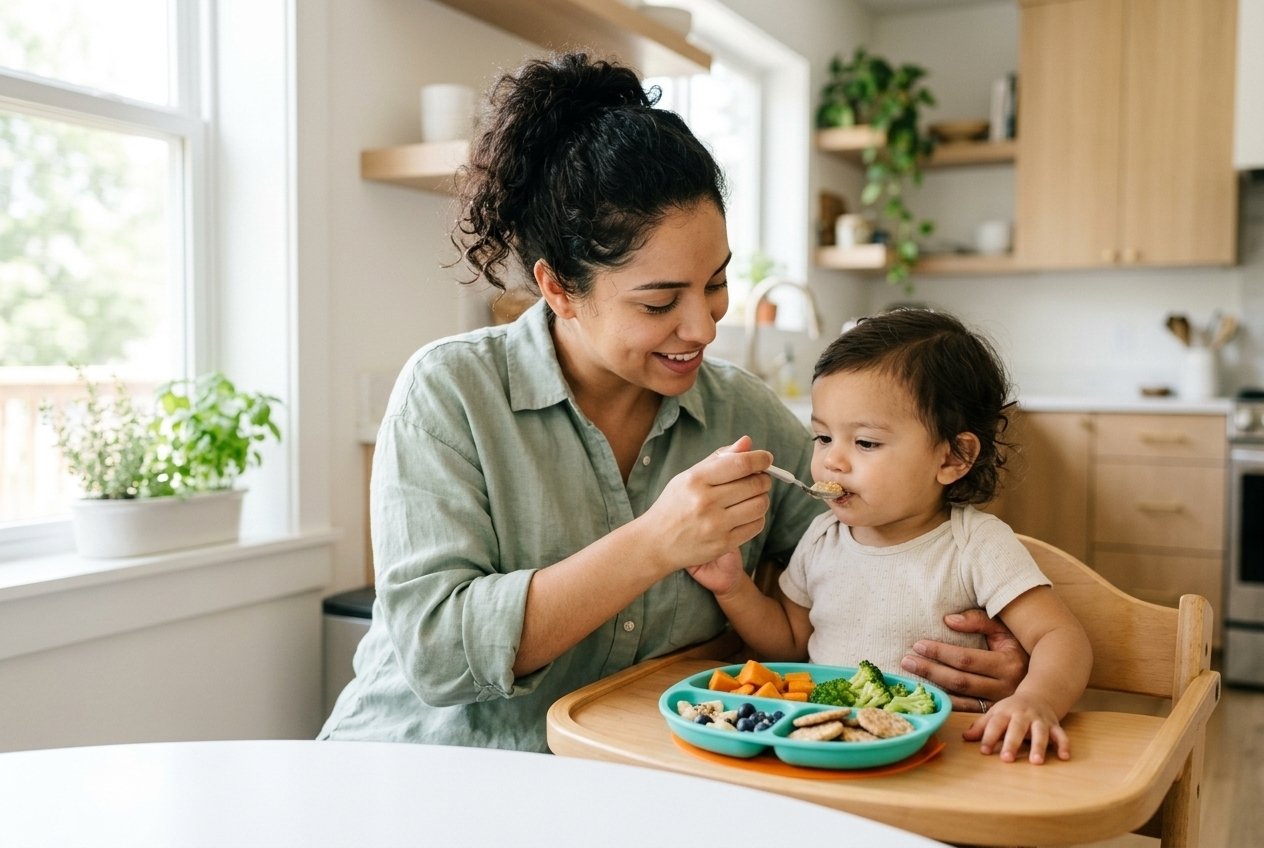
If you’ve ever spent twenty minutes preparing a balanced plate only to watch your toddler push it off the table, you already know that feeding a young child is less about cooking and more about psychology. The toddler years — roughly ages one through three — are a perfect storm of developmental changes that make eating feel like a daily negotiation. Growth slows down compared to infancy, appetites shrink, and little ones suddenly have opinions about everything, including which foods are allowed to touch on the plate.
What makes this stage harder is that many of the strategies parents reach for — bribing, pressuring, or making a separate “kids’ meal” — tend to backfire over time. The good news is that researchers and pediatric dietitians have learned a great deal about what actually works when it comes to getting toddlers to eat well. Most of it comes down to a few core principles that are easy to apply once you understand the reasoning behind them.
What follows are nine nutrition strategies that have solid backing from pediatric health research, explained in plain terms so you can put them to work at your next meal.
- 1. Understand the "Division of Responsibility"
- 2. Keep the Feeding Schedule Consistent
- 3. Respect the Neophobic Phase
- 4. Use "Food Bridges" to Expand What They'll Eat
- 5. Prioritize Iron, Zinc, and Vitamin D — Not Just Calories
- 6. Don't Short-Circuit Hunger with Too Much Milk or Juice
- 7. Get Your Toddler Involved in the Kitchen
- 8. Eat Together and Model What You Want to See
- 9. Turn Off Screens During Meals
- What Every Mealtime Really Comes Down To
- Frequently Asked Questions
1. Understand the “Division of Responsibility”

The single most useful concept in toddler feeding comes from feeding therapist and dietitian Ellyn Satter, who developed what she calls the Division of Responsibility. The idea is straightforward: you decide what food is on the table, when meals happen, and where the family eats. Your child decides whether to eat and how much.
That split might sound obvious, but most mealtime battles happen because parents cross into their child’s territory — pressuring them to take one more bite, bribing with dessert, or negotiating over how many bites of broccoli count as “enough.” Satter’s research shows that when parents consistently handle their side of the deal and trust children to handle theirs, kids are more likely to develop healthy eating patterns and a positive relationship with food over time.
Practically speaking, this means you put a balanced meal on the table, include at least one thing your child tends to like, and then step back. They eat what they eat. No pressure, no commentary on the amount.
2. Keep the Feeding Schedule Consistent

Toddlers do better with food when they know when to expect it. The CDC recommends that children between six months and three years eat every two to three hours — roughly three meals and two to three snacks per day. Beyond that, grazing all day is one of the most common things that derails toddler eating because it keeps appetite low at mealtimes.
When a child arrives at the table actually hungry, they are far more likely to try whatever is served. University Hospitals pediatric nutrition expert Dyan Reinier advises keeping meals and snacks at least two hours apart but no more than four, and suggests limiting snacks to around 100 calories to preserve mealtime appetite.
A predictable routine also gives toddlers a sense of structure, which at this age goes a long way. They don’t need to guess when food is coming — and that security alone can reduce some of the anxiety that feeds picky behavior.
3. Respect the Neophobic Phase

Between ages two and five, many children go through what researchers call the “neophobic” stage — a deep resistance to unfamiliar foods. This is developmentally normal and has nothing to do with how well you’re doing as a parent. Some experts believe it’s an evolutionary protective reflex that kicks in when toddlers become mobile and could theoretically pick up and eat something harmful.
The worst response to this phase is to stop offering new or rejected foods. Research consistently shows that it can take between 10 and 20 exposures to a new food before a child decides they like it. That means putting broccoli on the plate at dinner for weeks on end, even if it goes untouched, is actually working — the repeated exposure builds familiarity, and familiarity builds acceptance.
The key is to keep the approach low-pressure. The goal is exposure, not consumption. A child who touches, smells, or even just looks at a new food is making progress.
4. Use “Food Bridges” to Expand What They’ll Eat
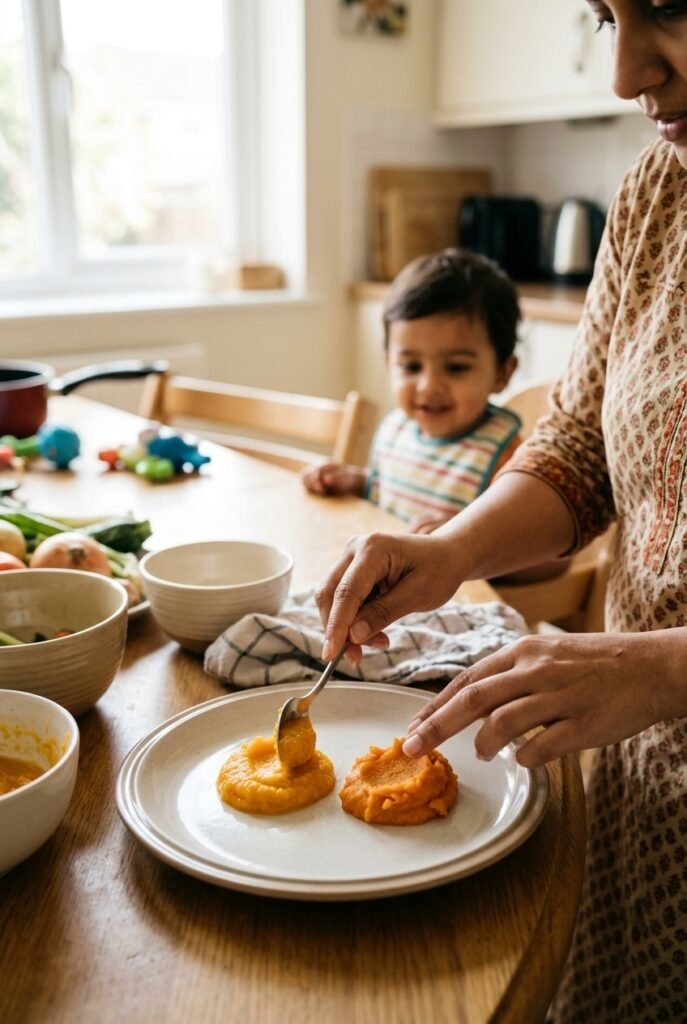
Once your child accepts a food, you can use it as a bridge to introduce something similar. The American Academy of Pediatrics calls this strategy “food bridging,” and it works by connecting a familiar, accepted flavor or texture to something new.
The logic is simple. If your daughter loves sweet potatoes, try mashed butternut squash next. If she’s on board with that, try mashed carrots. Each step stays close enough to the original that acceptance is more likely.
You can also bridge flavors by pairing a disliked food with one that’s already a favorite. Bitter vegetables like broccoli are much more acceptable to toddlers when served with something salty, like a sprinkle of grated cheese. The familiar flavor provides comfort while the new one gets a fair chance.
5. Prioritize Iron, Zinc, and Vitamin D — Not Just Calories
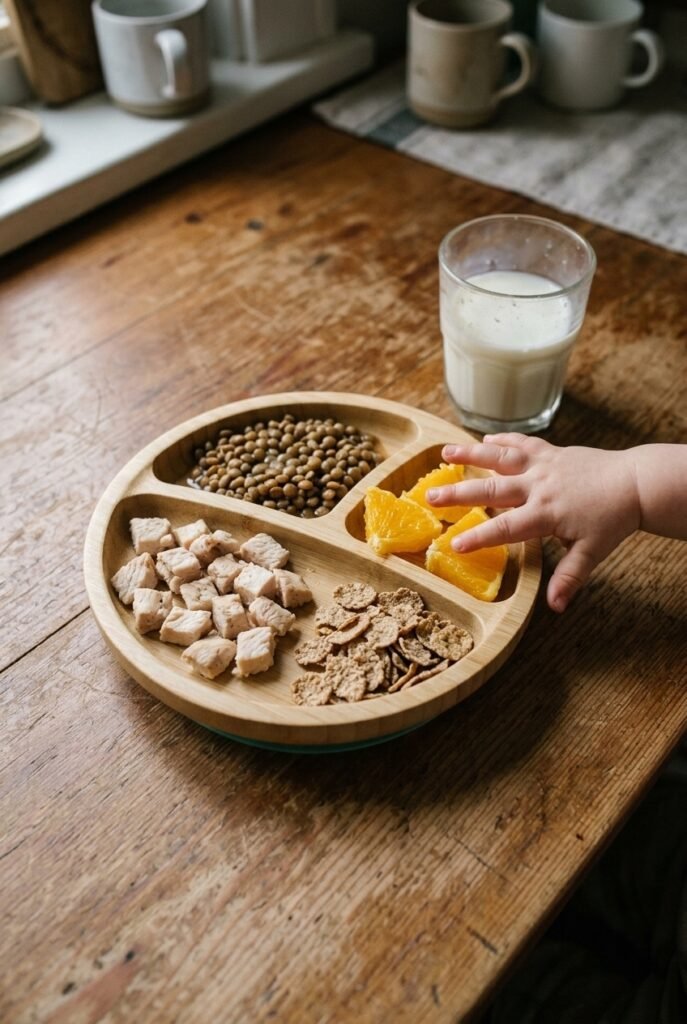
When toddlers eat less than you’d like, the instinct is often to worry about overall calories. But pediatric nutritionists say the bigger concern is whether children are getting enough of three specific micronutrients: iron, zinc, and vitamin D.
According to the CDC, toddlers need 7 milligrams of iron per day, 700 milligrams of calcium, and 600 IU of vitamin D. Iron is especially critical — it supports brain development, immune function, and the ability to pay attention and learn. Children’s Hospital of Orange County notes that iron deficiency remains one of the most common micronutrient issues in young children, even in households where calorie intake is adequate.
To cover these bases without turning meals into a supplement checklist:
- Iron: Lean meats, beans, lentils, and iron-fortified cereals. Pair with a vitamin C source (orange slices, bell pepper strips) to improve absorption.
- Zinc: Meat, poultry, beans, nuts, and seeds.
- Vitamin D: Fatty fish, eggs, and fortified dairy or plant-based milks.
One note on milk: it’s a good source of calcium and vitamin D, but drinking more than two cups a day can fill up a toddler’s small stomach, crowding out iron-rich foods and actually contributing to low iron levels.
6. Don’t Short-Circuit Hunger with Too Much Milk or Juice
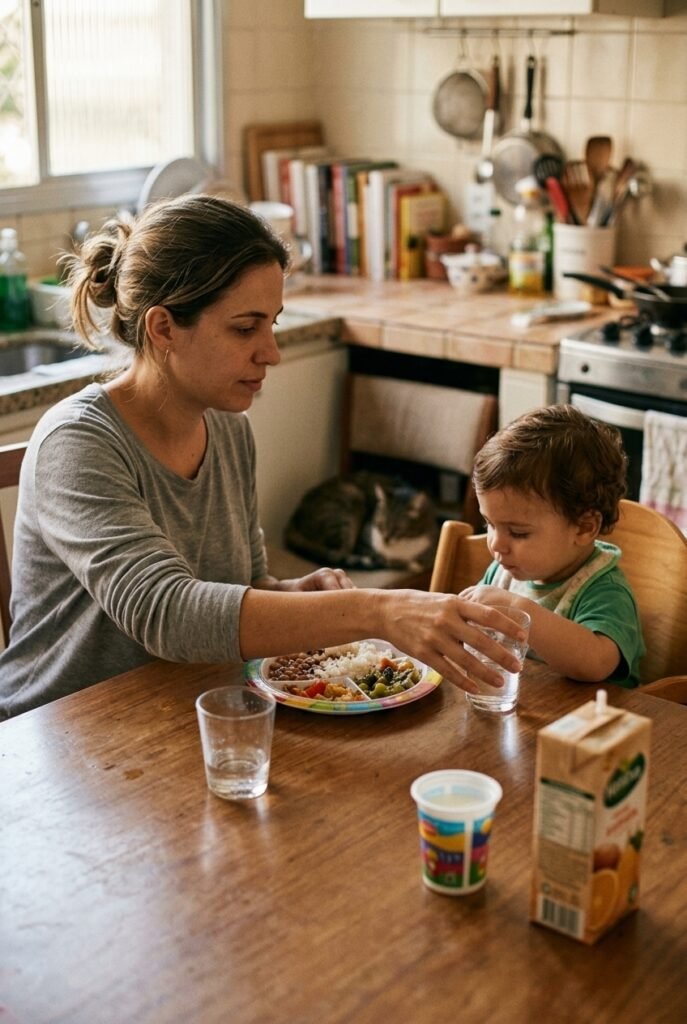
This one surprises a lot of moms. Milk feels nutritious, and it is — but it’s also filling in a way that works against mealtime eating. The same goes for juice. A toddler who has had 12 ounces of juice or milk in the hour before dinner may genuinely not be hungry when they sit down at the table.
The American Academy of Pediatrics recommends limiting juice to no more than four ounces per day for children aged one to three, and some pediatricians suggest cutting it entirely in favor of water. Water is the ideal drink between meals because it doesn’t dull appetite or displace food.
Serving milk with meals (rather than between them) is a reasonable approach that lets toddlers stay hydrated and get their dairy nutrients without the meal-time appetite interference.
7. Get Your Toddler Involved in the Kitchen

A toddler who helped make dinner is a toddler who is far more likely to try it. The American Academy of Pediatrics specifically recommends age-appropriate cooking tasks for young children — stirring, sifting, counting ingredients, washing vegetables, or even just handing you things from a low drawer. The act of handling a food before it becomes a meal creates familiarity that translates to willingness at the table.
Beyond the practical food benefits, kitchen involvement builds confidence and gives toddlers the sense of control they’re naturally craving at this age. Letting your child pick between two vegetables at the store — “Do you want peas or green beans tonight?” — gives them ownership over what ends up on their plate without letting them opt out of vegetables entirely.
Even a three-year-old can rinse berries, tear lettuce, or press cookie cutters into a sandwich. It doesn’t need to be elaborate.
8. Eat Together and Model What You Want to See
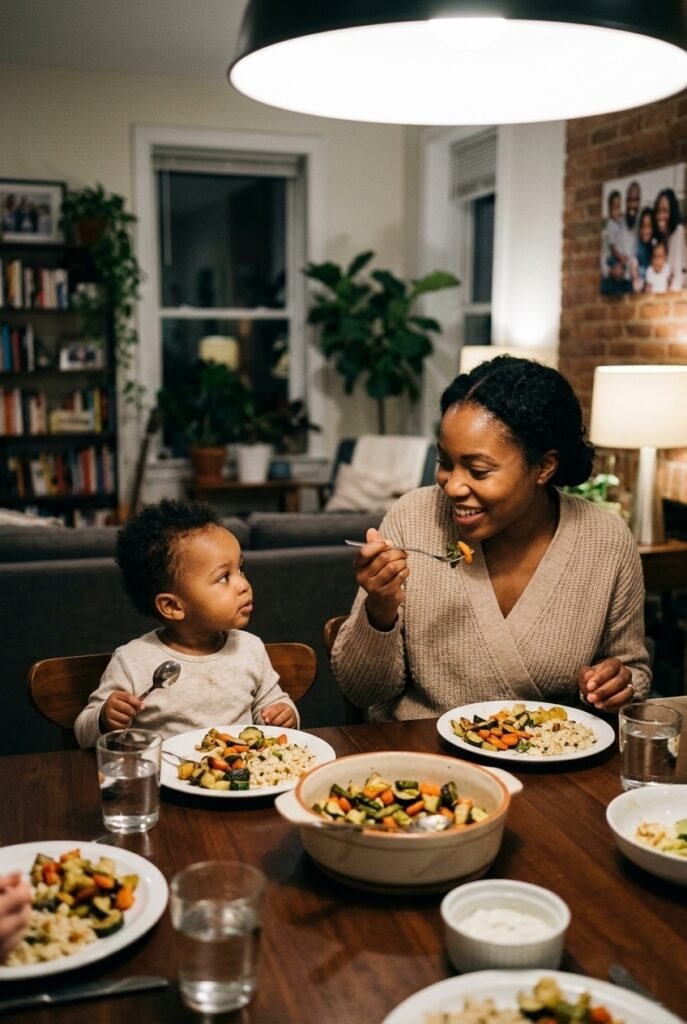
Toddlers are wired to copy the people they trust. If you eat a wide variety of foods at the table, they are watching. Research on the Division of Responsibility model supports what parents already suspect: children in families that eat together regularly tend to eat more fruits and vegetables over time.
This doesn’t mean performing enthusiasm for kale. It just means eating your own vegetables without fanfare, putting new foods on your plate as well as theirs, and making the table a calm and pleasant place. The absence of pressure is actually a form of modeling — it shows that food is something comfortable, not something to be anxious about.
One specific tip from the AAP: serve one meal for the whole family and resist the temptation to make a separate “kids’ plate” of preferred foods. This only reinforces picky patterns and makes the eventual shift to a broader diet harder. Include something familiar at every meal — but don’t build the whole meal around what your child will definitely eat.
9. Turn Off Screens During Meals
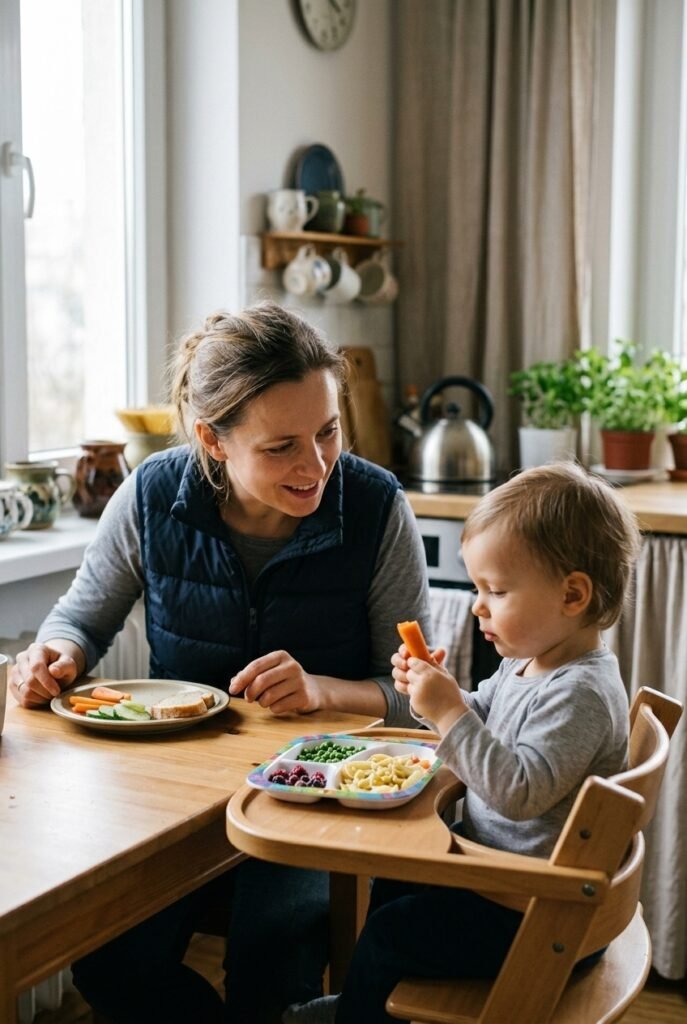
The CDC and the American Academy of Pediatrics are both clear on this: screens at mealtime work against healthy eating. When a toddler is focused on a show or tablet, they are not paying attention to the food in front of them or to their internal hunger and fullness cues. Over time, this disconnects them from the natural appetite signals that should govern how much they eat.
Beyond portion control, mealtime is when children learn a lot — how to use utensils, how to communicate preferences, what food looks and smells like up close. Screen-free meals keep kids engaged with the actual experience of eating, which pays off in their relationship with food long-term.
This doesn’t mean every meal needs to be a conversation about nutrition. It just means the table is a screen-free zone where the food gets the attention.
What Every Mealtime Really Comes Down To
Feeding a toddler well is rarely about finding the perfect recipe or the most nutritious food on the shelf. It’s mostly about consistency, patience, and getting out of the way enough to let your child develop their own relationship with food. The families that tend to struggle most are often the ones trying hardest — making special plates, tracking every bite, and reacting to every refusal. The science consistently points in the opposite direction.
Most children will broaden their palates as they grow, especially when they’ve been given low-pressure exposure to a wide variety of foods from the start. Your job at the table is to show up with good options, a calm presence, and the confidence to trust the process. That’s more than enough.
Frequently Asked Questions
Q: My toddler only wants to eat the same three foods every day. Is this normal? A: Yes, it’s completely normal for toddlers to go through phases of extreme food preferences and refuse nearly everything else. This is part of the neophobic stage that peaks between ages two and five. Continue offering a variety at meals without pressure, and most children cycle out of it over time.
Q: How many times should I offer a new food before giving up? A: Research suggests it can take between 10 and 20 exposures before a child accepts a new food — and simply having it on the plate counts as an exposure even if they don’t eat it. Consistent, low-key offering is the strategy, not giving up after a few rejections.
Q: Should I hide vegetables in my toddler’s food? A: It can help increase vegetable intake in the short term, but it comes with a trade-off. If your child discovers a texture change in a food they considered safe, they may stop trusting it. Using it alongside (not instead of) direct exposure tends to work better.
Q: How much milk is too much for a toddler? A: Most guidelines recommend no more than two cups (about 16 ounces) of whole milk per day for children over one year. More than that can fill their stomach before meals and reduce their intake of iron-rich foods.
Q: What are the most important nutrients for toddlers beyond calories? A: Iron, zinc, and vitamin D are the three most commonly flagged by pediatric nutritionists. Iron is particularly important because it supports brain development and attention. Pair iron-rich foods with vitamin C to help with absorption.
Q: Is it okay to use dessert as a reward for eating vegetables? A: Most pediatric feeding specialists advise against this because it teaches children to see vegetables as something to endure and dessert as the prize, which can backfire long-term. Offering dessert as a regular, calm part of the meal — without conditions — tends to reduce its power as a bargaining chip.
Q: My toddler won’t sit at the table for more than five minutes. What can I do? A: Short attention spans are typical at this age. The CDC notes that mealtimes can last 10 to 15 minutes for toddlers — and that’s fine. A consistent routine, a distraction-free environment, and not dragging meals past their natural end point all help keep the experience positive.
Q: At what age can toddlers start using utensils? A: By around 18 months, most toddlers can manage a spoon reasonably well. A fork often follows by age two to two-and-a-half. Providing child-sized utensils at every meal gives them regular practice. Finger foods are also completely appropriate and help build independence at the table.