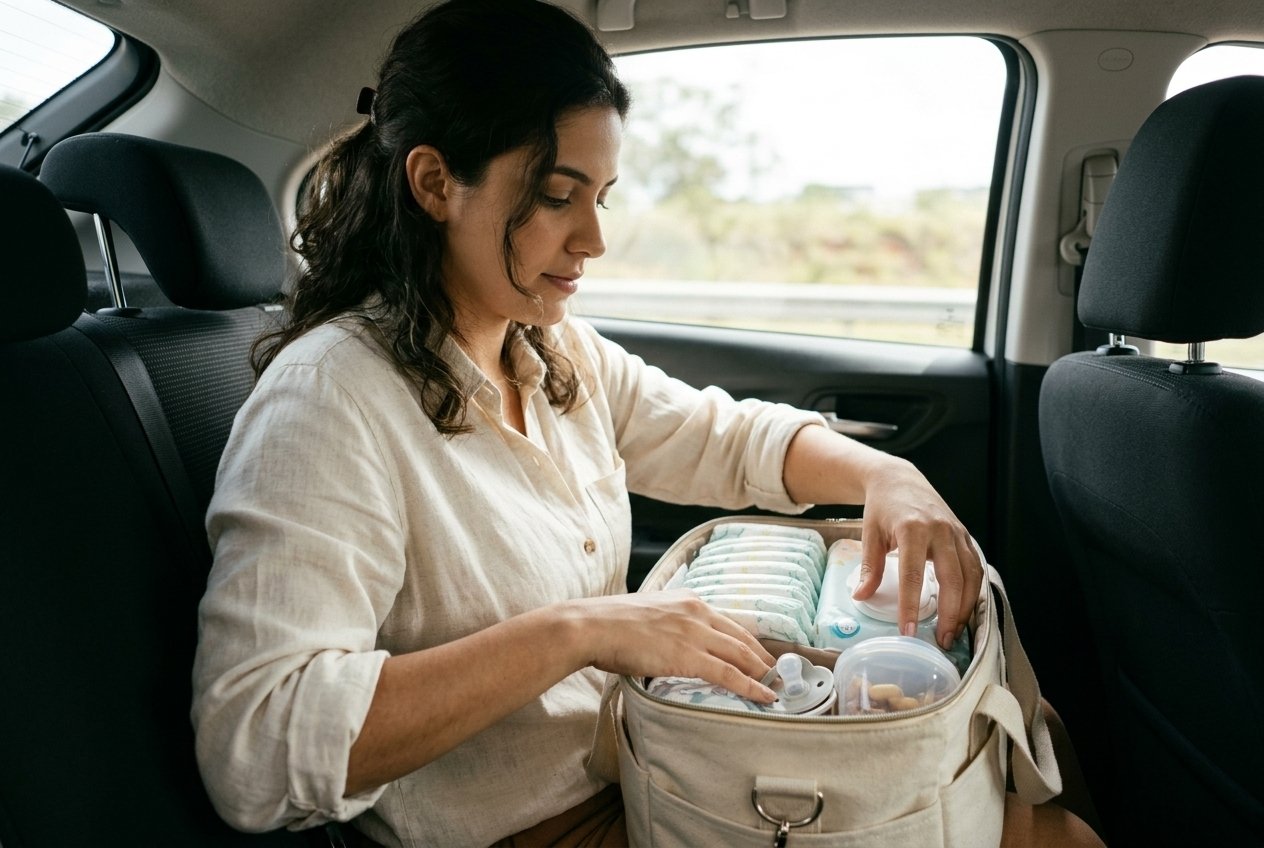
Taking a baby on a road trip is one of those things that sounds fun in theory and then hits very differently the moment you’re on the highway with a screaming infant and no wipes in reach. It’s not that road trips with babies can’t be wonderful — they absolutely can be. It just takes a different kind of planning than anything you’ve done before.
Most first-time parents underestimate how much the car changes things. At home, you have everything within arm’s reach. On the road, you have whatever you packed, in whatever order you packed it, accessed from the passenger seat while your partner keeps driving. That gap between home and car is where most road trip meltdowns — for babies and parents — actually start.
The good news is that most of the hard stuff is completely avoidable with the right gear. Whether you’re planning a two-hour drive to visit grandma or a full cross-country stretch, the ten things below cover the biggest pressure points parents run into on the road with a baby.
- 1. A Properly Installed, Age-Appropriate Car Seat
- 2. A Portable Changing Pad (Not Just the Diaper Bag)
- 3. White Noise — Downloaded, Not Streamed
- 4. A Car Seat Mirror or Back-Seat Camera
- 5. A Well-Stocked Feeding Setup
- 6. Sensory Toys That Attach to the Car Seat
- 7. A Travel Crib or Pack 'n Play
- 8. A Baby Carrier for Rest Stop Breaks
- 9. A First Aid Kit Built for Babies
- 10. A Departure Time That Works With Your Baby's Schedule
- Ready for the Road? Don't Forget Yourself
- Frequently Asked Questions
1. A Properly Installed, Age-Appropriate Car Seat
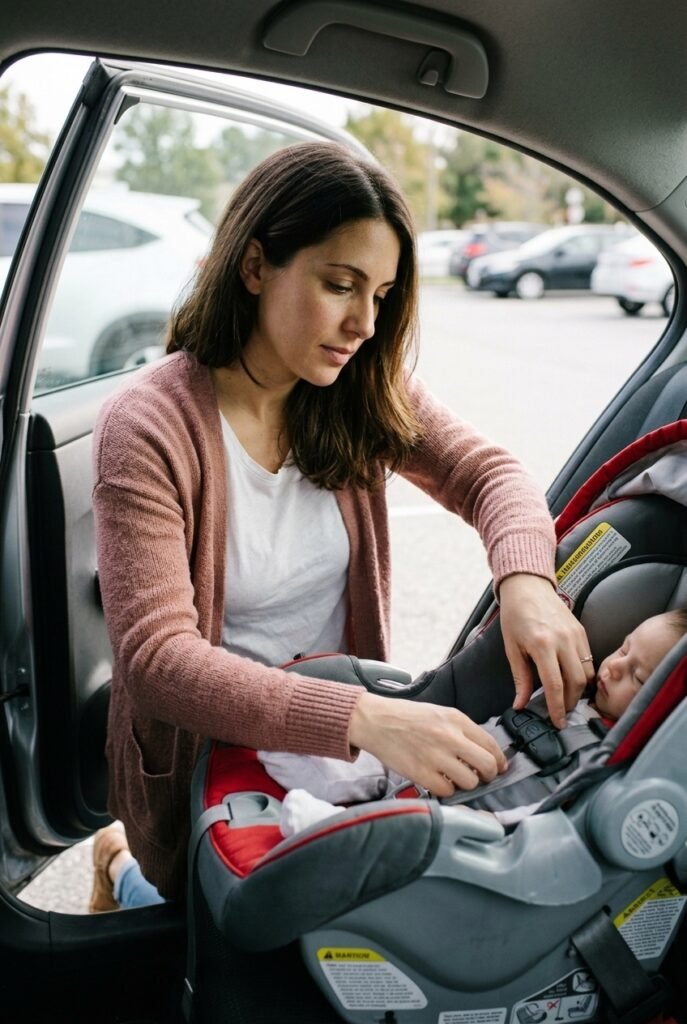
This one goes without saying, but the details matter more than most parents realize. Infants and young babies should always ride rear-facing — it provides significantly better protection in frontal collisions, which are the most common type. The harness straps need to lie flat against the body, with no twisting, and the chest clip should sit at armpit level.
What often gets overlooked: don’t dress your baby in a thick puffy coat under the harness. The padding compresses on impact, leaving the straps too loose to do their job. Instead, buckle them in their regular clothes and drape a blanket over the harness afterward. A quick pinch test on the straps after buckling is worth making a habit — if you can pinch fabric between your fingers, it needs to be tighter.
2. A Portable Changing Pad (Not Just the Diaper Bag)
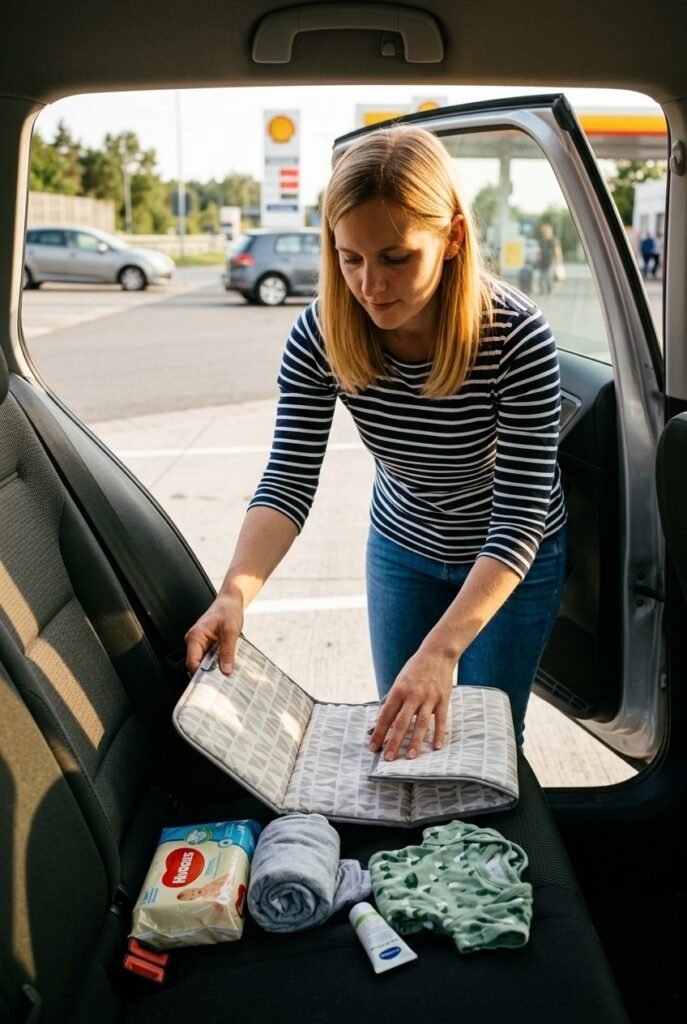
A diaper bag is a given. What actually saves you on the road is a compact, foldable changing pad that you can use anywhere — rest stop bathrooms, the back of your car, a blanket on the grass. Many public changing tables are either out of order, uncomfortably high, or just not available.
Keep the pad in a small front-seat pouch along with a handful of diapers, wipes, a diaper sack roll, and a spare onesie. That way, whoever’s in the passenger seat can handle a diaper situation without unpacking the entire trunk.
3. White Noise — Downloaded, Not Streamed
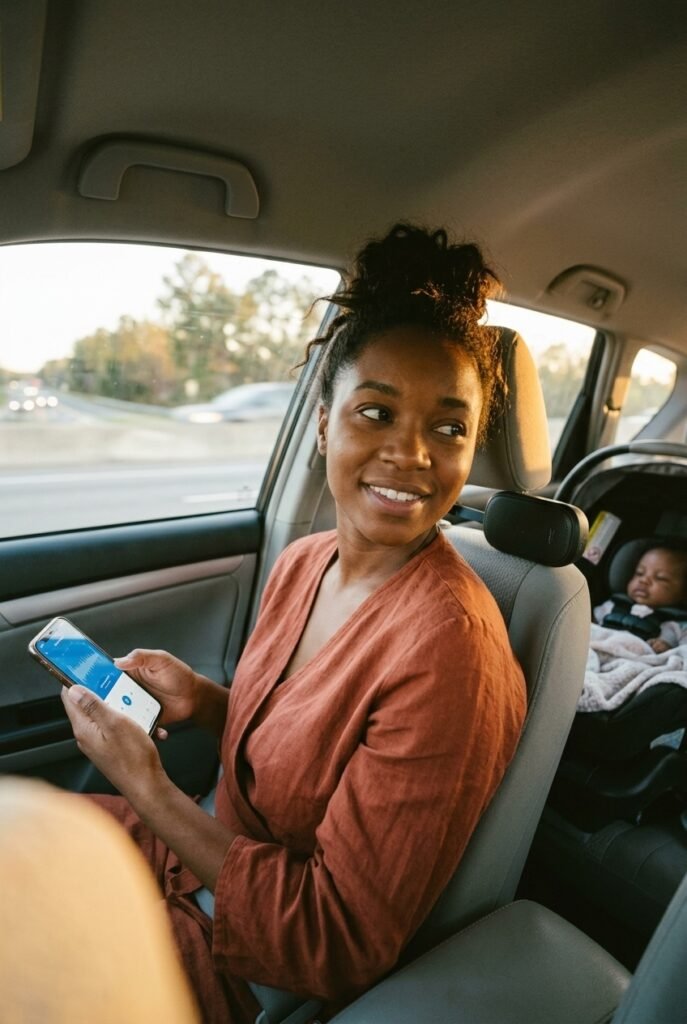
Most babies sleep better with white noise because it mimics the sounds they heard in the womb. The car itself provides some of that, but it’s not always consistent — slow traffic, stop-and-go driving, or a sudden quiet stretch of highway can break a nap fast.
Download a white noise app or playlist before you leave, so it works without a signal. A small portable Bluetooth speaker clipped near the car seat is more effective than playing through the car’s speakers, which can disturb the adults up front. Some parents swear by this single addition more than almost anything else on this list.
4. A Car Seat Mirror or Back-Seat Camera
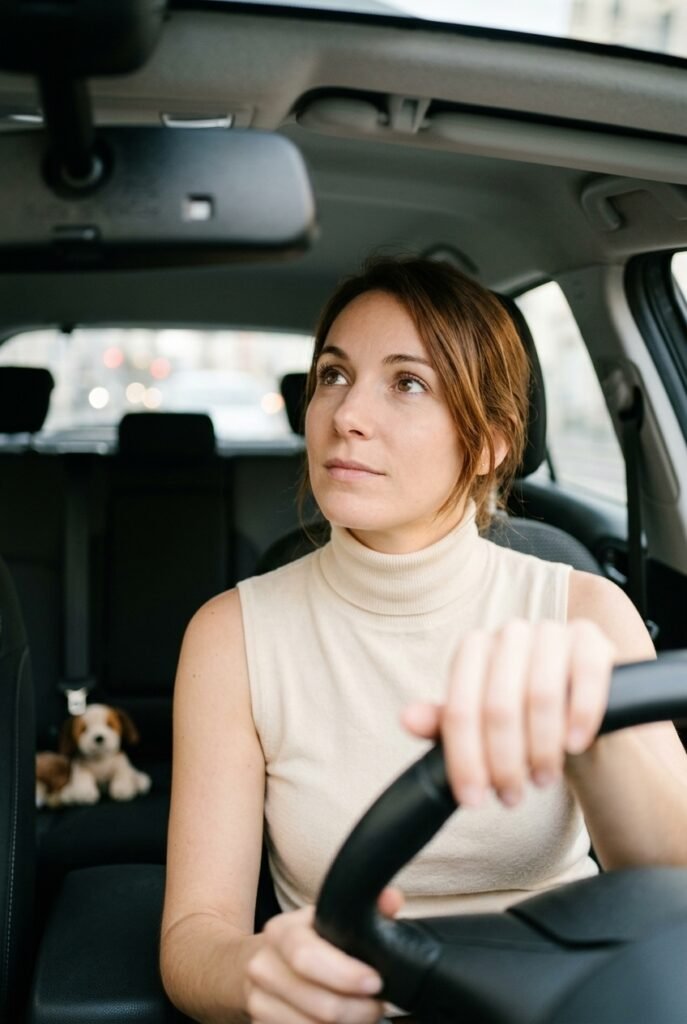
When your baby is rear-facing, you can’t see their face while driving. That’s genuinely stressful, especially for new parents. A wide-angle car seat mirror attaches to the headrest behind the baby and angles so you can see them in your rearview mirror without turning around.
If you want more visibility — particularly useful in larger vehicles like SUVs — a dedicated back-seat camera system gives you a live feed on a small dashboard monitor. These work in low light and give a much clearer view than a mirror alone. Either option adds real peace of mind on longer stretches.
5. A Well-Stocked Feeding Setup
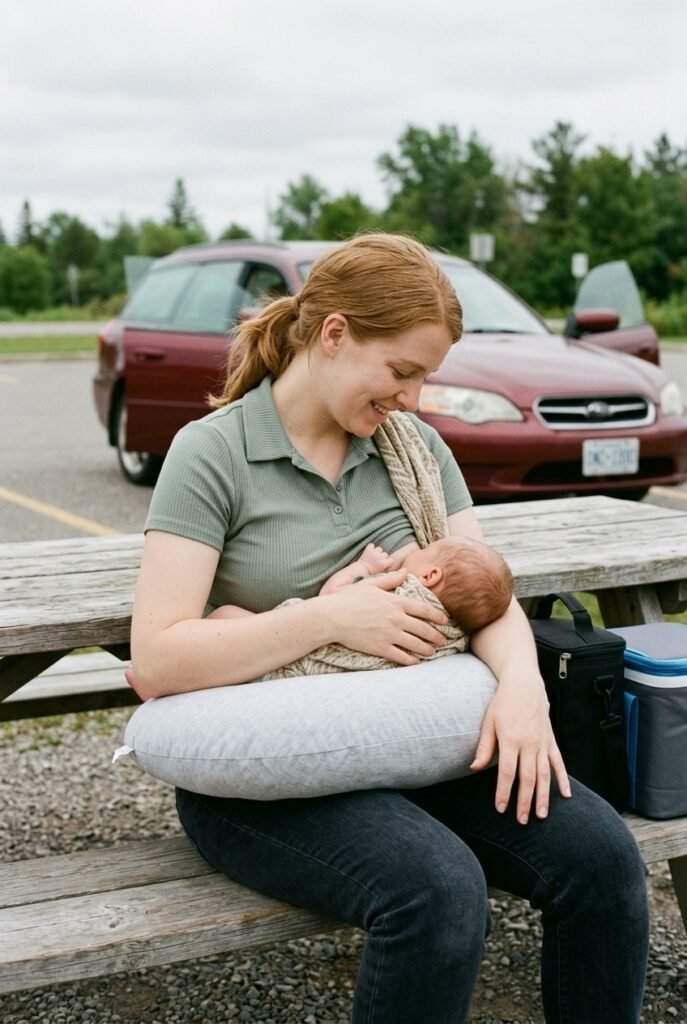
What you need here depends on how you’re feeding your baby.
- Breastfeeding: A nursing pillow like the Boppy is worth bringing. It makes car-side or rest-stop feedings more comfortable and doesn’t take up much space. A hands-free pumping bra and a small cooler for stored milk are smart additions for longer trips.
- Formula feeding: Pre-measured formula containers save time and reduce mess. Pair them with a small insulated bottle bag and a thermos of hot water so you’re not scrambling to find somewhere to heat a bottle.
Never feed your baby while the car is moving. Always pull over and take them out of the seat. It takes an extra five minutes and it matters.
6. Sensory Toys That Attach to the Car Seat
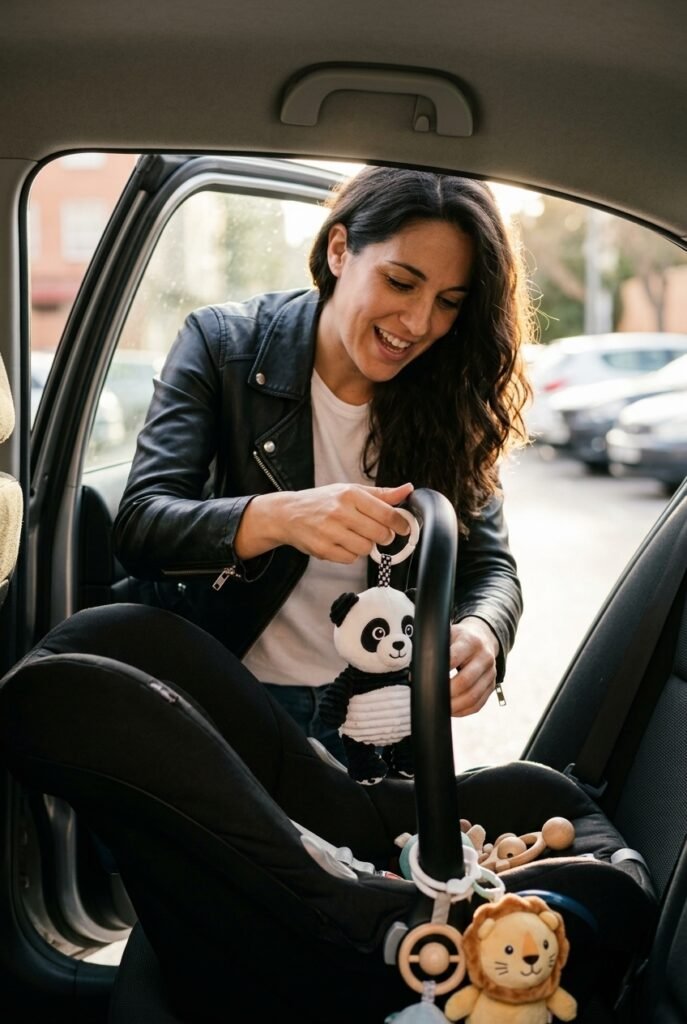
Babies get bored, and a bored baby in a moving car has a very limited range of expression. Soft sensory toys that clip or hang from the car seat handle — ones with crinkle fabric, rattles, or contrasting patterns — give them something to look at and reach for during awake stretches.
For babies under six months, high-contrast black and white images are genuinely engaging. For older babies, rotating toys every hour or so keeps things interesting. The trick is keeping a small stash of toys that feel “new” — even a toy they haven’t seen in a few days registers as fresh.
7. A Travel Crib or Pack ‘n Play
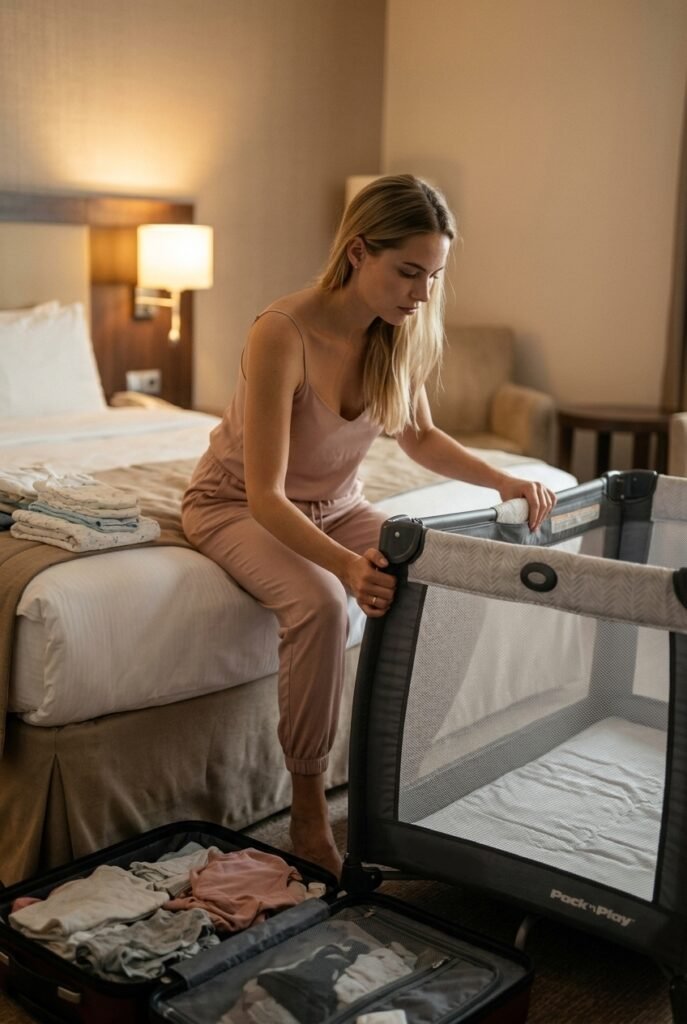
If you’re staying anywhere overnight, this is non-negotiable. You cannot count on hotels, Airbnbs, or family members to have a safe sleep surface ready. Co-sleeping in an unfamiliar bed is a real safety risk, especially when everyone is tired from travel.
The Graco Pack ‘n Play is one of the most popular options — it folds up, includes a bassinet for younger babies and a changing station, and is durable enough for repeated use. Before the trip, let your baby nap in it at home a few times. Familiarity helps. A baby who has never slept in a Pack ‘n Play is going to resist it on the first night away, which is not what you want after a full day of driving.
8. A Baby Carrier for Rest Stop Breaks
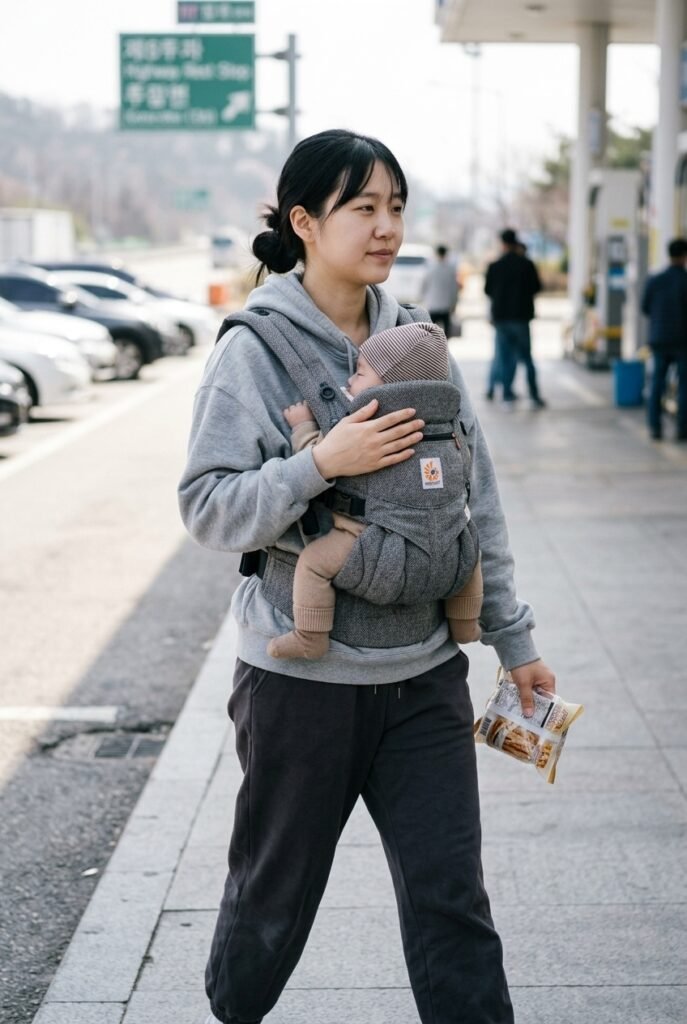
The 2-hour rule is real: babies shouldn’t stay in a car seat for more than two hours at a stretch. Extended sitting without breaks restricts movement and circulation, which isn’t good for developing bodies. So you’re going to be stopping — and when you stop, you want your hands free.
A structured baby carrier lets you hold your baby, hands-free, while you stretch your own legs, grab a snack, or use the restroom. It also soothes fussy babies almost immediately — the closeness and motion are deeply calming. Options like the Ergobaby Omni or the Lillebaby Complete are popular for their lumbar support, which matters when you’ve already been driving for hours.
9. A First Aid Kit Built for Babies
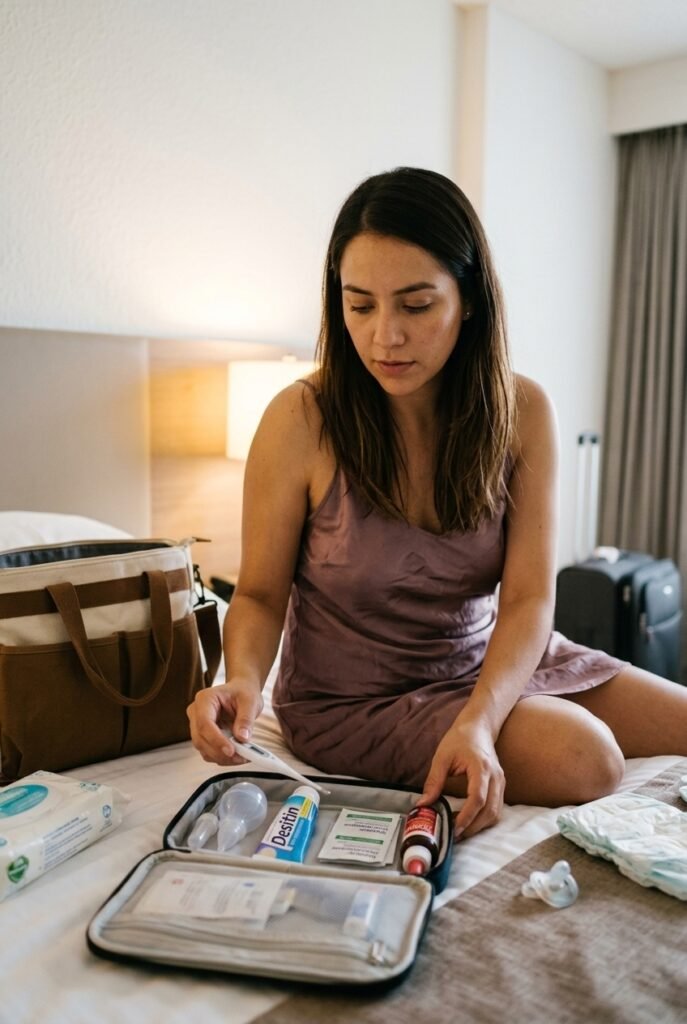
Standard first aid kits aren’t enough. Your travel kit should include infant-appropriate versions of everything:
- Infant acetaminophen (Tylenol) and ibuprofen (for babies 6 months and older)
- A digital rectal thermometer — the most accurate for infants
- Nasal aspirator and saline drops
- Diaper rash cream
- Antiseptic wipes and bandages
- Your pediatrician’s after-hours phone number
Teething can hit unexpectedly, allergic reactions happen, and babies spike fevers with no warning. Being three hours from the nearest pharmacy when it does is not the moment to realize you’re unprepared.
10. A Departure Time That Works With Your Baby’s Schedule
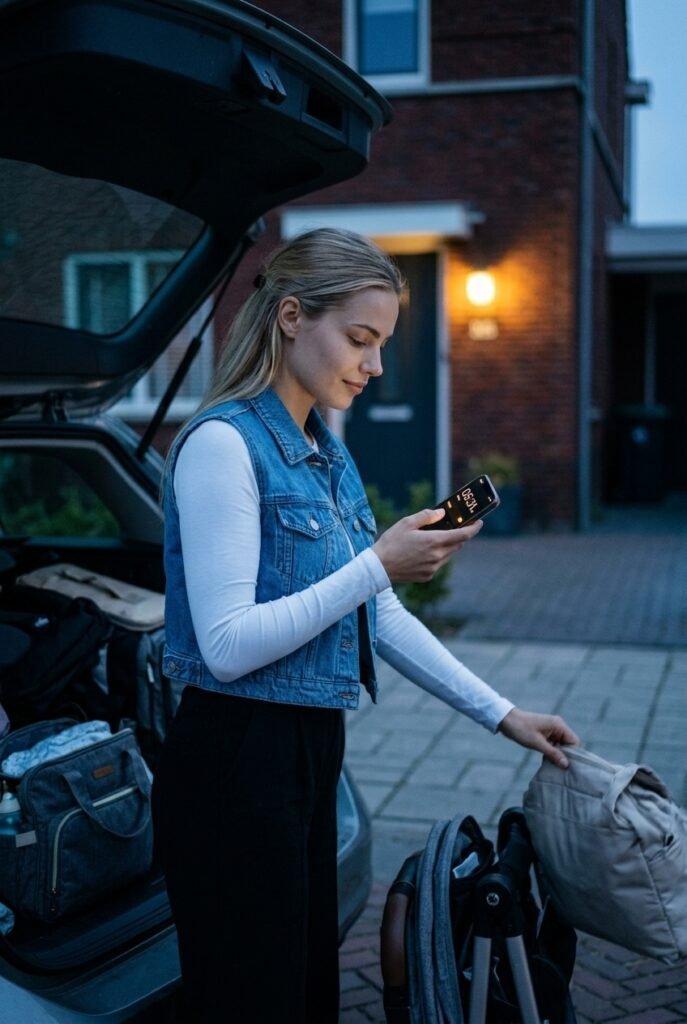
This isn’t a physical item, but it might be the most practical thing on this list. Timing your departure around your baby’s natural sleep cycle turns a potential four-hour stress test into a much smoother ride. Many parents find that leaving early in the morning — before or right at the baby’s first nap — means the first chunk of driving gets covered while the baby sleeps.
For longer trips, aligning drive time with nap windows as much as possible reduces the number of stops you need and keeps everyone calmer. It’s also worth adjusting bedtime or wake time by 15–30 minutes in the days before a big trip if you’re crossing time zones or significantly shifting your schedule.
Ready for the Road? Don’t Forget Yourself
Baby gear takes up so much mental space that it’s easy to forget you also need to survive this trip. Pack a spare shirt for yourself — formula happens — plus your own snacks, a water bottle within reach, and whatever you need to stay comfortable behind the wheel. A rested, fed parent handles the unexpected a lot better than one running on empty.
Road trips with a baby aren’t always easy, but they are absolutely doable. The families who do them well aren’t the ones who pack the most stuff — they’re the ones who packed the right stuff and gave themselves enough flexibility to adjust when things didn’t go exactly to plan. And they rarely do. That’s actually part of the charm.
Frequently Asked Questions
Q: How long can a baby safely stay in a car seat during a road trip? A: Babies should not be in a car seat for more than 2 hours at a time. Plan to stop every 1.5 to 2 hours so your baby can be taken out, fed, changed, and given a chance to move and stretch.
Q: Is it safe for a baby to sleep in their car seat overnight? A: No. Car seats are designed for travel, not extended sleep outside of the car. Once you stop for the night, move your baby to a flat, firm sleep surface like a travel crib or Pack ‘n Play.
Q: What’s the best time of day to leave for a road trip with a baby? A: Early morning departures tend to work well because you can time the drive with the baby’s first nap. Some parents also prefer evening departures for overnight stretches, though that approach works better with slightly older babies.
Q: Do I need a separate white noise machine or will a phone app work? A: A phone app works fine as long as you download the audio ahead of time so it plays without an internet connection. Pairing it with a small Bluetooth speaker near the car seat gives better results than playing through the car speakers.
Q: What should go in a car-seat emergency pouch? A: Keep a few diapers, wipes, a diaper sack roll, a spare onesie, and a burp cloth within easy reach from the front seat. This way you can handle basic needs quickly without digging through the trunk.
Q: How do I keep my baby entertained in a rear-facing car seat? A: Clip-on sensory toys, soft rattles, and high-contrast visual toys work well for younger babies. Rotating toys every hour keeps them feeling new. For older babies, board books and simple interactive toys add variety.
Q: Does my baby need a travel crib if I’m staying at a hotel? A: Yes. Hotels can often provide cribs on request, but availability isn’t guaranteed and you can’t always verify safety standards. Bringing your own travel crib removes that uncertainty and also gives your baby a familiar sleep space.
Q: What should be in a baby-specific first aid kit for a road trip? A: Infant acetaminophen, a digital rectal thermometer, nasal aspirator, saline drops, diaper rash cream, antiseptic wipes, bandages, and your pediatrician’s contact information. Ibuprofen can be added for babies six months and older.
Q: Can I feed my baby while the car is moving? A: No. Always pull over and stop the vehicle before feeding. This applies to both breastfeeding and bottle feeding — it’s safer for the baby and less stressful for everyone involved.