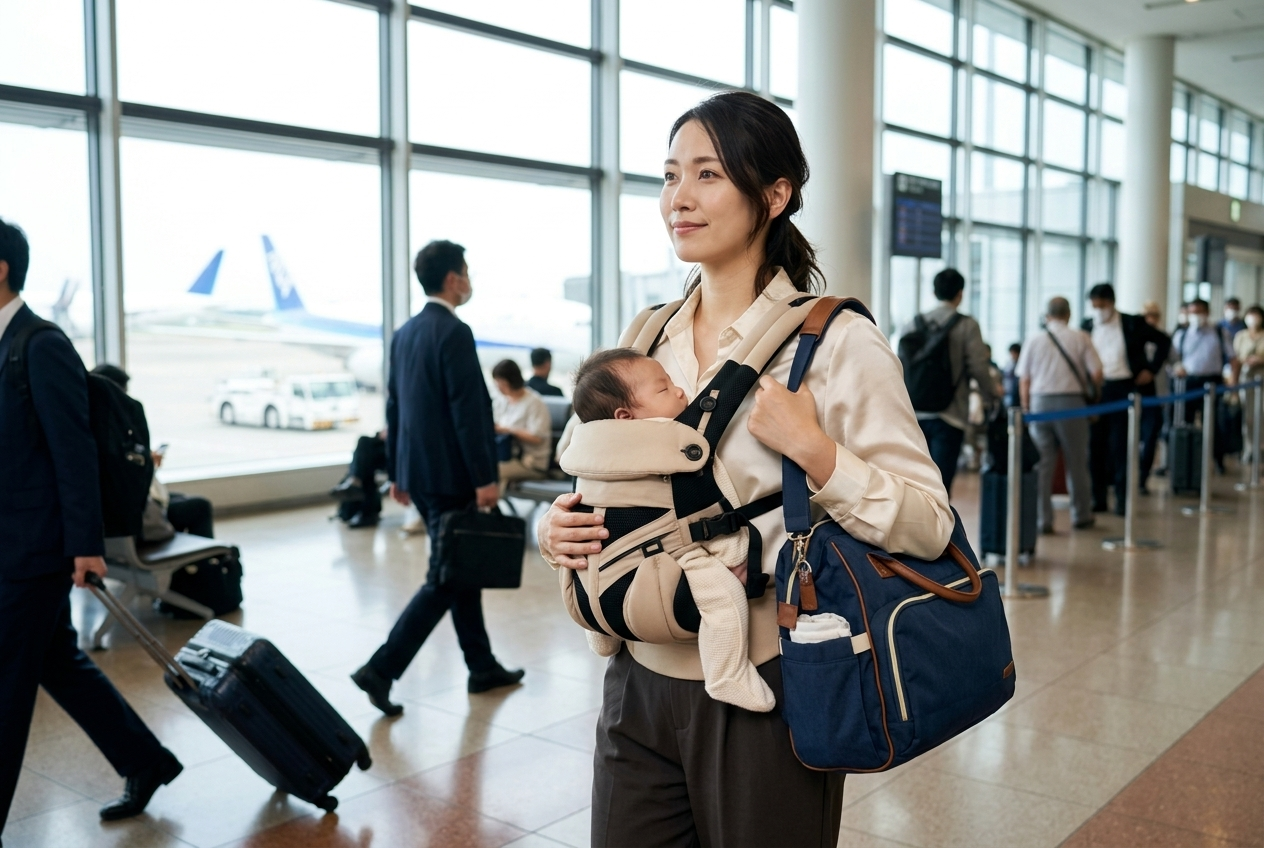
The first time you pack a diaper bag for a flight, something shifts. Suddenly the carry-on that used to hold a laptop and a change of clothes now holds wipes, a spare onesie, formula, a pacifier, two backup pacifiers, and approximately fourteen things you’re not sure you’ll need but can’t risk leaving behind. Flying with a baby is a different kind of travel — not harder, exactly, but different enough that walking in unprepared makes the whole experience harder than it needs to be.
Most moms worry about the wrong things. They picture a screaming baby and a plane full of glaring strangers. What actually makes or breaks a first flight is much more practical: timing the flight around the baby’s schedule, knowing what TSA will and won’t allow, understanding what to do at takeoff, and having the right things within arm’s reach. The logistics matter far more than luck.
The tips below cover the decisions that tend to trip up first-time flying moms — from how old a baby needs to be before it’s safe to fly, all the way to how to handle ear pressure, security lines, and nap timing mid-air.
- 1. Know When It's Actually Safe to Fly
- 2. Book the Flight Around the Baby's Sleep Schedule
- 3. Decide Between a Lap Infant and a Purchased Seat
- 4. Understand TSA Rules for Baby Items
- 5. Feed or Nurse During Takeoff and Landing
- 6. Gate-Check the Stroller — Don't Check It at Baggage
- 7. Pack Your Carry-On Like It's the Only Bag You Have
- 8. Board Last, Not First
- 9. Skip the Benadryl
- 10. Lower Your Expectations for the Day — and Give Yourself Grace
- You've Got This — One Flight at a Time
- Frequently Asked Questions
1. Know When It’s Actually Safe to Fly
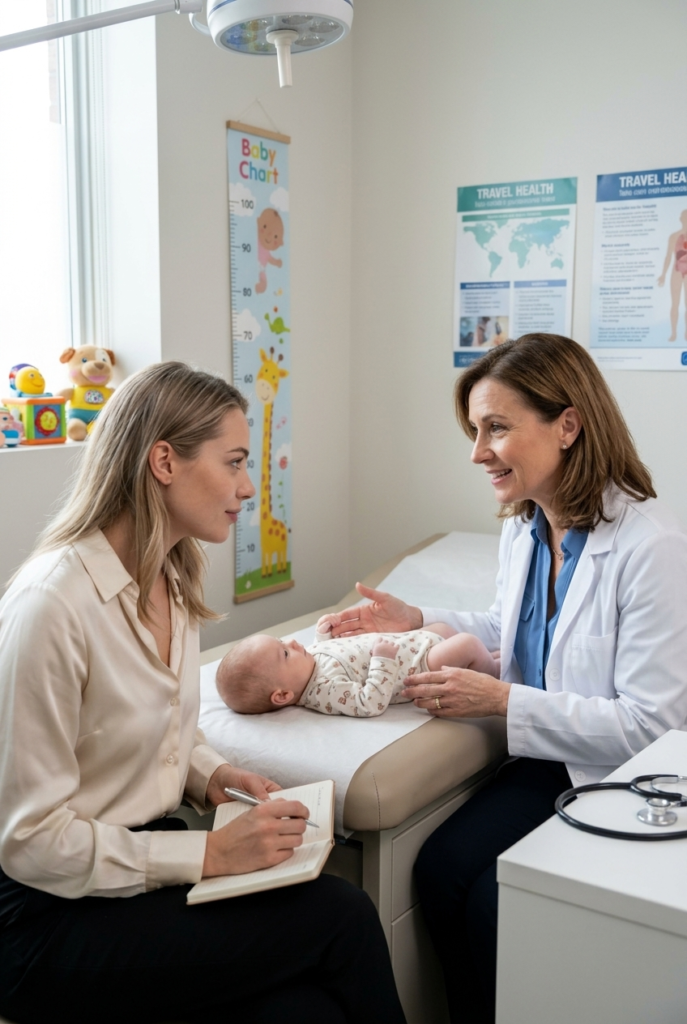
Most healthy, full-term babies can fly within weeks of birth, but that doesn’t necessarily mean they should. The American Academy of Pediatrics recommends waiting until a baby is at least 2 to 3 months old before flying if possible — mainly because airports and airplane cabins are high-traffic environments with a lot of germ exposure, and a newborn’s immune system is still very underdeveloped.
If travel is unavoidable earlier, most airlines allow babies as young as 7 to 14 days old, provided they’re healthy and full-term. Premature babies or those with respiratory or cardiac conditions need a pediatrician’s sign-off before any air travel. A quick check-in with your doctor before booking is the right first step, not an afterthought.
2. Book the Flight Around the Baby’s Sleep Schedule
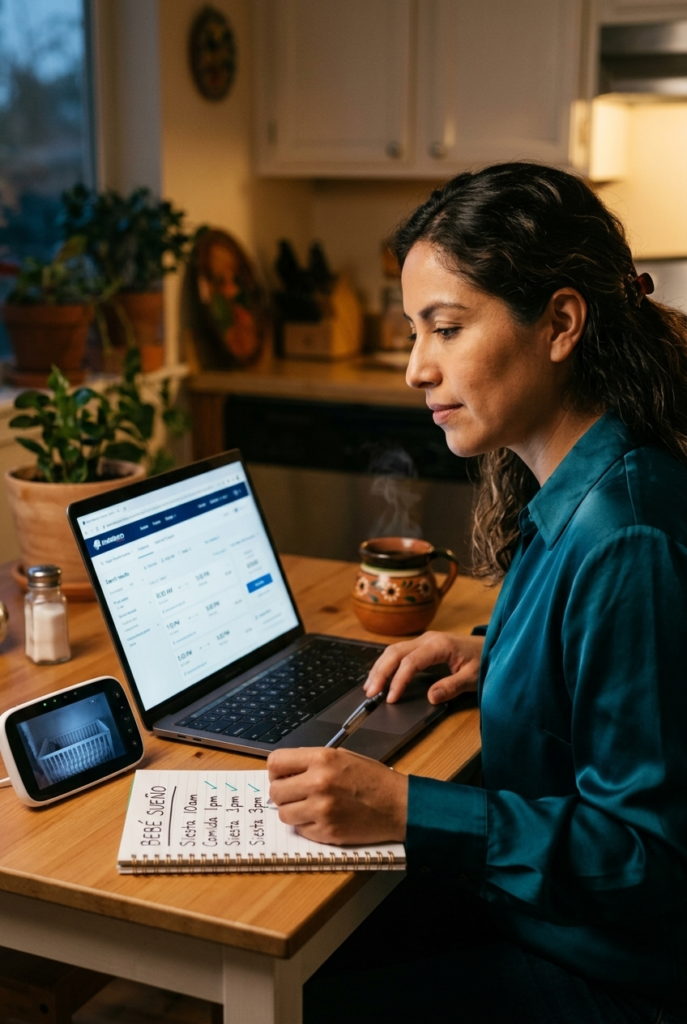
This single decision will shape the entire experience more than almost anything else. A baby who sleeps through most of the flight is a very different flight than one who is awake, bored, and overstimulated for two hours straight.
For shorter domestic flights, a mid-morning departure often works well — after the morning nap is underway or just winding down. For longer trips, overnight flights give babies the best shot at sleeping for the bulk of the time. The goal is to put yourself in a position where your baby’s natural biology is working with you, not against you. Booking the cheapest flight at the most convenient time for your schedule tends to backfire.
3. Decide Between a Lap Infant and a Purchased Seat
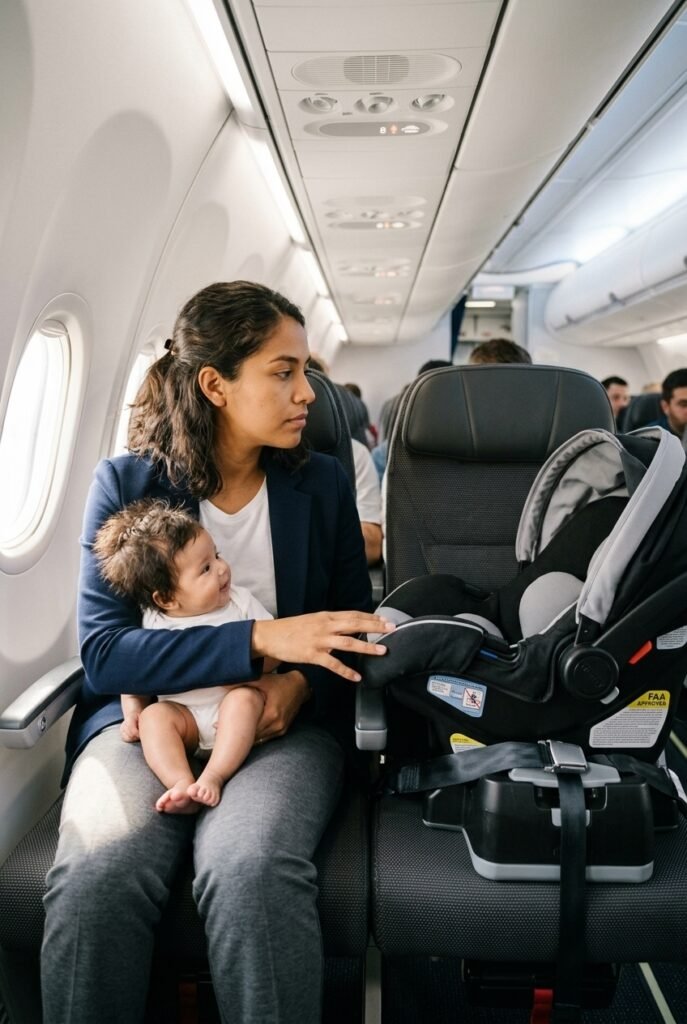
In the US, children under 2 can fly as lap infants for free on domestic routes. The airline won’t require a ticket. That said, the FAA and the American Academy of Pediatrics both recommend purchasing a separate seat and using an FAA-approved car seat for safety — turbulence is the leading cause of in-flight injuries in young children, and a lap hold doesn’t provide adequate protection when a plane suddenly drops.
If budget is a constraint, ask the airline whether there are empty seats on the flight when you board. Some gate agents will allow you to use an empty seat with a car seat at no charge. It’s not guaranteed, but it’s worth asking — especially on less-full flights.
4. Understand TSA Rules for Baby Items
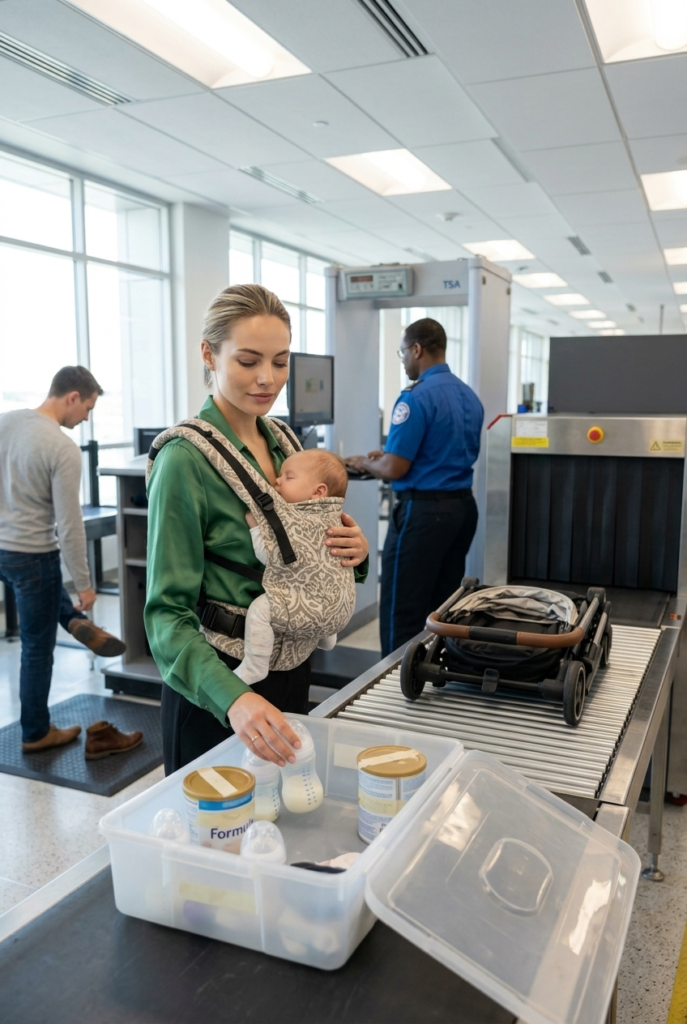
TSA rules for traveling with a baby are more lenient than most moms expect. Formula, breast milk, and baby food are all exempt from the standard 3.4-ounce liquid limit and can be packed in quantities “reasonable for the trip” in your carry-on. This includes ice packs and gel packs for keeping milk cold, whether or not you’re traveling with the baby.
A few logistics to know before you hit the security line:
- Remove formula and breast milk from your bag and place them in a separate bin for screening.
- Inform the TSA officer before they screen any liquid over 3.4 oz.
- Strollers and car seats go through the X-ray machine. If yours doesn’t fit, it’ll be physically inspected.
- Baby carriers can stay on through the metal detector, though you may need additional screening.
Knowing this in advance means you won’t be caught off guard or pressured to throw out supplies you’re legally allowed to bring.
5. Feed or Nurse During Takeoff and Landing
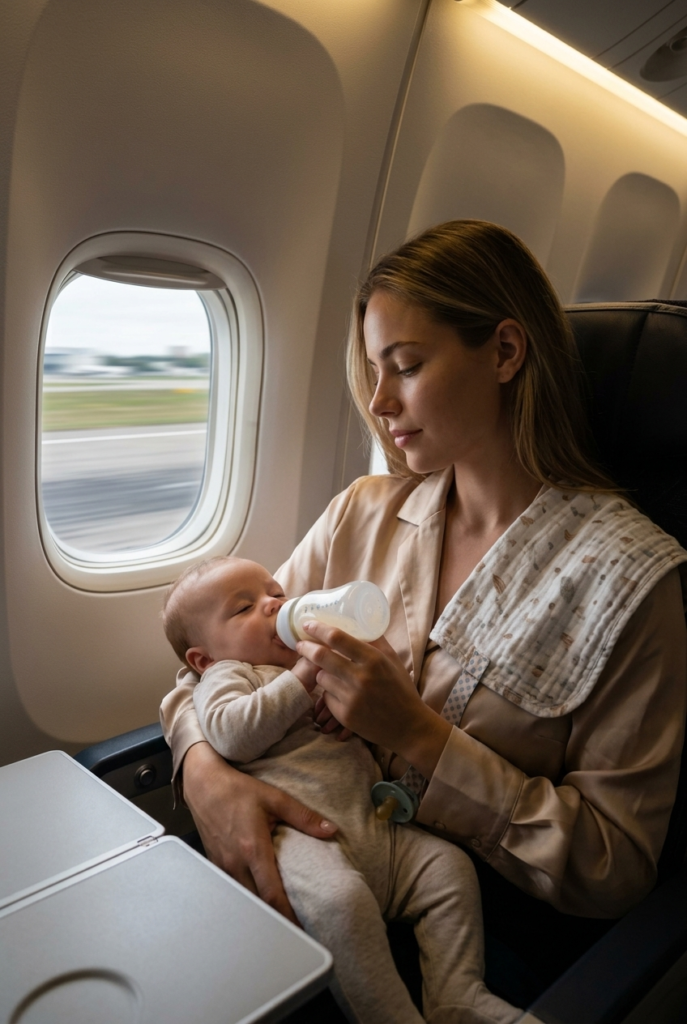
Ear pressure during ascent and descent is one of the main reasons babies cry on planes. Their Eustachian tubes are narrower than an adult’s, which makes equalization harder and more painful. The fix is simple: give them something to suck on — a breast, a bottle, or a pacifier — during takeoff and landing. The swallowing motion naturally helps their ears adjust to the pressure change.
If you’re breastfeeding, plan to nurse right as the plane starts moving. If you’re bottle-feeding, have a bottle ready before you board so there’s no scrambling once you’re buckled in. Timing matters here — starting too early means they’ve finished before the pressure actually builds. Waiting until the plane accelerates down the runway is about right.
6. Gate-Check the Stroller — Don’t Check It at Baggage
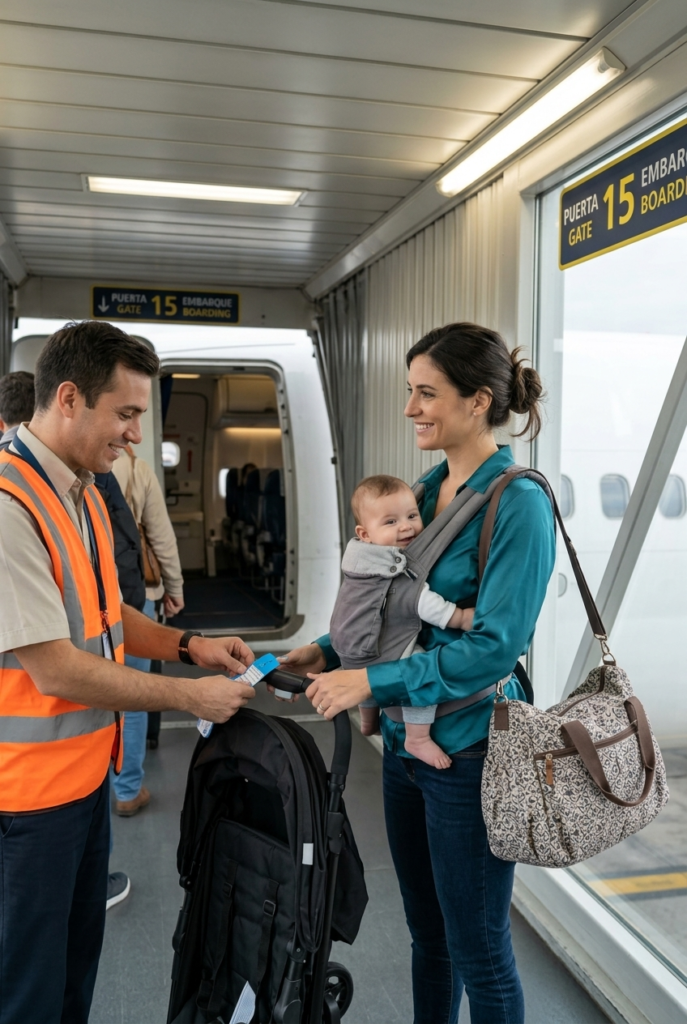
A stroller is incredibly useful inside the airport: through check-in, security, long terminal walks, and the wait at the gate. Checking it at baggage drop at the start of the trip means losing that tool for the entire airport portion of the day.
Gate-checking is the move. You use the stroller all the way to the jet bridge, hand it off right before boarding, and it’s returned to you right as you get off the plane. It costs nothing and keeps your hands free through the airport. Just attach a luggage tag with your name and contact info — strollers occasionally get sent to baggage claim by mistake, and a tag speeds up the recovery process.
7. Pack Your Carry-On Like It’s the Only Bag You Have
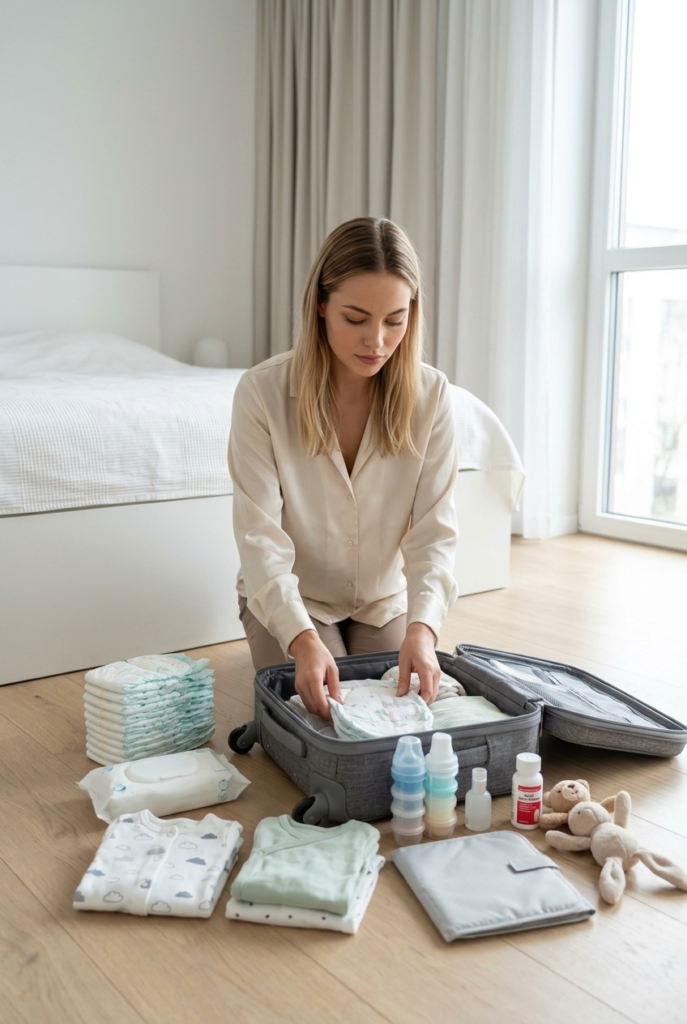
Whatever goes in checked luggage is inaccessible for the entire flight. Your carry-on is everything. Pack it assuming the checked bag gets delayed — because on a bad day, it might.
Carry-on essentials:
- Diapers: More than you think. Pack enough for double the flight time, plus delays.
- Change of clothes: Two outfits for the baby, one for you. Blowouts don’t care that you’re at 30,000 feet.
- Feeding supplies: Formula pre-measured, bottles ready, nursing cover if you want one.
- Infant pain reliever: If your pediatrician has cleared it, have it accessible — not buried at the bottom.
- A few small quiet toys: New or unfamiliar toys buy more attention time than favorites the baby has already figured out.
- Extra wipes: There are never enough wipes.
A changing pad is worth bringing too. Most airplane lavatories have changing tables, but they’re small. A portable changing pad gives you a clean surface wherever you end up.
8. Board Last, Not First
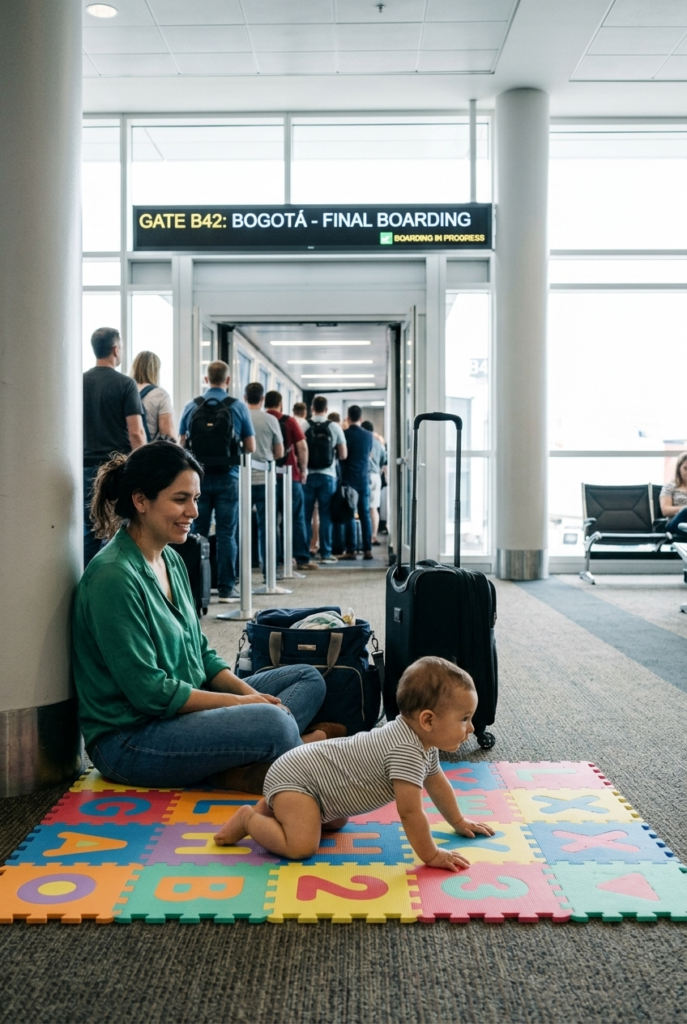
Early boarding for families with young children sounds like a perk. In reality, it means an extra 20 to 30 minutes strapped into a seat on a parked plane — which is 20 to 30 minutes of a baby’s patience spent before the flight even begins.
A better approach: send one person ahead to wipe down the seats, get overhead bags stowed, and get settled. The other person stays at the gate and lets the baby burn off energy, crawl around, or simply move freely until the last boarding call. Board at the end, get buckled in, and the plane is usually moving within minutes. That difference in timing matters more than having a few extra minutes to settle in.
9. Skip the Benadryl
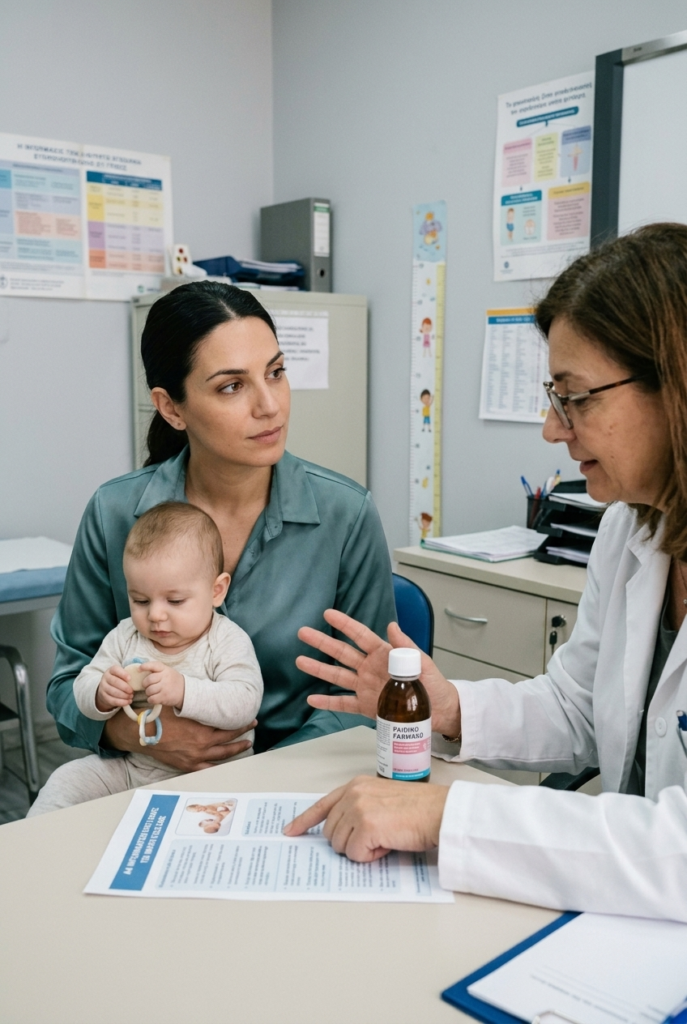
It comes up at almost every family gathering before a first baby flight: “just give them a little Benadryl.” The idea is that the antihistamine will make them drowsy and sleep through the trip. The reality is that diphenhydramine — the active ingredient — causes a paradoxical stimulant reaction in a meaningful number of babies and toddlers, meaning it makes them hyper and agitated rather than sleepy.
Finding that out at altitude is not the situation you want to be in. If you’re genuinely concerned about your baby’s ability to handle a long flight, that’s a conversation to have with your pediatrician before the trip — not something to troubleshoot with an over-the-counter medication at the gate.
10. Lower Your Expectations for the Day — and Give Yourself Grace
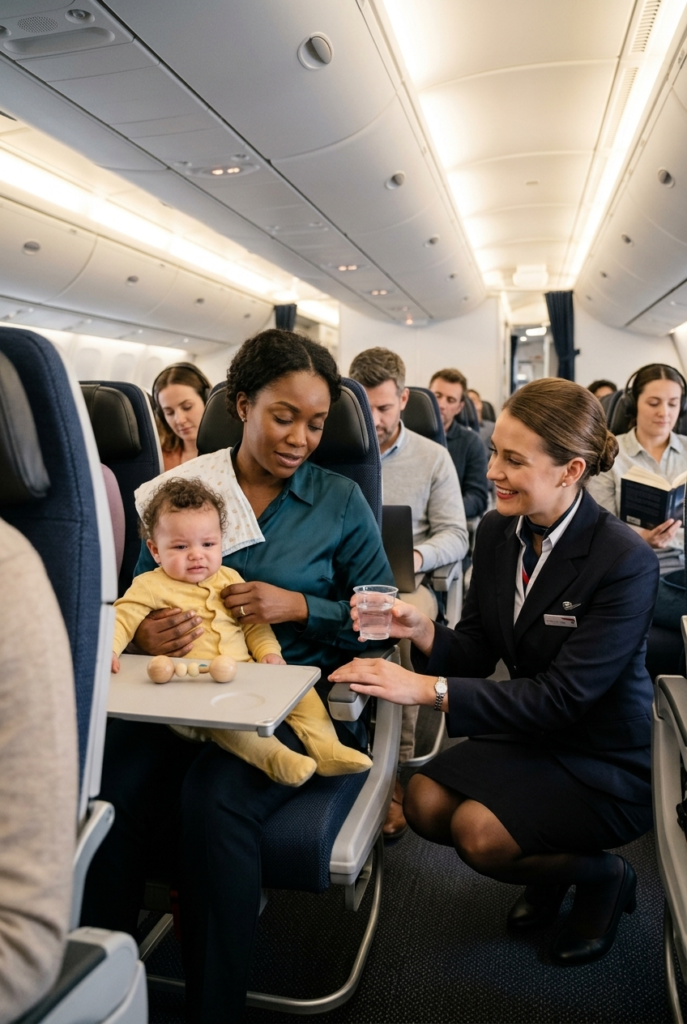
Even a well-planned, well-timed flight with a well-rested baby is an unpredictable day. Things will go sideways in small ways. The diaper blowout will happen as you’re boarding. The nap will be shorter than expected. The baby will decide that the one toy you didn’t pack is the only toy worth having.
The moms who handle first flights best are almost always the ones who go in expecting imperfection and refusing to apologize for the baby being a baby. Most passengers are more understanding than you expect. Flight attendants have seen everything. And a little mess, a little crying, a little chaos — it’s temporary. The flight ends. You land. And you’ll know, for next time, exactly what to do differently.
You’ve Got This — One Flight at a Time
The first flight is always the hardest because everything is unknown. Once you’ve done it once, the unknowns become familiar, the packing becomes second nature, and the logistics stop feeling like a puzzle. Most moms who were terrified before that first flight are booking the next trip on the way home from the airport.
Prepare what you can, hold the rest loosely, and trust that you know your baby better than anyone on that plane. Babies have been flying since there were planes to fly on, and families have figured it out every single time. Yours will too.
Frequently Asked Questions
Q: How old does a baby need to be to fly?
A: Most airlines allow babies as young as 7 to 14 days old, but the American Academy of Pediatrics recommends waiting until at least 2 to 3 months when possible, so the immune system is stronger and feeding is more established.
Q: Do I need to buy a seat for my baby?
A: No — children under 2 fly as lap infants for free on domestic US flights. That said, the FAA recommends purchasing a seat and using an FAA-approved car seat for safety, since turbulence is the leading cause of in-flight injuries for young children.
Q: Can I bring breast milk and formula through airport security?
A: Yes. Breast milk, formula, and baby food are exempt from the standard 3.4-ounce liquid rule and can be brought in carry-on bags in quantities reasonable for the trip. Let the TSA officer know before screening begins.
Q: What’s the best time to book a flight with a baby?
A: Book around the baby’s natural sleep schedule. Mid-morning departures work well for shorter flights. For longer trips, overnight flights give babies the best chance of sleeping for most of the journey.
Q: How do I help my baby’s ears during takeoff and landing?
A: Feed or nurse during takeoff and landing. The swallowing motion helps equalize ear pressure, which is the main cause of discomfort and crying in babies during those phases of the flight.
Q: Should I check my stroller at baggage or gate-check it?
A: Gate-check it. You can use it through the entire airport and hand it off right at the jet bridge before boarding. It’s returned to you as you exit the plane, at no charge.
Q: Is it safe to give my baby Benadryl before a flight?
A: No. Diphenhydramine can cause the opposite of the intended effect in babies and toddlers — making them hyperactive instead of sleepy. Talk to your pediatrician if you have genuine concerns about your baby handling a long flight.
Q: When should I board the plane with a baby?
A: Board last. Use the gate time to let your baby move freely and burn energy. Send a travel partner ahead to get settled, then join at the final boarding call. This minimizes the time your baby spends confined before the flight even takes off.
Q: What should I pack in my carry-on for a baby’s first flight?
A: Pack diapers for double the flight time, two outfit changes for the baby, one for yourself, all feeding supplies, a portable changing pad, a few quiet new toys, and any pediatrician-approved infant medications. Treat it as your only bag.