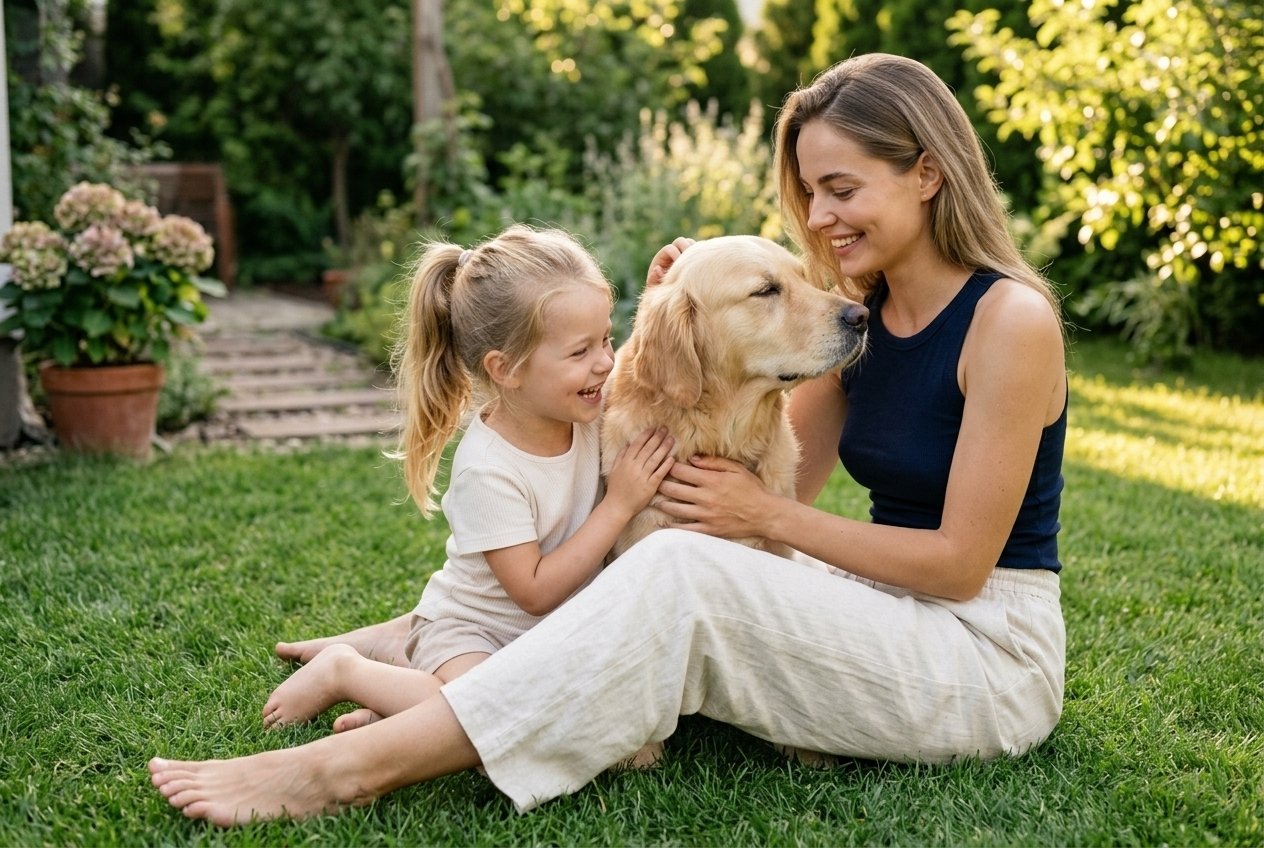
Getting a dog when you have kids is one of those decisions that feels both exciting and a little terrifying. You want a companion that will roll with the chaos, handle sticky fingers without complaint, and be the kind of presence that actually makes your household a warmer place — not a stressful one.
The truth is, not every dog is built for that role. Some breeds get overwhelmed by noise and unpredictable movement. Others have so much energy that they knock toddlers over just by walking past them. And then there are the ones that seem to have been designed for exactly this kind of life — patient, loving, sturdy, and genuinely happy in the middle of a busy family.
What makes a dog truly great with kids comes down to a handful of core traits: a steady, calm temperament, a tolerance for the unexpected, the ability to learn boundaries, and an affectionate nature that extends to the whole family. The ten breeds below consistently check every one of those boxes.
1. Golden Retriever
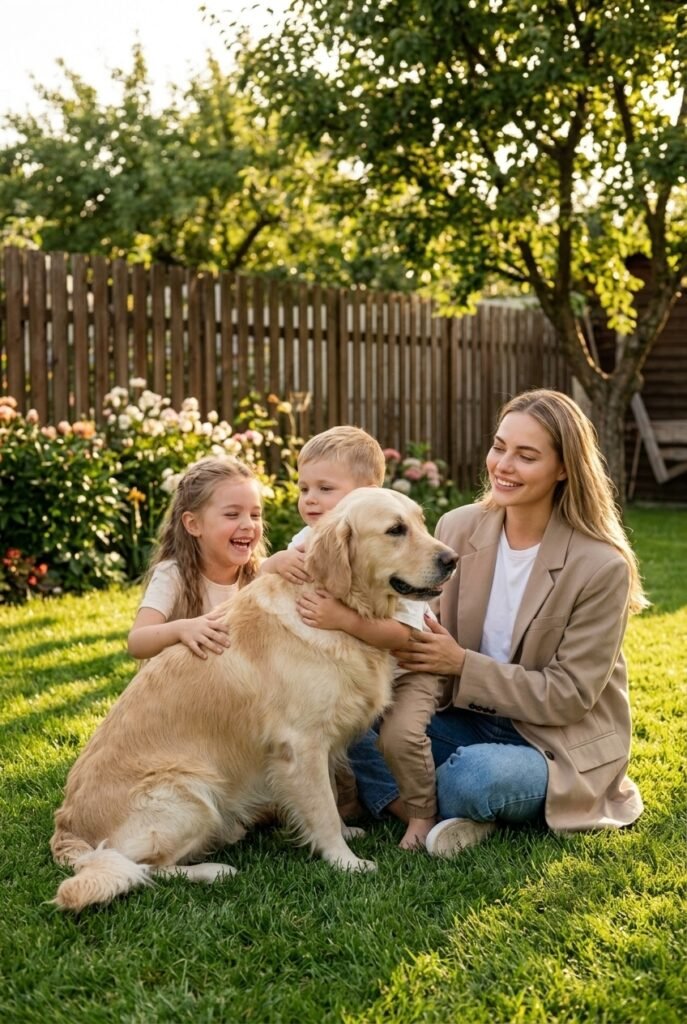
There’s a reason this breed ends up on virtually every “best family dog” list. Golden Retrievers are naturally gentle, patient, and deeply attached to the people around them. They don’t tend to be reactive, which matters a lot when you have kids who shriek, run, and trip over things constantly.
They’re large enough to hold their own in active play but soft-mouthed and careful enough to be trusted around toddlers. Goldens also respond beautifully to training, which makes teaching them house rules relatively straightforward. The tradeoff? They do shed a lot, and they need daily exercise to stay balanced. A bored or under-exercised Golden can get mouthy or hyper — so this one is best for families who can commit to daily walks and backyard play.
2. Labrador Retriever
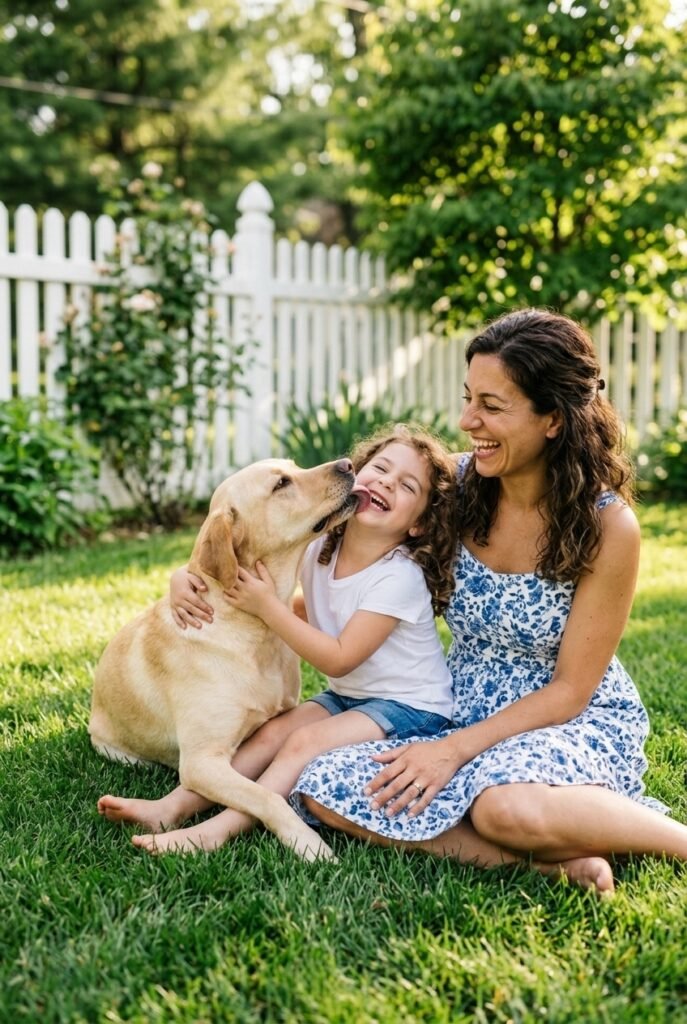
Labs are America’s most popular breed for a reason, and it has everything to do with personality. They’re outgoing, friendly to strangers and kids alike, and almost impossibly tolerant. Whether your child is trying to dress them up, use them as a pillow, or drag them around the yard, a well-trained Lab will take it in stride.
They come in three colors — yellow, black, and chocolate — and in two general energy levels. English Labs tend to run calmer; American Labs are more athletic and bounce-off-the-walls enthusiastic. Either way, they need solid exercise. These are not dogs that do well sitting at home all day. If your family loves being outside, a Lab will love you right back.
3. Beagle
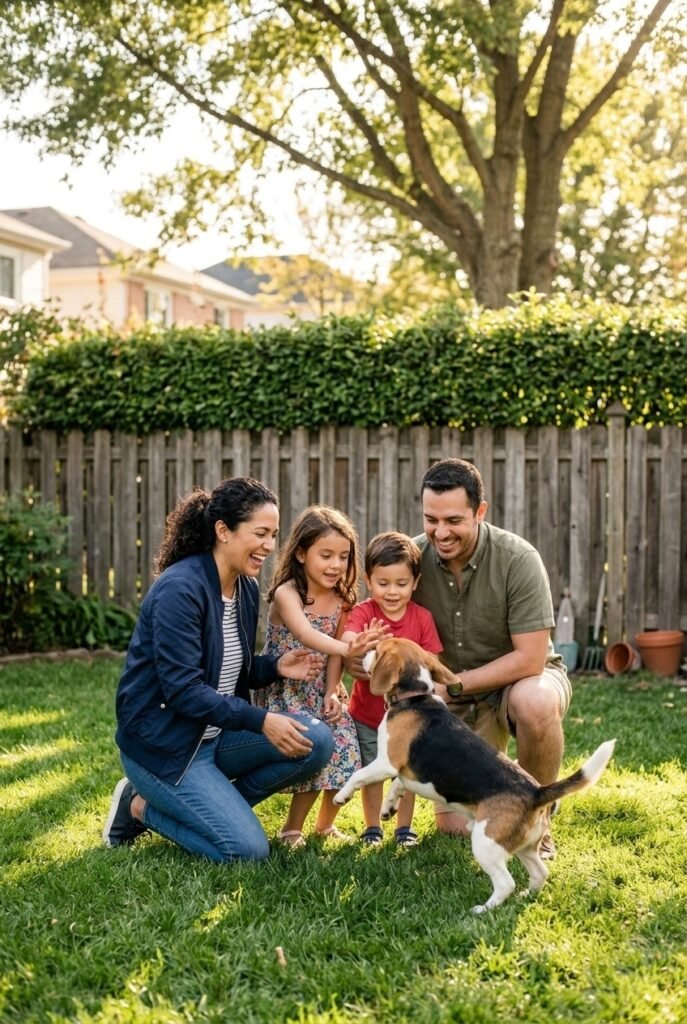
Beagles are often overlooked in favor of flashier breeds, but they deserve a spot near the top of any family-friendly list. They’re sturdy enough to handle rough play without getting hurt, small enough that young kids aren’t intimidated by them, and social enough to want to be in the middle of everything.
Their pack-animal instincts make them naturally comfortable in group settings — they genuinely enjoy having other humans and pets around. The main thing to know is that Beagles have a serious nose, and when they catch a scent, focus goes out the window. Keeping them in a fenced yard is important. They’re also known to bark and howl, which could be a consideration if you have a newborn who needs a quiet house.
4. Cavalier King Charles Spaniel
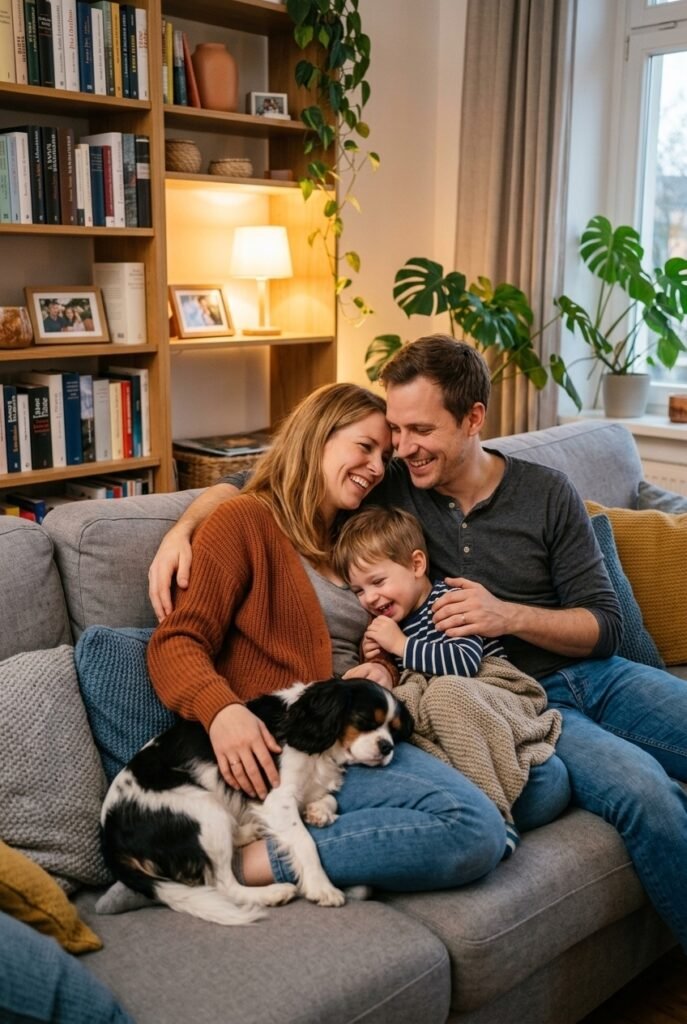
This breed is a beautiful fit for families who want something a little calmer and more compact. Cavaliers are gentle, affectionate, and almost effortlessly adaptable — they’ll happily sit on the couch with a tired parent just as readily as they’ll play with the kids in the living room.
Their patience with children is well-documented. They’re small (typically under 20 pounds), which makes them manageable in tighter spaces, and they’re not prone to snapping or getting overwhelmed easily. One thing to keep in mind: Cavaliers are prone to certain heart conditions, so regular vet checkups are important. But in terms of temperament and adaptability, they’re hard to beat.
5. Bernese Mountain Dog
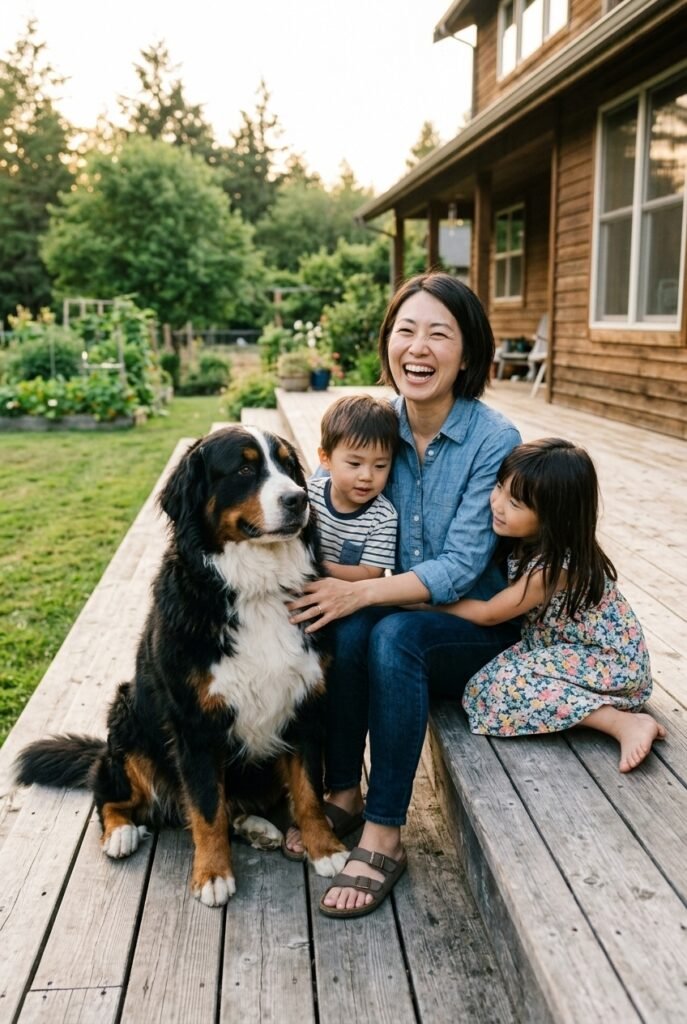
If your family has the space — and the heart for a large dog — the Bernese Mountain Dog is one of the most remarkable options out there. These gentle giants are calm, devoted, and surprisingly careful around children despite their size. They’ve been known to let kids climb on them without so much as a complaint.
Originally bred as working farm dogs in Switzerland, Berners are loyal to their families in a way that’s hard to describe until you’ve experienced it. They tend to pick one person to be especially bonded to, while still loving every member of the household. Training them early is key because of their eventual size, but they’re eager learners. The downsides are real: they shed heavily, have shorter lifespans than smaller breeds, and need space to move around comfortably.
6. Poodle (Standard or Miniature)
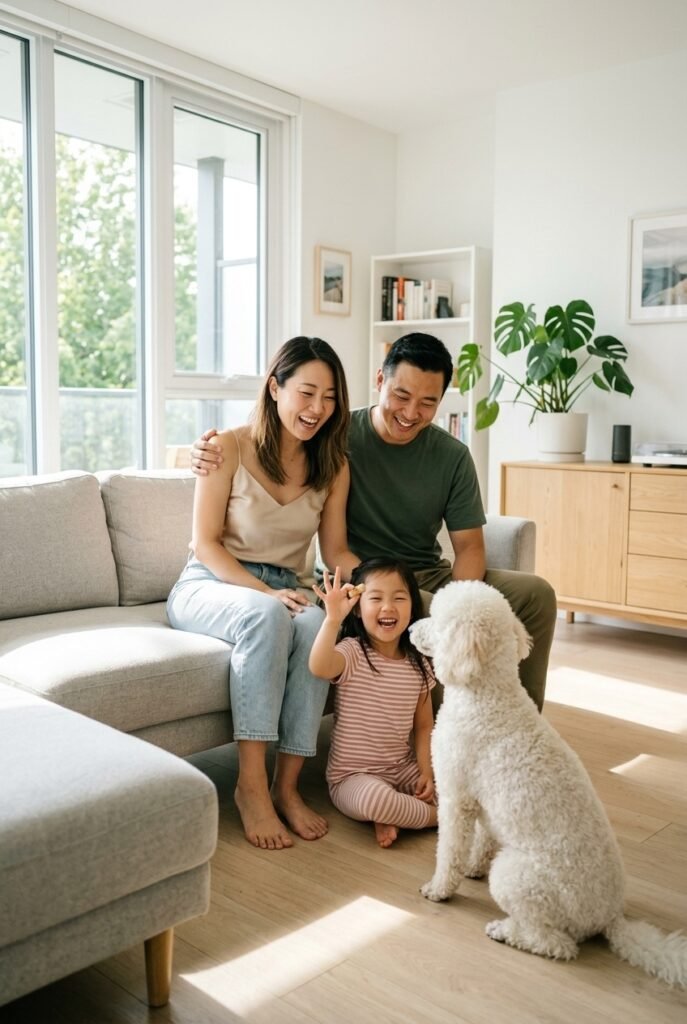
A lot of people underestimate Poodles because of the grooming reputation, but the personality more than makes up for the haircut appointments. Standard Poodles in particular are brilliant, playful, and deeply attached to their families. They learn new things fast — sometimes too fast — which means they need mental stimulation as much as physical exercise.
For families with allergies, Poodles are one of the better choices since their low-shedding coats are less likely to trigger reactions. The Miniature size works well in smaller homes. Either way, these dogs are warm and great with kids of all ages. They do thrive with consistent training, which also means kids can get involved in teaching them tricks — a genuinely fun bonding experience.
7. Boxer
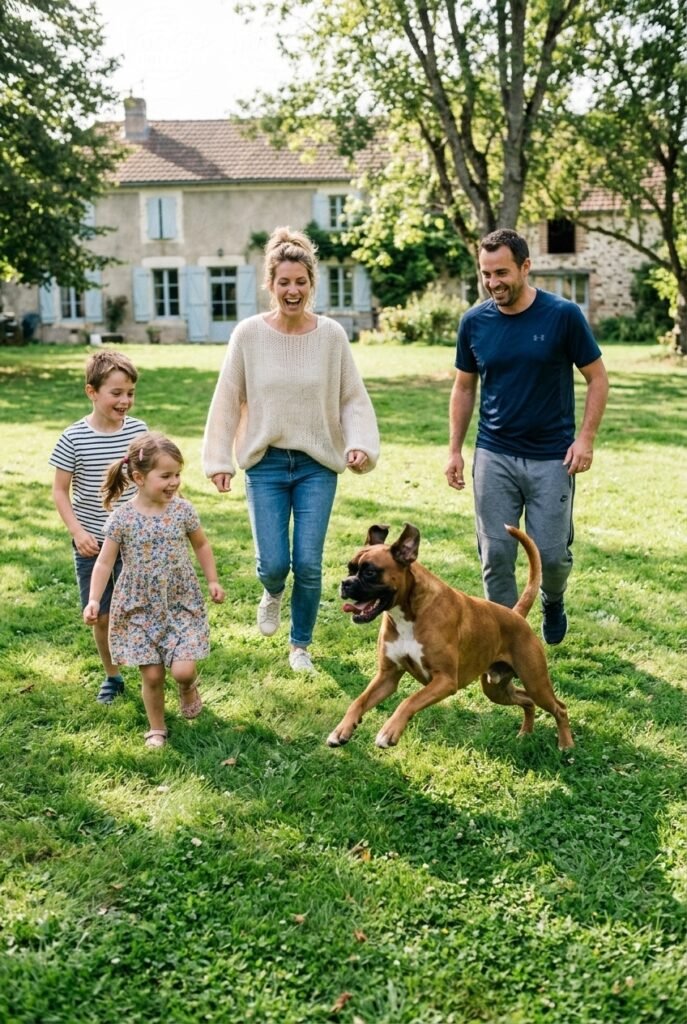
Boxers look a bit intimidating, but anyone who has spent time around them knows they’re essentially oversized puppies. They’re playful, goofy, energetic, and absolutely devoted to their families. Kids love them because Boxers match their energy level and are always ready to play.
They’re patient and protective without being aggressive, making them reliable around children. Boxers are also relatively easy to train and respond well to positive reinforcement. The catch is their energy — this is a high-activity breed that needs a lot of daily exercise. A Boxer that doesn’t get enough stimulation can become destructive. But for an active family, they’re one of the most joyful breeds you can bring home.
8. Bichon Frisé
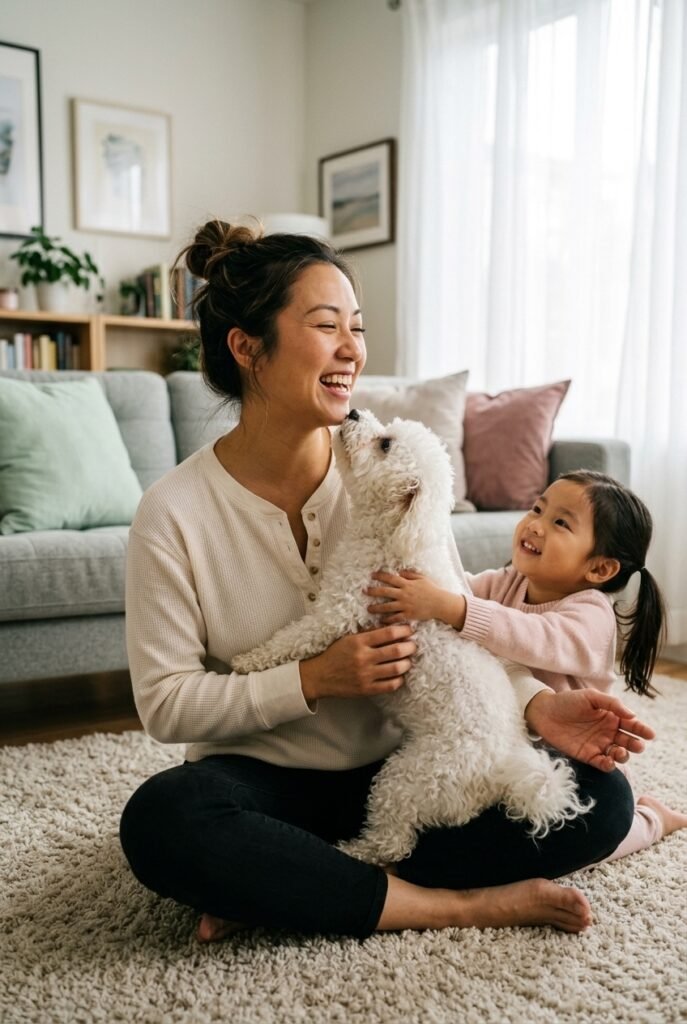
Don’t let the small size fool you — Bichons have big personalities and a genuinely sunny disposition. They’re friendly with strangers, adaptable to apartment living, and get along well with other pets and children. They’re the kind of dog that’s happy to see everyone and doesn’t tend to develop strong fears or anxieties.
Because they don’t shed much, they’re a popular option for families where someone has mild allergies. They’re not as athletic as some of the other breeds on this list, but they still need regular playtime and short walks to stay mentally healthy. Bichons also tend to be very trainable, and their affectionate nature makes them quick to bond with kids.
9. Irish Setter
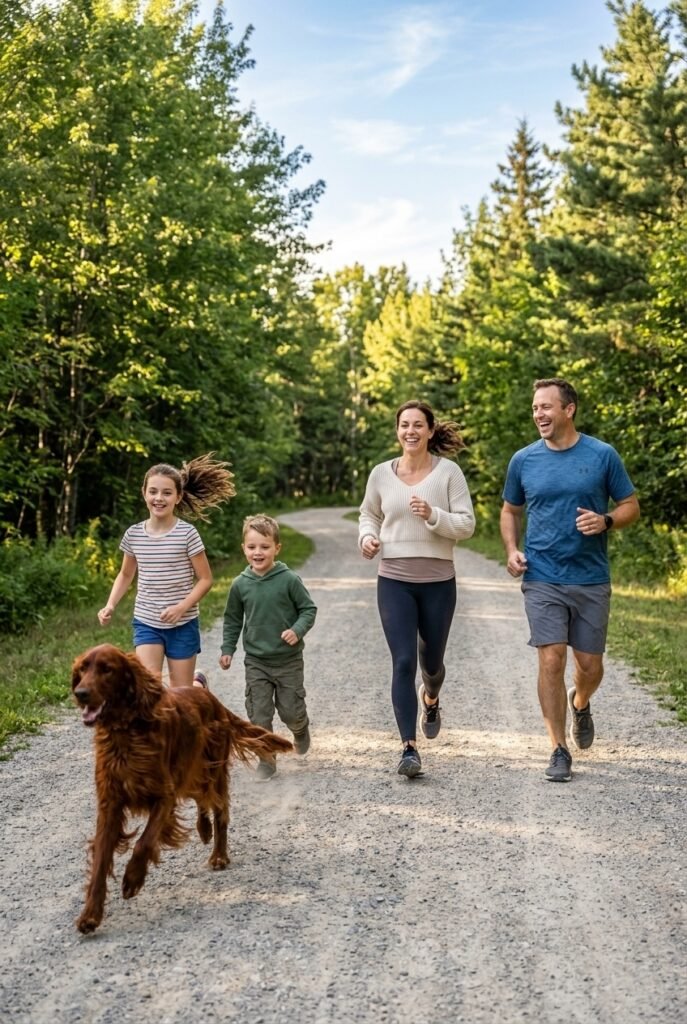
Irish Setters are one of those breeds that brings pure energy and warmth into a home. They’re enthusiastic, people-loving, and get along beautifully with children of all ages — including babies. Their friendly temperament is hard to rattle, which makes them well-suited to the kind of noise and unpredictability that kids bring.
They do need a lot of exercise. This is a sporting dog at heart, and without adequate activity, their behavior can get a little wild. Their long, silky red coat is also a grooming commitment. But for a family that loves being outdoors and wants a dog that will genuinely run and play alongside the kids for years, an Irish Setter is a fantastic match.
10. Newfoundland
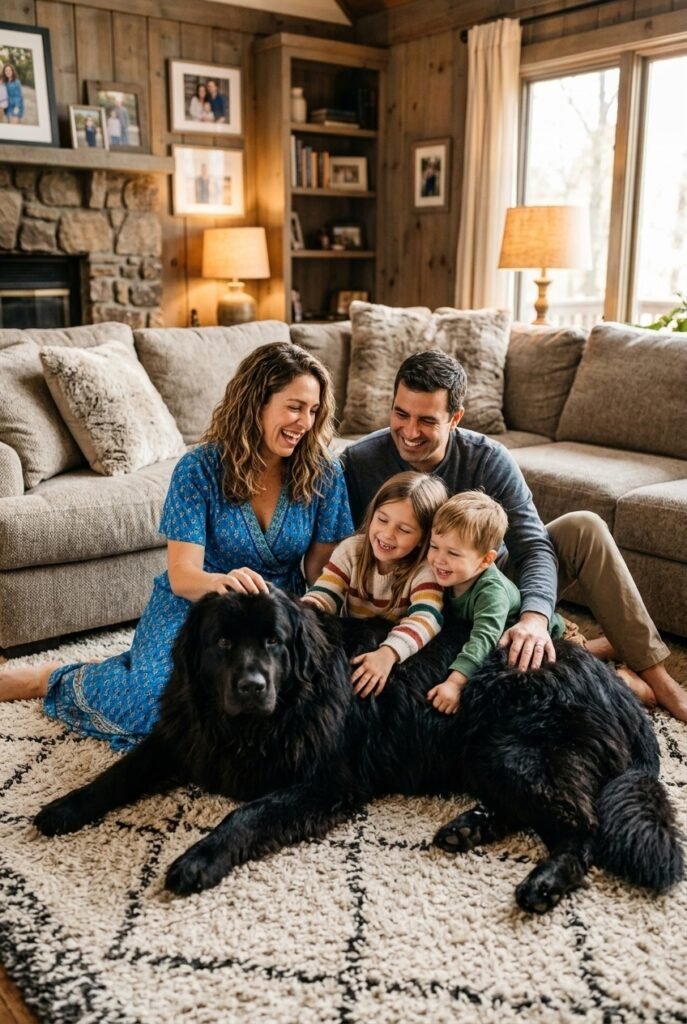
Called “the gentle giant” for good reason, the Newfoundland is one of the most naturally calm and patient breeds in existence. These dogs are enormous — often over 100 pounds — but they’re careful, sweet-tempered, and instinctively gentle around children. There are stories of Newfies acting as unofficial lifeguards around water because of their protective nature.
They need space, clearly, and their coats require regular brushing. They drool. They shed. They take up a lot of room on the couch. But in terms of reliability with kids, patience under chaos, and sheer lovability, few breeds come close. Early socialization helps them understand their own size, since they don’t always realize how big they are.
The Bond Your Family Has Been Waiting For
Choosing the right dog for your household isn’t just about finding a breed that tolerates kids — it’s about finding one that genuinely fits your family’s rhythm, energy, and lifestyle. Some families need a calm lap dog; others need a trail companion. The right answer is different for every home.
What every breed on this list has in common is a proven history of patience, adaptability, and real affection for the children in their lives. When that connection clicks, a dog doesn’t just become part of the family — it becomes one of the things your kids will talk about for the rest of their lives.
Frequently Asked Questions
Q: What is the single best dog breed for a family with young children? A: There’s no one-size-fits-all answer, but Golden Retrievers and Labrador Retrievers consistently top the list because of their patient, gentle natures and high tolerance for the unpredictable behavior of young kids.
Q: Are large dog breeds safe around toddlers? A: Many large breeds — like Newfoundlands, Bernese Mountain Dogs, and Labrador Retrievers — are actually very gentle and careful around toddlers. Size alone isn’t the deciding factor; temperament and training matter far more.
Q: What dog breeds are good for families with allergies? A: Poodles and Bichon Frisés are popular choices for allergy-prone households because their coats shed very little. No dog is completely allergy-free, but these breeds tend to cause fewer reactions.
Q: Is it better to get a puppy or an adult dog when you have kids? A: Both have advantages. Puppies can be socialized alongside your children from the start, but they require significant training time and supervision. Adult dogs often come with established temperaments, which makes it easier to assess whether they’ll be good with kids before bringing them home.
Q: How important is training for a family dog? A: Very. Even the most naturally gentle breed benefits from early obedience training. It makes the dog easier to manage, keeps children safer, and actually strengthens the bond between the dog and the whole family.
Q: Can small dogs be good with kids? A: Yes, though it depends on the breed. Beagles, Bichon Frisés, and Cavalier King Charles Spaniels are small but sturdy and patient. Tiny, fragile breeds like Chihuahuas aren’t always the best fit for homes with young children who don’t yet know how to handle dogs gently.
Q: Should children always be supervised with dogs? A: Yes, regardless of breed. Every dog has its limits, and young children don’t always understand boundaries. Supervised interactions — especially with toddlers — are the safest approach, even with the most family-friendly breeds.
Q: How much exercise do family dogs typically need? A: It varies widely. High-energy breeds like Boxers, Irish Setters, and Labs need substantial daily exercise — at least an hour or more. Calmer breeds like Cavalier King Charles Spaniels and Bichon Frisés do well with shorter daily walks and indoor play.
Q: What traits should I look for beyond breed when choosing a family dog? A: Individual temperament, early socialization history, and how the dog interacts with your kids when you first meet it all matter. Breed gives you a starting point, but every dog is its own personality.