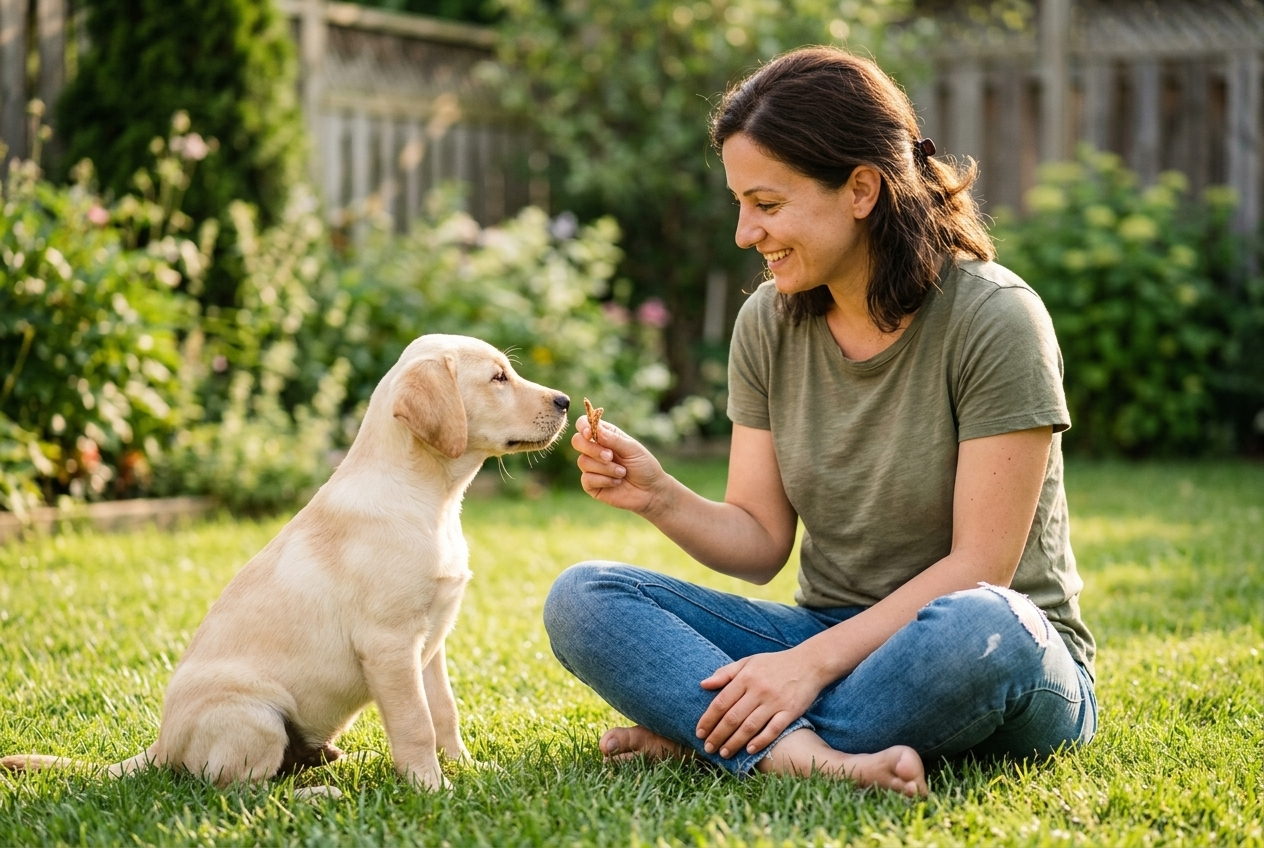
Dogs are smarter than most people give them credit for. They watch you constantly, pick up on your moods, and are genuinely trying to figure out what you want from them. The problem isn’t that they’re stubborn — it’s that they often don’t understand the communication. That’s where reward-based training changes everything.
The science behind this approach has been settled for decades. Dogs learn by making connections between their actions and what follows. When something good happens right after they do something, they remember it and repeat it. It’s not complicated in theory, but the execution requires knowing a few things most dog owners never get told.
Whether your dog is a brand-new puppy or a fully grown adult who never quite got the hang of commands, these 10 training principles work. They’re used by certified professional trainers, backed by animal behavior research, and easy enough to apply at home starting today.
- 1. Find What Your Dog Actually Values
- 2. Get Your Timing Right — Within Seconds
- 3. Use a Marker Word or Clicker to Bridge the Gap
- 4. Start With Luring, Then Fade It Out
- 5. Try Capturing Behaviors Your Dog Already Does
- 6. Shape Complex Behaviors in Small Steps
- 7. Keep Sessions Short and Focused
- 8. Switch to a Variable Reward Schedule Once a Behavior Is Learned
- 9. Proof Commands in New Environments and With Distractions
- 10. Redirect Instead of Correcting
- Your Dog Is Always Learning — Make It Count
- Frequently Asked Questions
1. Find What Your Dog Actually Values
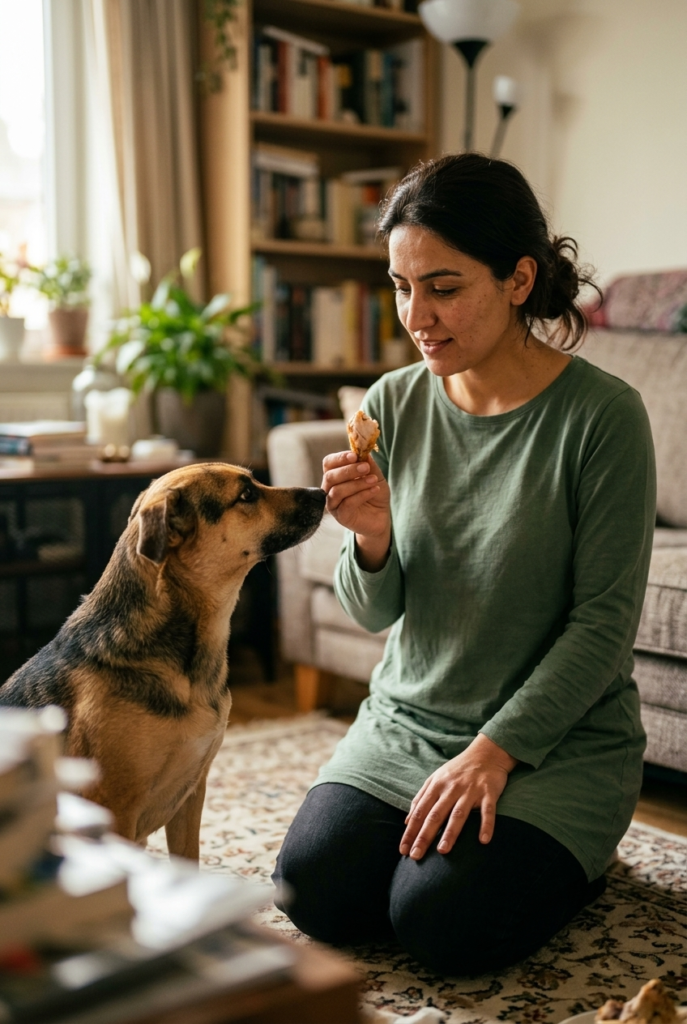
Not every dog goes crazy for a piece of kibble. Some dogs will sprint across a field for a ball, while others melt for a slice of chicken breast. A few couldn’t care less about food but will do anything for a game of tug.
Before any real training begins, figuring out what your dog finds genuinely exciting matters more than any technique. Trainers call this the “reinforcer” — and it’s personal to each dog. High-value rewards (think real meat, cheese, freeze-dried liver) are best saved for harder tasks or new environments with lots of distractions. Lower-value rewards, like dry biscuits, work fine for skills your dog already knows well.
The key is that the reward has to mean something to your dog in that moment, not just in general. A dog that’s just eaten a big meal won’t be motivated by treats the way a slightly hungry dog will be.
2. Get Your Timing Right — Within Seconds
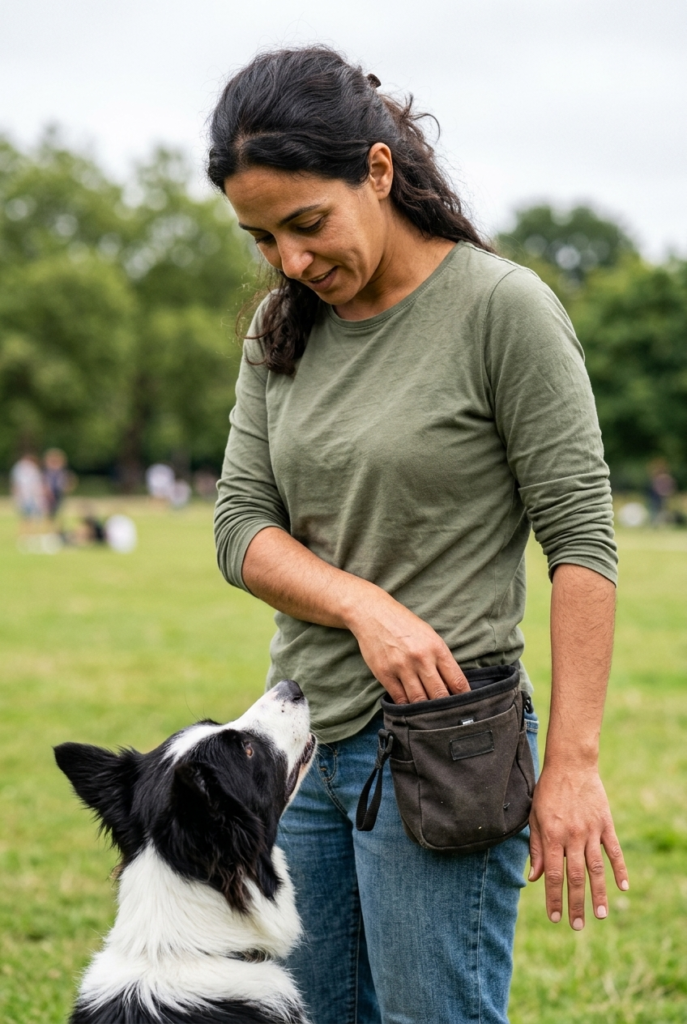
This is probably the single most misunderstood part of reward-based training. The reward needs to come within one to two seconds of the exact moment your dog does the right thing. Research on how dogs learn confirms that even a five-second delay is enough to confuse them about which behavior earned the treat.
Dogs can’t reflect on what they did a few seconds ago the way people can. If your dog sits, you say “good girl,” and then you walk to the kitchen to get a treat — what you’ve actually rewarded is whatever she was doing while you walked. Maybe she followed you. Maybe she sniffed the floor.
Keeping treats in a pocket or a small pouch during training sessions solves this completely. The faster the reward follows the behavior, the clearer the communication.
3. Use a Marker Word or Clicker to Bridge the Gap
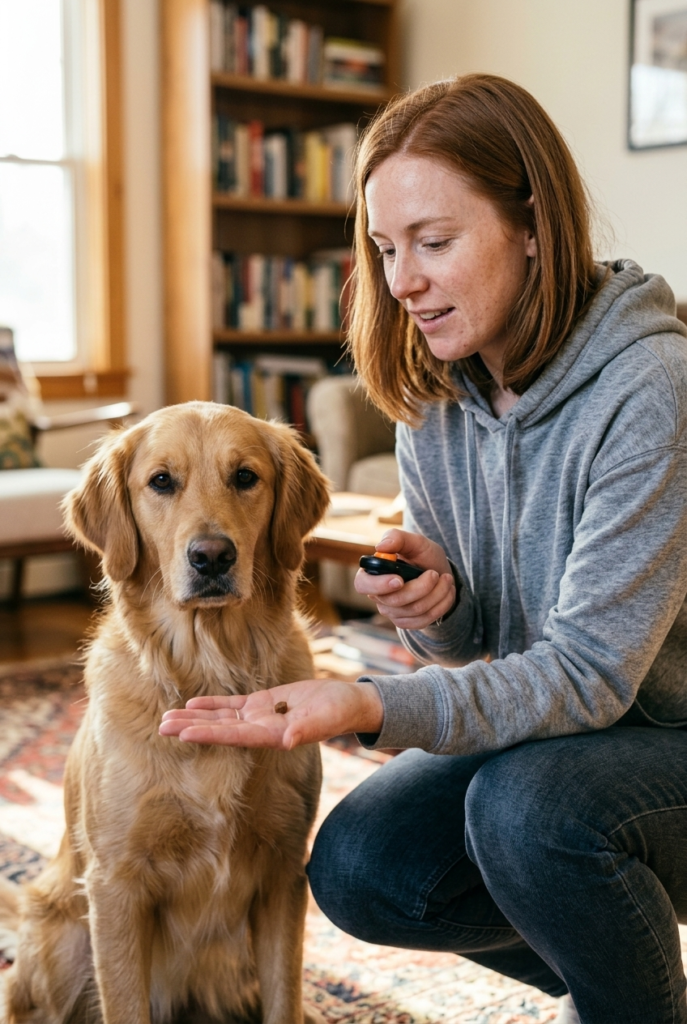
Since reaching into your pocket still takes a second or two, trainers use what’s called a “bridge” — something that instantly marks the exact behavior being rewarded, even before the actual treat arrives.
A clicker works beautifully for this. The sharp, consistent sound means “yes, that exact thing you just did” and your dog learns quickly that a click always predicts a reward. Many women find this easier to use than it sounds — one hand holds the clicker, the other has the treat ready.
A verbal marker like the word “yes!” said in a clear, bright tone does the same job if you’d rather skip the clicker altogether. The point is consistency. Whatever word or sound you choose, use it the same way every single time — the moment the behavior happens, before anything else.
4. Start With Luring, Then Fade It Out
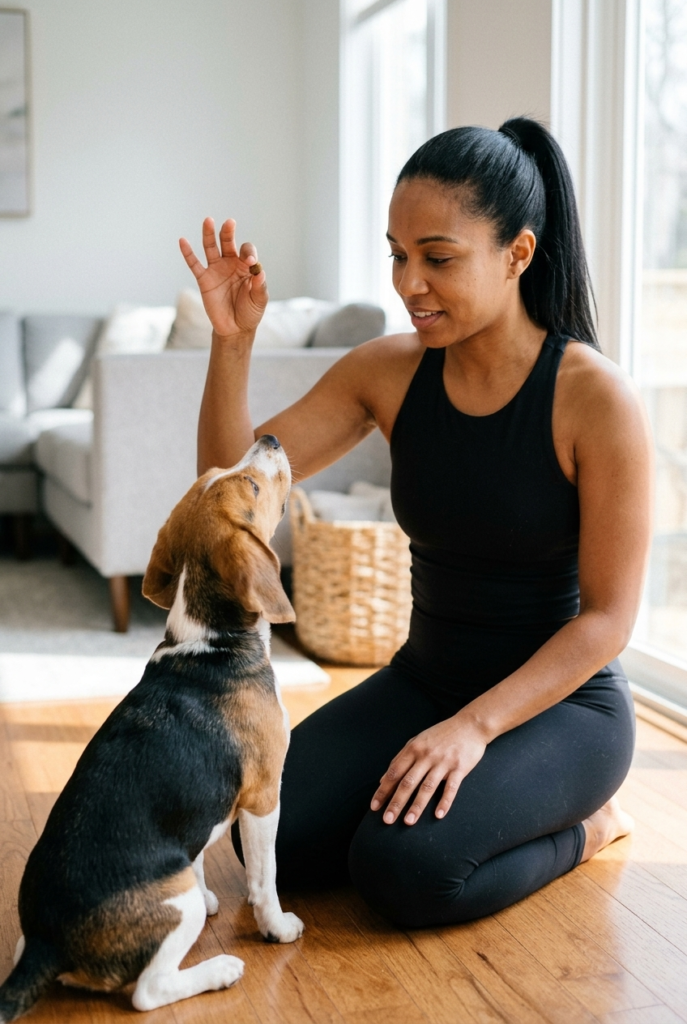
Luring means using a treat to physically guide your dog into a position. Hold a treat near your dog’s nose and slowly move your hand upward — most dogs will naturally sit as their nose follows the treat and their rear goes down.
It’s fast, clear, and almost foolproof for teaching basics like sit, down, and spin. The catch is that too many owners keep using the lure forever and accidentally teach their dog to only respond when they can see food in the hand.
The fix is straightforward: after your dog has followed the lure successfully a handful of times, start doing the same hand motion without a treat in that hand. Deliver the reward from your other hand or your pocket after the behavior happens. Within a few sessions, your dog will respond to the hand signal, not the food itself.
5. Try Capturing Behaviors Your Dog Already Does

Capturing is one of those techniques that feels almost too easy. The idea is to wait for your dog to naturally do something you want — then mark it and reward it the moment it happens.
Want to teach your dog to lie down on cue? Every time she settles onto the floor on her own, say “yes!” and toss a treat her way. Repeat this enough times and she starts to notice that lying down makes good things happen. Once she’s offering it more frequently, add the verbal cue right before she does it.
This works especially well for behaviors that are tricky to lure, like a relaxed “place” command or even a calm greeting at the door. It takes more patience than luring, but the behavior tends to be reliable because the dog figured it out herself.
6. Shape Complex Behaviors in Small Steps
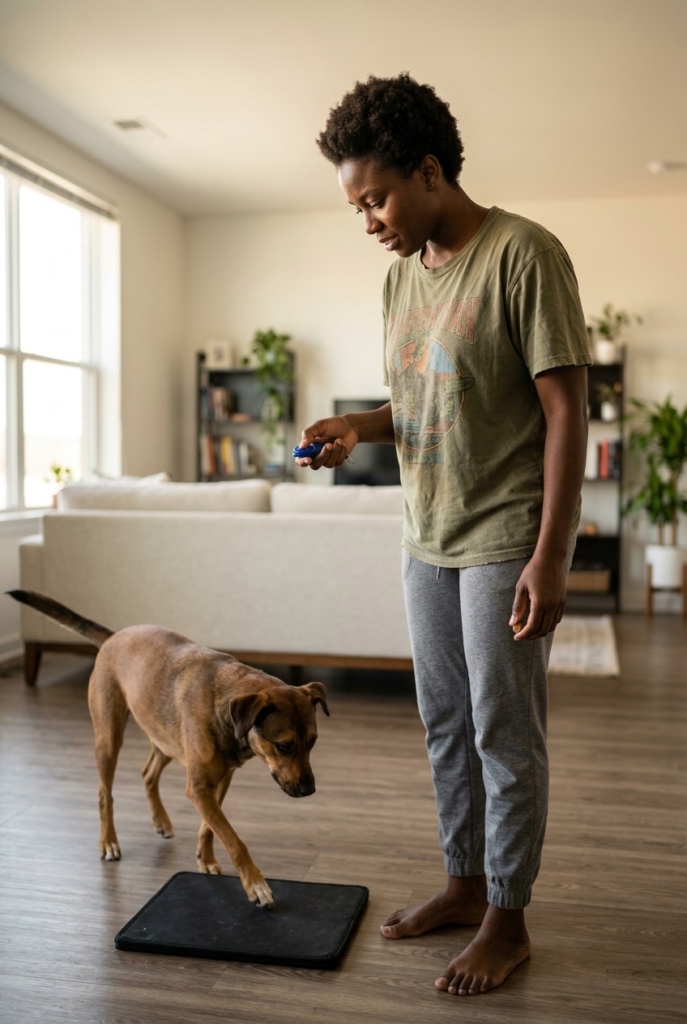
Shaping takes a bigger goal and breaks it into tiny achievable pieces, rewarding small approximations along the way until the full behavior comes together.
Say you want your dog to go to a specific mat and lie down on it. You don’t wait for the perfect finished behavior on day one. You reward her for looking at the mat. Then for walking toward it. Then for stepping on it. Then for standing on it. Eventually for sitting, then lying down.
Each tiny win gets marked and rewarded, and your dog learns to offer more and more because she knows you’ll notice. Shaping builds mental engagement and focus — and according to many trainers, dogs who are shaped rather than always lured tend to be more creative problem-solvers in general.
7. Keep Sessions Short and Focused
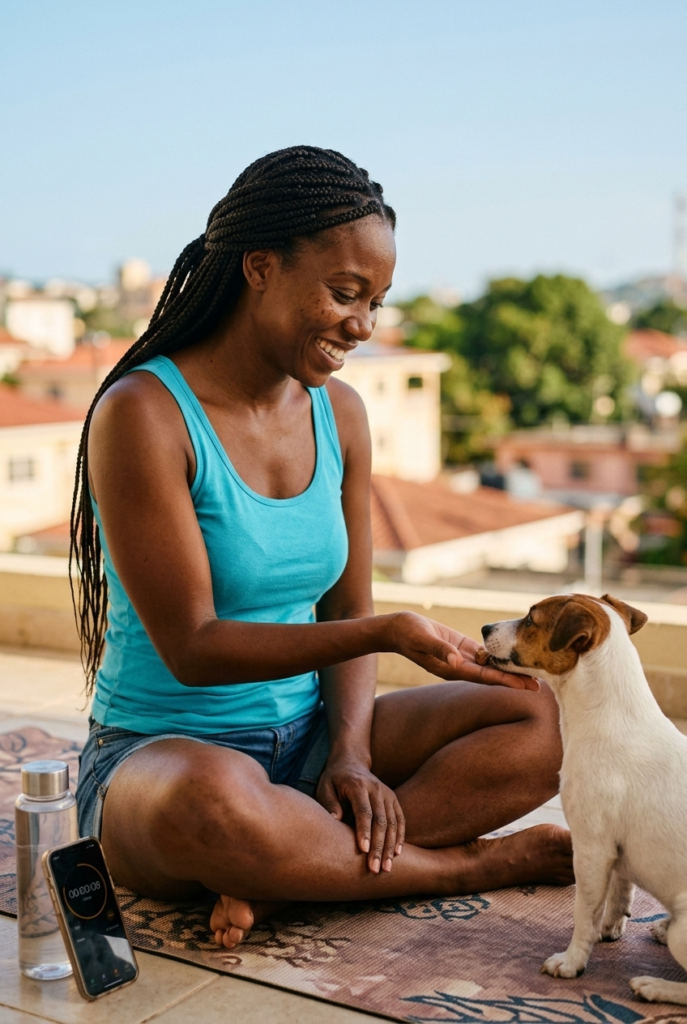
Dogs don’t learn well when they’re tired or mentally overloaded. Most professional trainers recommend keeping sessions between five and fifteen minutes, especially when teaching something new. Two or three short sessions spread through the day often produce faster results than one long one.
Signs that your dog is mentally done include: yawning, sniffing the floor obsessively, sitting and staring at you blankly, or making lots of errors on things she knew five minutes ago. When you see those signs, end the session on a successful easy behavior and come back later.
Short sessions also help you stay patient. It’s much easier to be consistent and upbeat for ten minutes than for forty.
8. Switch to a Variable Reward Schedule Once a Behavior Is Learned
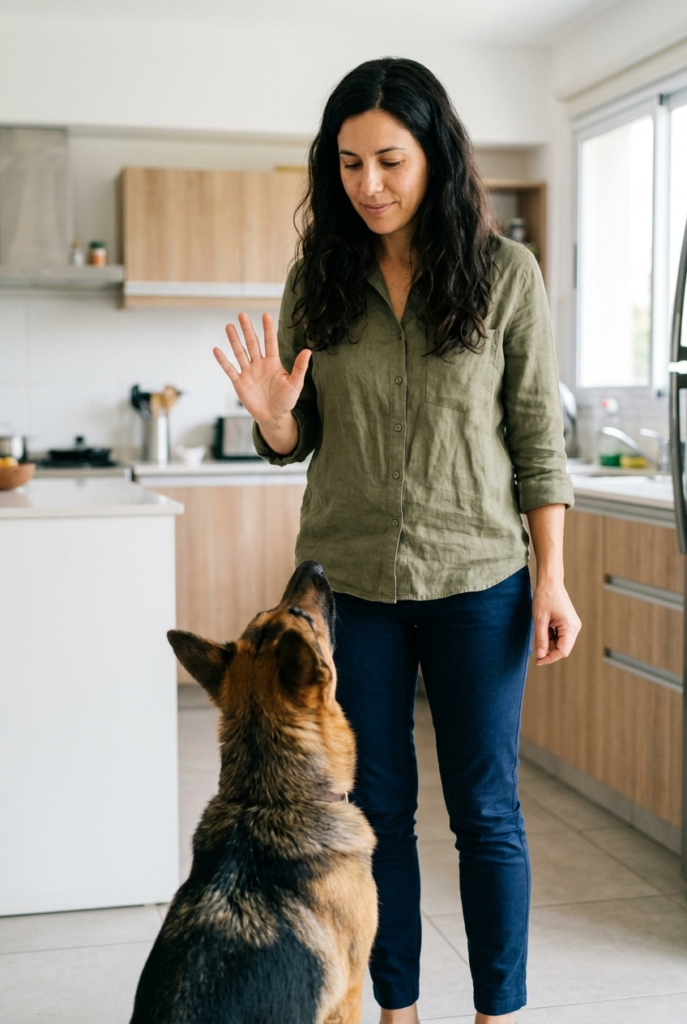
This one surprises a lot of people. Once your dog knows a command reliably, you actually get better results by not rewarding every single repetition.
This is called a variable reinforcement schedule, and the psychology behind it is well-established. When rewards come unpredictably — sometimes after one repetition, sometimes after three, sometimes not at all — the behavior actually gets stronger and more persistent. Think about why people keep checking their phones: it’s because they never know when something interesting will be there.
The practical version: once your dog reliably sits on cue, reward every other time. Then every few times. Keep some verbal praise every time, but save the treat for random repetitions. Your dog stays engaged because she’s always wondering if this might be the time.
9. Proof Commands in New Environments and With Distractions
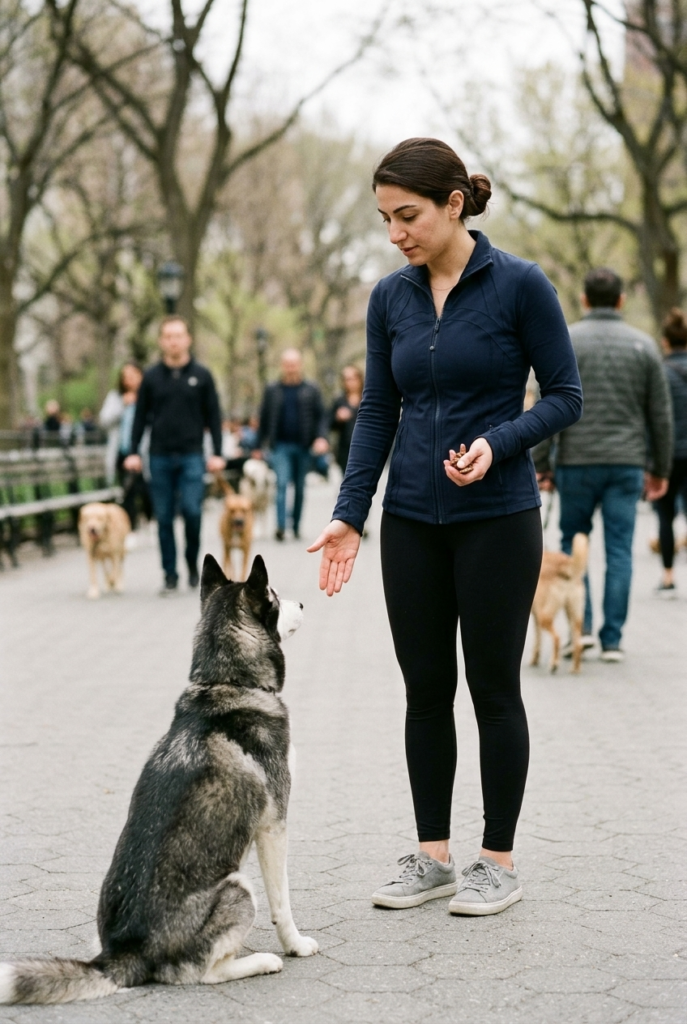
This one catches almost every dog owner off guard. A dog who sits perfectly in the kitchen and seems to have forgotten her own name at the dog park isn’t misbehaving — she simply hasn’t been taught that “sit” means the same thing everywhere.
Dogs don’t generalize commands automatically. You have to practice in multiple locations, with gradually increasing distractions, for the behavior to become truly reliable. Start with low-distraction versions of harder environments — a quiet parking lot before a busy trail, for example — and go back to higher-value rewards when you’re practicing somewhere new.
Trainers call this “proofing,” and it’s what separates a dog who obeys in your living room from one who actually listens when it counts.
10. Redirect Instead of Correcting
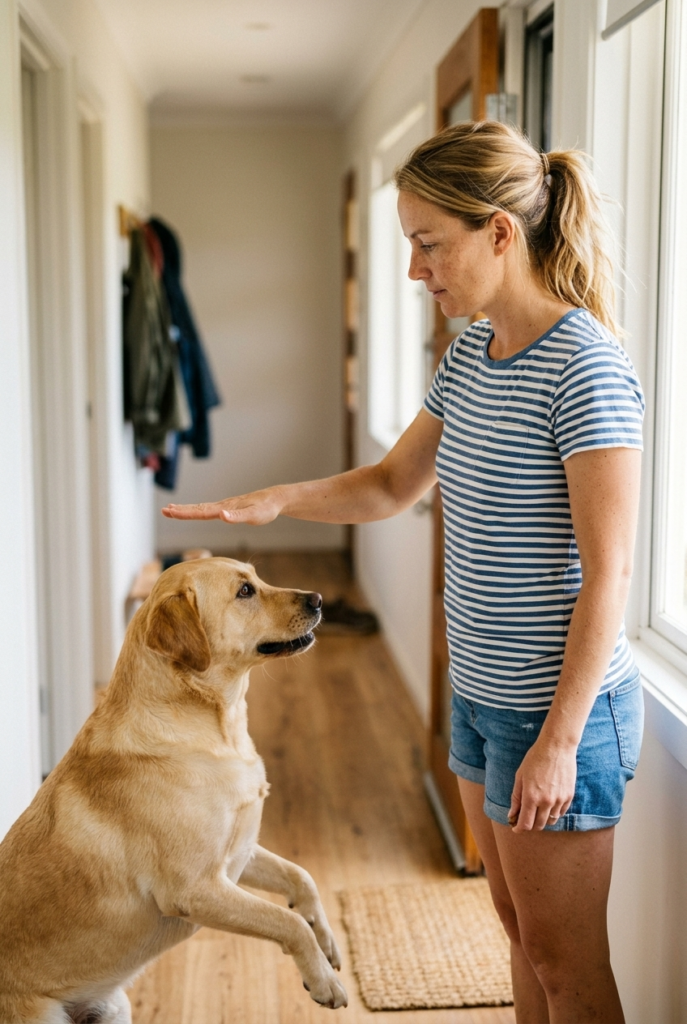
When your dog does something you don’t want — jumping up, barking at guests, pulling on the leash — the most effective move isn’t punishment. It’s redirection to a behavior that’s incompatible with the unwanted one.
A dog can’t jump on you and sit at the same time. So instead of reacting to the jumping, ask for a sit the moment she approaches, then reward the sit generously. Over time, she learns that approaching people calmly is what gets her the attention she’s after.
Punishment-based methods — scolding, physical corrections, shock collars — can suppress behavior temporarily, but behavioral research consistently shows they increase anxiety and can actually create aggression in dogs who had no prior tendency toward it. Redirection works with your dog’s brain instead of against it.
Your Dog Is Always Learning — Make It Count
The beauty of reward-based training is that it doesn’t require special equipment, a ton of time, or a naturally easy dog. What it needs is consistency, observation, and a willingness to see things from your dog’s perspective.
A dog who understands what you want from her is a dog who’s calmer, more confident, and genuinely easier to live with. That doesn’t happen through demanding compliance — it happens through clear communication and a whole lot of well-timed treats. The ten principles above give you a practical framework to build exactly that, whether you’re starting from scratch or retraining habits that have been around for years.
Frequently Asked Questions
Q: How soon can I start positive reinforcement training with a puppy? A: You can start from the very first day your puppy comes home. Even eight-week-old puppies can learn basic behaviors like sit, name recognition, and focus. Short sessions of just two to three minutes are plenty at that age.
Q: Can positive reinforcement training work on older dogs? A: Yes, completely. Adult and senior dogs respond well to reward-based methods — in fact, many older dogs who were trained with harsher methods in the past show noticeable improvements in confidence and engagement when switched to this approach.
Q: How many treats will my dog need long-term? A: A lot in the beginning, far fewer as behaviors become reliable. Once a command is solid, you move to a variable schedule and can phase treats down significantly. Praise, play, and life rewards (like a walk or the chance to sniff something exciting) can replace food rewards over time.
Q: My dog only listens when I have treats. What’s going wrong? A: This usually means the lure wasn’t faded out early enough. The dog learned to respond to the visible treat, not the actual cue. Go back to basics: practice the hand signal without food in that hand and deliver the reward from your pocket after the behavior happens.
Q: How long does it typically take to teach a new behavior? A: Simple behaviors like sit or down can be taught in just a few short sessions. More complex skills or behaviors that require proofing across environments can take weeks of consistent practice. Progress depends on the individual dog, the clarity of your communication, and how often you train.
Q: Is it ever okay to say “no” to my dog? A: A calm “no” or a neutral “nope” as information (letting your dog know that wasn’t quite right) is fine when used sparingly. What doesn’t help is repeated, frustrated, or loud corrections — these create anxiety without teaching your dog what to do instead. Redirection to the right behavior is always more effective.
Q: What if my dog isn’t food motivated at all? A: Very few dogs have zero interest in food — but some do prefer play, access to smells, or affection as a reward. Experiment with different toys, tug games, or real-meat treats before assuming food won’t work. If your dog genuinely seems unmotivated by everything, it’s worth checking with a vet to rule out any underlying health issues.
Q: Should I train every single day? A: Daily training — even just five to ten minutes — produces faster results than occasional longer sessions. Consistency is far more important than session length. A few minutes each day, spread across different contexts, builds reliability much more quickly than weekend-only practice.