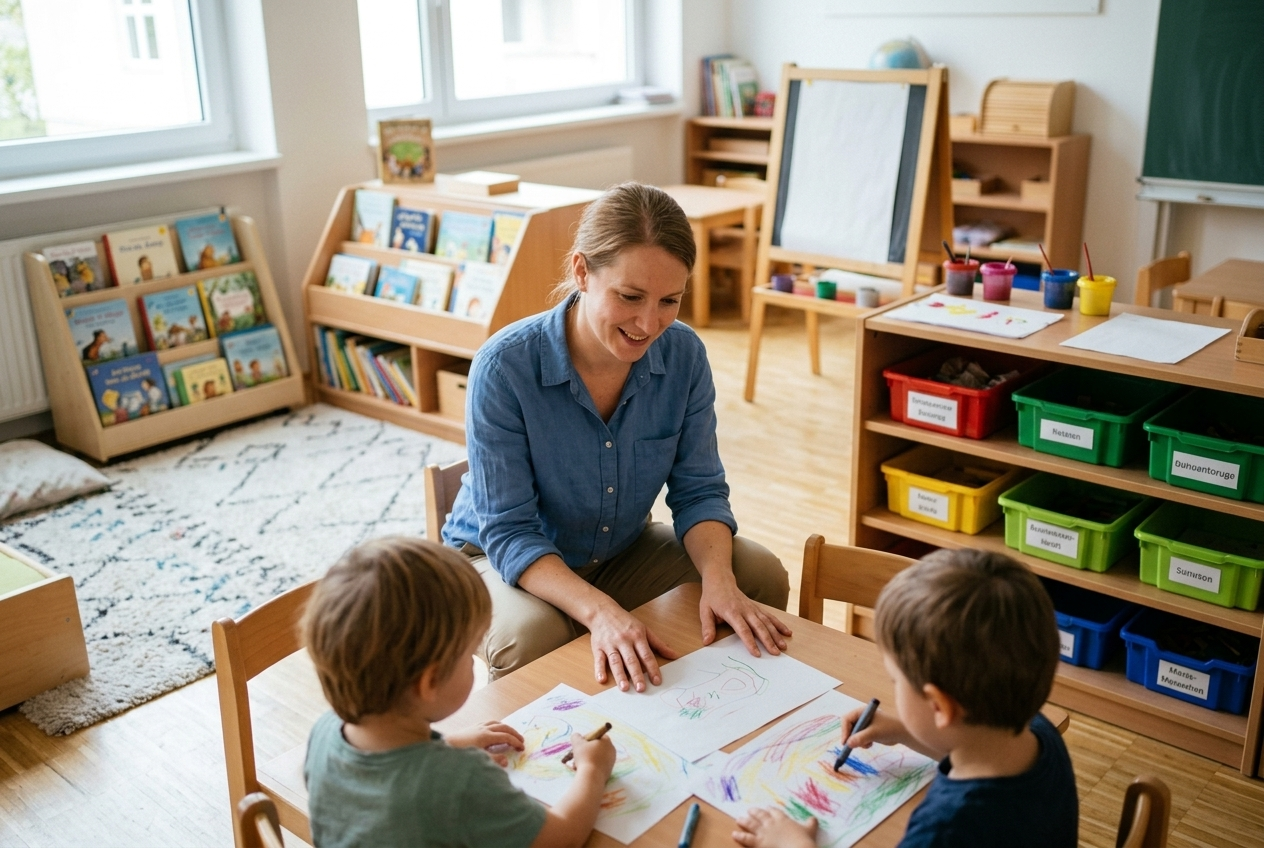
The way a classroom is set up can shape how a child learns, behaves, and feels — often more than teachers realize. Young children are extraordinarily sensitive to their surroundings. The layout of the room, the colors on the walls, where materials are stored, even the type of seating available — all of it sends a message to a child’s brain about what kind of space this is and what they’re expected to do in it.
For parents and educators, this is both a challenge and an opportunity. A cluttered, poorly organized room can make kids feel overwhelmed and distracted. But a space that’s been thoughtfully designed? That same room can spark curiosity, calm anxious little ones, and make learning feel like something children genuinely want to do.
The good news is that a great early childhood classroom doesn’t require a big budget or a complete renovation. Small, intentional changes can make a real difference. What follows are nine classroom setup ideas grounded in current research and practical experience — the kind of ideas educators across the country are putting to work right now.
- 1. Divide the Room into Distinct Learning Centers
- 2. Bring in Flexible Seating Options
- 3. Set Up an Open-Ended Art Studio Area
- 4. Create a Cozy Reading Nook
- 5. Add a Sensory Play Station
- 6. Designate a Calm-Down Corner
- 7. Incorporate Nature-Inspired Elements
- 8. Use Color Intentionally
- 9. Build in a Dramatic Play Zone
- The Space Shapes the Learning
- Frequently Asked Questions
1. Divide the Room into Distinct Learning Centers
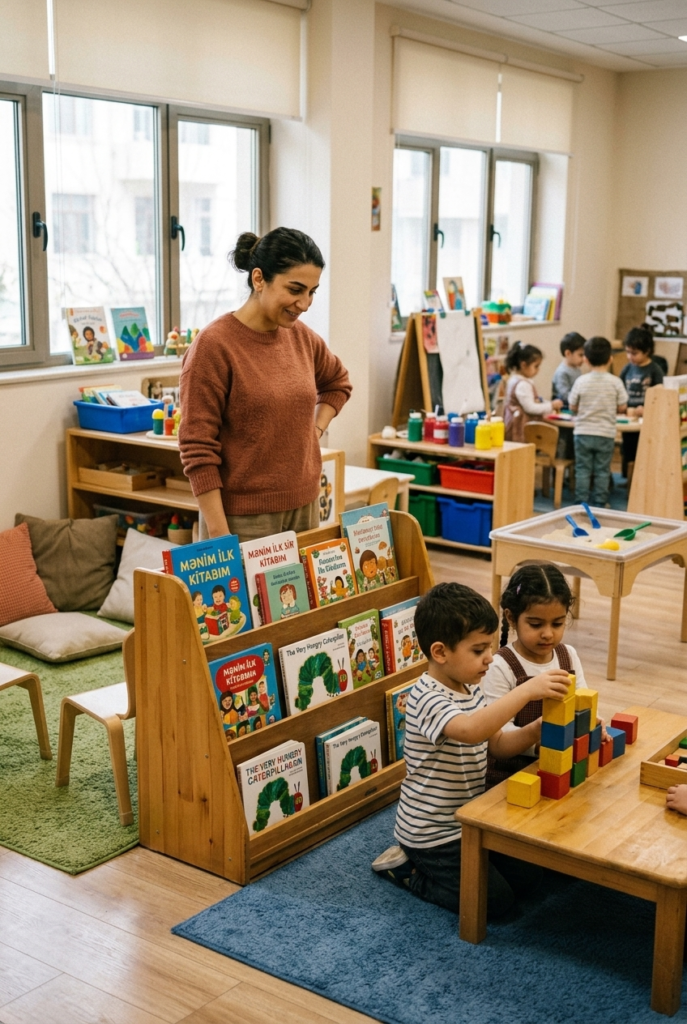
Rather than setting up one big open space for everything, breaking the classroom into clearly defined zones is one of the most effective things a teacher can do. Reading corners, art areas, sensory play stations, block-building zones — each one signals to children what kind of activity belongs there and helps them focus on the task at hand.
This kind of zoning also supports smoother transitions throughout the day. Kids know where to go and what to expect, which reduces the chaos that comes with switching between activities. Low bookshelves and simple rugs work beautifully as natural dividers without making the room feel boxed in or cramped.
Research from early learning programs consistently supports this approach. When children can move between clear, purposeful zones, they’re more likely to stay engaged and less likely to act out.
2. Bring in Flexible Seating Options
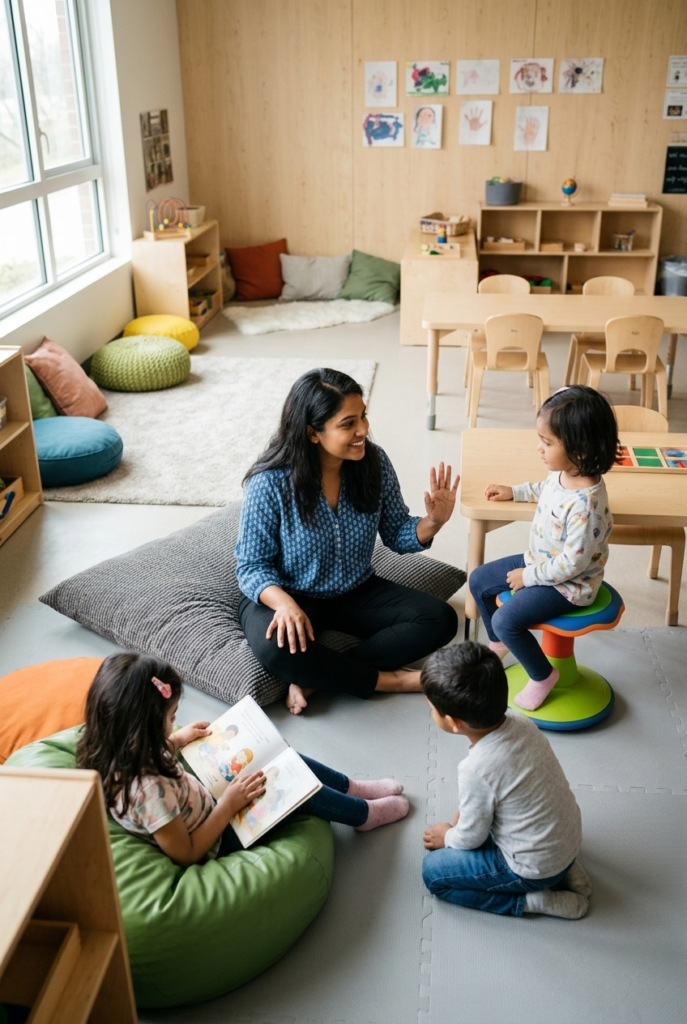
Standard rows of chairs and tables are not doing young learners any favors. Children, especially those ages two to five, need to move. Sitting still for extended periods goes against how their bodies and brains are wired.
Flexible seating — think floor cushions, wobble stools, low tables where kids can stand, bean bags tucked into reading corners — allows children to choose where and how they sit based on what helps them focus. Teachers who have made the switch often report better engagement and fewer behavioral disruptions, simply because children feel more comfortable and in control.
It doesn’t have to be a complete overhaul. Even adding a few cushions to one corner of the room gives kids options and signals that their comfort matters.
3. Set Up an Open-Ended Art Studio Area
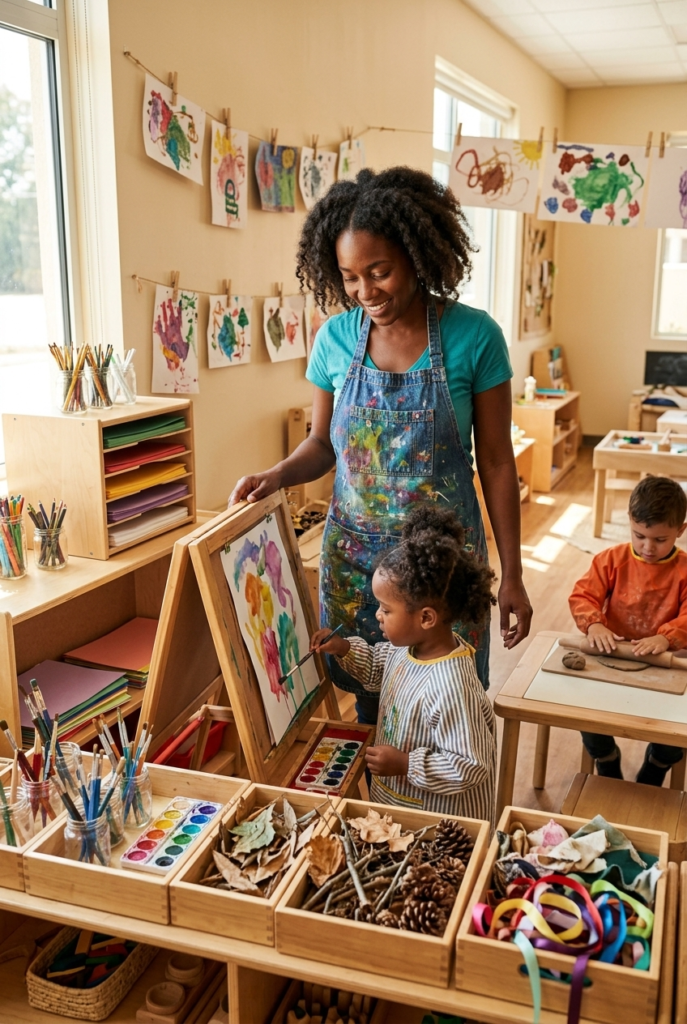
A dedicated art space does more than give children a place to paint. It builds self-expression, fine motor skills, and confidence — all at once. The key word here is open-ended. That means stocking the area with materials children can use freely, rather than setting up pre-made crafts where everyone produces the same result.
Easels, different types of paper, watercolors, clay, fabric scraps, and natural materials like leaves or twigs give children real choices. Displaying their finished work on a gallery wall — at their eye level, not just at adult height — shows them their creativity is valued.
This is different from teacher-directed craft projects. In an open-ended space, a child isn’t coloring inside the lines someone else drew. She’s making her own decisions about what to create and how. That’s where real learning happens.
4. Create a Cozy Reading Nook
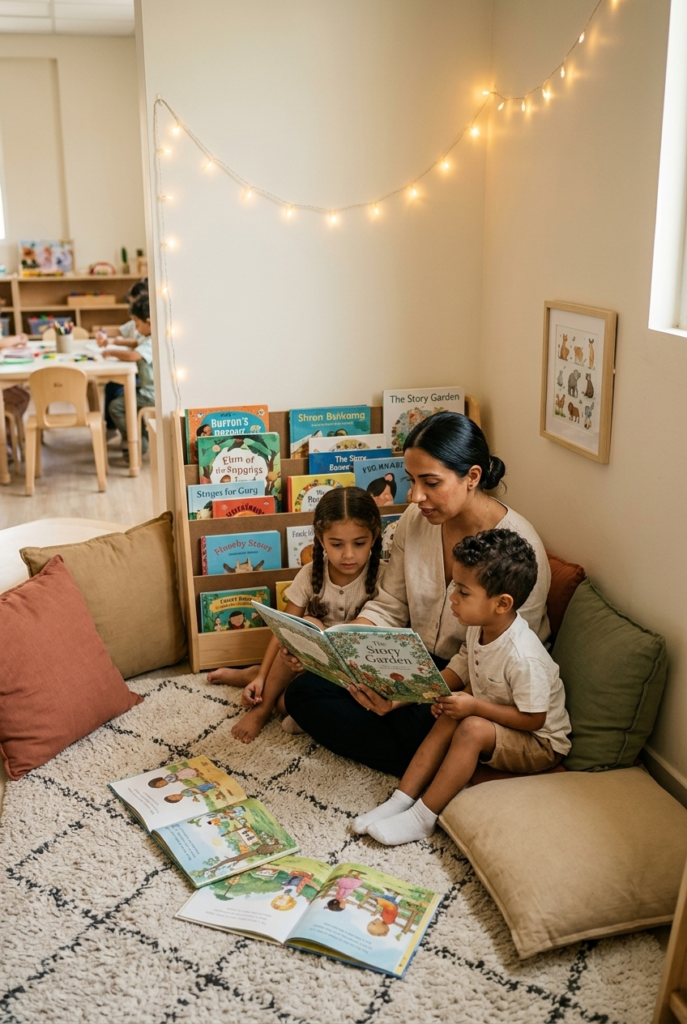
A well-designed reading corner can turn reluctant readers into book lovers. This doesn’t need much space — even a corner outfitted with a soft rug, a few floor cushions, a small bookshelf organized at children’s eye level, and some soft lighting can feel like a completely different world from the rest of the classroom.
The goal is to make the space feel special and inviting. When children associate books with comfort and calm, they naturally gravitate toward them. Rotating the book selection regularly keeps the nook feeling fresh. Including books that represent different cultures, family structures, and experiences helps every child see herself reflected in the stories available to her.
Keep the area small on purpose. A cozy nook feels like a retreat. A large, open book area doesn’t have the same pull.
5. Add a Sensory Play Station
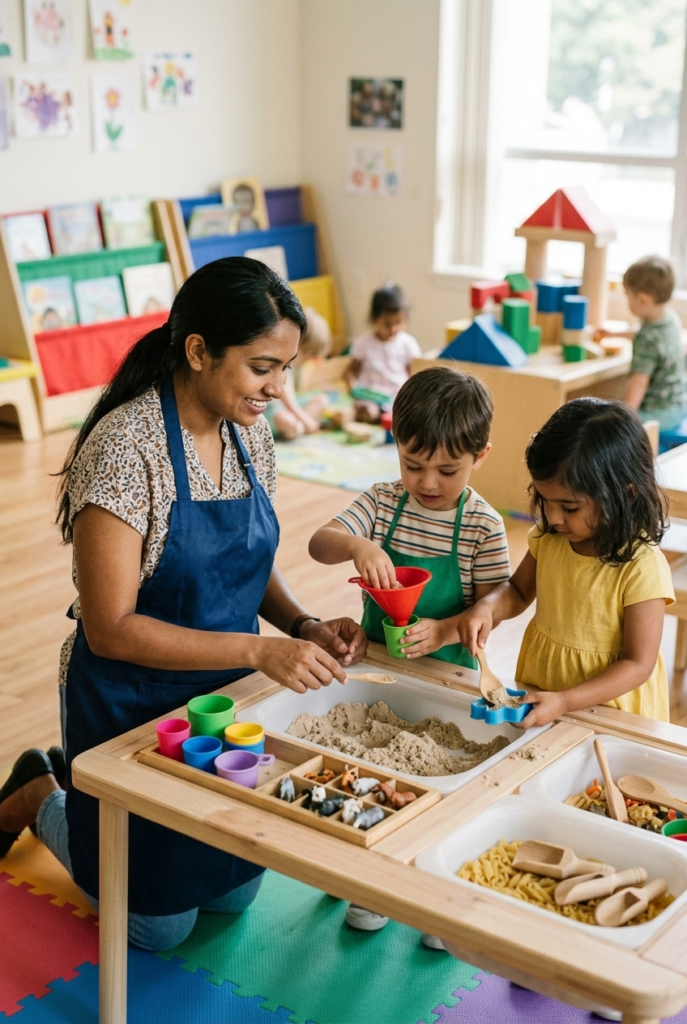
Sensory play — filling bins with sand, rice, water beads, kinetic sand, or shaving cream — is not just fun. It’s genuinely important for early development. Tactile experiences help children process information, regulate emotions, and build the kind of focus that carries over into more structured learning.
Setting up a permanent or semi-permanent sensory station in the classroom gives children regular access to this kind of exploration. The materials can rotate to keep things interesting: a water table one week, a bin filled with dried pasta and scoops the next. Adding small tools like funnels, spoons, and cups extends the play and builds early math skills like measuring and comparing.
Research has connected appropriate sensory activities to improved behavior management in preschool-aged children, making this one of the most practical additions any classroom can include.
6. Designate a Calm-Down Corner
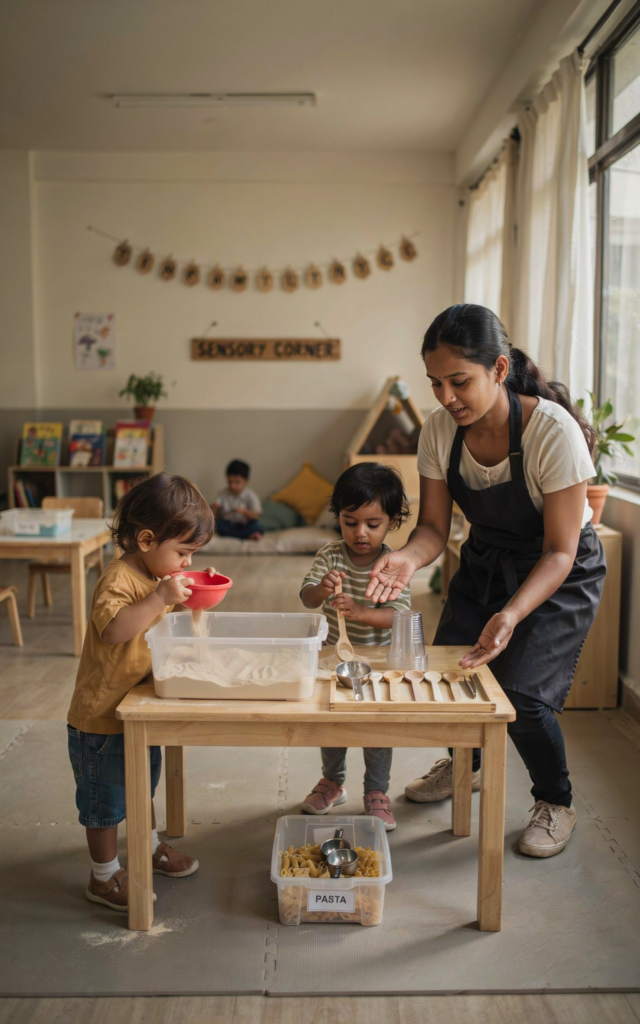
Young children don’t yet have fully developed emotional regulation skills. They get overwhelmed, frustrated, and overstimulated — and they need a safe place to manage those feelings. A calm-down corner addresses exactly that.
This area should feel soft and quiet: a small tent or canopy, a beanbag or floor cushion, maybe a few simple sensory tools like a stress ball or a glitter jar. The purpose is not punishment. It’s the opposite — it’s giving children a tool they can use independently when they feel too big emotions building up.
When kids know they have a place to go when things feel like too much, they’re less likely to act out. Over time, using the calm corner actually builds self-awareness and emotional intelligence, two skills that matter enormously in school and in life.
7. Incorporate Nature-Inspired Elements
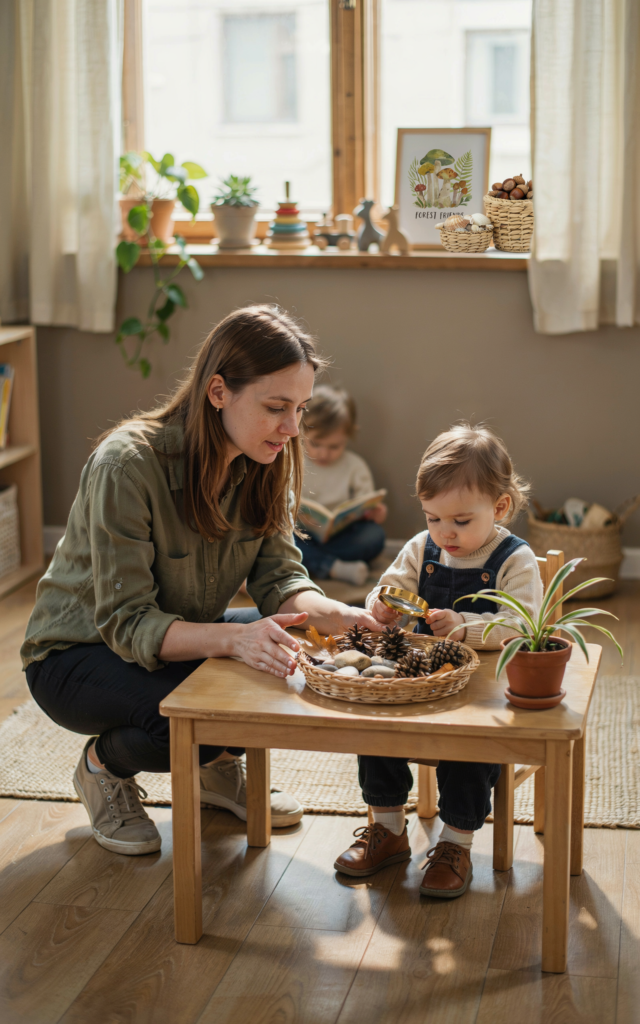
Bringing the natural world into the classroom — even in small ways — has a measurable effect on children’s wellbeing and curiosity. Potted plants (non-toxic ones, of course), nature-themed artwork, wooden toys, wicker baskets, and collections of smooth stones or shells can shift the feel of a room from institutional to genuinely calming.
Outdoor classrooms and nature walks are gaining real momentum in early childhood education right now, and many schools are finding ways to extend that philosophy indoors. A small science corner where children can observe plants growing, sort natural objects by size or texture, or look at insects under a magnifying glass connects classroom learning to the real world in a way that artificial materials simply can’t.
Natural elements don’t just look nice. They stimulate curiosity, encourage sensory exploration, and create a more peaceful atmosphere overall.
8. Use Color Intentionally
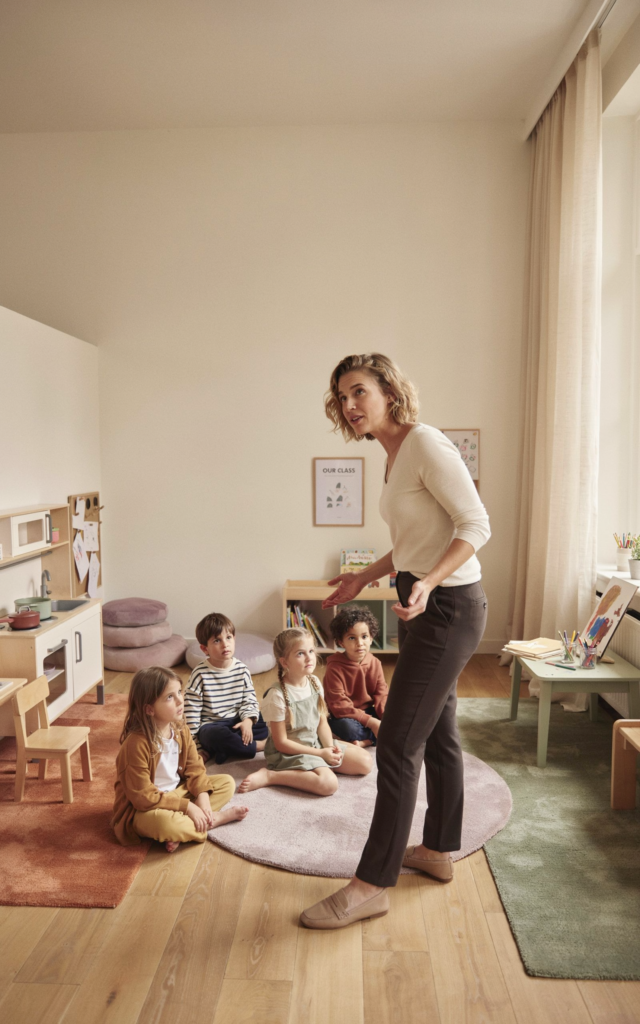
Color has a direct effect on mood and focus — even for adults, let alone young children. The impulse to make early childhood classrooms bright and stimulating makes sense, but going overboard with color can actually work against learning rather than for it.
The approach that’s getting traction now is color-coding by zone rather than painting everything in bold primary colors. A calming lavender corner for quiet reading, warmer tones in the dramatic play area, a neutral backdrop in the main instructional space — each choice supports the purpose of that area rather than competing with it.
Colorful rugs are an especially practical way to define different learning zones while adding visual interest without overwhelming the senses. The goal is balance: enough color to be stimulating, enough neutral space to allow the brain to rest.
9. Build in a Dramatic Play Zone
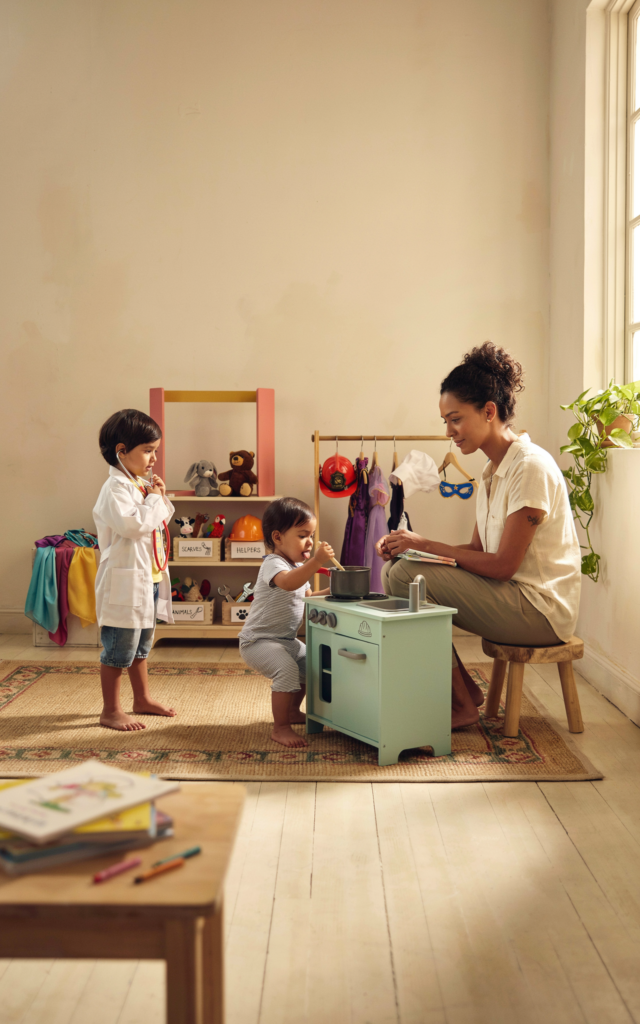
Dramatic play — dress-up corners, pretend kitchens, puppet theaters, simple prop boxes — is one of the richest learning activities in an early childhood classroom. Children working through imaginative play are practicing language, social skills, problem-solving, and emotional processing all at once.
A well-stocked dramatic play zone doesn’t need to be elaborate. A few scarves, some child-sized kitchen tools, a puppet theater made from a large cardboard box, and a rotating collection of props tied to current themes (community helpers, seasons, animals) give children plenty to work with. Changing the setup every few weeks keeps the space feeling new and keeps the storytelling going.
This kind of play is where children practice being people — and that matters more than any worksheet.
The Space Shapes the Learning
A classroom is not just a room. For young children, it’s the environment that either supports their growth or gets in the way of it. The ideas above don’t require a full renovation or a new budget — many of them are as simple as rearranging furniture, adding a rug, or giving children a dedicated corner for something they already love to do.
Teachers and parents who pay attention to these details are giving children something lasting. A space that feels safe, organized, and full of possibility sends a message every time a child walks through the door: this is a place where you can learn, play, and be yourself.
Frequently Asked Questions
Q: How many learning centers should an early childhood classroom have?
A: Most experts recommend between four and six clearly defined centers, depending on room size. Common ones include a reading corner, art area, block zone, sensory station, dramatic play area, and a science or discovery corner. The priority is that each space has a clear purpose children can recognize.
Q: Does flexible seating really make a difference for young children?
A: Yes — research supports it consistently. When children can choose seating that suits their physical and sensory needs, they tend to stay focused longer and display fewer disruptive behaviors. Even small additions like floor cushions or wobble stools can have a noticeable effect.
Q: What makes a calm-down corner different from a time-out area?
A: The intention is completely different. A time-out area is used as a consequence. A calm-down corner is a self-regulation tool — a place children choose to go when they feel overwhelmed, equipped with simple tools that help them settle. It’s meant to support emotional development, not to correct behavior through isolation.
Q: What plants are safe to keep in an early childhood classroom?
A: Spider plants, snake plants, and pothos are commonly recommended because they’re hardy, low-maintenance, and non-toxic to children. Always double-check toxicity before adding any plant to a space where young children are present.
Q: How often should classroom materials and centers be rotated?
A: Rotating materials every two to four weeks is a good general guideline. The goal is to keep the environment feeling fresh without changing things so frequently that children lose the sense of routine and familiarity that helps them feel secure.
Q: Is dramatic play academically valuable, or is it just fun?
A: Both — and that’s exactly the point. During dramatic play, children are developing language, practicing social negotiation, working through emotions, and building narrative thinking skills. These are foundational to literacy, math reasoning, and social development. It’s one of the highest-value activities in an early childhood setting.
Q: How do colors in the classroom affect young learners?
A: Color influences mood and focus in measurable ways. Overly stimulating, high-contrast environments can increase anxiety and distraction in young children. A balanced approach — color-coding zones with intentional choices and including calming neutrals — tends to support better focus and emotional regulation than all-bright or all-neutral spaces.
Q: Should children be involved in setting up their classroom?
A: Involving children in small decisions — choosing which books go in the nook, picking a color for a bin, deciding where a plant should sit — builds ownership and investment in the space. Even young children respond well to having a say in their environment, and it fosters independence from the start.