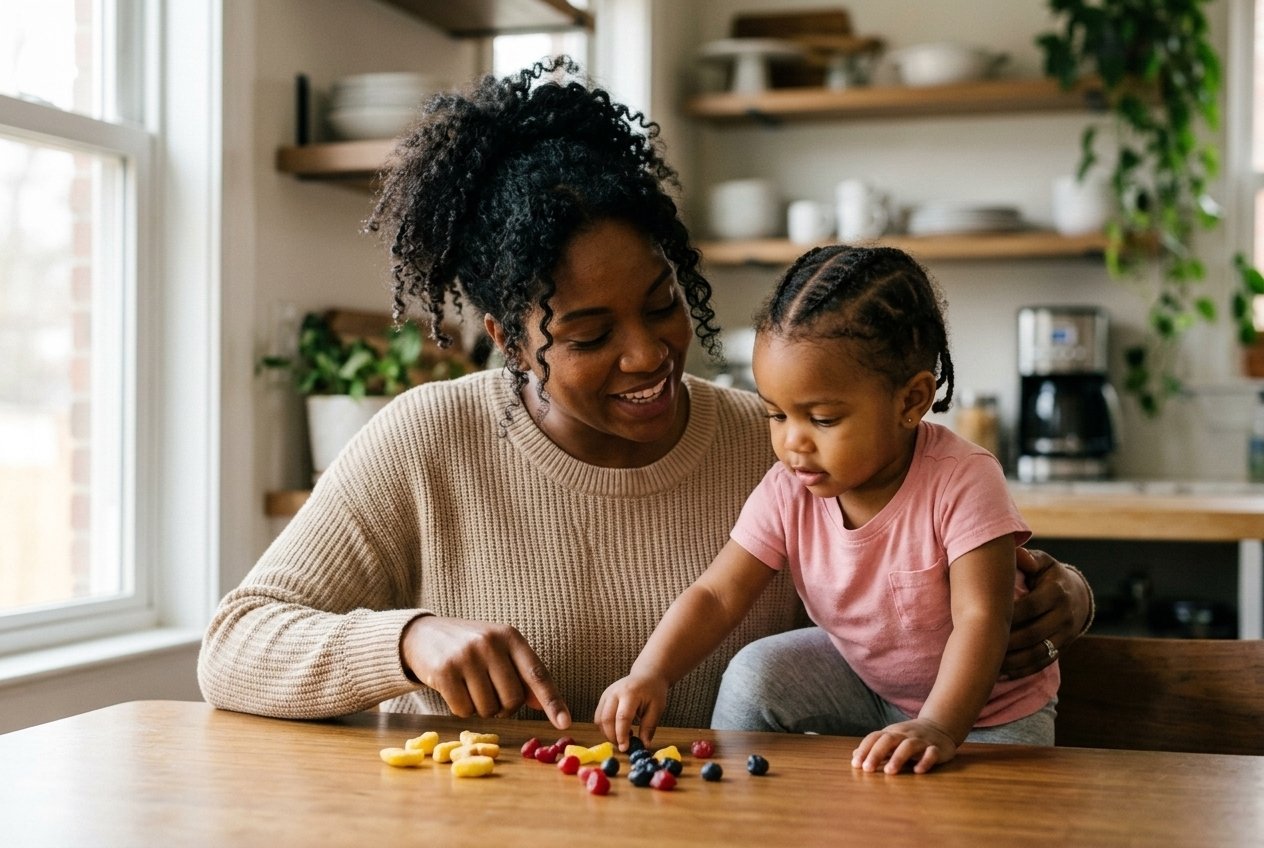
Toddlers don’t need flashcards or a set curriculum to build the skills they’ll rely on for years to come. Most of what shapes a young brain happens in ordinary moments — folding laundry together, walking to the mailbox, or eating a snack at the kitchen table. These small windows of attention add up to something real.
The trick is knowing which everyday moments actually count as learning. A toddler’s attention span is short, usually somewhere between five and fifteen minutes, so the goal isn’t a long lesson. It’s a handful of brief, repeated moments woven into a day that’s already happening anyway.
Below are ten simple activities that fit into a normal morning or afternoon at home. None of them require special toys, and most take only a few minutes.
- Narrate Your Day Out Loud
- Read the Same Book Again and Again
- Sort Laundry or Toys by Color and Size
- Turn Snack Time into a Counting Lesson
- Playdough and Squishy Hands-On Play
- Practice Zippers, Buttons, and Spoons
- Go on a Backyard or Sidewalk Scavenger Hunt
- Sing Songs and Nursery Rhymes on Repeat
- Water Play at the Sink
- Ask Open-Ended Questions During Pretend Play
- Small Moments Add Up to Real Learning
- Frequently Asked Questions
Narrate Your Day Out Loud
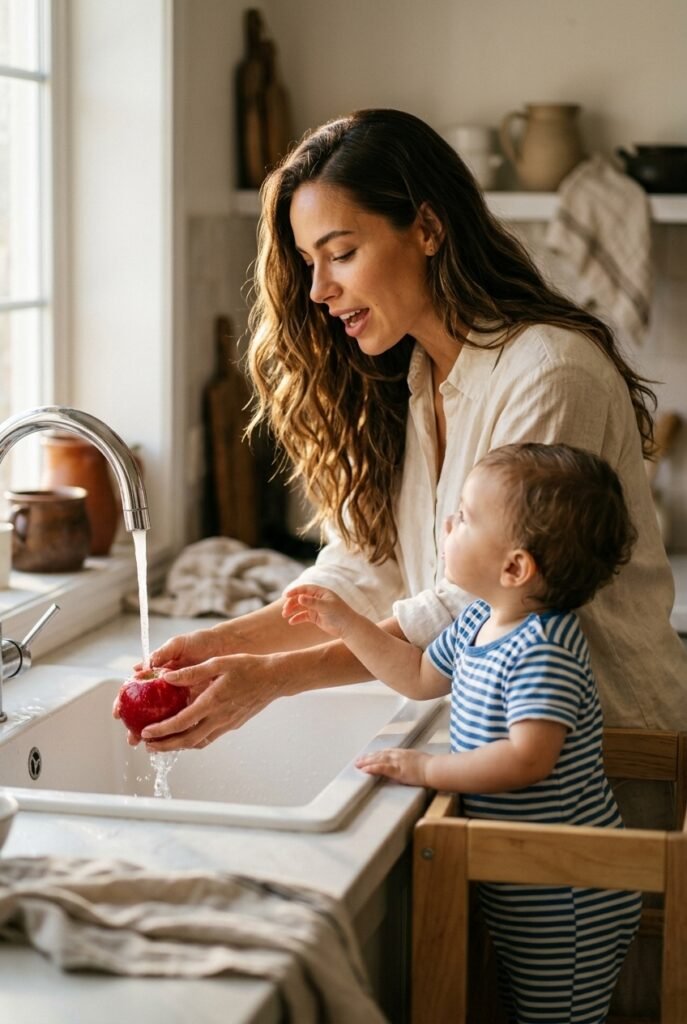
Talking through what you’re doing, even when your toddler can’t respond in full sentences yet, is one of the simplest ways to build vocabulary. Say things like “now we’re washing the red apple” or “look, the towel is soft” as you go about your tasks. Pause after you speak and give your child a chance to point, babble, or repeat a word back. This kind of running commentary costs nothing and fits into laundry, cooking, or getting dressed without adding a single extra minute to your day.
Read the Same Book Again and Again
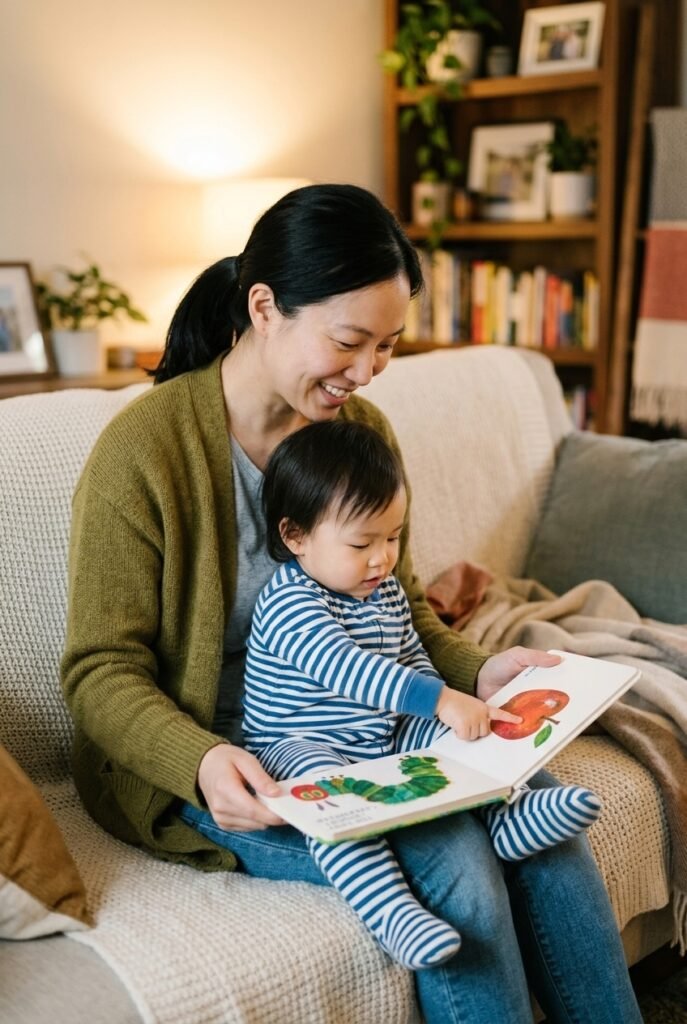
It might feel repetitive to you, but reading the same board book for the tenth night in a row is exactly what builds early literacy skills. Toddlers learn words and story patterns through repetition, and a familiar book lets them predict what comes next, which builds confidence and memory. Let your child turn the pages, point to pictures, or fill in the last word of a sentence you’ve paused on.
A few easy ways to get more out of story time:
- Pause mid-sentence and let your child guess the next word
- Ask “where’s the dog?” and let them point instead of you naming it
- Change your voice for different characters to hold their attention longer
- Let them hold the book and “read” it back to you in their own way
Sort Laundry or Toys by Color and Size
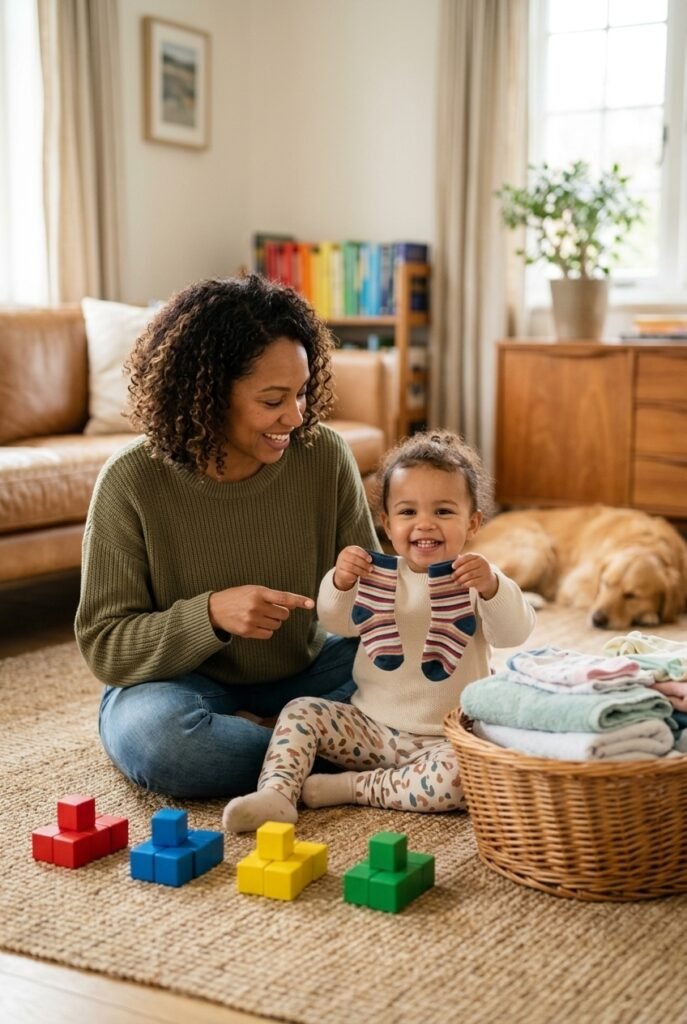
Sorting is one of the earliest math skills a toddler can practice, and it hides inside a task you’re already doing. Hand your child a basket of clean socks and ask them to match pairs, or have them separate toy blocks by color before you put them away. This kind of simple categorizing builds the foundation for later skills like counting, patterns, and comparing sizes — all without a single worksheet involved.
Turn Snack Time into a Counting Lesson
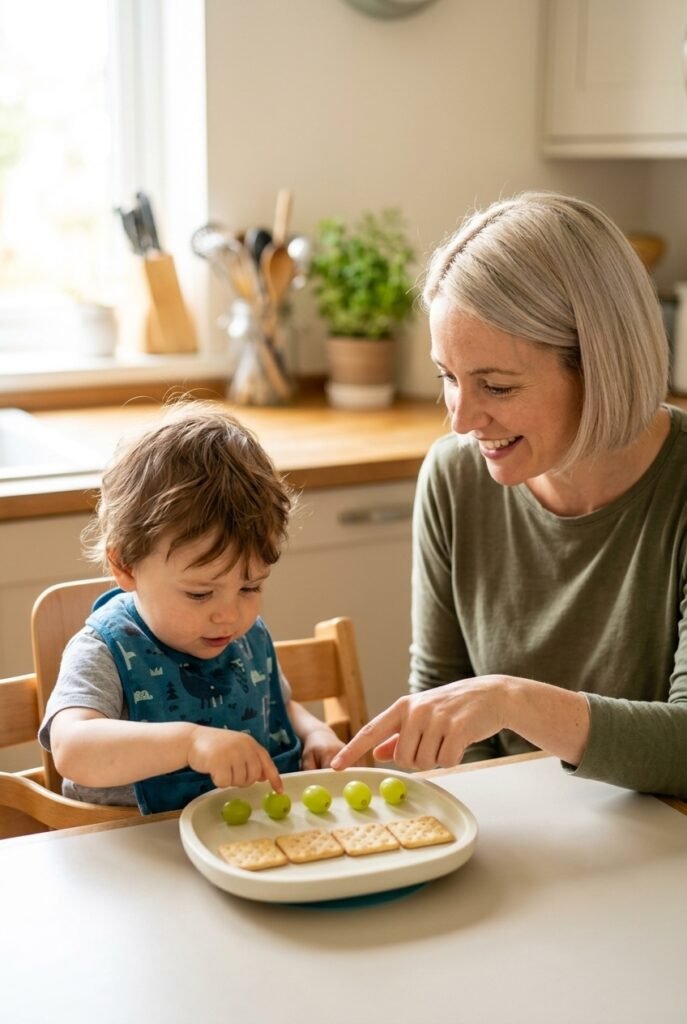
Snack time happens multiple times a day, which makes it a natural spot for quick counting practice. It doesn’t need to feel like a lesson at all.
Before handing over crackers or grapes, count them out loud one at a time as you place them on the plate. Ask your toddler to count along with you, even if they only get the first two or three numbers right. Over time, this small repeated habit helps numbers start to feel familiar rather than abstract.
Playdough and Squishy Hands-On Play
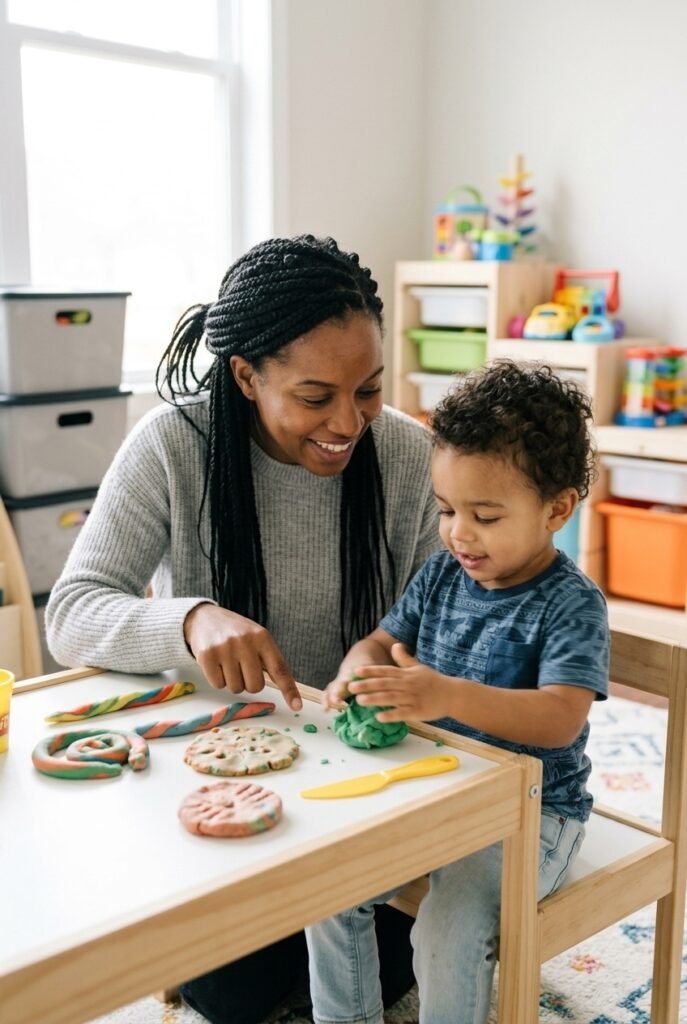
Playdough is one of the most useful tools for building the small hand muscles toddlers need for writing later on. Rolling, squishing, and pinching dough strengthens the same muscles used to hold a crayon or a spoon.
You don’t need fancy molds or kits for this to work.
Plain dough, a plastic knife, and a few minutes at the table are enough. Let your toddler roll snakes, flatten “pancakes,” or poke holes with their fingers while you name the shapes and colors they’re making.
Practice Zippers, Buttons, and Spoons
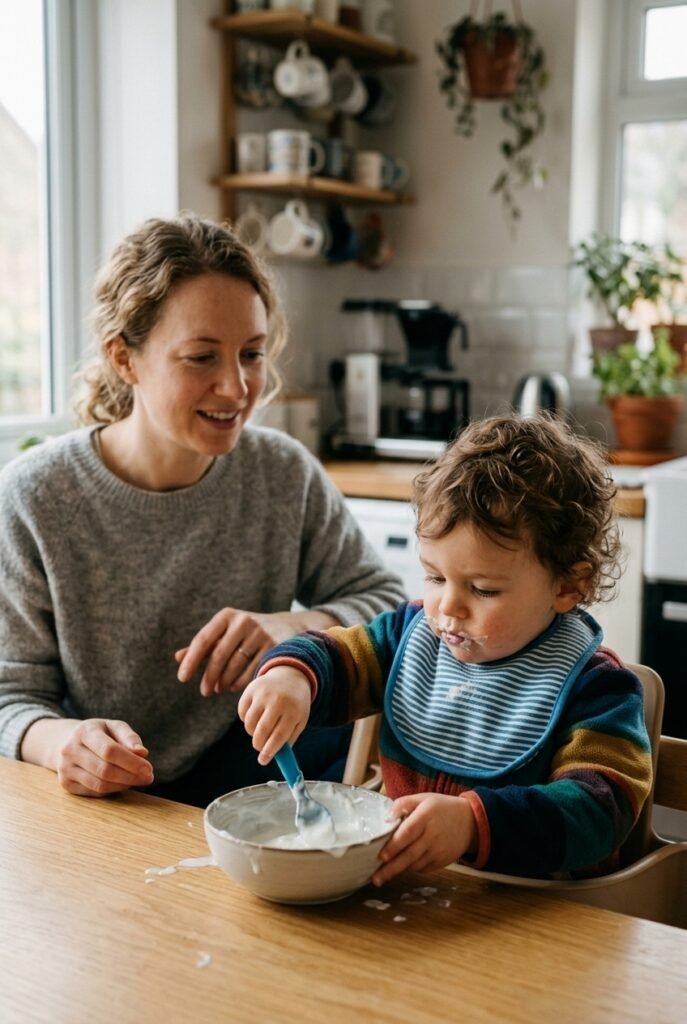
Getting dressed and eating meals are daily tasks that double as fine motor practice when you slow down and let your toddler try the hard parts themselves. Instead of zipping the jacket or scooping the yogurt for them, guide their hands through the motion a few times, then step back and let them attempt it on their own, even if it takes longer and gets a little messy. These small independence-building moments teach coordination and patience at the same time, and they matter more for development than most parents realize.
Go on a Backyard or Sidewalk Scavenger Hunt
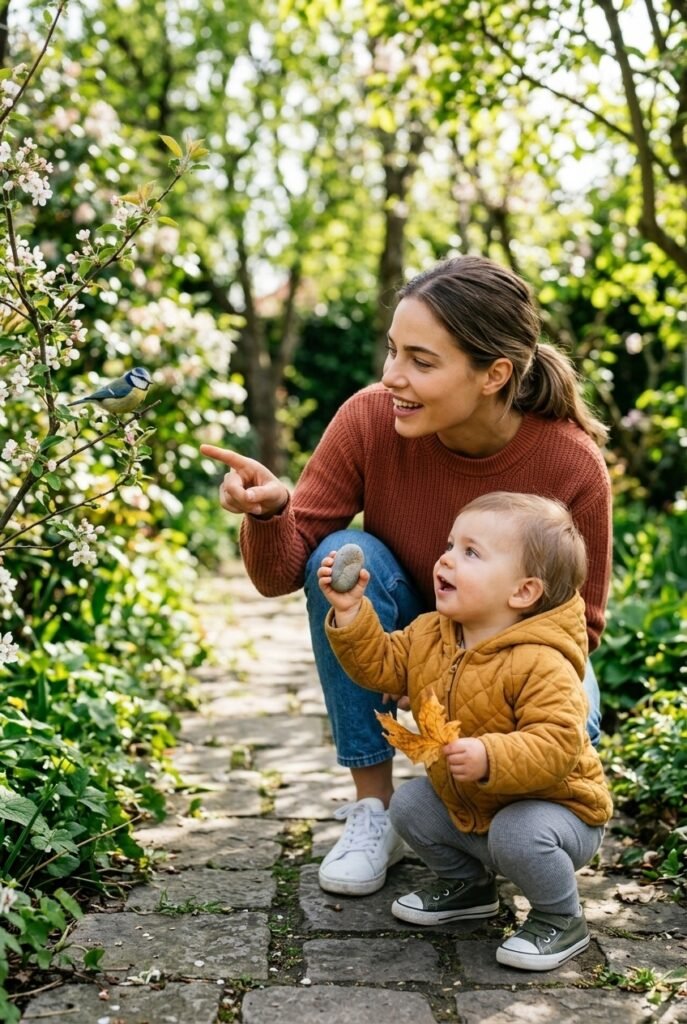
A short walk around the block can turn into a full learning activity with almost no planning. Before heading out, name a few things to look for, like a red leaf, a smooth rock, or a bird. As you walk, point things out and describe them using simple words: rough, soft, tiny, bumpy. This builds descriptive vocabulary while your toddler is moving and using their senses at the same time.
Once you’re home, a scavenger hunt can turn into a quiet indoor activity too. Press the leaves and petals you collected onto a piece of sticky tape or cardboard to make a simple nature collage. Talking through what you found while gluing it down reinforces the words all over again.
Sing Songs and Nursery Rhymes on Repeat
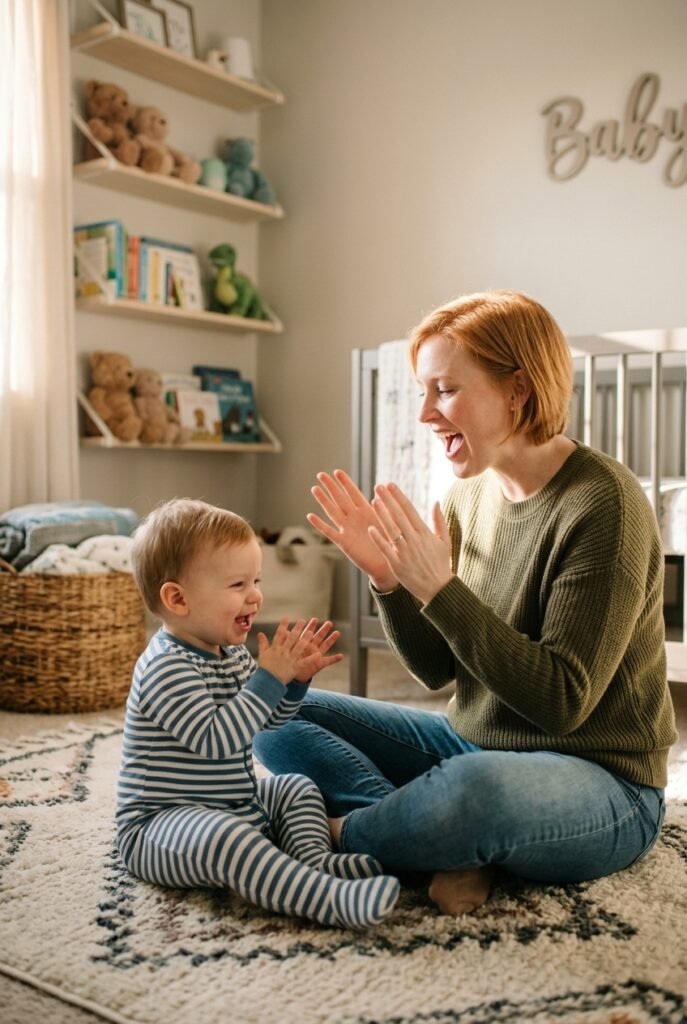
Songs with repeating lines and simple rhymes help toddlers pick up rhythm, memory, and word patterns faster than plain speech does. Sing the same few songs during car rides, bath time, or diaper changes, and don’t worry about getting the words exactly right. Add hand motions when you can, since pairing movement with words helps toddlers remember both.
Water Play at the Sink
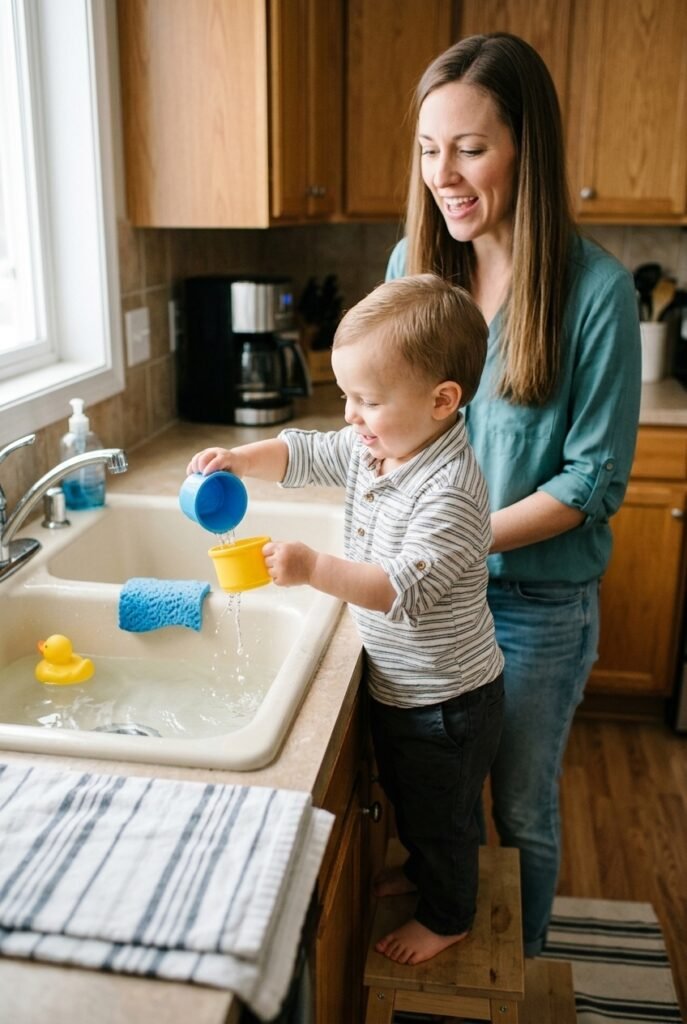
Water play sounds simple, but it packs in a surprising number of skills at once. Pouring, scooping, and squeezing water builds hand strength and coordination.
It also introduces early science concepts like sinking, floating, and full versus empty.
Set your toddler up at the sink or in a shallow bin with a few cups and a sponge, roll up their sleeves, and let them pour water back and forth for a few minutes while you narrate what’s happening. A towel on the floor handles most of the mess, and the activity buys you a few quiet minutes while your child stays fully engaged.
Ask Open-Ended Questions During Pretend Play
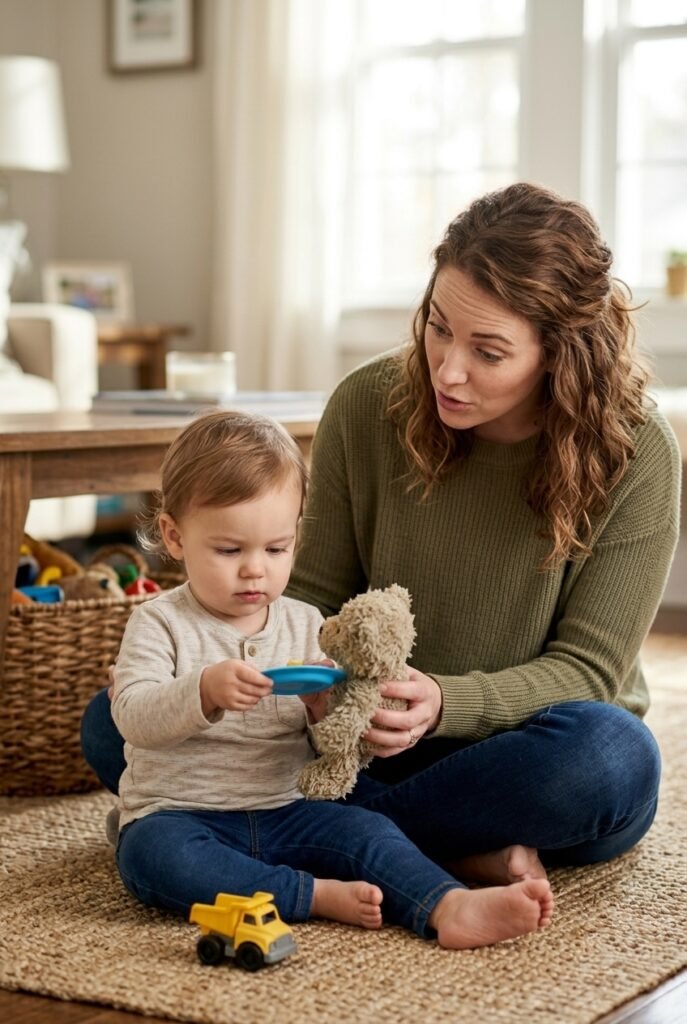
Pretend play, like feeding a stuffed animal or driving a toy truck around, is where toddlers practice storytelling and problem-solving. Instead of directing the play yourself, ask questions like “what does the bear want to eat?” or “where is the truck going?”
Let your toddler lead the answer, even if it’s just a single word or a sound effect.
Small Moments Add Up to Real Learning
None of these activities require a special budget, a curriculum, or hours of free time. What they have in common is that they turn tasks you’re already doing, folding laundry, eating a snack, walking to the corner, into small chances for your toddler to practice language, counting, coordination, and problem-solving.
Pick one or two that fit naturally into your routine and stick with them for a few weeks before adding more. Consistency matters far more than variety at this age, and the goal isn’t to check off ten activities every single day. It’s to notice that learning was already happening in your house long before you started looking for it.
Frequently Asked Questions
How long should each activity last for a toddler? A: Most toddlers do best with five to fifteen minutes per activity. Their attention naturally shifts after that, so shorter, more frequent sessions work better than one long one.
Do I need to do all ten activities every day? A: No. Pick one or two that fit into your day naturally and repeat them consistently. Consistency matters more than covering every activity daily.
What age is best to start these activities? A: Most of these activities work well for toddlers between 12 months and 3 years old, though you can adjust the difficulty as your child grows.
Is reading the same book over and over actually helpful, or should I rotate books more often? A: Repetition is helpful at this age. Toddlers build memory, vocabulary, and confidence by hearing the same story multiple times before moving on to a new one.
My toddler won’t sit still for counting or sorting. What should I do? A: Keep sessions short and tie them to something already happening, like snack time or putting away laundry, instead of setting aside separate time for it. Movement and short bursts work better than sitting still.
Are screen-free activities really necessary, or can educational apps replace some of these? A: Hands-on, real-world activities build motor skills and language in ways screens can’t replicate at this age. Apps aren’t harmful in small amounts, but they shouldn’t replace daily hands-on play.
What if my toddler gets frustrated with buttons or zippers? A: Guide their hands through the motion a few times before stepping back. Let them try, but step in before frustration builds too much, and try again another day.
Do I need special toys or kits for these activities? A: No. Everyday household items like socks, cups, water, and playdough work just as well as store-bought kits.
How can I tell if these activities are actually helping my child’s development? A: Look for gradual signs like new words, better hand coordination, longer attention during play, or more independence in daily tasks like dressing or eating.
Can dads or other caregivers do these same activities? A: Yes. Every activity here works just as well with any caregiver. Consistency and engagement matter more than who is doing it.