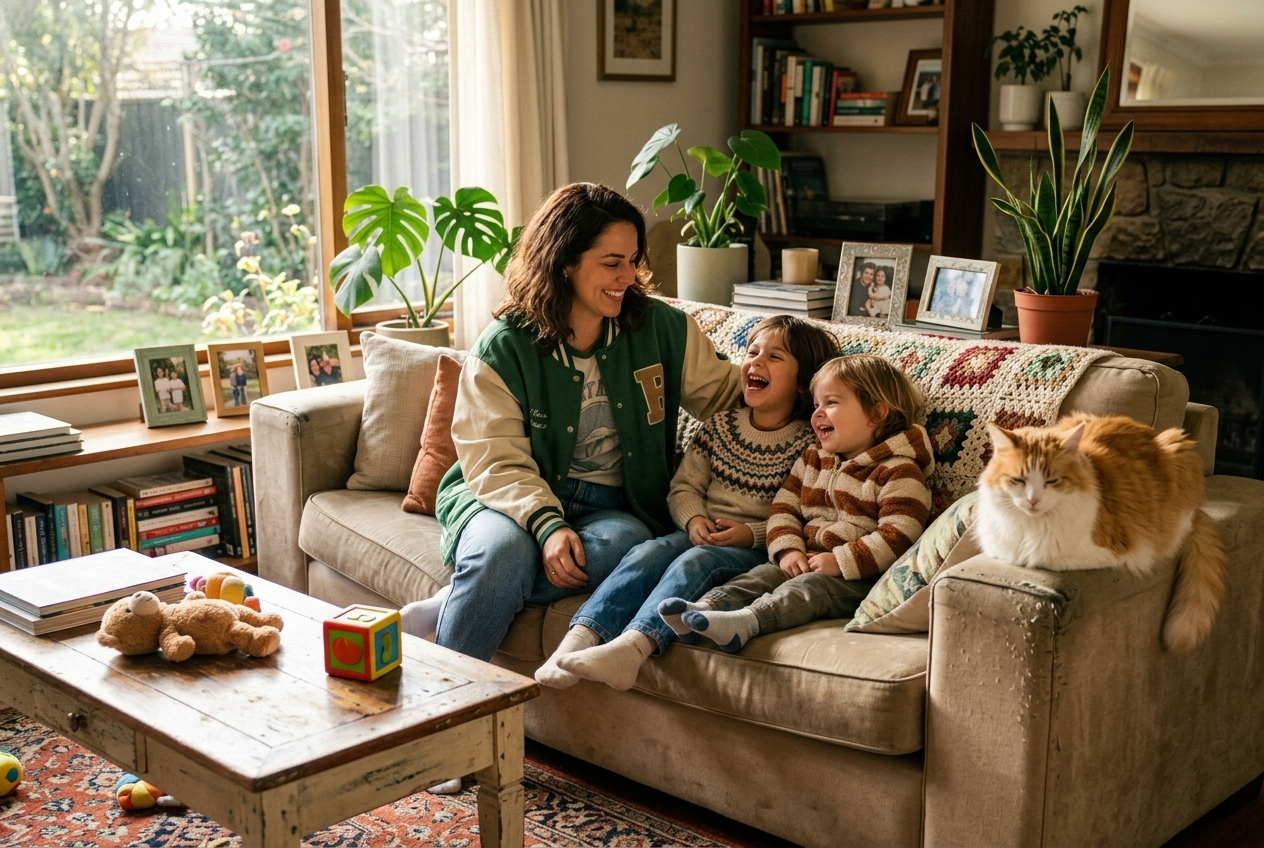
Choosing a cat for a household full of children is not quite the same as picking one for a quiet apartment. Kids are loud, unpredictable, and sometimes way too enthusiastic with their hugs. The right cat needs to handle that — with patience, not claws.
The good news is that certain breeds are genuinely built for this kind of life. They tolerate noise, thrive on attention, and hold up well when a five-year-old decides to follow them from room to room all afternoon. These cats are not just “okay” with kids — they actually seem to enjoy them.
Below are nine breeds that consistently work well in busy, child-filled homes, from gentle giants to chatty social butterflies that never want to be left out of the fun.
- 1. Maine Coon — The Gentle Giant That Actually Loves Chaos
- 2. Ragdoll — The Cat That Actually Goes Limp in Your Arms
- 3. American Shorthair — Low Maintenance, High Reliability
- 4. Birman — Calm, Cuddly, and Surprisingly Playful
- 5. Burmese — Smart, Affectionate, and Practically Dog-Like
- 6. Abyssinian — For Active Families Who Want a Real Participant
- 7. Manx — The Loyal, Dog-Like Cat With a Sense of Humor
- 8. Siberian — Big, Patient, and Surprisingly Hypoallergenic
- 9. Norwegian Forest Cat — The Quiet Powerhouse for Calmer Households
- A Good Cat Is Also a Trained Household
- The Right Cat Makes Family Life That Much Better
- Frequently Asked Questions
1. Maine Coon — The Gentle Giant That Actually Loves Chaos
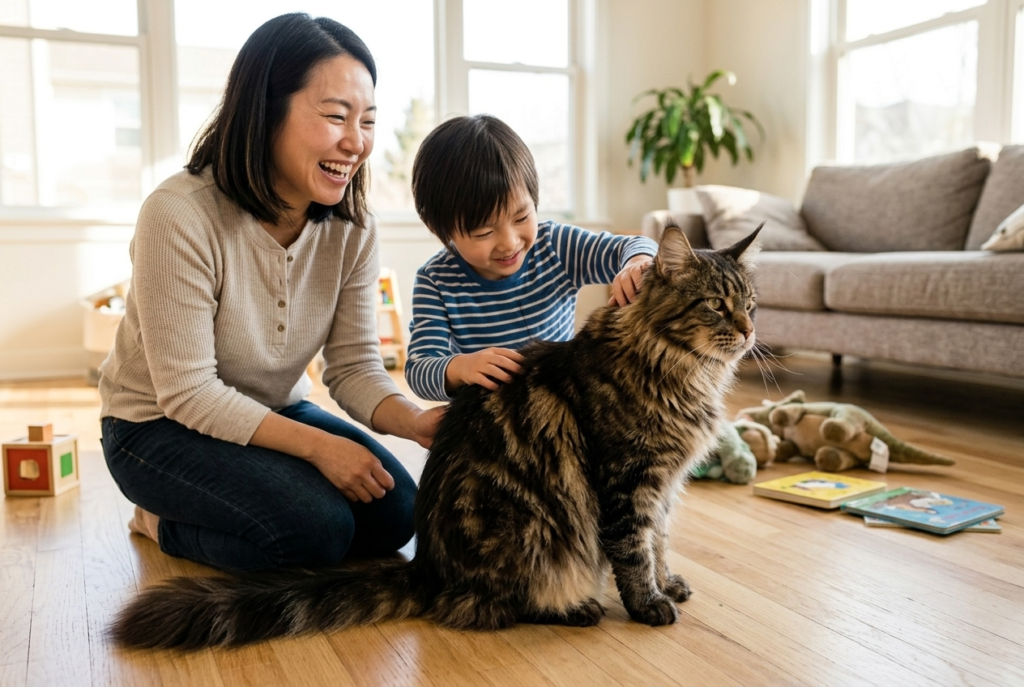
The Maine Coon has been crowned the number one pedigreed cat breed by the Cat Fanciers’ Association for 2025, and it’s easy to see why families keep gravitating toward them. These cats are big — sometimes reaching 18 pounds — but they carry that size with an almost goofy sweetness.
What makes them so good with kids is their patience. They tolerate noise, sudden movements, and enthusiastic pets without overreacting. They also tend to stay playful well into adulthood, which means they’re a good match for kids who want a cat that actually plays back. Maine Coons are known for chirping and trilling rather than traditional meowing, which kids tend to find endlessly entertaining.
They’re also social with other pets, including dogs, which matters a lot in multi-pet households.
2. Ragdoll — The Cat That Actually Goes Limp in Your Arms
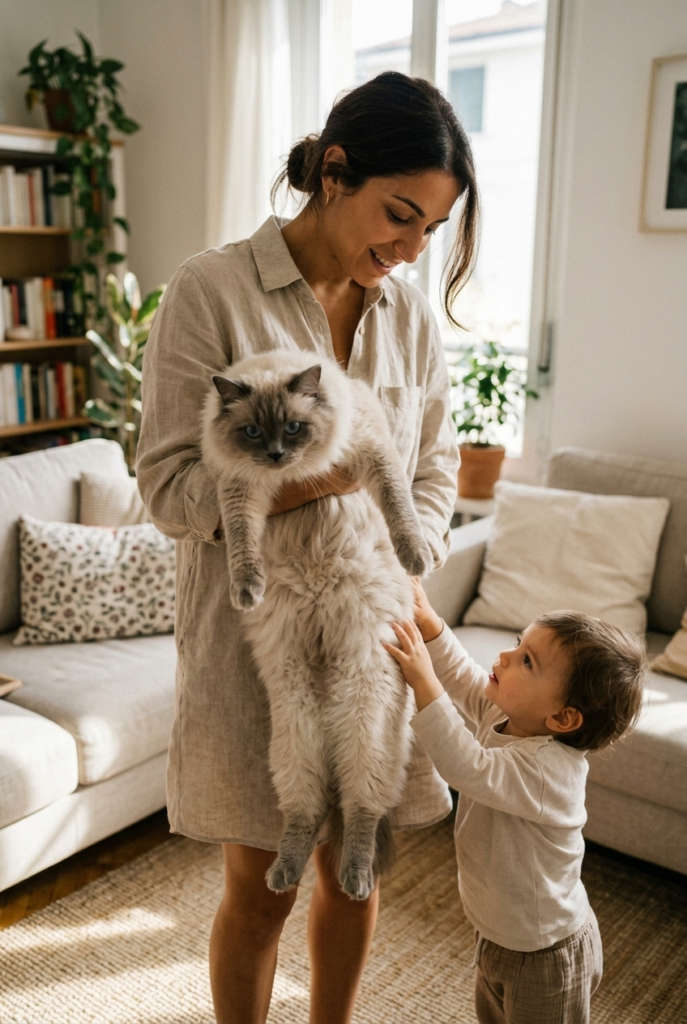
If there’s one breed that seems almost custom-designed for families with younger kids, it’s the Ragdoll. The name comes from their tendency to go completely relaxed when picked up — which is exactly the kind of temperament you want when your toddler decides they need to carry the cat across the living room.
Ragdolls are famously docile. They don’t tend to scratch or bolt when things get overwhelming. They follow family members around the house and will happily curl up with whoever is sitting still long enough. According to Trupanion, the Ragdoll ranked as the number one cat breed by ownership in 2024, which says a lot about how well these cats fit into actual family life.
They have luxuriously soft, semi-long fur and blue eyes, and they come in several coat patterns. Grooming takes a little effort, but it’s also a great task to hand off to older kids.
3. American Shorthair — Low Maintenance, High Reliability
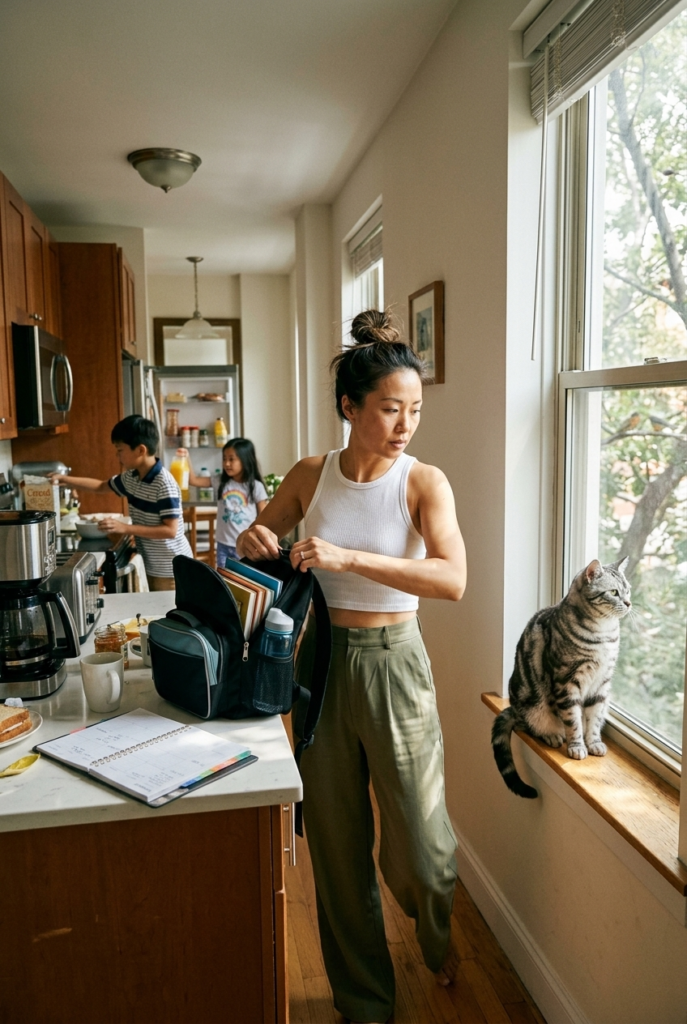
The American Shorthair is the quintessential family cat — steady, adaptable, and genuinely easygoing. This breed has been around since settlers brought cats from Europe to North America, and centuries of that kind of varied, busy environment has resulted in a cat that handles change without drama.
These cats are playful but not demanding. They’re happy playing with the kids, but they’re equally content bird-watching from a window when everyone heads off to soccer practice. They don’t need constant attention, which is a real advantage on hectic school-day mornings.
American Shorthairs also tend to be healthy and sturdy — another major bonus for families who don’t want frequent vet trips.
4. Birman — Calm, Cuddly, and Surprisingly Playful
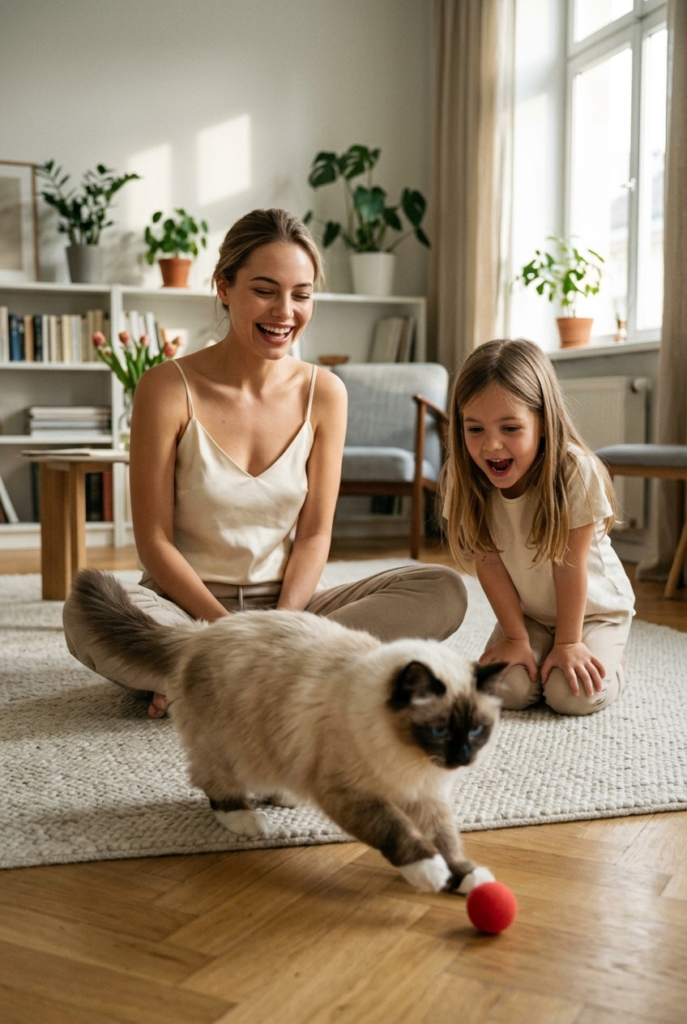
The Birman, sometimes called the Sacred Cat of Burma, has a reputation for sweetness that holds up in real life. These cats are calm and even-tempered, but they’re not boring — they have an energetic side that comes out during play, and they’re known to chase balls and enjoy a good game of fetch.
What works especially well with kids is that Birmans are patient and adaptable. They don’t spook easily, and they genuinely like being around people. The Cat Fanciers’ Association describes them as “exceptionally sweet natured cats that love to be with people,” and that tracks with what most Birman owners report.
They’re medium-sized, about 12 pounds, and their semi-long silky coat needs regular brushing, but the fur doesn’t mat as easily as some long-haired breeds.
5. Burmese — Smart, Affectionate, and Practically Dog-Like
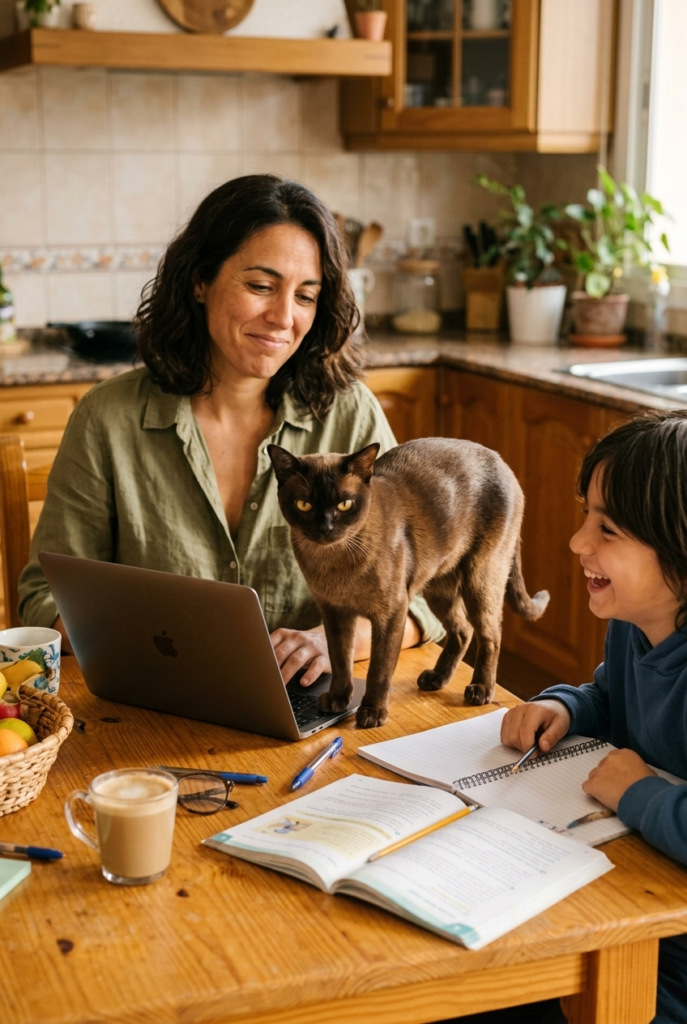
The Burmese is one of those cats that makes non-cat-people reconsider their position. These cats are social to an almost canine degree — they follow you around, they want to be involved in whatever’s happening, and they genuinely thrive on attention and interaction.
For families with older kids, the Burmese is a particularly good match. They’re highly intelligent and can learn games, including fetch. Older children who want an active pet that engages with them rather than just tolerating them tend to love this breed.
They’re also notably tolerant and tender with younger kids, which makes them work across a wide age range in the household. The one thing to keep in mind: Burmese don’t do well with long periods of solitude, so this breed fits best in a home where someone is around most of the day.
6. Abyssinian — For Active Families Who Want a Real Participant
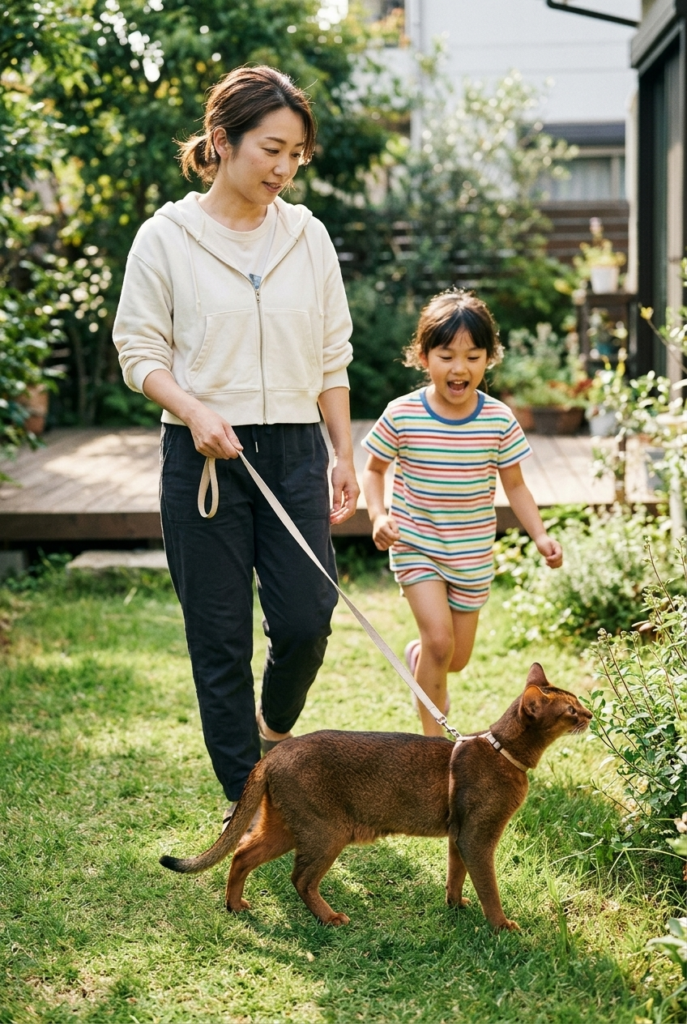
The Abyssinian is not a lap cat, and it doesn’t pretend to be. This breed is more interested in being in on the action than sitting quietly on the sidelines. They’re athletic, curious, and have a kitten-like energy that many owners say stays with them throughout their entire life.
For families with active, older kids, that’s actually a selling point. Abyssinians will join in on homework sessions, follow kids into the backyard, and are smart enough to be leash trained for outdoor walks. They thrive when given puzzle toys, vertical space, and regular interaction.
This breed works best with children who’ve been taught how to handle cats gently — their smaller build means they’re better suited to kids who understand a cat’s limits rather than very young toddlers who don’t yet have that awareness.
7. Manx — The Loyal, Dog-Like Cat With a Sense of Humor
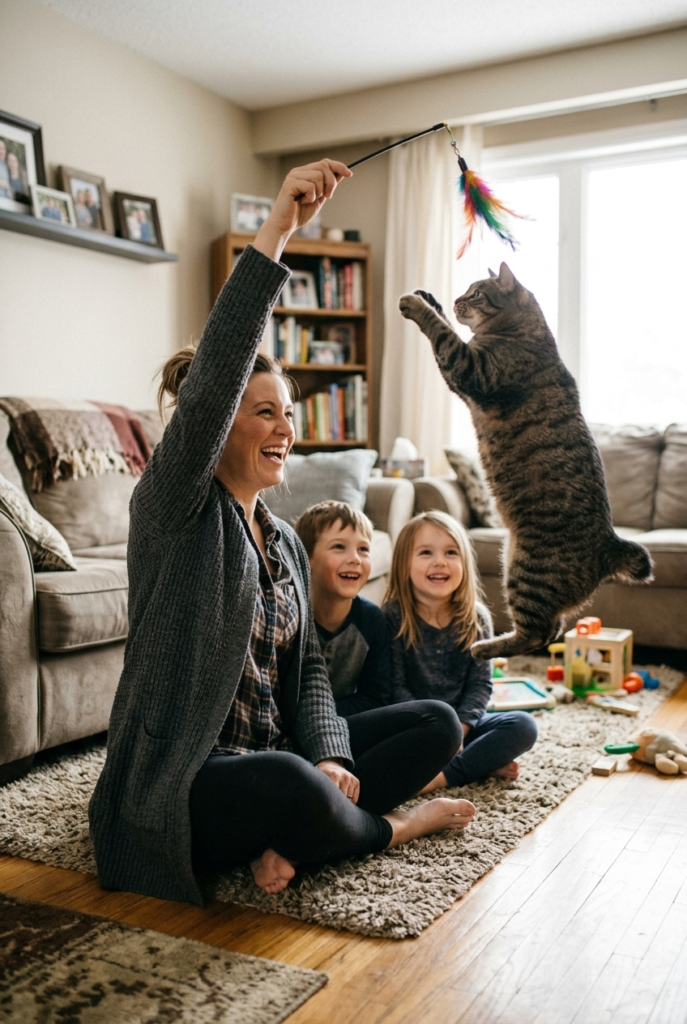
The Manx is probably the least talked about breed on this list, which is a shame because they’re excellent family cats. Most well known for their naturally short or absent tail, they’re also known for a loyalty that’s genuinely unusual in cats.
Manx cats tend to bond closely with their families and have been described as protective — some owners report their Manx alerting them to strangers or acting as a sort of feline watchdog. They’re highly social, enjoy interactive play, and can entertain high-energy kids without getting frazzled.
Regular play sessions matter with this breed, as they can get bored without enough stimulation. But for families willing to put in that engagement, a Manx becomes a devoted, long-term companion.
8. Siberian — Big, Patient, and Surprisingly Hypoallergenic
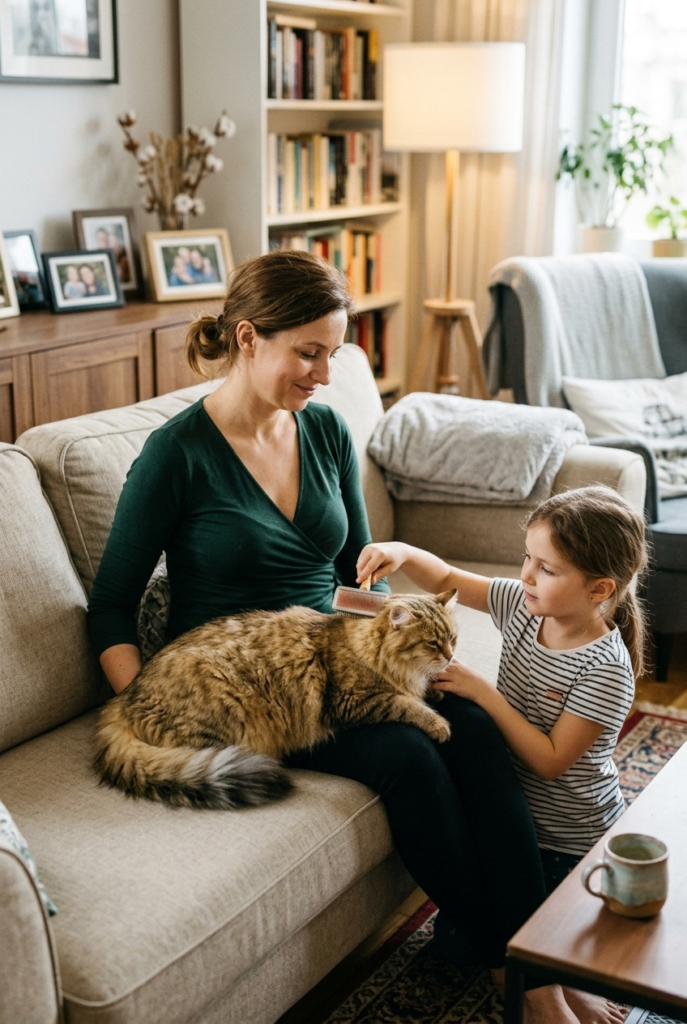
The Siberian is worth serious consideration for one reason beyond personality: they produce significantly lower levels of the Fel d 1 protein — the primary allergen that causes cat allergies in humans. For families where one parent or child has mild cat allergies, this makes the Siberian a genuinely viable option worth discussing with an allergist.
Beyond that practical advantage, Siberians are patient, laid back, and love being around children. Owners consistently describe them as the most tolerant of boisterous, energetic kids compared to other breeds they’ve owned. They’re also robust and athletically built, which means they can handle active play without issue.
Their thick, triple-layered coat does require regular grooming, but many families find that kids enjoy brushing the cat as part of their pet care routine.
9. Norwegian Forest Cat — The Quiet Powerhouse for Calmer Households
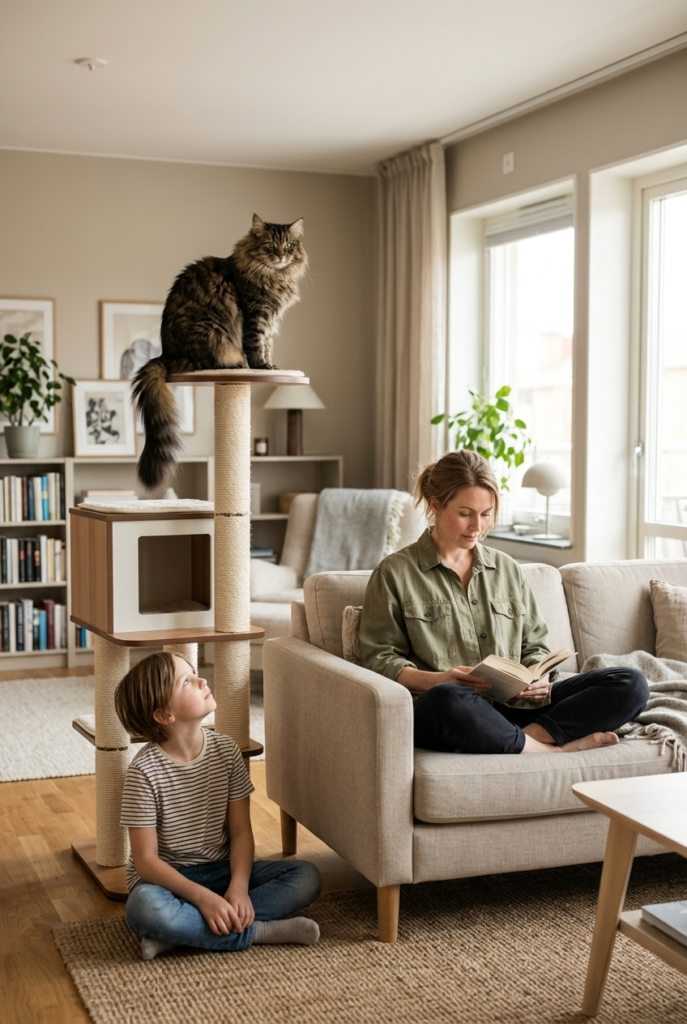
The Norwegian Forest Cat, called “Wegie” by fans, is another large, fluffy breed with a gentle personality. These cats are friendly and social, but they tend to be a bit more independent than something like a Ragdoll or Burmese — they engage on their own terms, which some families actually appreciate.
They’re great with children who have learned to respect a cat’s space, and they do well in homes with other pets. They love to climb, so a good cat tree is less of a luxury and more of a basic necessity with this breed.
What makes them stand out as family cats is their calm, steady nature. They don’t startle easily, they’re not aggressive, and they have a steady confidence that makes them easy to live with even in a busy household.
A Good Cat Is Also a Trained Household
No matter the breed, the other half of making things work is teaching kids how to actually interact with a cat. That means no tail-pulling, no chasing, no picking up a cat that clearly wants to be put down. Even the most patient breed has its limits.
Watch for signs that a cat is done with an interaction: ears flattened back, a tightly wrapped tail, wide pupils, or a low posture. Teaching children to read these signals early on protects both the cat and the kids, and it builds the kind of respectful relationship that makes pet ownership actually positive for everyone in the house.
The Right Cat Makes Family Life That Much Better
None of the breeds on this list are going to be a problem if you choose thoughtfully and set up the household correctly. The difference is mostly in what kind of personality fits your family’s rhythm — whether you need an easygoing lap cat, an active play partner, a hypoallergenic option, or a dog-loyal companion who happens to be a cat.
What they all have in common is that they can handle the noise, the energy, and the sometimes-chaotic love that kids bring. And for families who get the match right, the bond between a child and their cat tends to be one of those things that sticks with them for the rest of their life.
Frequently Asked Questions
Q: What is the best overall cat breed for families with young children? A: The Ragdoll and Maine Coon consistently rank at the top for families with young kids. Both are patient, gentle, and tolerant of the kind of enthusiastic handling that comes with toddlers and small children.
Q: Are there cat breeds that work well for families where someone has allergies? A: Yes. The Siberian is one of the most recommended options in this situation because it produces lower amounts of the Fel d 1 allergen compared to most other breeds. It’s not 100% hypoallergenic, but many allergy sufferers tolerate Siberians much better than other cats.
Q: Is a Burmese cat good for a home where the cat will be left alone during the day? A: Not ideal. Burmese cats are highly social and don’t do well with extended alone time. If your household is empty most of the day, this breed may develop anxiety or behavioral issues. A more independent breed like the American Shorthair or Norwegian Forest Cat would be a better fit.
Q: At what age can kids start interacting independently with a family cat? A: Most experts suggest that children under the age of 6 should always be supervised during interactions with a cat. Older kids can start learning to read cat body language and take on more independent interaction as they demonstrate they understand how to handle the cat respectfully.
Q: Do any of these breeds work well with dogs? A: Yes. The Maine Coon, Ragdoll, American Shorthair, and Siberian are all known for getting along well with dogs, especially when introductions are handled gradually and calmly.
Q: How do I know if a cat I’m adopting will be good with my kids? A: Breed is a helpful starting point, but individual personality matters just as much. When adopting, ask the shelter or breeder specifically about how the cat responds to noise, being handled, and children. Spending time with the cat before committing is always the better approach.
Q: Which breed on this list is best for a family that wants an active, playful cat rather than a lap cat? A: The Abyssinian or Manx would be the strongest choices. Both are energetic, love interactive play, and stay engaged with family members rather than simply lounging nearby.
Q: Is long fur a problem for a family with kids? A: Not necessarily, but it does add grooming responsibility. Breeds like the Maine Coon, Birman, and Siberian have longer coats that need regular brushing. For families who prefer less upkeep, the American Shorthair, Burmese, or Manx are lower-maintenance in that department.