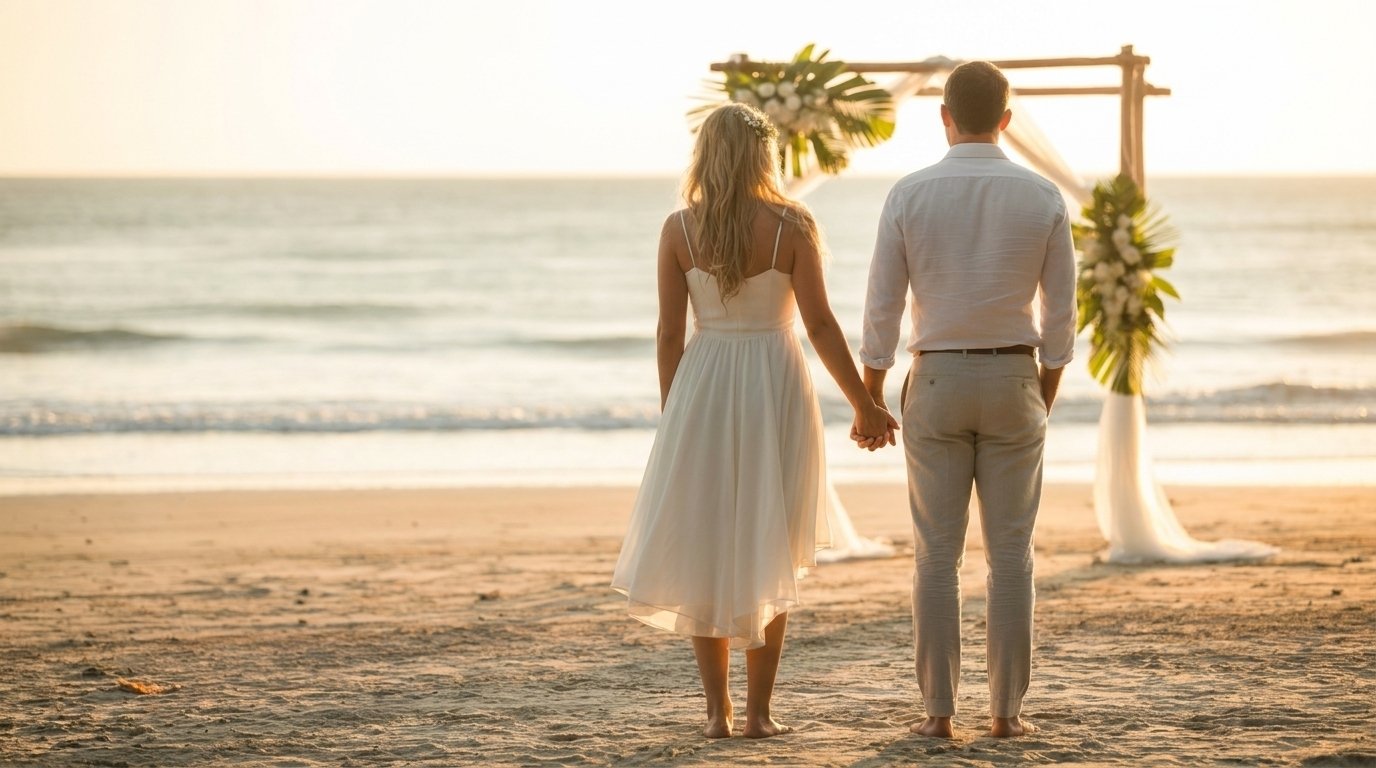
A beach wedding is one of those ideas that sounds perfect the moment it crosses your mind. The waves, the open sky, the warm sand beneath your feet — it’s a setting that does most of the heavy lifting before you even hang a single decoration. And the best part? You don’t need an enormous budget or a five-star resort to pull it off beautifully.
Planning ahead makes all the difference with a coastal ceremony. Wind, tide schedules, public beach permits, and the unpredictability of outdoor weather are all real factors to account for. The couples who end up with stunning, stress-free beach weddings are usually the ones who gave themselves enough time to research, adapt, and make smart decisions early on.
Whether you’re dreaming of a barefoot ceremony at sunset, a boho-chic gathering with pampas grass and linen, or something a little more polished with floral arches and ghost chairs, there’s a version of a beach wedding that fits your vision. Here are 11 ideas worth putting on your planning list.
- 1. Build Your Ceremony Around a Wooden or Bamboo Arch
- 2. Time Your Ceremony for Golden Hour
- 3. Go Barefoot — and Make It Intentional
- 4. Keep the Color Palette Soft and Sea-Inspired
- 5. Choose the Right Dress for the Setting
- 6. Use the Beach Itself as Your Decor
- 7. Plan for Guest Comfort
- 8. Try a Sand Ceremony Instead of Unity Candles
- 9. Think About Tropical Florals
- 10. Plan a Relaxed, Lounge-Style Reception
- 11. Handle the Practical Details Early
- Your Coastal Wedding, Your Way
- Frequently Asked Questions
1. Build Your Ceremony Around a Wooden or Bamboo Arch
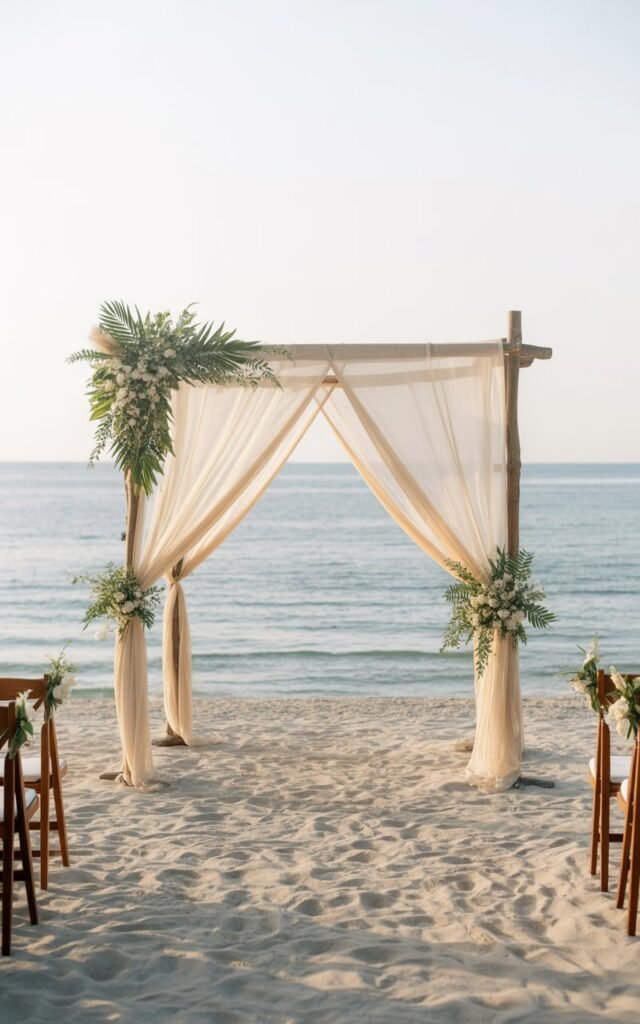
An arch is one of the best investments you can make for a beach ceremony. It gives your photos a clear focal point, frames the ocean behind you, and signals to guests exactly where to look. The key is keeping it proportional to the setting — something too tall or too elaborate can compete with the natural backdrop rather than complement it.
Unfinished wood and bamboo work especially well on sand. They’re lightweight, sturdy enough to anchor with sandbags hidden behind the posts, and their warm, organic tones photograph beautifully against blue water. Drape them with sheer fabric that moves in the breeze, add some greenery or tropical blooms, and you have a ceremony setup that looks intentional without feeling overdone.
2. Time Your Ceremony for Golden Hour
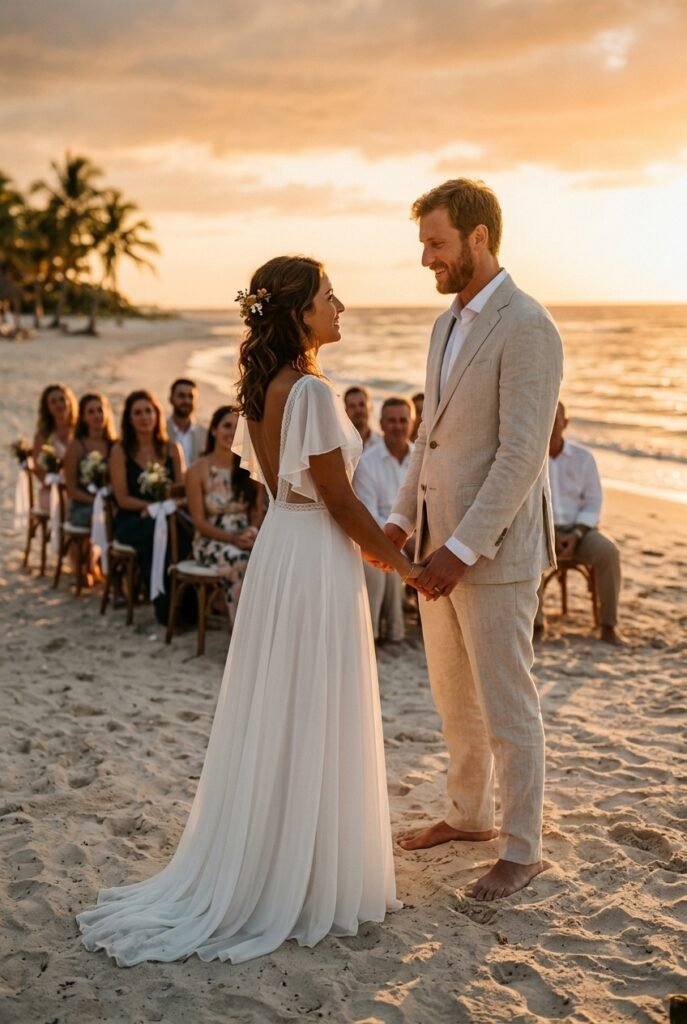
This is the single most impactful decision you can make for your beach wedding photos — and honestly, for the whole mood of the day. Golden hour, the window of soft, warm light about an hour before sunset, flatters everything. Your dress, your guests, the water, the sky — all of it looks better in that light.
To nail the timing, look up the exact sunset time for your wedding date and location, then schedule your ceremony to start about 60 to 75 minutes before that. Your vows will land right as the light hits its peak. The ceremony end and newlywed photos will happen during the magic window. It’s a practical choice that costs nothing and delivers everything.
As a bonus, morning ceremonies work well too. The light is soft, crowds are minimal on public beaches, and the temperature is far more manageable — especially in warmer states like Florida, Hawaii, or California. Consider offering guests a casual coffee and pastry setup afterward to set a relaxed, welcoming tone.
3. Go Barefoot — and Make It Intentional
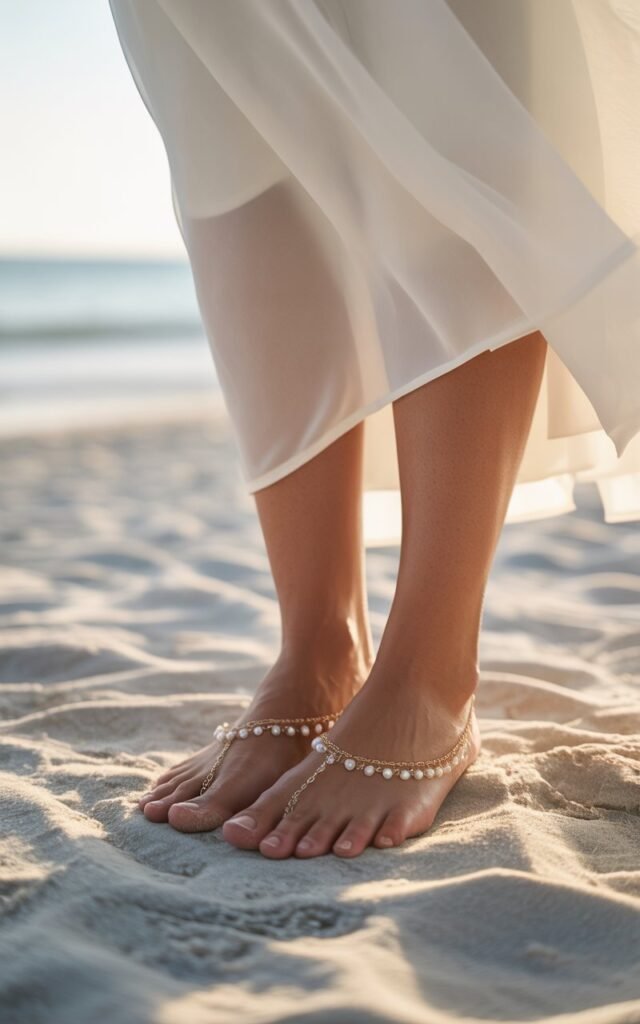
Barefoot ceremonies feel completely at home by the water. But if you want it to look polished rather than like you just forgot your shoes, plan for it ahead of time. Set up a small sandal station at the entrance of the ceremony area where guests can slip off their shoes, grab a pair of comfortable sandals if needed, and store their footwear in a labeled bag.
For the bride, barefoot sandals — delicate chains and beading that sit across the top of the foot — are a gorgeous alternative to traditional heels. They photograph beautifully, they’re practical on soft sand, and they add just enough detail to make the look feel finished. For the groom, linen pants rolled up at the ankle are a clean and comfortable pairing.
4. Keep the Color Palette Soft and Sea-Inspired
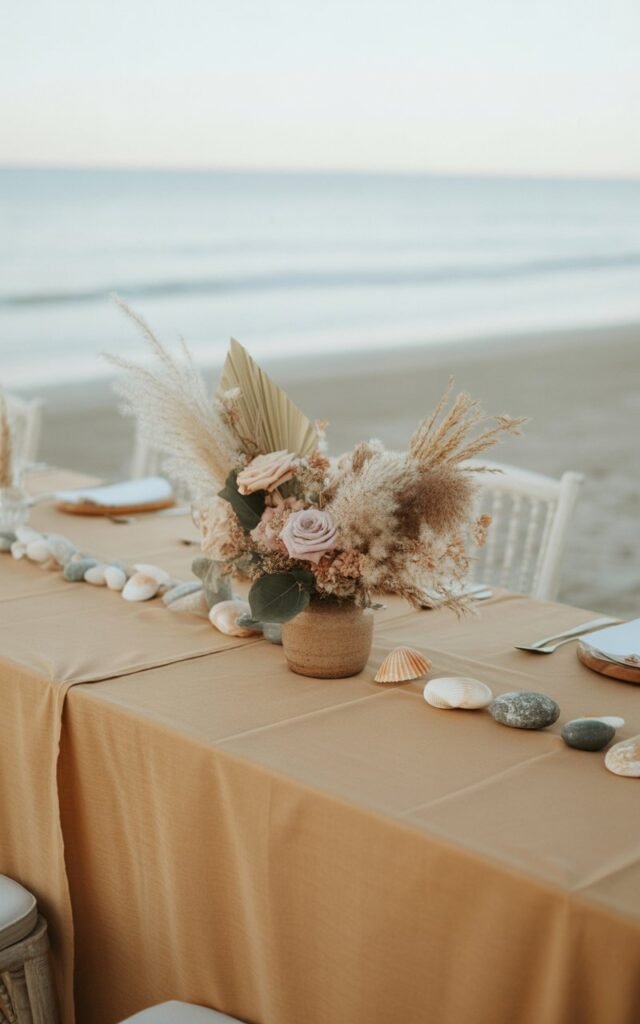
Loud, saturated colors tend to fight with the beach rather than work with it. The most consistently stunning coastal weddings lean into softer tones that feel like a natural extension of the setting. Seafoam green, blush pink, soft lavender, warm beige, and sandy neutrals all photograph beautifully against the ocean and sky.
Earthy tones — terracotta, warm taupe, dusty sage — are also having a real moment right now, and they translate especially well to rustic or boho-leaning beach setups. Whatever palette you choose, carry it consistently across your florals, linens, bridesmaid attire, and stationery so the whole day feels cohesive.
5. Choose the Right Dress for the Setting
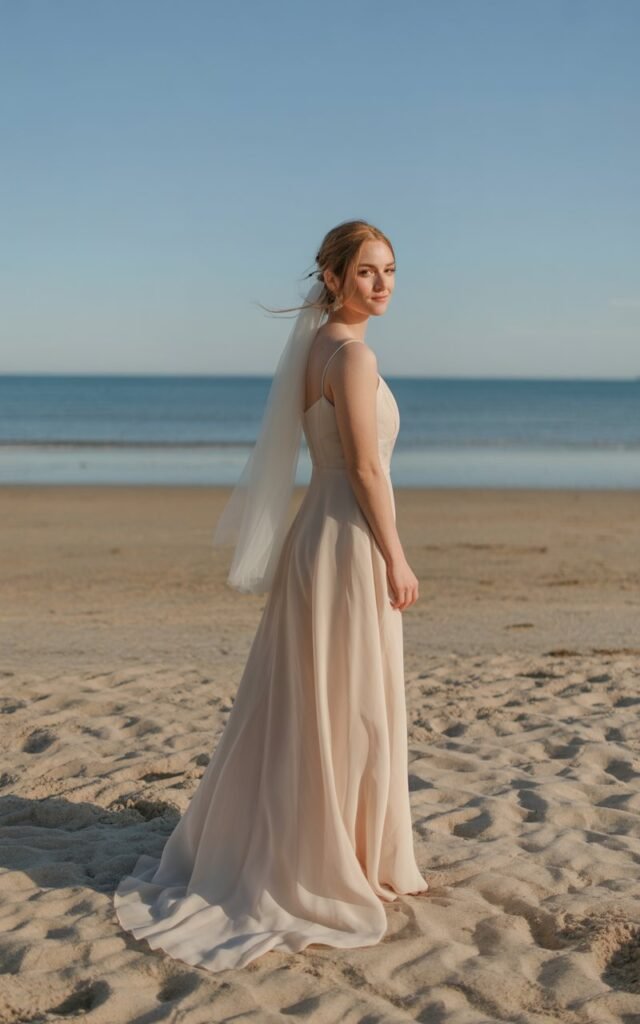
A beach setting rewards brides who prioritize movement and breathability. Heavy fabrics, long trains, and overly structured silhouettes can be genuinely uncomfortable on sand, especially in heat or wind. Lightweight options like chiffon, organza, and linen are far more practical — and they look exactly right in a coastal setting, with that effortless flow that photographs so well in a breeze.
A-line, sheath, and empire waist silhouettes are consistently popular for beach ceremonies because they’re elegant without being restrictive. Tea-length gowns are another option worth considering — shorter hems are practical on sand and give the whole look a playful, modern feel. For a sunset ceremony specifically, soft champagne, blush, or ivory tones pick up the warm light beautifully. Pure white can look harsh in direct coastal light.
6. Use the Beach Itself as Your Decor
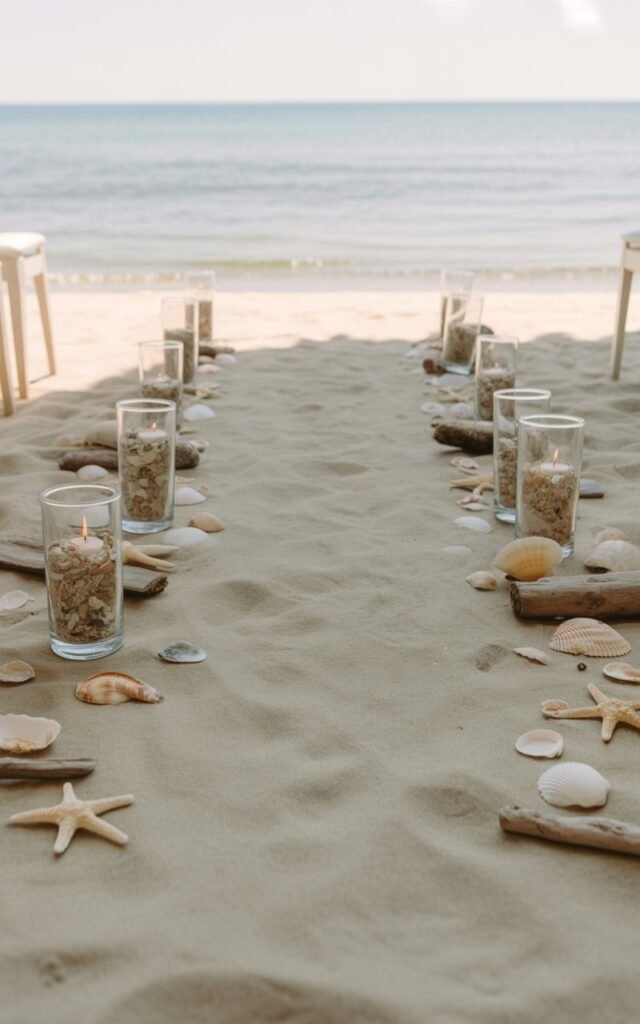
One of the biggest advantages of a coastal wedding is the setting itself. The sand, the water, the sky — these are your backdrop, and you don’t need to cover them up or compete with them. Keeping your décor simple isn’t a budget compromise; it’s actually the smarter aesthetic choice.
Seashells, driftwood, sea glass, and dried coral all work beautifully as natural accents along the aisle, on tables, or clustered at the bar. Real dried coral or starfish as aisle markers look genuinely beautiful without costing much. Clear glass votives filled with sand and a few shells make easy, inexpensive centerpieces that stay low enough not to block anyone’s sightlines — important in an outdoor setting where wind is a factor. Heavy, tall floral arrangements are a risk; low and grounded is always safer.
7. Plan for Guest Comfort
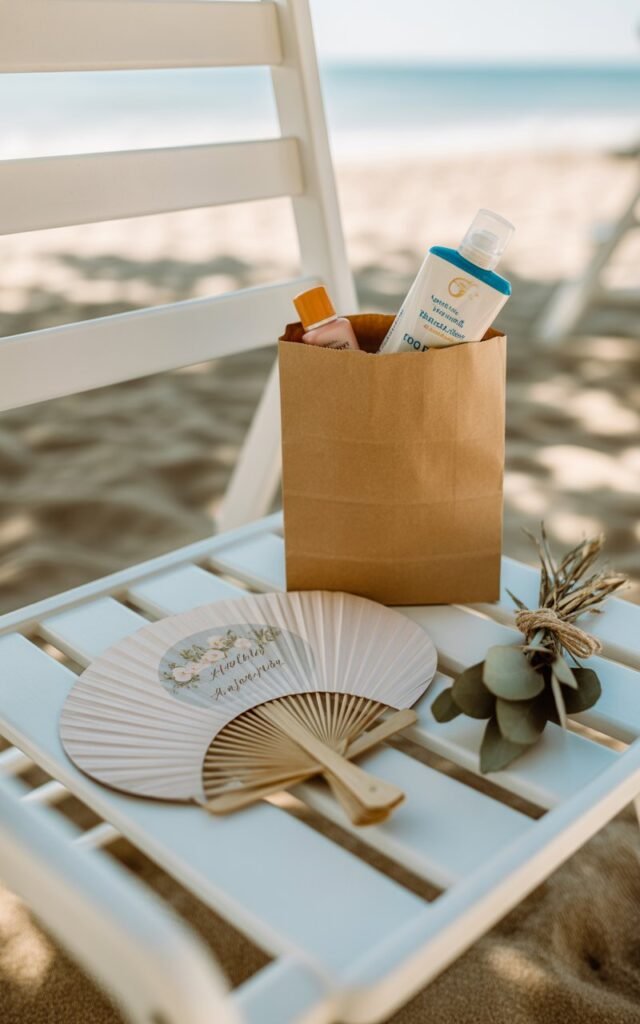
This is the detail that separates a genuinely enjoyable beach wedding from one that’s beautiful in photos but uncomfortable in person. Heat, sun, and sand are a lot to deal with, and guests who are sweltering or squinting can’t fully enjoy themselves.
A few practical additions go a long way:
- Personalized hand fans at each seat — these are also a keepsake guests actually use
- A small welcome station with chilled water, sunscreen, and lip balm
- Umbrellas or a shaded area near the reception for those who need a break from the sun
- A wooden walkway or beach mats along the aisle to help guests navigate the sand — especially helpful for older family members or anyone in heels
If your beach is public, scope out restroom access, parking, and typical traffic levels at the time you plan to host. These are logistics worth sorting out early.
8. Try a Sand Ceremony Instead of Unity Candles
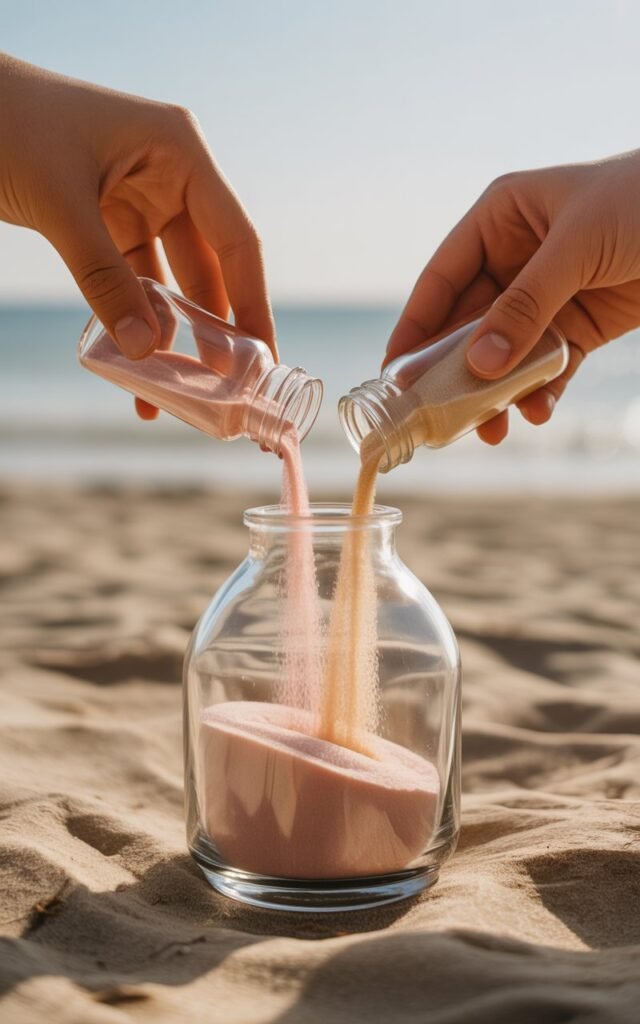
Unity candles are tricky outdoors — wind tends to have its own agenda. A sand ceremony is the coastal version, and it works beautifully both symbolically and visually. The couple each pours different colored sand into a single vessel during the ceremony, representing two lives becoming one. The layered result is something you keep and display long after the wedding day.
Other meaningful ritual options for beach ceremonies include a rope-tying ceremony, a memory box the couple fills with mementos to open on a future anniversary, or a simple barefoot commitment moment in the waves after the official vows. These personal touches make the ceremony feel specific to you rather than generic.
9. Think About Tropical Florals
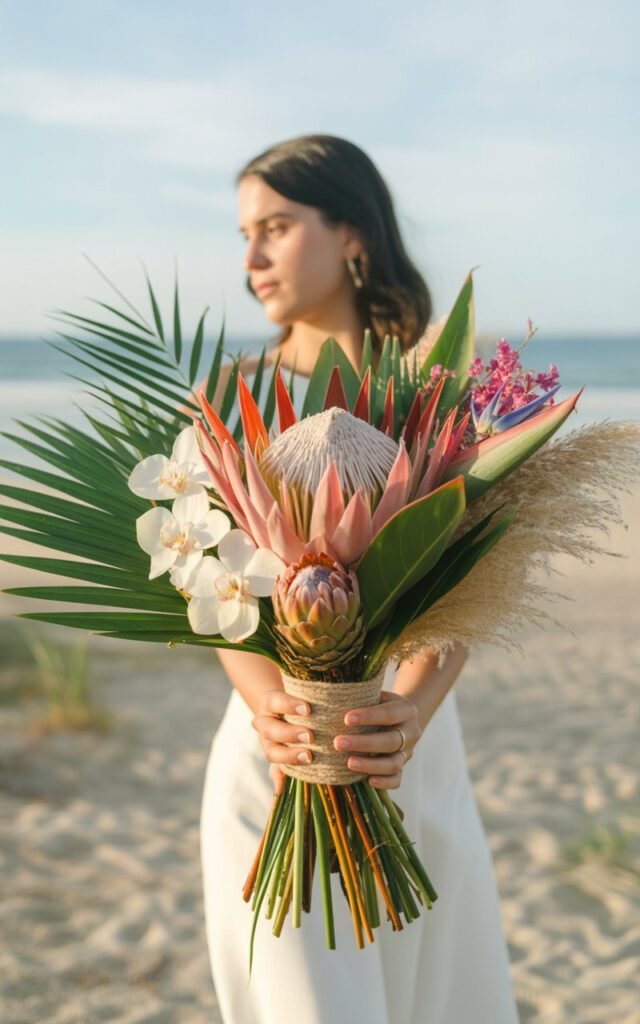
Standard flower arrangements can look out of place on a beach — too formal, too garden-party, not enough of a match for the setting. Tropical blooms, on the other hand, feel completely at home. Hibiscus, orchids, birds of paradise, bougainvillea, and anthurium all have that vivid, lush quality that pairs naturally with coastal surroundings.
King proteas are worth considering for anyone who wants to keep the palette mostly neutral — they’re striking and structural without being loud. Combine tropical blooms with palm fronds, ferns, or pampas grass for a look that’s grounded in the setting. Florals that stay low to the ground and carry natural weight hold up better in wind than anything too tall or top-heavy.
10. Plan a Relaxed, Lounge-Style Reception
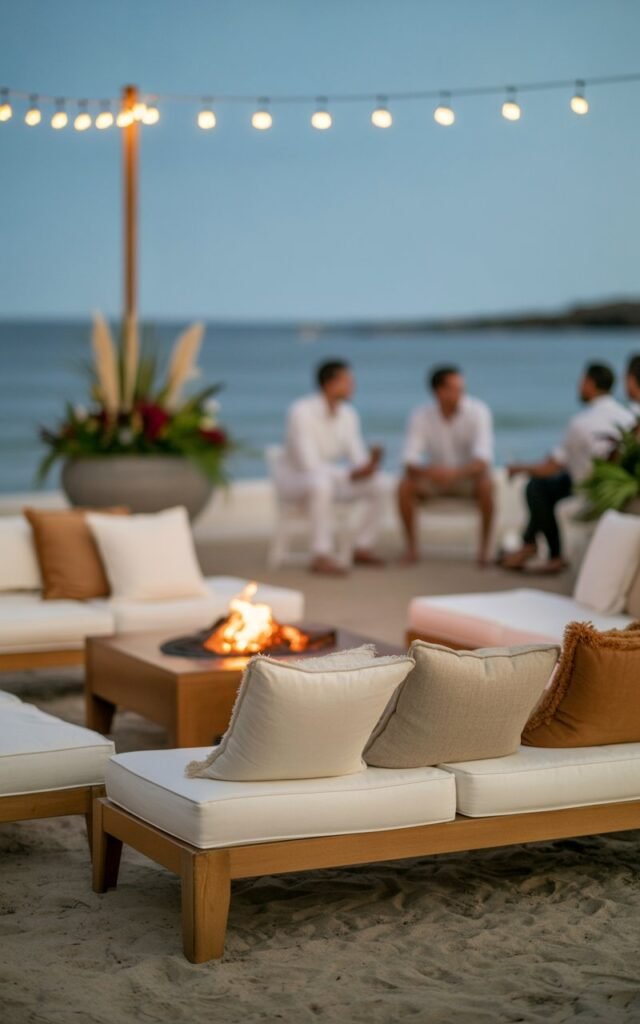
Formal sit-down dinners and beach settings don’t always mix well. The most natural match for a coastal wedding is a reception that feels as relaxed as the setting — think open-air lounge areas with comfortable seating, maybe a fire pit as the evening cools, and a more casual approach to dining.
Food trucks are a genuinely good option for beach weddings on a moderate budget. They handle the service, minimize rentals, and fit the vibe perfectly. Coastal fare — lobster rolls, shrimp tacos, ceviche, fresh fruit — feels right by the water and keeps guests happy without the formality of a plated dinner. Signature cocktails in sunset-inspired hues (a peach bellini, a passion fruit mojito, something with ginger and citrus) add a personalized touch to the bar menu.
For entertainment, consider mixing music with some beach games — cornhole, bocce ball, or even a telescope set up for stargazing once the sun goes down. Not every guest wants to dance, and having other options keeps the energy going for everyone.
11. Handle the Practical Details Early
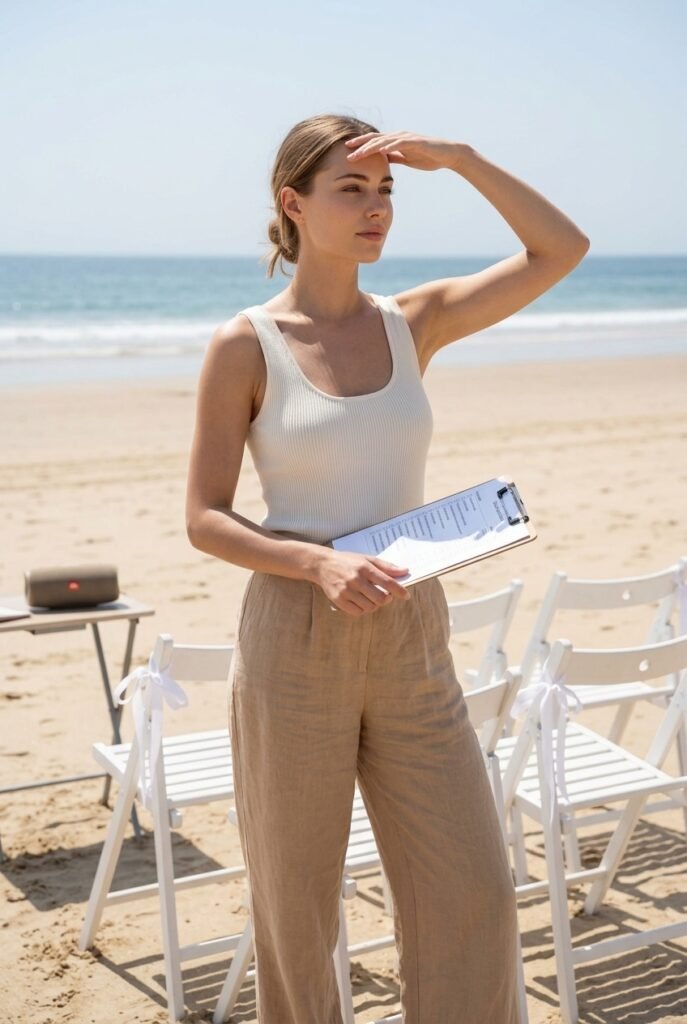
The beach is a beautiful setting and a genuinely demanding one. Getting ahead of the logistics is what makes the difference between a smooth day and a stressful one.
A few things to sort out well in advance:
- Permits: Most public beaches in the US require a permit for events. Research your specific beach’s requirements early — some book up months ahead.
- Sound: The sound of crashing waves can drown out ceremony audio if you’re too close to the water. Discuss this with your DJ or officiant and invest in a good sound system.
- Weather backup: Always have a plan B. A nearby venue with floor-to-ceiling windows, a tent option, or even a covered patio can save your wedding day if weather turns.
- Windproof décor: Test everything before the day. Lightweight items that look beautiful in your inspiration photos can become projectiles on a windy afternoon.
Taking a walk-through of your beach location at the same time of day as your ceremony is one of the smartest things you can do during the planning process. You’ll see how the light falls, where the crowd levels are, and exactly where to position the ceremony space.
Your Coastal Wedding, Your Way
A beach wedding rewards the women who plan with the setting in mind rather than against it. The couples who have the most beautiful coastal ceremonies are the ones who kept things relatively simple, prioritized guest comfort, and let the ocean do what it does naturally — set an atmosphere that no indoor venue can replicate. Whether your version is a barefoot bohemian gathering for 30 or a polished sunset ceremony for 150, the foundation is the same: good timing, light fabrics, natural touches, and a backup plan for the weather.
Start early, visit your location in person, and trust that the beach itself is doing most of the work. What you add on top of that should feel personal, comfortable, and true to how you and your partner actually want to spend your wedding day. The rest will fall into place.
Frequently Asked Questions
Q: Do I need a permit to get married on a beach in the US?
A: Yes, in most cases. The majority of public beaches in the United States require an event permit, and some popular locations book up months in advance. Check with the local parks department or beach authority as early as possible in your planning process.
Q: What is the best time of day for a beach wedding ceremony?
A: Golden hour — about 60 to 75 minutes before sunset — is widely considered the best time for both ceremony lighting and photography. Morning ceremonies are also a solid option, with softer light, fewer crowds, and cooler temperatures compared to midday.
Q: What type of wedding dress works best for a beach ceremony?
A: Lightweight, breathable fabrics like chiffon, organza, and linen work best. A-line, sheath, and empire waist silhouettes are practical and elegant on sand. Avoid long, heavy trains, which can be difficult to manage in wind and soft sand.
Q: How do I keep my beach wedding décor from blowing away?
A: Use low-profile, weighted arrangements. Glass bowls and vases filled with sand or water add stability to centerpieces. Sandbags behind arch posts keep structures grounded. Test every element of your décor before the wedding day, ideally in outdoor conditions.
Q: What are good flower choices for a beach wedding?
A: Tropical blooms like orchids, birds of paradise, hibiscus, and bougainvillea suit the coastal setting well. King proteas work beautifully for neutral-toned palettes. Pair florals with palm fronds, pampas grass, or ferns to keep arrangements grounded and wind-resistant.
Q: How do I keep guests comfortable at a beach wedding?
A: Provide hand fans at each seat, set up a shaded area or parasols near the reception, and offer a welcome station with chilled water and sunscreen. A wooden walkway or beach mats along the aisle help guests — especially older family members — navigate the sand more easily.
Q: Should I have a backup plan for bad weather?
A: Yes, always. Even in typically sunny locations, weather can shift unexpectedly. Identify a nearby indoor venue, tent option, or covered outdoor space in advance, and communicate the backup plan to guests and vendors so everyone knows what to do if conditions change.
Q: What colors work best for a beach wedding color palette?
A: Soft, natural tones tend to photograph best and feel most cohesive with a coastal setting. Seafoam green, blush pink, soft lavender, warm beige, and sandy neutrals are consistently popular. Earthy tones like terracotta and dusty sage also work well, especially for boho or rustic-leaning ceremonies.
Q: What is a sand ceremony and how does it work?
A: A sand ceremony is a unity ritual where both partners each pour differently colored sand into a single vessel during the ceremony, symbolizing the merging of two lives. It’s a practical and visually appealing alternative to unity candles, which can be difficult to keep lit in an outdoor, windy setting.