
Getting a three-month-old to sleep better feels like one of the most pressing problems in a new mom’s life — and for good reason. Sleep deprivation at this stage is real, relentless, and physically exhausting. The good news is that by three months, your baby’s brain has matured enough to start building the earliest habits around sleep, even if full-on formal sleep training is still a few weeks away.
At this age, babies are wrapping up what many call the “fourth trimester” — that tender newborn phase where everything is instinct and survival mode. Around the 12-week mark, something shifts. You may notice a bit more predictability starting to emerge. Their circadian rhythm, the internal clock that separates day from night, begins to develop. That means right now is actually the perfect time to lay the groundwork.
The ten strategies below are practical, research-backed, and gentle enough to use tonight. Some of them you can implement in the next hour. They won’t transform everything overnight, but they will start moving your baby — and you — toward better, more consistent rest.
- 1. Nail Your Wake Windows
- 2. Start a Consistent Bedtime Routine
- 3. Aim for a 7–8 PM Bedtime
- 4. Create a Dark, Cool, Quiet Sleep Space
- 5. Use White Noise
- 6. Transition Away from the Swaddle
- 7. Try the Pick Up, Put Down Method
- 8. Practice "Drowsy but Awake"
- 9. Use the Fading Method to Wean Off Sleep Props
- 10. Keep an Eat–Wake–Sleep Rhythm During the Day
- Small Steps Now Mean Bigger Wins Later
- Frequently Asked Questions
1. Nail Your Wake Windows

This one concept alone can change everything. A wake window is simply the stretch of time your baby stays awake between sleep sessions. At three months, that window is typically 75 to 110 minutes. Go past it, and your baby becomes overtired. Put her down too early, and she’s not ready to sleep.
Watch for early sleepy cues: a slowdown in activity, staring off into space, or a yawn. That’s your signal to start winding down — not to wait until she’s fussing hard. Missing that window usually means a rough settle and a shorter nap.
2. Start a Consistent Bedtime Routine
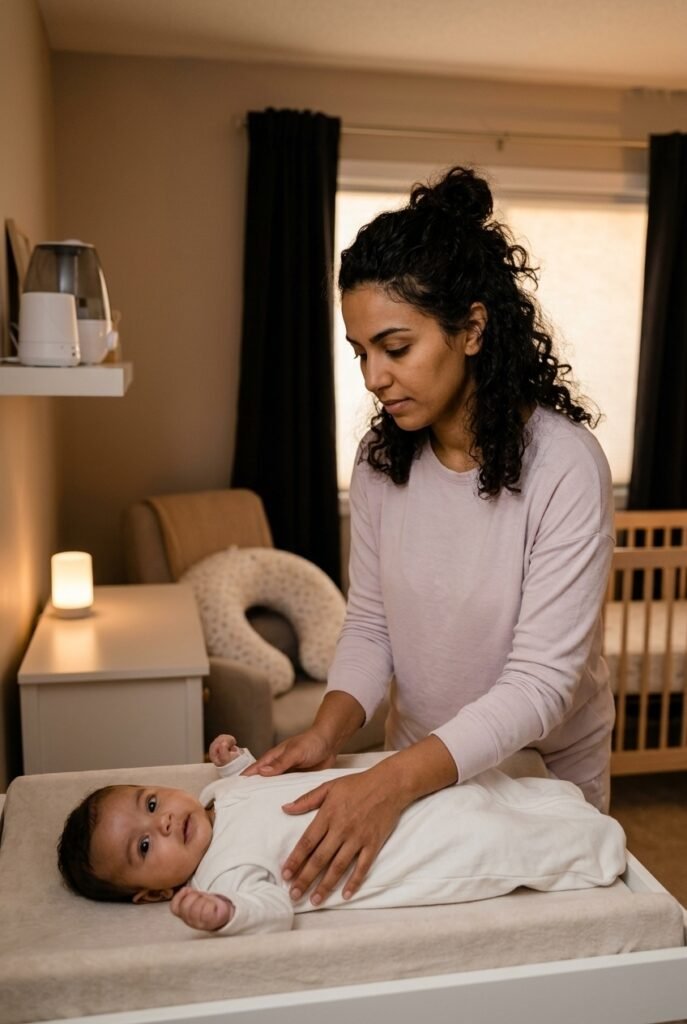
A bedtime routine doesn’t need to be complicated. What it does need to be is consistent — the same steps, in the same order, every single night. Babies at this age are starting to pick up on patterns, and repetition is exactly how they learn what’s coming next.
A simple routine might look like this: dim the lights, do a diaper change and put on a sleep sack, nurse or offer a bottle, then a short song or gentle rocking. The whole thing should take no more than 20 to 30 minutes. Keep it calm, keep it predictable, and over time your baby’s brain will begin associating those steps with sleep.
Research from pediatric sleep experts consistently supports that bedtime routines in early infancy lead to better sleep outcomes not just now, but as children get older.
3. Aim for a 7–8 PM Bedtime
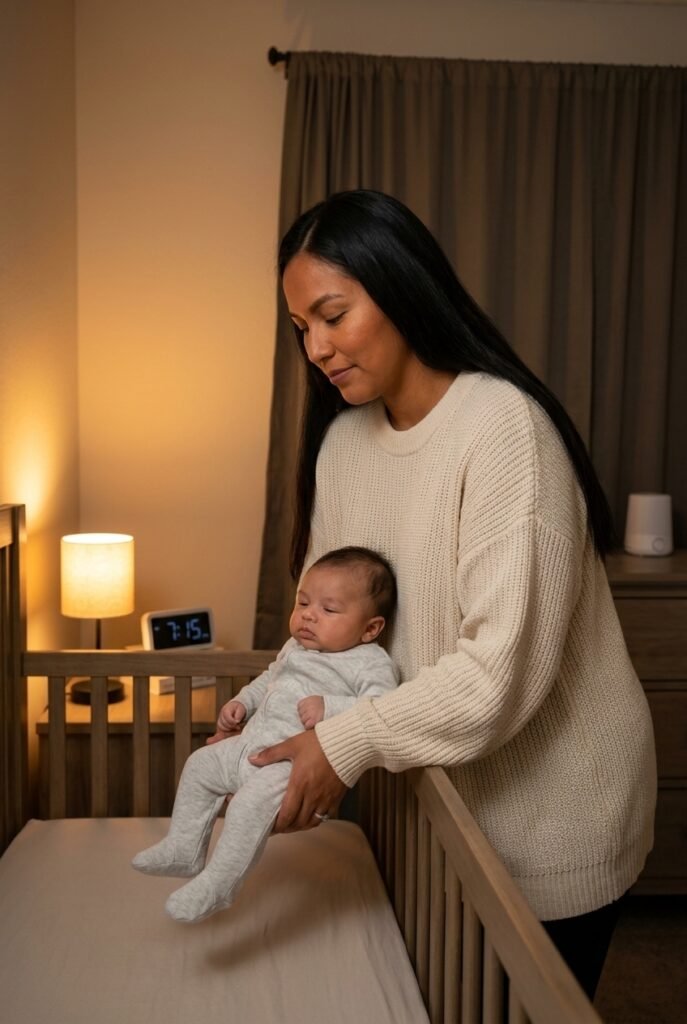
Many moms assume that keeping a baby up later means she’ll sleep longer. In most cases, the opposite is true. A baby who goes to bed overtired — after 9 PM or later — is harder to settle and often wakes more throughout the night.
For most three-month-olds, the sweet spot is somewhere between 7 and 8 PM, calculated roughly 12 to 14 hours after their morning wake-up. Watch your baby’s energy levels in the late afternoon and use that as your guide. An earlier, calmer bedtime often produces longer overnight stretches.
4. Create a Dark, Cool, Quiet Sleep Space
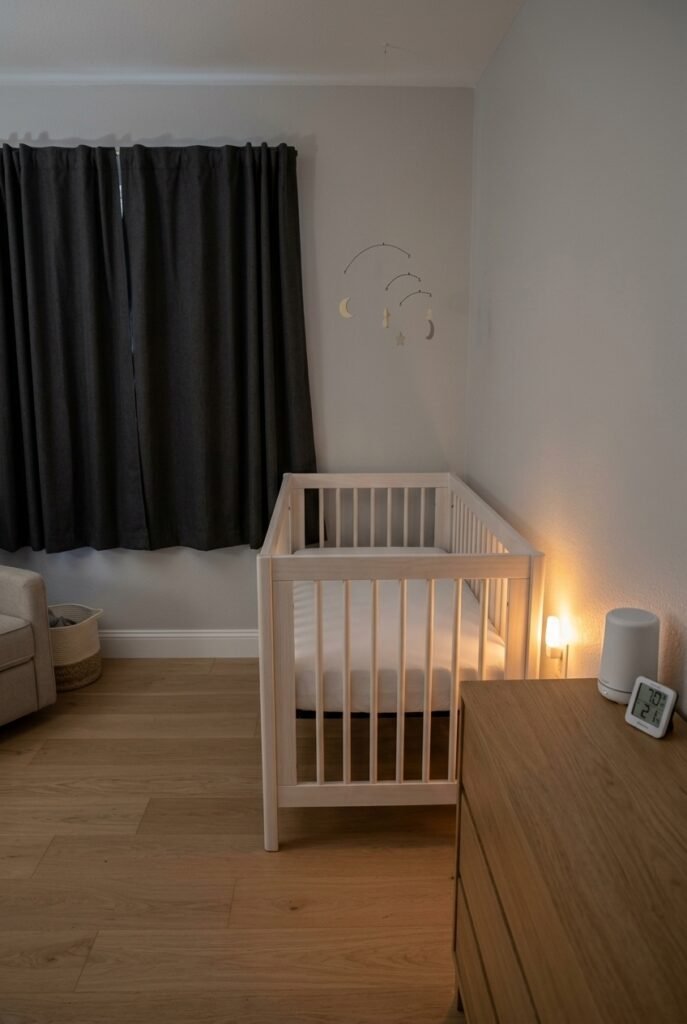
The environment your baby sleeps in matters more than most people realize. At three months, the circadian rhythm is just beginning to develop, and darkness plays a direct role in triggering melatonin production — the hormone that signals it’s time to sleep.
Blackout curtains are worth every penny at this stage. Pair them with a room temperature between 68 and 72°F, which is the range pediatric experts generally recommend for safe infant sleep. Keep the space free of toys, loose bedding, and bumpers — safe sleep guidelines call for a firm, flat surface with nothing extra in the crib.
5. Use White Noise
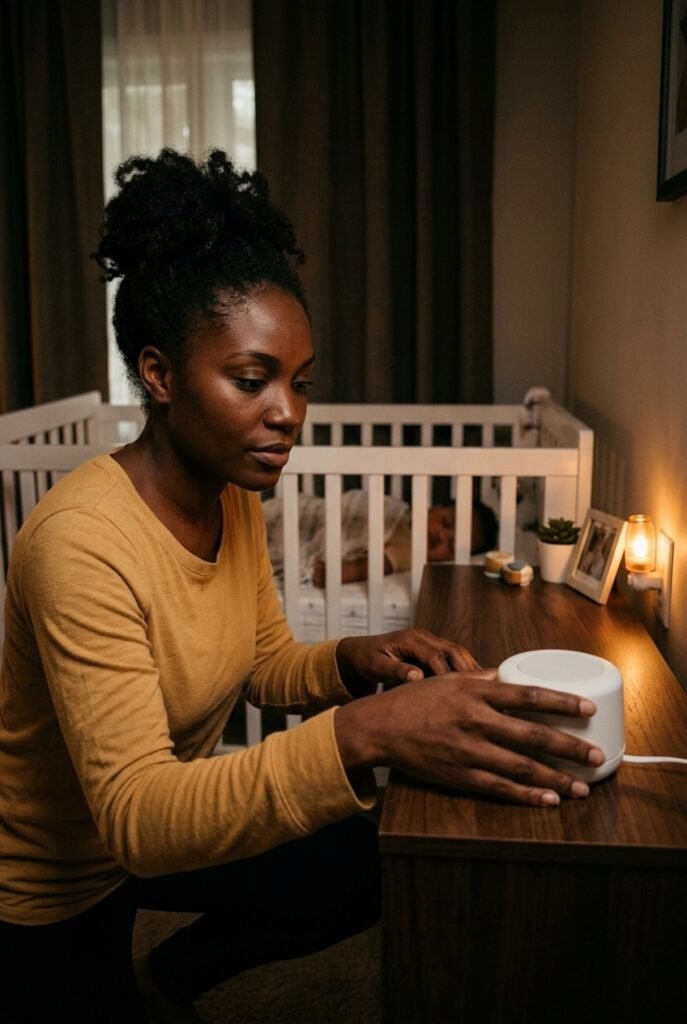
White noise is one of the simplest and most effective tools you have. It mimics the whooshing sounds your baby heard in the womb, which is why it has such a calming effect. It also creates a consistent audio backdrop that masks household noise — a door closing, a TV down the hall, a sibling running through the house.
A white noise machine placed across the room (not directly next to your baby’s ear) can make a noticeable difference in how quickly your baby settles and how long she stays asleep. Many moms find it helpful for both naps and nighttime sleep.
6. Transition Away from the Swaddle
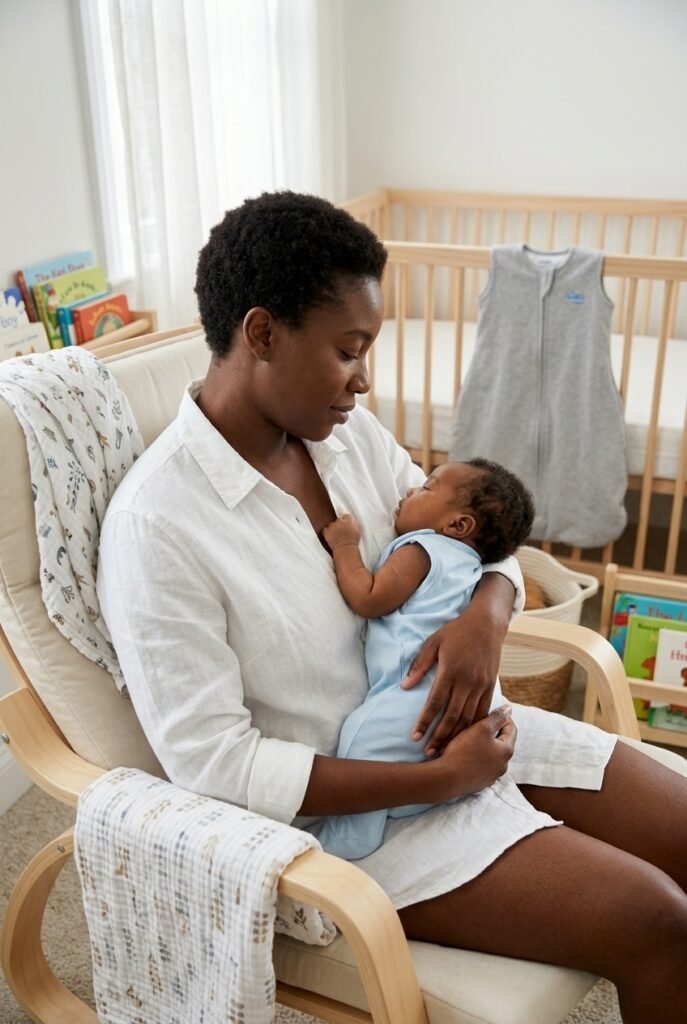
If your baby has been swaddled since birth, three months is the window to start thinking about transitioning out of it. As babies begin working toward rolling — which often happens around this age — swaddling becomes a safety concern. Arms need to be free for self-protection during sleep.
A sleep sack or a transitional product like the Merlin’s Magic Sleep Suit can help bridge that gap. These options provide a sense of snugness and containment without restricting movement. They also give your baby access to her hands, which is important for self-soothing — a skill that becomes the foundation of all sleep training progress.
7. Try the Pick Up, Put Down Method
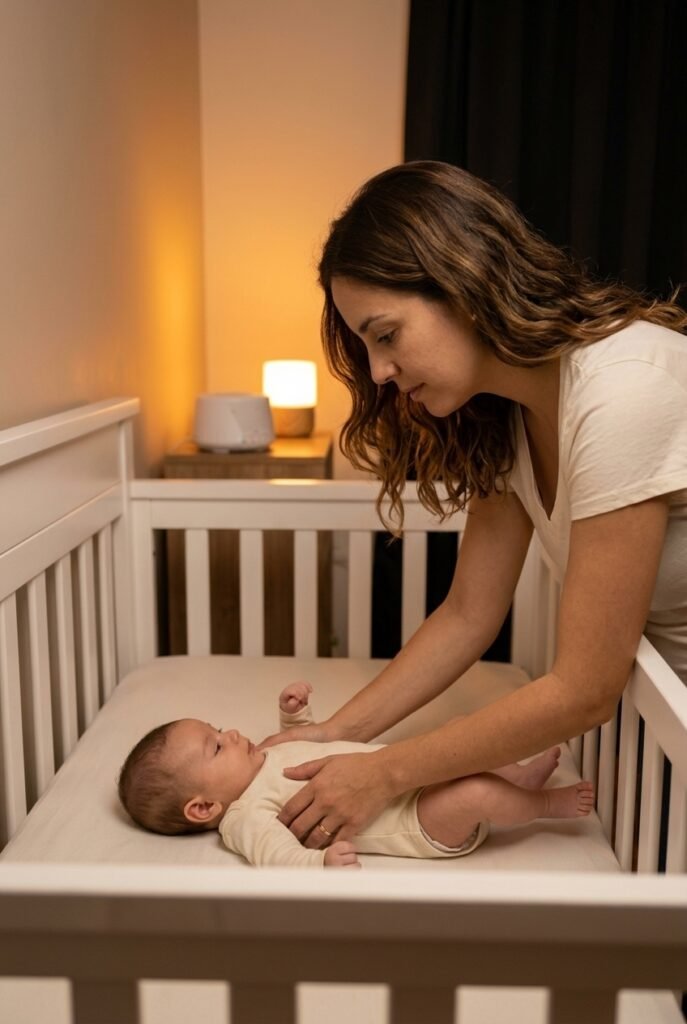
This is one of the gentlest approaches to early sleep training and works well with three-month-olds. The idea is straightforward: place your baby in the crib drowsy but still awake. If she cries, pick her up and calm her — then put her back down once she’s settled.
You repeat this process until she falls asleep. Yes, it can take a while at first. But over several nights, most babies begin to need fewer pick-ups. The goal is to gradually shift the association away from being fully asleep in your arms before entering the crib.
This method is low-stress, keeps you close and responsive, and is well-suited for the three-month age range when babies still need reassurance but are capable of making early progress toward independent settling.
8. Practice “Drowsy but Awake”
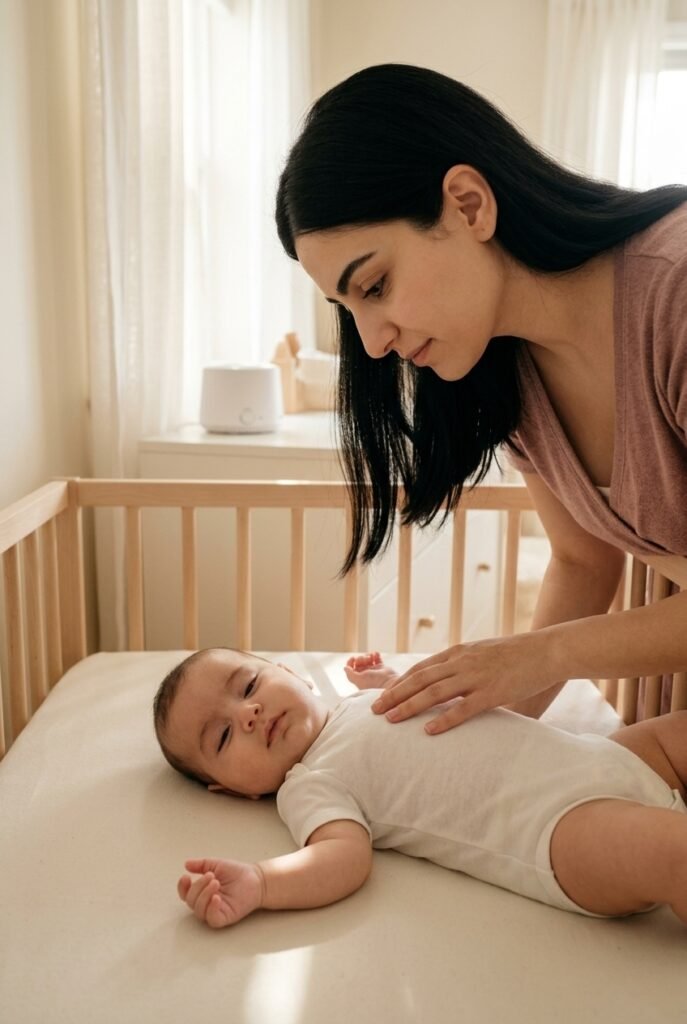
If there is one phrase that comes up in every conversation about infant sleep, it’s this one. Putting your baby down drowsy but awake — not fully asleep — is the single most important habit to build at this stage.
When a baby falls asleep in your arms and wakes up in a crib, the experience is disorienting. She’ll cry to recreate the conditions under which she fell asleep. But if she goes down while still slightly awake, she begins learning that the crib is a safe place to drift off. That skill is what allows her to connect sleep cycles on her own overnight — which is ultimately the goal of all sleep training.
Start practicing this at one sleep session per day, usually the first morning nap when your baby is most rested and cooperative.
9. Use the Fading Method to Wean Off Sleep Props
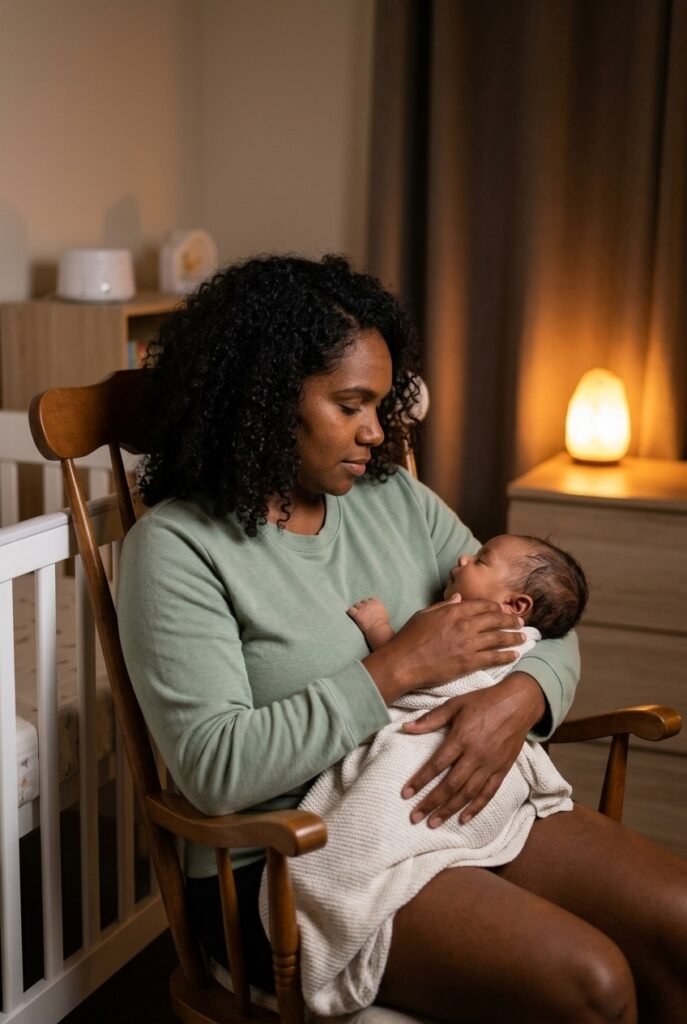
If your baby currently relies on being rocked, nursed, or bounced all the way to sleep, the fading method offers a gentle way to reduce that dependency gradually. Instead of stopping cold, you scale back your involvement a little each night.
For example, if you typically rock her until she’s fully asleep, try rocking until she’s almost there, then shifting her to the crib. After a few nights, rock slightly less. Then less again. The transitions are small enough that they rarely cause big protests, and your baby begins adjusting without a dramatic shift.
This approach works best when you choose one specific sleep prop to fade at a time, rather than changing everything at once.
10. Keep an Eat–Wake–Sleep Rhythm During the Day
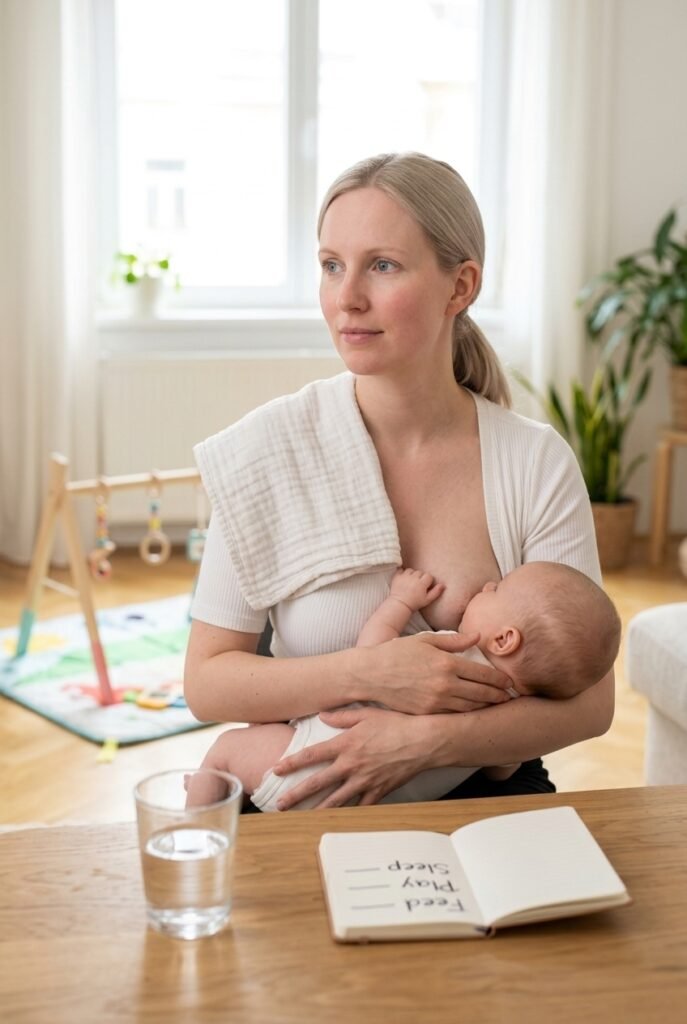
How your baby’s days are structured has a direct impact on how well nights go. An Eat–Wake–Sleep cycle — where feeding comes at the start of the wake window, not right before sleep — helps in two important ways. First, it reduces the chance of your baby developing a nursing or bottle-feeding association with falling asleep. Second, it creates a more predictable flow to the day that makes wake windows easier to track.
It’s not a rigid schedule at three months — flexibility is still needed. But having a loose pattern gives your day structure and makes it easier to anticipate when your baby will next be ready for sleep, which means fewer overtired meltdowns and smoother transitions.
Small Steps Now Mean Bigger Wins Later
Three months is not too early to start building a foundation. Full sleep training — the kind where babies consistently put themselves to sleep and sleep through the night — typically happens closer to four to six months. But the habits you build right now are exactly what makes that transition smoother when the time comes.
You don’t have to do all ten of these at once. Start with two or three that feel manageable tonight. A dark room, a consistent routine, and putting her down a little less asleep than usual are already meaningful steps. Trust the process, stay consistent, and give yourself grace. You are not doing this wrong — you are doing it one night at a time.
Frequently Asked Questions
Q: Is three months old too young to start sleep training? A: Formal sleep training — like the Ferber method — is typically recommended starting at four to six months. However, at three months you can absolutely begin building habits like a consistent bedtime routine, drowsy-but-awake practice, and a dark, quiet sleep environment. These lay the groundwork for sleep training when your baby is developmentally ready.
Q: How many hours should a three-month-old be sleeping? A: Most babies this age need about 14 to 16 hours of sleep total in a 24-hour period, typically broken into 10 to 12 hours at night and 4 to 6 hours spread across 3 to 5 naps during the day.
Q: What are wake windows for a three-month-old? A: At three months, wake windows generally run between 75 and 110 minutes. Wake windows tend to be shorter in the morning and a little longer as the day goes on. Keeping an eye on sleepy cues — yawning, quieting down, staring off — helps you time naps well without letting your baby get overtired.
Q: When should I stop swaddling my baby? A: Most sleep experts recommend transitioning out of the swaddle around the time your baby shows signs of rolling, which often begins around two to three months. Once rolling is possible, a swaddle becomes a safety risk. A sleep sack or transitional sleep suit is a good alternative.
Q: What does “drowsy but awake” actually mean in practice? A: It means placing your baby in the crib while she’s still slightly conscious — her eyes may be drooping, her body relaxed, but she hasn’t fully crossed into sleep yet. The goal is for her to experience that last step of falling asleep in the crib rather than in your arms, so she learns to associate the crib with drifting off.
Q: How long does it take for a bedtime routine to start working? A: Most babies start responding to a consistent bedtime routine within one to two weeks. At three months, the brain is just beginning to pick up on patterns, so repetition over time is what builds the association. Keeping the routine under 30 minutes and in the same order each night speeds up the process.
Q: Is white noise safe for babies? A: Yes, when used correctly. Place the white noise machine across the room from your baby rather than directly beside her ear, and keep the volume at a moderate level — roughly the sound of a shower running. It’s safe for both naps and nighttime sleep and can be a significant help for settling.
Q: What is the fading method and how is it different from cry-it-out? A: The fading method involves gradually reducing how much help you give your baby to fall asleep over a series of nights — rocking a little less, patting less firmly, holding for shorter periods — until she needs little to no assistance. It’s much gentler than cry-it-out because you remain present and responsive throughout, just slowly stepping back over time.