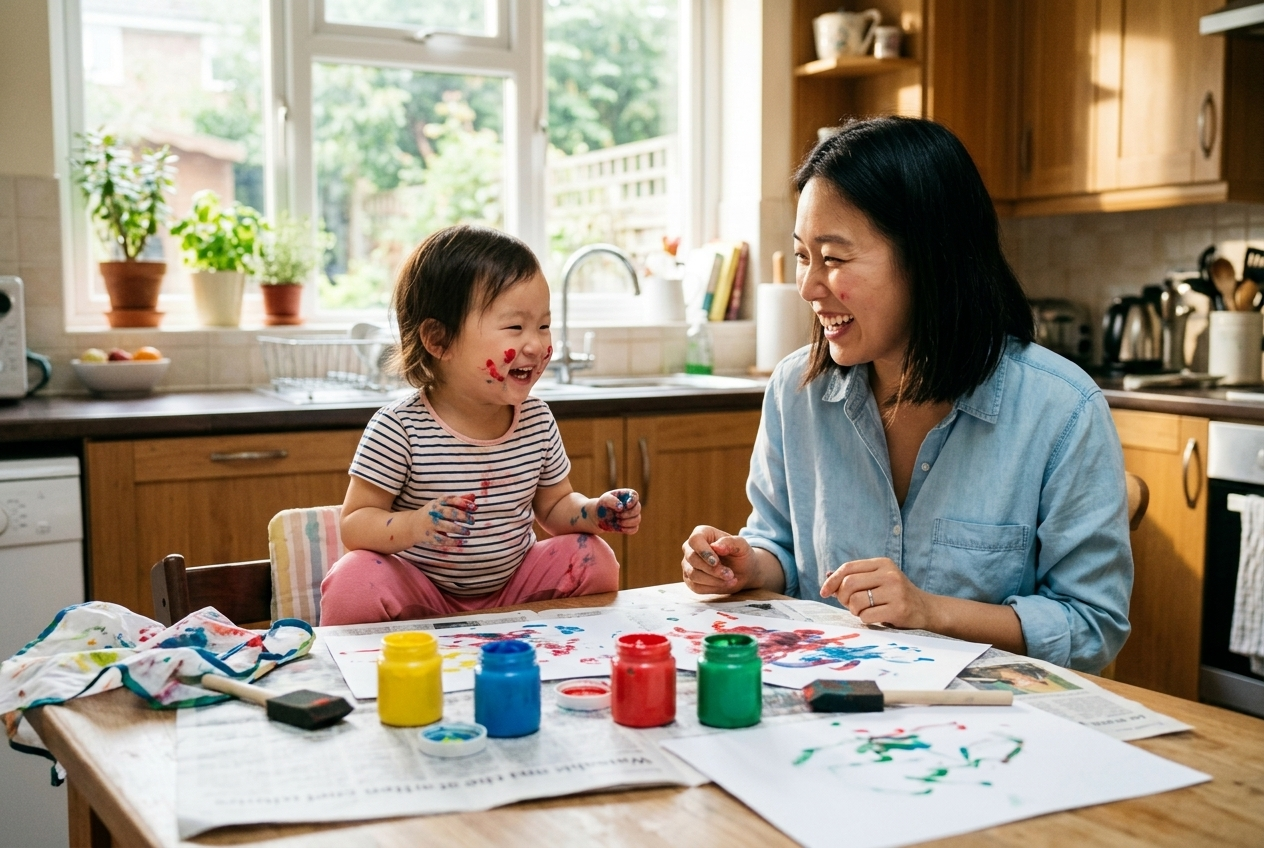
There’s a specific kind of afternoon that stays with you. The kind where paint ends up on the table, on tiny elbows, maybe on the wall — and somehow nobody minds. That’s what painting with your toddler girl can be, if you let go of the idea that it needs to look a certain way.
The truth is, you don’t need art school experience or a Pinterest-perfect setup. Most of the best projects for this age require nothing more than washable paint, some paper, and a little bit of patience. What they give back is a lot more than a pretty picture.
Research consistently shows that creative activities help toddlers build fine motor skills, color recognition, and early problem-solving abilities — all while they think they’re just having fun. For moms, these sessions can be genuinely relaxing, a break from the mental load of the day. Below are nine ideas that work well for both of you.
- 1. Handprint Flowers on Canvas
- 2. Tape Resist Rainbow Painting
- 3. Sponge Stamp Animals
- 4. Watercolor Resist with White Crayon
- 5. Fingerprint Dot Art
- 6. Bubble Wrap Texture Printing
- 7. Paint-in-a-Bag Sensory Painting
- 8. Nature Stamp Printing
- 9. Matching Mini Canvases
- A Few Things Worth Knowing Before You Start
- The Finished Art Is Only Part of It
- Frequently Asked Questions
1. Handprint Flowers on Canvas
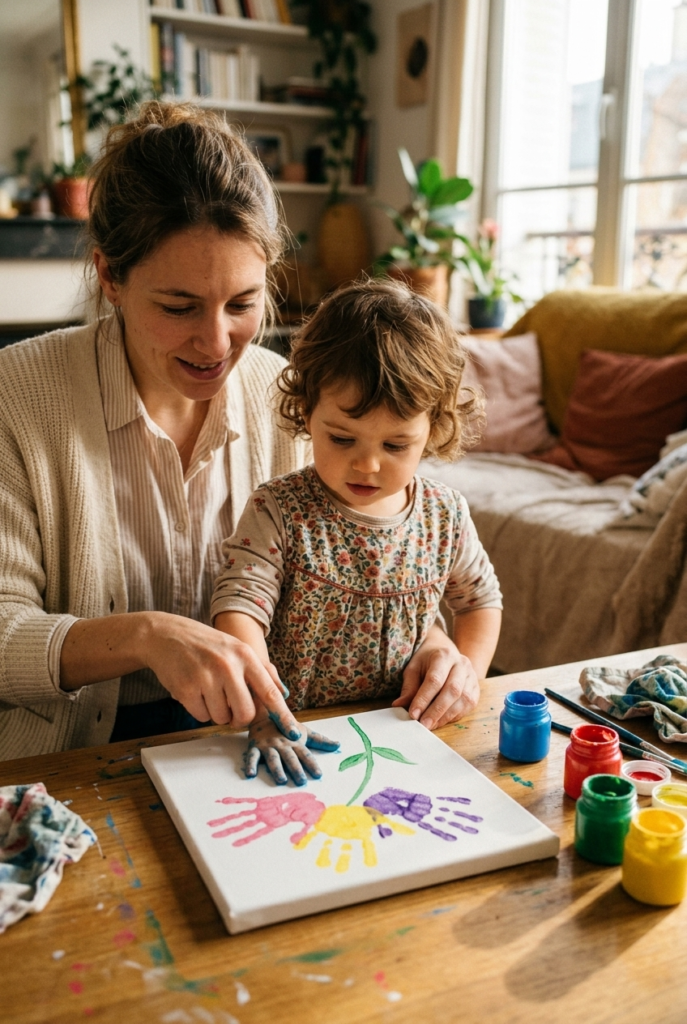
This one never gets old, and there’s a reason for that. Coat your daughter’s hand in a bright color — pink, purple, yellow — and press it firmly onto a canvas or heavy cardstock. That print becomes a flower petal. Repeat it around a center point with a few colors, add a painted stem, and you’ve got a keepsake she’ll look at for years.
The great part about this for moms: you can paint something beside her at the same time. Try painting a simple vase at the bottom of the canvas to hold all the handprint blooms. It becomes a true collaboration, not just a toddler project with a mom watching from the side.
Use washable tempera paint on the hands — it cleans up fast, and it gives a clean, bold print.
2. Tape Resist Rainbow Painting
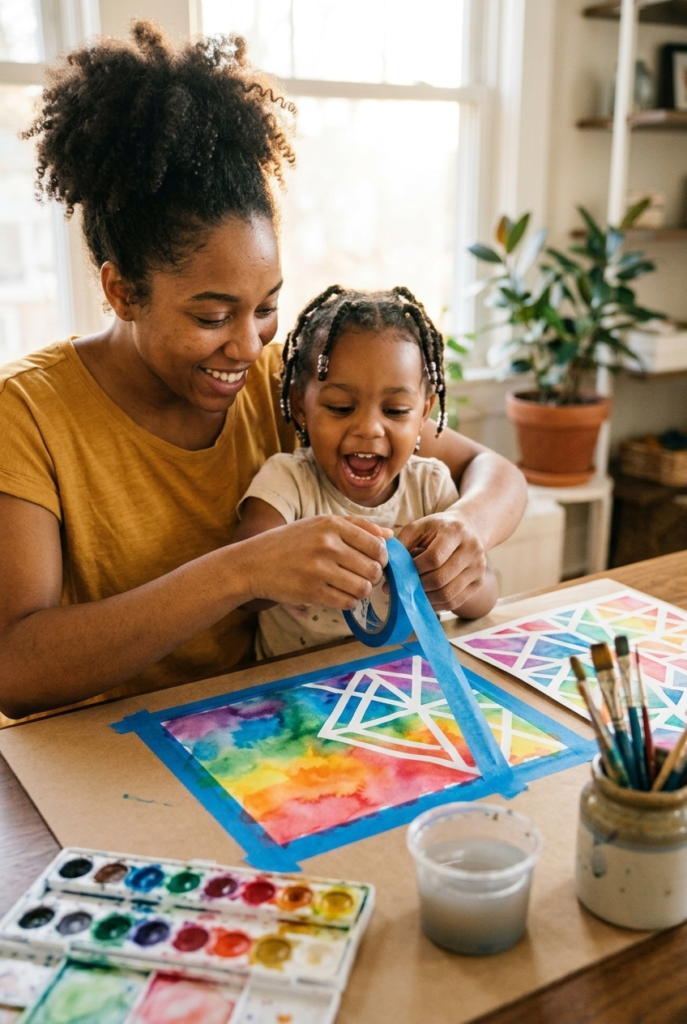
Painters tape is one of the most underrated art supplies for this age group. Lay strips of tape diagonally across a piece of watercolor paper. Let your little one paint freely over the whole thing with rainbow colors — no rules, no wrong way to do it. Once the paint dries completely, peel the tape back slowly to reveal crisp white lines cutting through the color.
The reveal moment is genuinely magical to a toddler. They don’t always understand why it looks the way it does, and that confusion turns into pure delight pretty quickly.
Moms can do the same project right alongside them on a separate sheet. Try geometric shapes instead of straight lines for a different effect — triangles, a grid, a starburst.
3. Sponge Stamp Animals
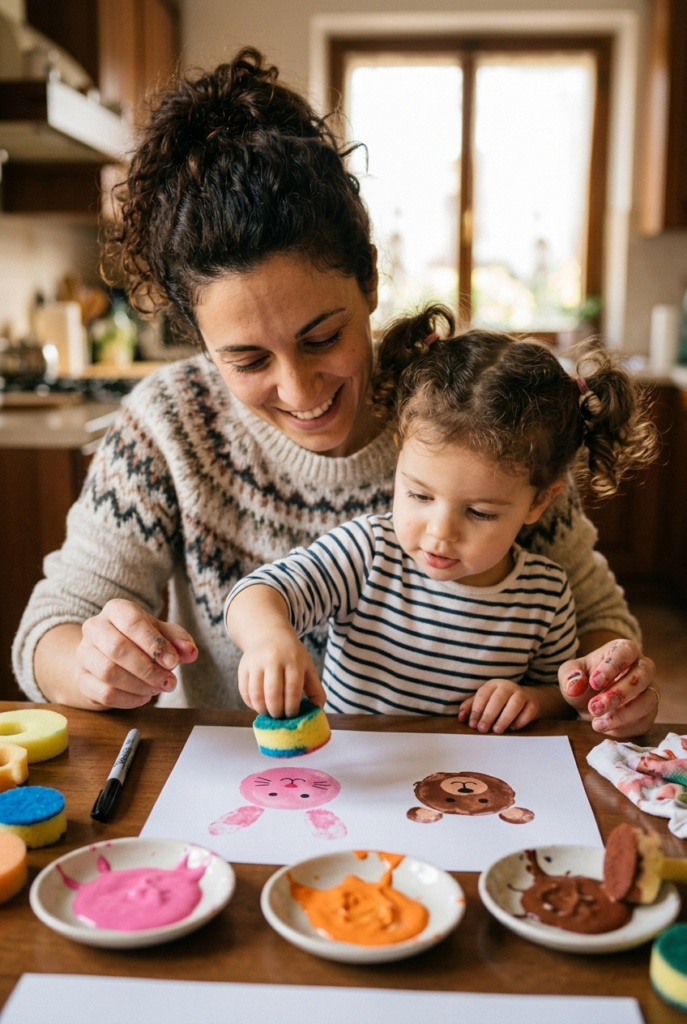
Cut a kitchen sponge into basic shapes — circles, triangles, ovals — or pick up a foam stamp set at the dollar store. Dip the sponge into paint and press. A circle becomes a body, a smaller circle becomes a head, and suddenly there’s a bunny or a bear on the page.
For toddler girls who love animals, this is a major hit. The sponge is easy to grip, the stamp is forgiving, and the results look more “finished” than straight brushwork at this age.
You can take it further by drawing details — eyes, ears, whiskers — with a fine-tipped marker once the paint dries. Let her pick which animals to make. Caterpillars, ladybugs, elephants — all of them work with basic sponge shapes.
4. Watercolor Resist with White Crayon
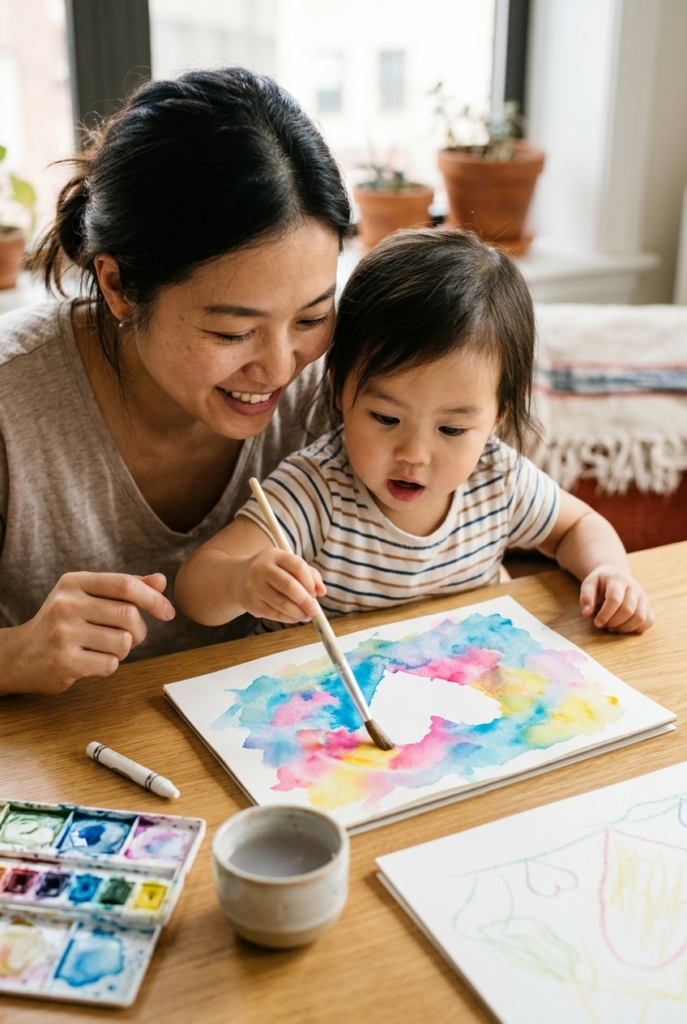
Draw something on watercolor paper with a white crayon — a heart, a star, her name, a flower outline. Press hard so the wax goes on thick. Then hand the paper over and let her brush watercolors freely across the whole sheet.
The hidden image slowly appears as the paint hits the wax. It’s a simple science moment wrapped inside an art project, and toddlers are completely mesmerized by it.
As the mom, you can prep multiple sheets ahead of time with different hidden drawings. While she paints, you paint your own sheet with a regular brush. Watercolors are calming to work with, even for adults — maybe especially for adults.
5. Fingerprint Dot Art
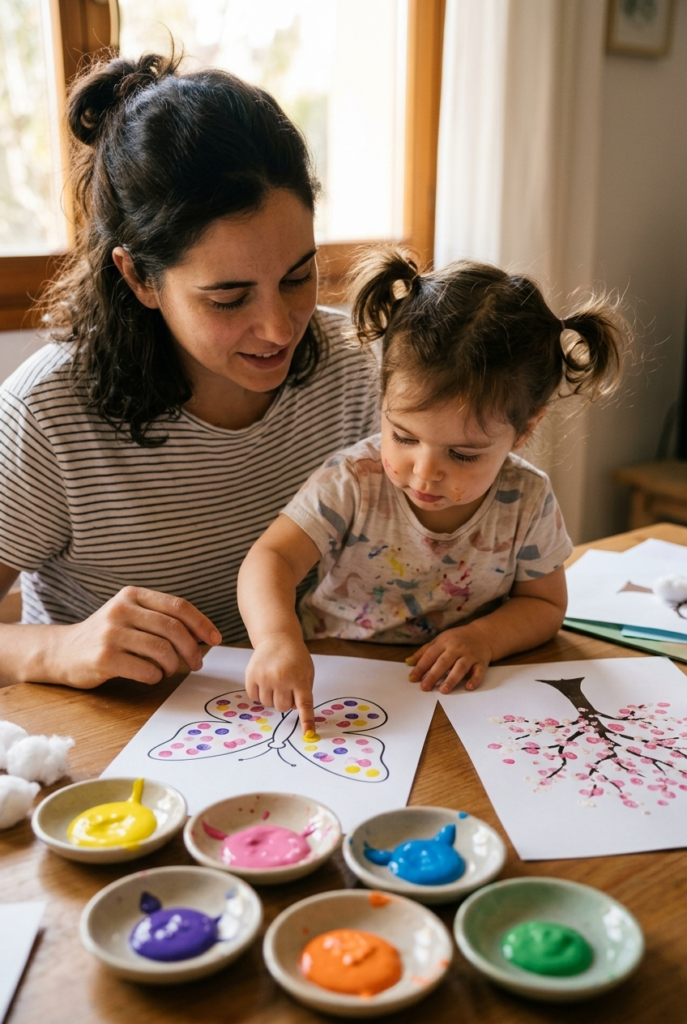
All you need here is a few colors of paint in small dishes and clean fingertips. Dots made with fingertips can become almost anything: a cluster of grapes, a field of flowers, a night sky full of stars, a caterpillar on a leaf.
For a toddler girl who loves details, give her a printed outline — a tree, a butterfly, a simple house — and let her fill it in entirely with fingerprint dots. The repetition is actually very satisfying for kids at this age, and it’s building real fine motor control in the process.
For the mom version, try a more complex scene: a fingerprint cherry blossom tree, a dotted border on a card, or an abstract pattern in her favorite color palette. Fingerprint art scales up beautifully.
6. Bubble Wrap Texture Printing
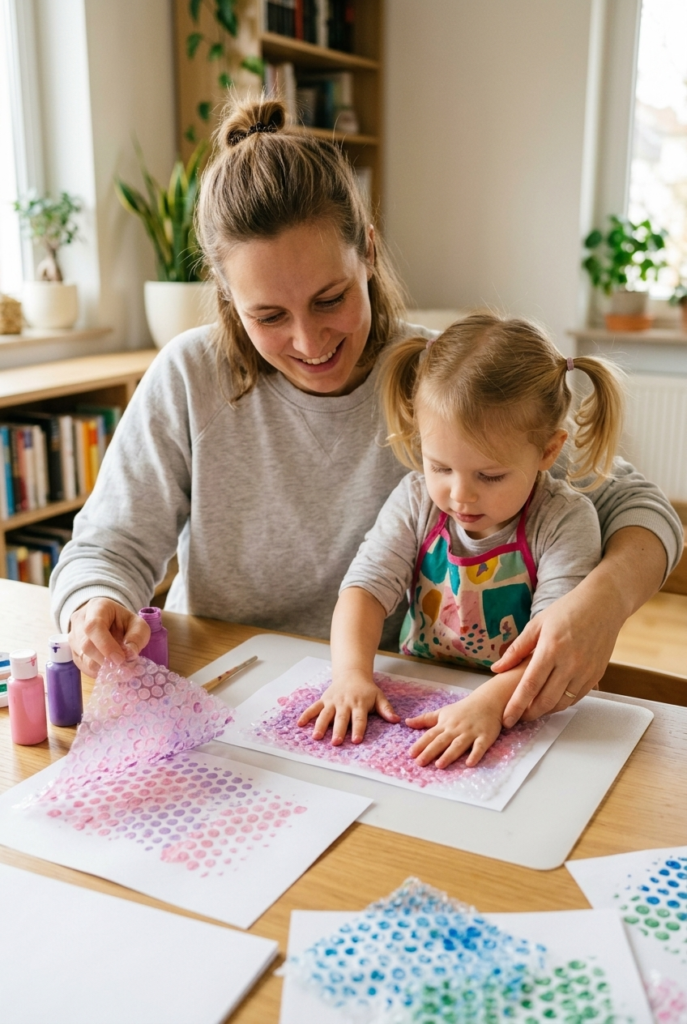
Cut a piece of bubble wrap to fit a sheet of paper. Brush paint directly onto the bubble side, then press it paint-side-down onto the paper. The small circular bubbles leave behind a textured, polka-dot pattern that looks surprisingly beautiful.
You can use one color or layer a few. Blues and greens make a convincing ocean or a field of grass. Pink and purple together feel very dreamy. Let your daughter choose the colors and do the pressing — the weight of her small hands is enough to transfer the pattern clearly.
This is also a very low-mess activity since the paint stays on the wrap until the moment of printing. Great for days when you just can’t deal with a full cleanup situation.
7. Paint-in-a-Bag Sensory Painting
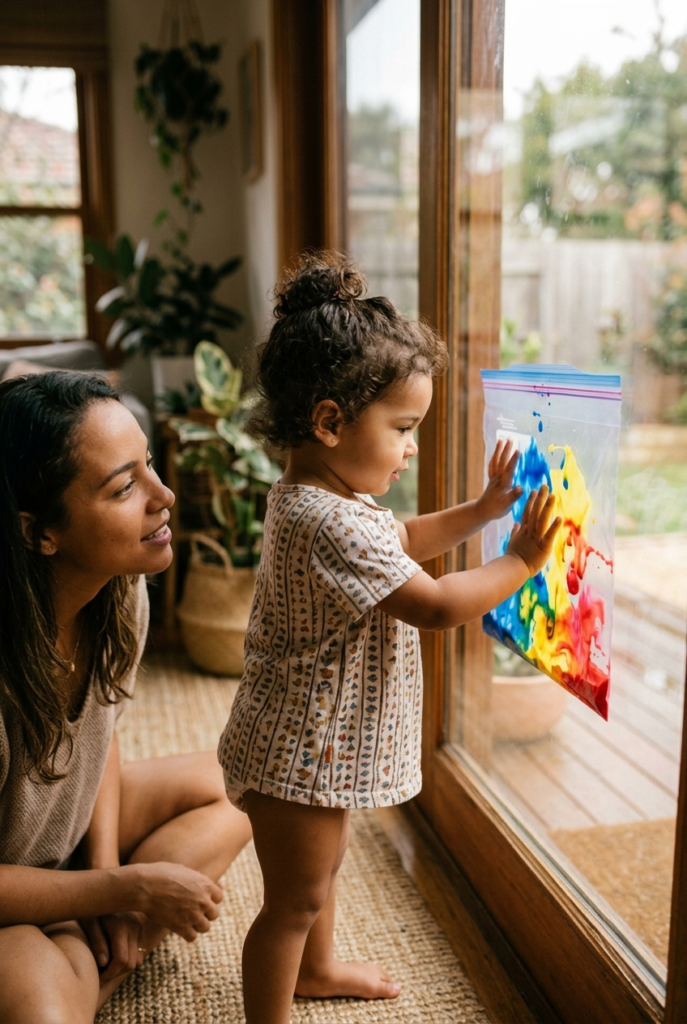
Squeeze a few drops of different colored paint into a zip-lock bag. Seal it completely — double-check the seal — then tape it flat to a table or a window. Your daughter pushes, swirls, and drags the colors around with her fingers on the outside of the bag.
She gets the sensory experience of painting without touching the paint at all. It’s genuinely mess-free, and for toddlers who are still at the stage where everything goes into the mouth, this is a safe way to introduce color mixing.
What she sees happening inside the bag — colors blending together as she moves her hands — is also a real learning moment about how blue and yellow make green, how red and white make pink.
8. Nature Stamp Printing
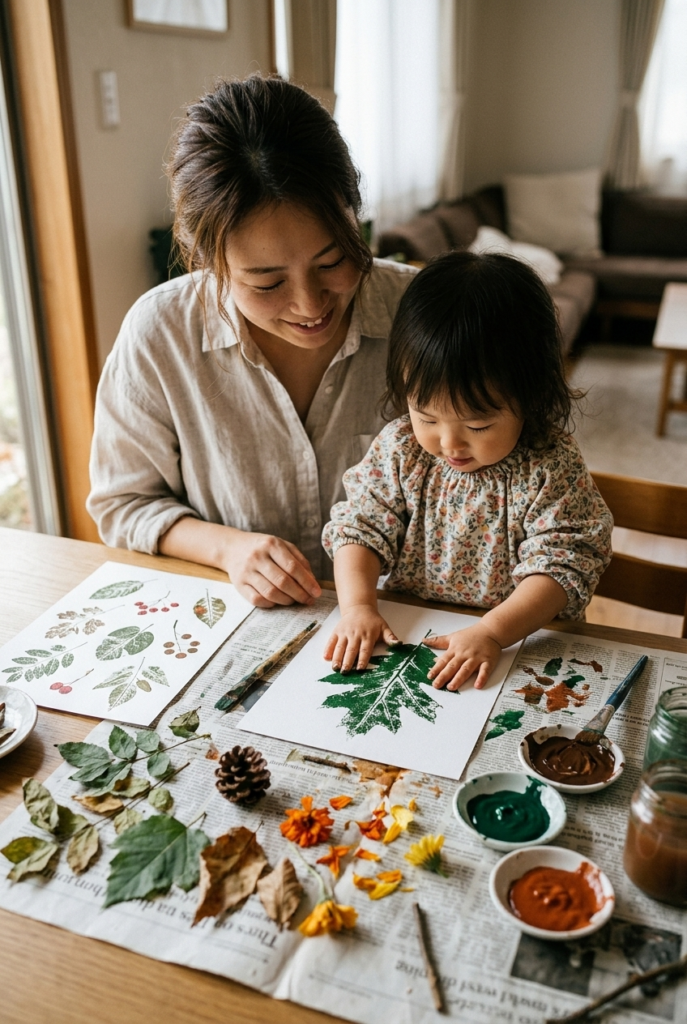
Take a short walk first. Collect leaves, sticks, pinecones, flower petals, whatever you find. Bring them inside, lay them out, and start pressing them into paint and stamping them onto paper.
Leaves especially produce stunning prints when coated in paint and pressed flat — the veins of the leaf show through in perfect detail. Pinecones make great textured circular stamps. Even a stick dragged through paint leaves an interesting line.
This project works well for moms because you can go as simple or as complex as you want. A toddler girl might stamp randomly across the page and love every second of it. A mom might arrange leaf prints into a wreath shape or line up botanical prints in a row for a framed piece.
Keep the paint acrylic for crisp prints, and work on newspaper to protect the surface.
9. Matching Mini Canvases
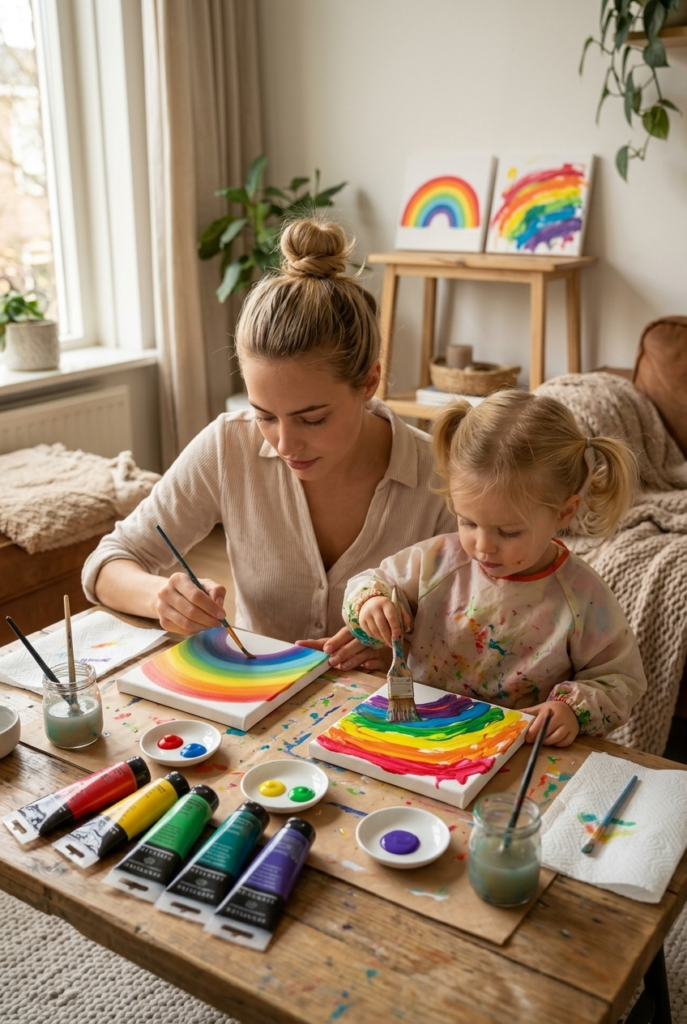
Buy a set of small canvases — the 4×4 or 5×7 size works perfectly. You each get one. Pick a simple subject together: a rainbow, a moon, a flower, a heart. Paint the same thing, side by side, each in your own way.
When they’re done, they hang together. A tiny gallery of two.
This is the activity that feels the most like a shared creative moment rather than a supervised toddler project. She’s making art. You’re making art. You’re in the same room doing the same thing, and that parallel play is deeply satisfying for both of you, even if her rainbow has ten colors and yours only has seven.
Use acrylic paint on canvas for the best coverage. Start with a simple background color, let it dry for a few minutes, then add your design on top.
A Few Things Worth Knowing Before You Start
Choose the right paint. Washable tempera is the go-to for toddlers — it’s non-toxic, comes off skin and fabric easily, and dries fast. Acrylic works well on canvas and gives brighter results, but read the label. Always look for non-toxic on the packaging.
Set up for success. Lay down a plastic tablecloth or a few sheets of newspaper. Put an old t-shirt or a smock on her. Keep a damp cloth within reach. The more relaxed you are about possible mess, the more fun it is for both of you.
Don’t direct too much. The goal is not a finished product that looks like the example. Let her use the colors she wants, place her handprint where she wants to, dot her fingerprints however she likes. Art at this age is about the process, not the outcome.
The Finished Art Is Only Part of It
These painting sessions are a lot more than craft projects. For toddler girls, time like this builds vocabulary (naming colors, shapes, what they see), develops grip strength and hand-eye coordination, and gives them a sense of accomplishment that you can’t manufacture any other way.
For moms, it’s permission to sit still, be creative, and do something with your hands that has nothing to do with the to-do list. And the pieces you make together — the handprint flowers, the matching canvases, the tape resist rainbows — have a way of becoming the things you hold onto the longest.
You don’t need much to get started. A few colors, some paper, two sets of hands. That’s about it.
Frequently Asked Questions
Q: What type of paint is safest for toddlers? A: Washable tempera paint is the best choice for young children. It’s non-toxic, washes off skin and most fabrics easily, and dries quickly. Always check the label for non-toxic certification before buying.
Q: At what age can toddler girls start painting? A: Most children can start basic finger painting around 12 to 18 months. At that stage, use taste-safe or non-toxic paints. By age two, they can handle simple stamp and brush activities. The projects in this list work best for ages two and up.
Q: How do I keep the mess manageable during a toddler painting session? A: Lay a plastic tablecloth or old newspaper over the table and floor. Put a smock or old t-shirt on her. Keep a damp cloth within arm’s reach and use washable paints. Setting up properly before you start makes the cleanup take a few minutes instead of thirty.
Q: Do I need to buy expensive art supplies? A: Not at all. A basic set of washable tempera paints, some heavy cardstock or a pack of small canvases, and a few foam brushes are enough for every project on this list. Dollar stores and craft stores carry everything you need at very low cost.
Q: What is the easiest painting idea for a very young toddler (under 2)? A: The paint-in-a-bag sensory activity is ideal for very young toddlers. They get the visual experience of watching colors blend with no direct contact with the paint. Handprint pressing with a parent guiding the hand also works well at this age.
Q: How can I make these paintings into keepsakes? A: Date each piece on the back when it’s finished. Handprint and fingerprint art ages particularly well as a keepsake because the size of the print documents exactly how small her hands were at that specific time. Small canvases can be framed cheaply. Cardstock pieces scan well and can be made into cards or printed in a photo book.
Q: Can a mom with no art background do these projects? A: Yes, completely. None of these require any drawing skill or artistic training. The techniques — stamping, pressing, taping — are designed to produce a good-looking result regardless of experience level. The process matters more than the final piece anyway.
Q: How long should a toddler painting session last? A: Follow her lead. Some toddlers are done in ten minutes, others will keep going for forty-five. Don’t push a session longer than she wants — ending on a happy note means she’ll be excited to do it again next time.