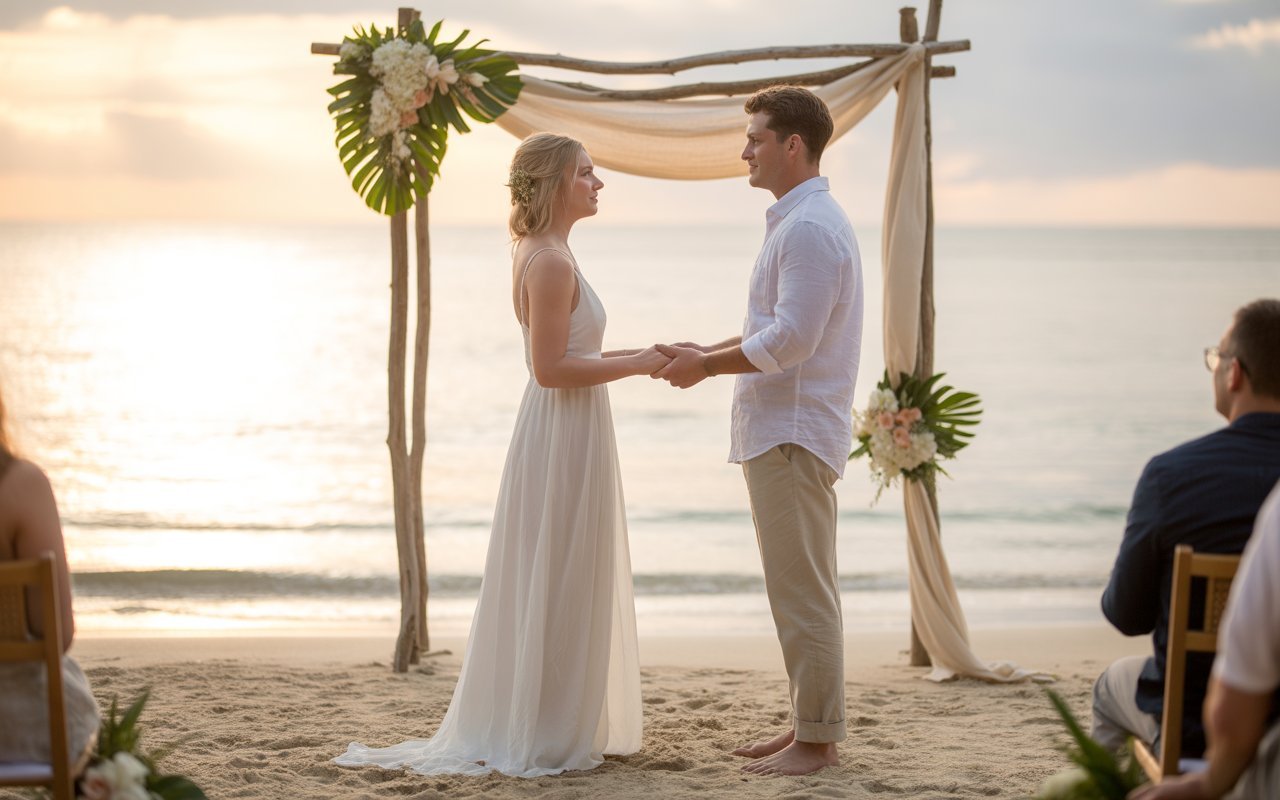
There is something about a beach wedding that no ballroom or vineyard can replicate. The sound of waves in the background, warm sand beneath your feet, and a sky that shifts from bright blue to shades of gold and pink as the sun goes down — it creates the kind of atmosphere that photographs itself. And beyond the visuals, it just feels different. More personal. More real.
What makes a coastal ceremony so special is that the setting does a lot of the heavy lifting for you. You do not need elaborate floral installations or dramatic lighting rigs to create a mood. The ocean handles that. What you need instead is thoughtful planning — the kind that works with the environment rather than against it. That means knowing how to choose the right details, what to skip, and where to put your energy.
Whether you are dreaming of a barefoot ceremony at a local beach or a full destination wedding in the Caribbean, the ideas below cover the key decisions that will shape your day — from your gown and décor to the ceremony rituals and guest experience. Here are nine ideas that actually work.
- 1. Choose the Right Location First — Everything Else Follows
- 2. Time Your Ceremony Around Golden Hour
- 3. Get the Dress Right for Sand, Wind, and Sun
- 4. Build Your Color Palette Around the Setting
- 5. Let the Décor Breathe — Less Is More Outdoors
- 6. Add a Meaningful Ceremony Ritual
- 7. Think About Guest Comfort — Really Think About It
- 8. Plan the Reception to Match the Vibe
- 9. Hire a Photographer Who Actually Knows Beaches
- Your Big Day, Your Shoreline
- Frequently Asked Questions
1. Choose the Right Location First — Everything Else Follows

The location is not just a backdrop. It sets the tone for your dress, your color palette, your guest attire, and how formal or relaxed the whole event feels. A wild, rocky New England coastline has a completely different energy than a calm, palm-lined beach in the Florida Keys or a clifftop in Malibu. Think about what kind of mood you want to create before you get attached to any specific décor ideas.
Practical things matter here too. Check accessibility — can guests with mobility limitations reach the ceremony site comfortably? Are there nearby restrooms, parking, and shade? What time does the sun set, and where exactly does the light fall at that hour? These questions will save you a lot of headaches later. If you are planning a destination wedding, make sure to research local permit requirements. Many public beaches require a permit for events, even small ones.
2. Time Your Ceremony Around Golden Hour
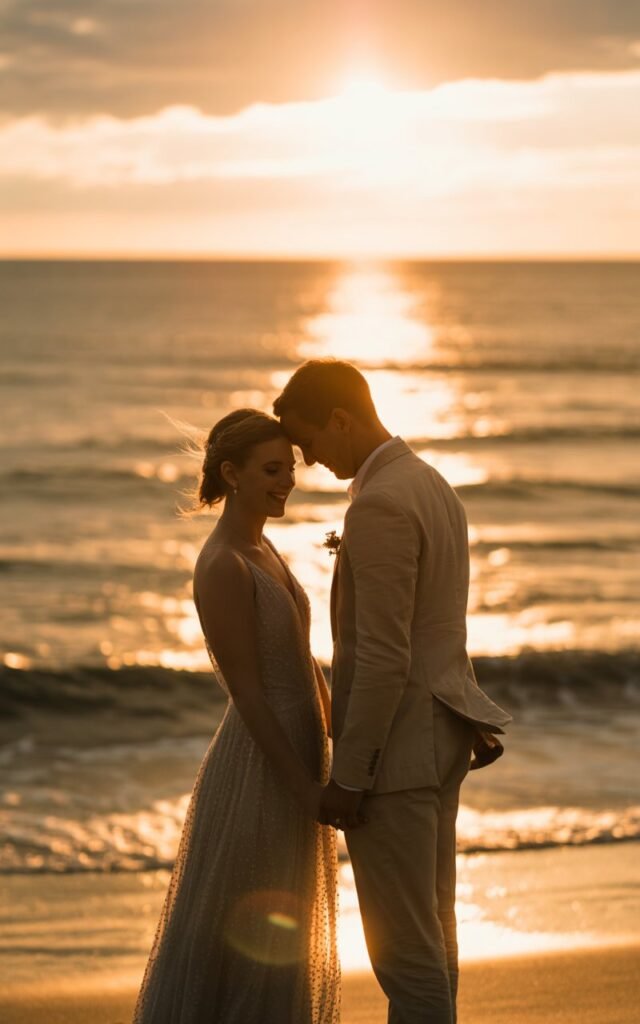
If there is one decision that will make your photos look like they belong in a magazine, it is this one. Scheduling your vows for the hour just before sunset — what photographers call golden hour — floods everything in warm, soft, flattering light. Harsh midday sun creates unflattering shadows and makes guests squint. Golden hour makes everyone glow.
Talk to your photographer before you lock in a time. They will know exactly when the light peaks at your specific location on your wedding date. Plan your ceremony to begin about 45 minutes before sunset so that by the time you are exchanging rings, the sky is doing its best work behind you. The reception naturally flows into a beautiful evening setting without much extra effort.
3. Get the Dress Right for Sand, Wind, and Sun
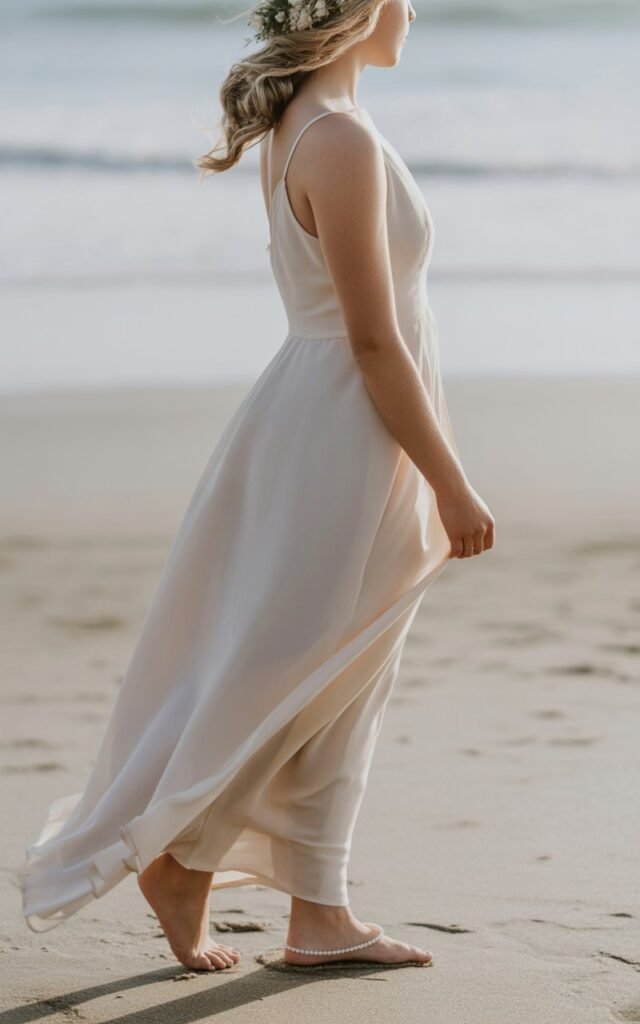
A beach wedding dress has to work with the environment — not just look beautiful in photos. Heavy satin, rigid corsets, and cathedral trains that drag through sand are going to make your day physically uncomfortable. The good news is that the fabrics best suited to coastal settings also happen to photograph beautifully.
Chiffon, organza, and lightweight tulle move with ocean breezes instead of fighting them. A-line silhouettes are universally flattering and practical on uneven terrain. Tea-length and midi-length gowns keep you cool and away from wet sand at the shoreline. If you love the idea of a long gown, a detachable train gives you the dramatic look for photos and the ease of movement at the reception.
For shoes, skip the heels. They will sink into the sand immediately. Wedges give you height without the sinking problem, and decorated barefoot sandals — the kind with beading or pearl details across the foot — are a genuinely pretty alternative that many coastal brides love. For hair, loose waves and soft updos hold up better in sea air than rigid styles. Secure everything with strong pins, and skip the long veil if the wind is unpredictable. A flower crown or a jeweled hair vine is both beautiful and practical.
4. Build Your Color Palette Around the Setting
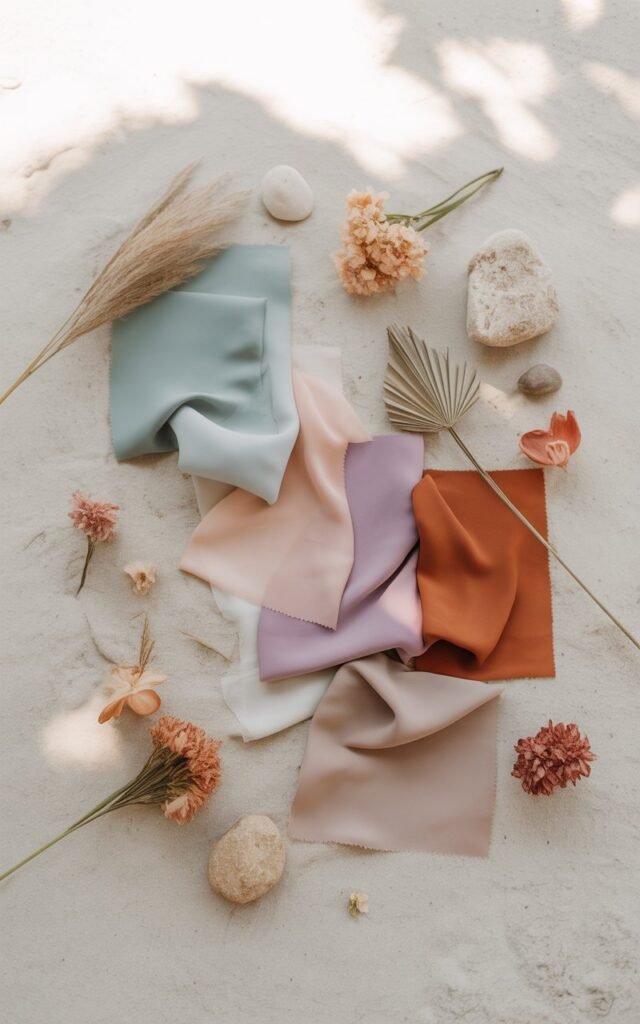
The most cohesive beach weddings let the natural environment inform the color palette. That does not mean you have to go with navy blue and seashells. It means thinking about what colors actually look good against sand, sea, and sky — and building from there.
Soft pastels like seafoam green, blush pink, and lavender sit beautifully in coastal light without competing with the scenery. Earthy tones — warm beige, terracotta, soft taupe — work especially well for more relaxed, bohemian-style ceremonies. If you want something bolder, coral, aqua, and warm gold all translate well in beach settings. What to avoid: bright white florals or linens that wash out in full sun, and very dark or jewel-toned colors that absorb heat and can look heavy against the natural brightness of the beach.
5. Let the Décor Breathe — Less Is More Outdoors
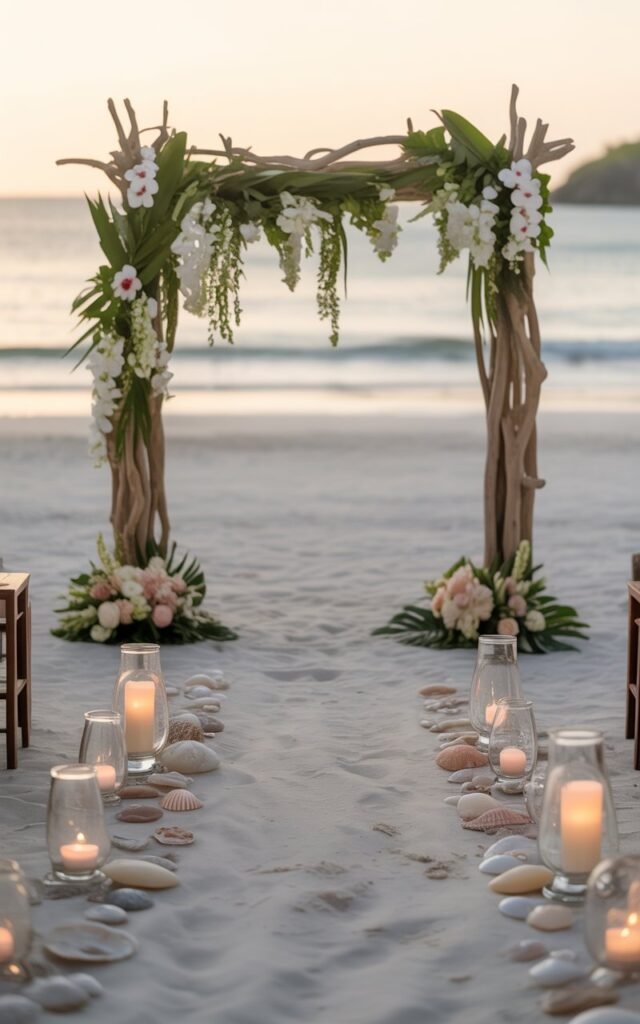
One of the most common mistakes at beach weddings is overdoing the décor. You are working within one of the most naturally beautiful settings in the world. Piling on too many decorative elements makes the space feel cluttered and often fights with the scenery rather than complementing it.
A few well-chosen pieces go a long way. A driftwood arch draped in light linen or soft greenery is simple and stunning. Seashells and beach glass lining the aisle give the ceremony an authentic coastal feel without looking costumey. For centerpieces, low-profile arrangements work better than tall ones outdoors — wind will knock over anything too top-heavy. Candles in glass lanterns or hurricane vases stay lit and look gorgeous at dusk.
Tropical florals — bougainvillea, anthuriums, hibiscus, orchids — are a natural fit for beach settings. Paired with palm fronds or soft greenery, they read as festive without being overdone. For a more minimalist look, a cascading green arch with white blooms is timeless and works in almost any coastal location.
6. Add a Meaningful Ceremony Ritual
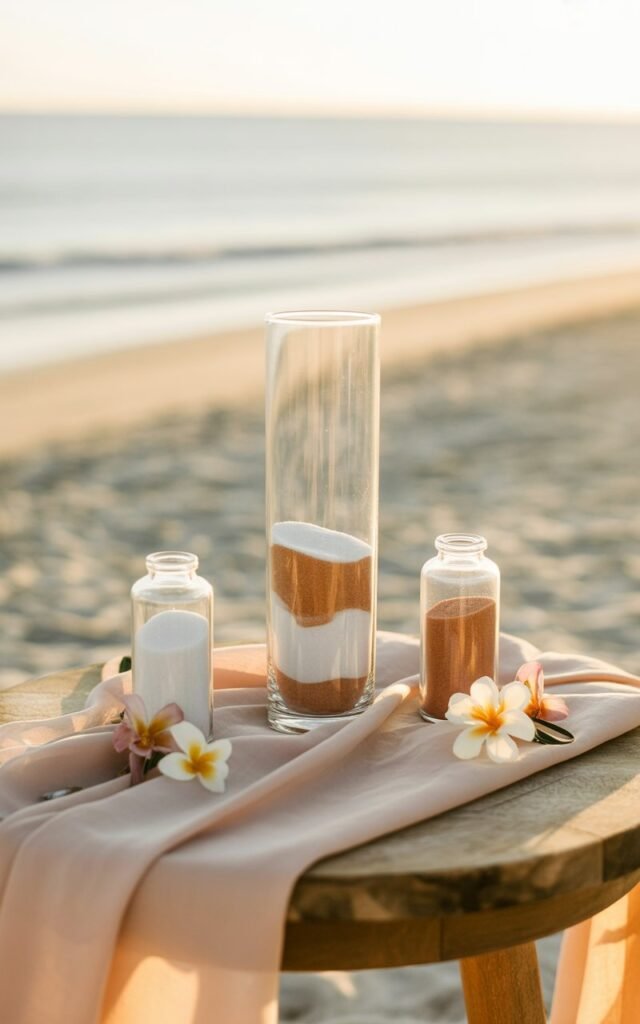
A beach setting opens the door to ceremony rituals that feel genuinely connected to the environment — not forced or generic. Two of the most popular ones work particularly well outdoors.
The sand ceremony is a classic for a reason. The couple each pours a different color of sand into a single vessel, representing two lives merging into one. The result is a beautiful layered keepsake you take home. Another option gaining popularity is “tying the knot” — literally — using a beautiful braided rope in a fisherman’s knot, which actually grows stronger under pressure. It is a meaningful symbolic touch with a story behind it. Some couples write their vows on parchment paper, seal them in a bottle, and plan to open it on a future anniversary. Any of these add depth and personality to the ceremony without requiring additional vendors or budget.
7. Think About Guest Comfort — Really Think About It

Your guests will love your beach wedding if they are comfortable. If they are sweating in the midday sun with nowhere to sit in the shade, they will remember that instead. Guest comfort is one of the most overlooked aspects of outdoor wedding planning, and it does not have to cost much to get right.
Set up a small welcome station with chilled water, sunscreen, and hand fans. Provide umbrellas or parasols near the ceremony seating for shade. If you are doing a daytime ceremony, consider renting a tent or canopy structure as both a design element and a practical sun shield. A shoe valet — a simple basket where guests can swap heels for flip-flops — is a practical and much-appreciated touch. In the evening, have light wraps or a basket of pashminas available at the reception for when the sea breeze picks up. These small details are what guests mention years later.
8. Plan the Reception to Match the Vibe
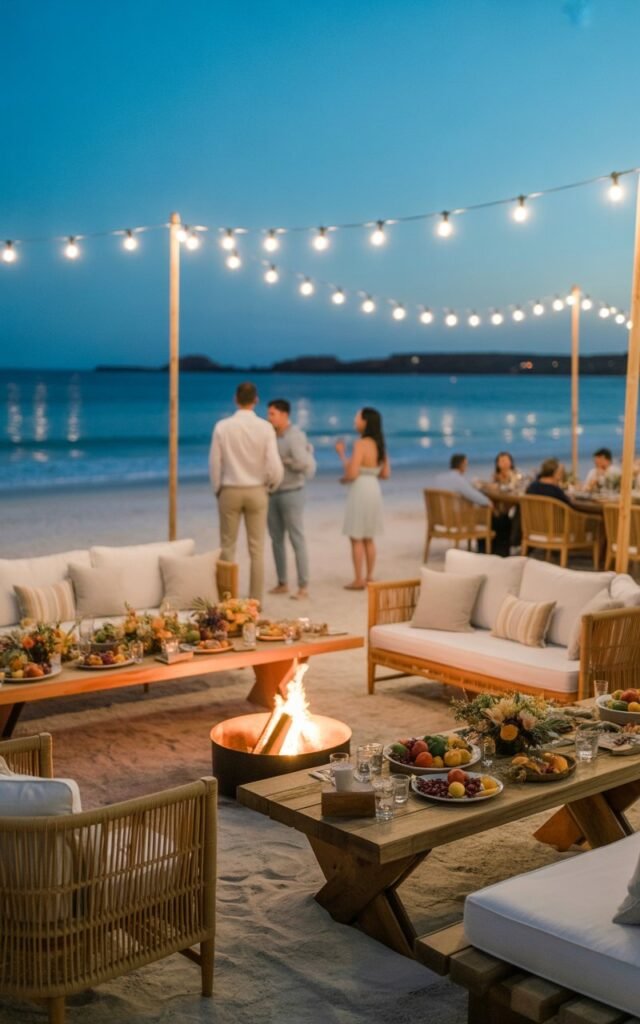
Beach wedding receptions are moving away from traditional formal sit-down dinners toward something more relaxed and interactive — and honestly, that suits the setting much better. Open-air lounge areas with comfortable seating, fire pits, and natural lighting create the kind of atmosphere where people actually mingle and enjoy themselves instead of sitting rigidly through a five-course meal.
Food trucks, buffet stations, and grazing tables are a great match for the laid-back coastal energy. Signature cocktails that nod to the location — something with coconut, fresh citrus, or tropical fruit — feel festive and on-theme. For entertainment, consider a steel drum band or a live acoustic set for the ceremony and early reception, then transition to a DJ for dancing. If the beach allows it, a late-night bonfire with s’mores and casual seating is one of those details guests genuinely love. Position the dance floor close to the water if possible — there is something about dancing by the ocean at night with string lights overhead that feels truly magical.
9. Hire a Photographer Who Actually Knows Beaches
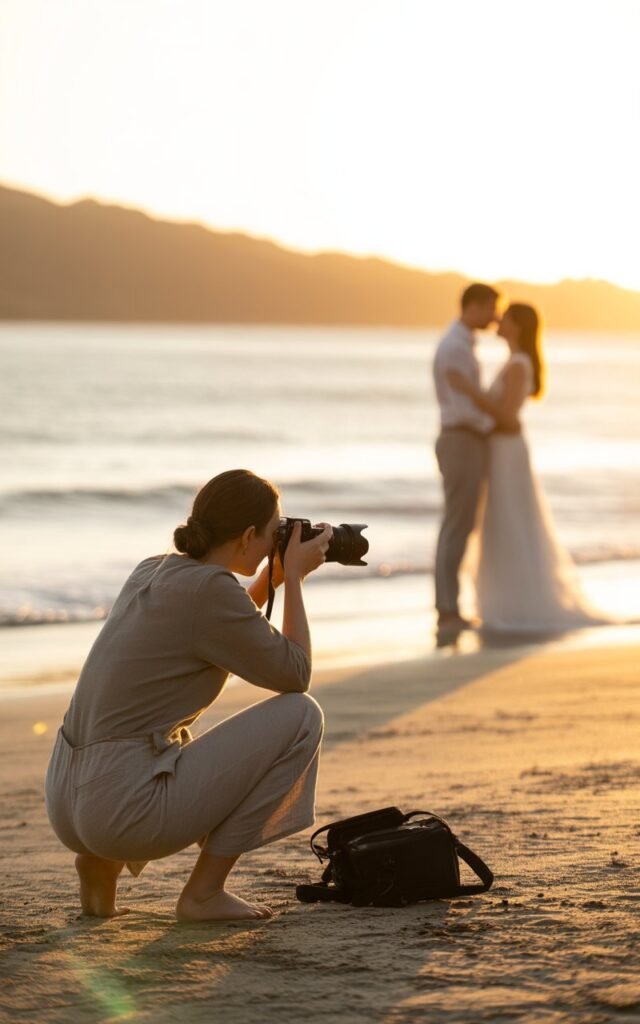
Outdoor beach photography is its own skill set. The light changes quickly, wind affects hair and fabric constantly, and the reflective quality of water and sand can create exposure challenges that catch inexperienced photographers off guard. You want someone who has worked in coastal settings before — not just someone whose portfolio has a beach session in it, but someone who regularly shoots at locations like yours.
When reviewing portfolios, look at how they handle the transition from bright daylight to golden hour. Check how they compose shots with the horizon — is it flat and well-placed, or is it cutting through heads awkwardly? Ask specifically whether they have shot at your beach or in similar conditions. A photographer who knows how to work with sea breeze, shifting tides, and salt air is worth every extra dollar.
Your Big Day, Your Shoreline
A beach wedding can be as simple or as elaborate as you want it to be — that is one of the things that makes it such a flexible option. You can get married barefoot with twenty guests and a handful of tropical flowers, or you can plan a full multi-day event with a hundred people and a reception under the stars. What stays consistent across both is this: the more you work with the natural beauty of the setting, the better everything looks and feels. The ocean does not need competition — it needs a partner.
The details that make a coastal ceremony truly memorable are rarely the expensive ones. They are the thoughtful ones — the cool towels waiting for guests in the heat, the ceremony timed perfectly to catch the last light of the day, the ritual that actually means something to you as a couple. Get those right, and the rest will fall into place beautifully.
Frequently Asked Questions
Q: What is the best time of year to have a beach wedding?
A: This depends on your location. In most coastal areas of the US, late spring and early fall offer the best combination of comfortable temperatures, lower wind, and reduced rain risk. Summer is beautiful but can be extremely hot midday. If you are planning a destination beach wedding in the tropics, research the local rainy season carefully — some months are far more unpredictable than others.
Q: Do I need a permit to get married on a public beach?
A: In most cases, yes. Many public beaches require an event permit even for small gatherings. The process varies by location, so check with your local parks department or municipality as early as possible. Some beaches also have restrictions on décor, fire, and amplified music, so get these details before committing to a site.
Q: What fabric is best for a beach wedding gown?
A: Chiffon, organza, lightweight tulle, and soft crepe are the most practical and flattering choices. They move with coastal breezes, keep you cool, and photograph beautifully. Avoid heavy satin, velvet, or stiff brocades — they trap heat and restrict movement on uneven terrain.
Q: What shoes should a bride wear to a beach wedding?
A: Traditional heels are not a good choice — they sink into sand immediately. Wedge sandals give you height without that problem. Flat embellished sandals, decorated barefoot sandals with pearls or beading, or simply going barefoot during the ceremony are all popular and practical options.
Q: How can I keep guests comfortable at an outdoor beach ceremony?
A: Set up a welcome station with chilled water, sunscreen, and hand fans. Provide shade through umbrellas, parasols, or a tent. Offer a shoe valet with flip-flops for guests who arrive in heels. For evening receptions, have lightweight wraps available when the sea breeze picks up after sunset.
Q: What color palette works best for a beach wedding?
A: Soft pastels — seafoam, blush, lavender — and earthy neutrals — warm beige, terracotta, soft taupe — are consistently flattering in coastal settings. Aqua, coral, and warm gold also translate beautifully. Very dark or oversaturated colors can look heavy against the natural brightness of the beach and absorb a lot of heat.
Q: How do I handle wind at a beach ceremony?
A: Wind is one of the most common challenges at outdoor coastal weddings. For your gown, choose fabrics that flow gracefully rather than fighting the breeze. Secure your hair with strong pins and opt for a low-profile hair accessory over a long veil. For décor, use low-profile centerpieces and weight down any light fabrics or linens. Skip tall, top-heavy floral arrangements that can topple.
Q: Is a sand ceremony a good idea for a beach wedding?
A: It is one of the most popular unity rituals for coastal ceremonies, and for good reason. Each partner pours a different color of sand into a shared vessel, creating a layered keepsake that symbolizes two lives becoming one. It is simple to set up, meaningful to watch, and you take home a beautiful memento. It works well for couples who want a ritual that feels connected to their setting without being religious or overly formal.
Q: What should guests wear to a beach wedding?
A: The dress code depends on the formality of the event, but in general, guests do best in light, breathable fabrics like chiffon, linen, or cotton. Flowy maxi dresses, sundresses, and lightweight jumpsuits are all appropriate for casual to semi-formal beach weddings. Sandals and wedges work better than heels. Guests should avoid all-white attire and very heavy or formal fabrics that will be uncomfortable in the heat.