Key Takeaways
- Schedule your ceremony 30 minutes before sunset for optimal lighting and cooler temperatures that keep guests comfortable while creating stunning photo opportunities during golden hour.
- Go barefoot and set up a shoe station to let guests choose their comfort level while maintaining an authentic beach atmosphere that makes walking on sand easier.
- Choose tropical flowers like orchids and proteas that withstand heat and humidity better than traditional blooms, keeping your arrangements fresh throughout the celebration.
- Create a sand ceremony unity ritual by pouring different colored sand into one container, giving you a meaningful keepsake that represents your union and can be displayed at home.
- Set up guest comfort stations with sunscreen, cold water, cooling towels, and fans to help everyone stay refreshed and protected from sun exposure during your outdoor event.
- Add nautical decor elements like rope details, driftwood, and ocean-inspired colors (blues, whites, sandy neutrals) to tie your wedding theme to the coastal setting without overwhelming natural beauty.
Planning a wedding by the ocean brings something special to your celebration. The natural beauty of waves and sand creates a stunning backdrop. Many women dream of having their ceremony with their toes in the sand and the sound of water nearby.
Beach celebrations offer a relaxed setting that feels different from traditional indoor venues. The casual atmosphere lets you and your guests feel comfortable. You can add personal touches that match the coastal surroundings. Fresh air, natural light, and ocean views make every moment feel magical.
Whether you’re thinking about a small gathering or a larger celebration, there are many ways to make your seaside event stand out. From timing your vows perfectly to choosing the right decorations, each decision shapes your special moment. Here are six ideas that will help you create a beautiful beach wedding.
Sunset Ceremony Timing
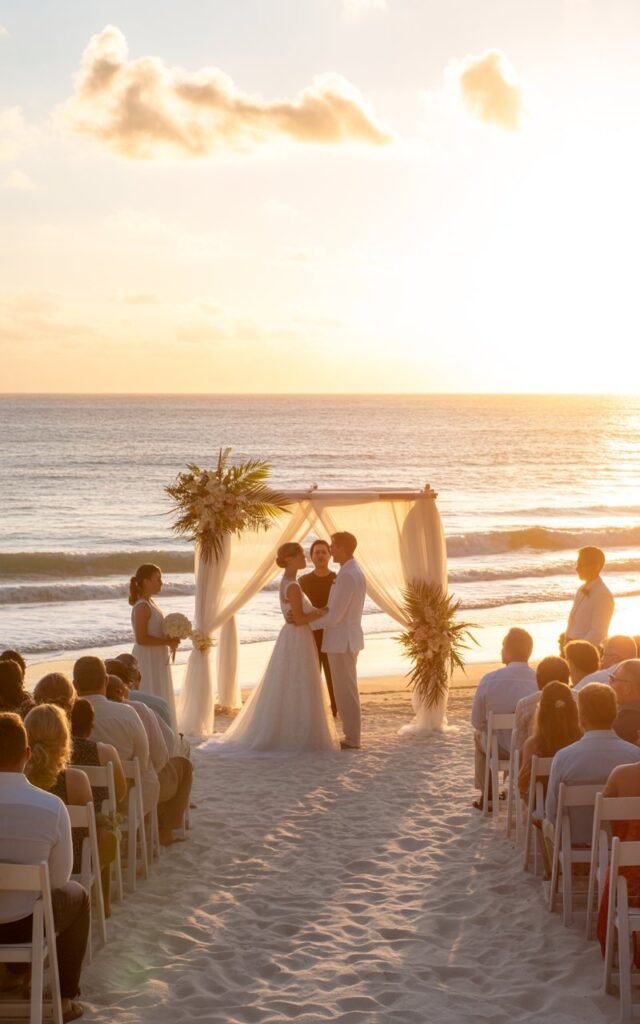
Choosing the right time for your ceremony makes a big difference. Late afternoon or early evening offers the best lighting. The sun sits lower in the sky, creating warm golden tones. This natural glow makes everything look better in photos.
Benefits of Golden Hour
Sunset timing solves several problems at once. You avoid the hottest part of the day. Your guests stay cooler and more comfortable. The harsh midday sun won’t make everyone squint in photos. Plus, the temperature drops as evening approaches.
Planning Around the Sun
Check sunset times for your wedding date. Schedule your ceremony about 30 minutes before the sun goes down. This gives you the best light without complete darkness afterward. Your photographer will thank you for this choice.
Talk to your venue about backup options. Weather can change quickly near the ocean. Having a plan B keeps stress levels down. Some beaches have covered areas nearby for unexpected rain.
Consider these timing factors:
Temperature Drop: Evening air cools down significantly, so prepare blankets or shawls for guests.
Tide Schedule: High tide can limit beach space, so check tide charts when setting your ceremony time.
Natural Lighting: The golden hour lasts about 60 minutes, giving you perfect photo opportunities.
Visibility: Bring extra lighting for the reception area once darkness falls.
Barefoot Wedding Ceremony
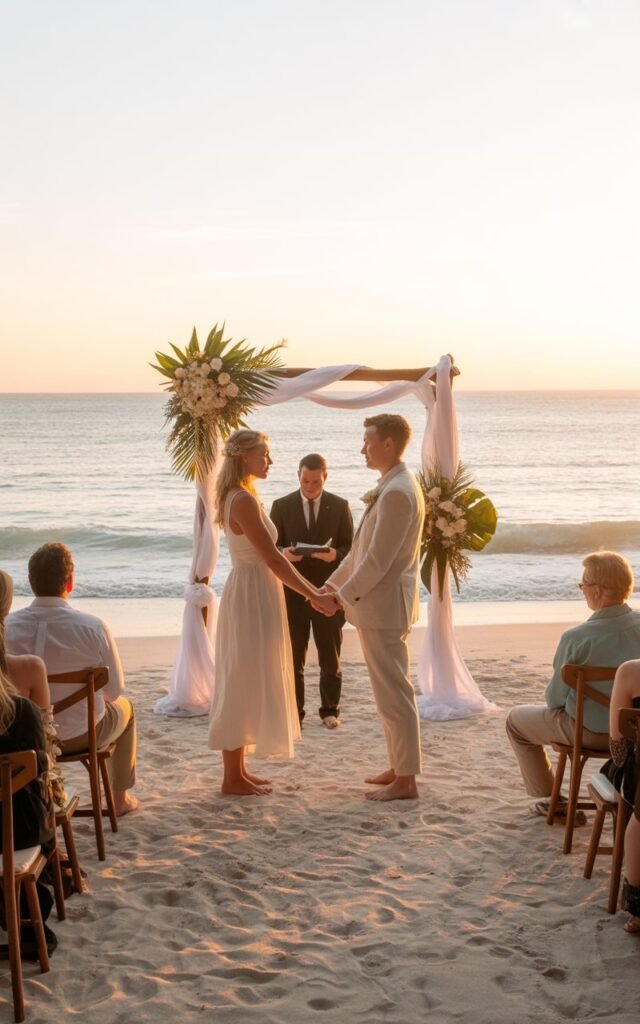
Going shoeless at your beach wedding feels natural and comfortable. Sand and heels don’t mix well. Many brides choose to skip footwear completely. This decision makes walking easier and looks relaxed in photos.
Walking barefoot connects you to the beach setting. You feel the sand between your toes. This simple choice makes the experience more memorable. It also saves money on wedding shoes you might never wear again.
Making Barefoot Work
Set up a shoe station near your ceremony area. Guests can leave their footwear in baskets or on shelves. Provide tags or numbers so people can find their shoes later. This small detail prevents confusion.
Some women worry about sandy feet in photos. A quick rinse station solves this problem. Fill buckets with water and keep towels nearby. Guests appreciate the thoughtfulness.
You might want special foot jewelry. Anklets or toe rings add a decorative touch. These accessories look pretty without being formal. They photograph well against the sand.
Practical Considerations
Think about the ceremony duration. Standing on hot sand for 30 minutes gets uncomfortable. Schedule your vows during cooler hours. You can also lay down rugs or mats in the ceremony space. This gives everyone a softer surface while keeping the barefoot feel.
Tropical Floral Arrangements
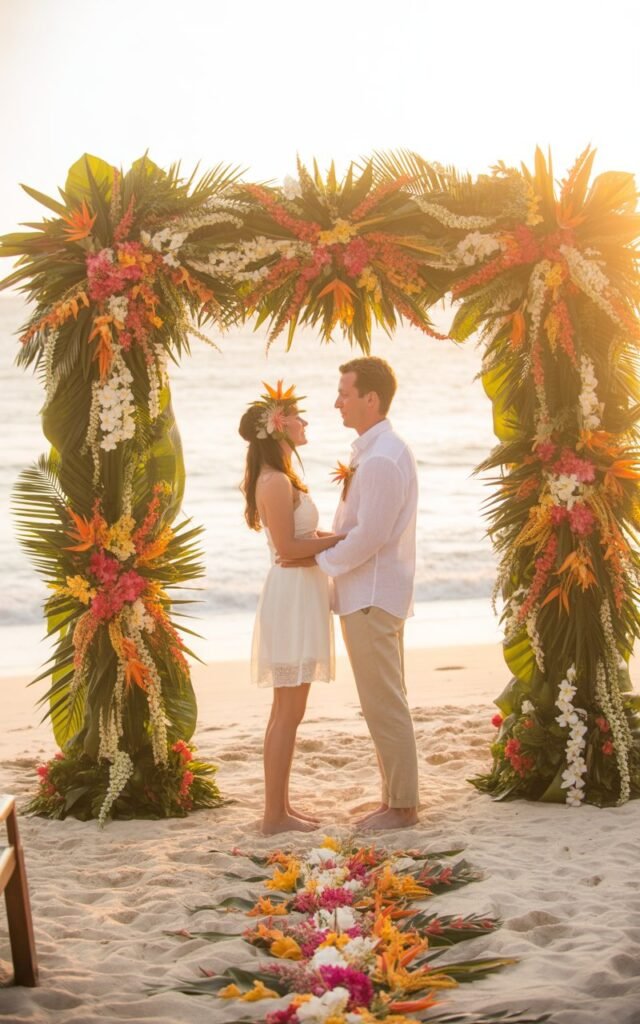
Beach settings call for different flowers than traditional venues. Tropical blooms handle heat and humidity better. They look natural in coastal environments. Orchids, hibiscus, and birds of paradise work beautifully.
These flowers add bold colors to your decor. Bright pinks, oranges, and yellows pop against blue water. You can mix in palm leaves and ferns for texture. The greenery fills out arrangements without extra cost.
Choosing the Right Blooms
Pick flowers that last in warm weather. Proteas and anthuriums stay fresh longer. Bougainvillea adds volume and color. Local florists know which options work best for your location.
Consider seasonal availability. Some tropical flowers cost more depending on the time of year. Ask your florist about budget-friendly alternatives. Mixing expensive blooms with greenery stretches your budget.
Arrangement Styles
Keep bouquets loose and natural. Tight, formal arrangements look out of place on the beach. Your bouquet should feel light and easy to carry. Add shells or starfish for extra beach flair.
Ceremony arch decorations need secure attachment. Wind can blow arrangements apart. Use fishing line or zip ties hidden in greenery. Test your setup before the wedding day.
Here are popular tropical flower options:
Orchids: These elegant blooms handle heat well and come in many colors.
Plumeria: Sweet-smelling flowers that photograph beautifully and last for hours.
Monstera Leaves: Large tropical leaves add drama without increasing flower costs.
Birds of Paradise: Bold, sculptural flowers that make a strong visual statement.
Table centerpieces can include floating flowers in shallow bowls. Add water and candles for evening ambiance. This look costs less than tall arrangements.
Sand Ceremony Unity Ritual
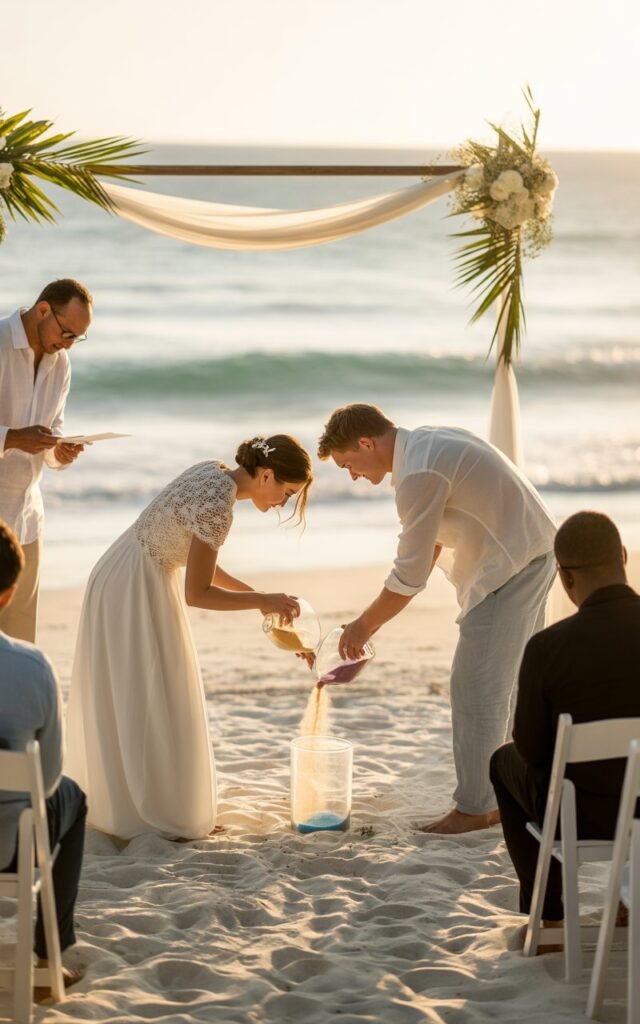
This meaningful tradition works perfectly for beach weddings. You and your partner each pour different colored sand into one container. The mixing represents joining your lives together. The finished vessel becomes a keepsake you can display at home.
Setting Up the Ceremony
Choose sand colors that match your wedding palette. Many couples pick colors that represent their families. Some use sand from meaningful locations. You can collect sand from places that matter to both of you.
The container matters as much as the sand. Glass vases show off the layered colors. Some couples use decorative bottles or jars. Pick something that fits your home decor style. You’ll want to display this after the wedding.
Your officiant can explain the symbolism during the ceremony. Keep the description brief and personal. Guests enjoy watching the sand pour and blend. It creates a visual moment during the vows.
Making It Meaningful
Add a personal touch by involving family members. Parents or children can add their own sand colors. This expands the unity symbol to include more people. It works especially well for blended families.
Write a short statement about what the sand represents. Read it aloud as you pour. This adds emotional weight to the action. Keep it simple and from the heart.
After the ceremony, seal the container permanently. This prevents spills and keeps the sand layers intact. Display your sand ceremony piece where you’ll see it daily. It serves as a beautiful reminder of your wedding day.
Beach-Inspired Guest Comfort Stations
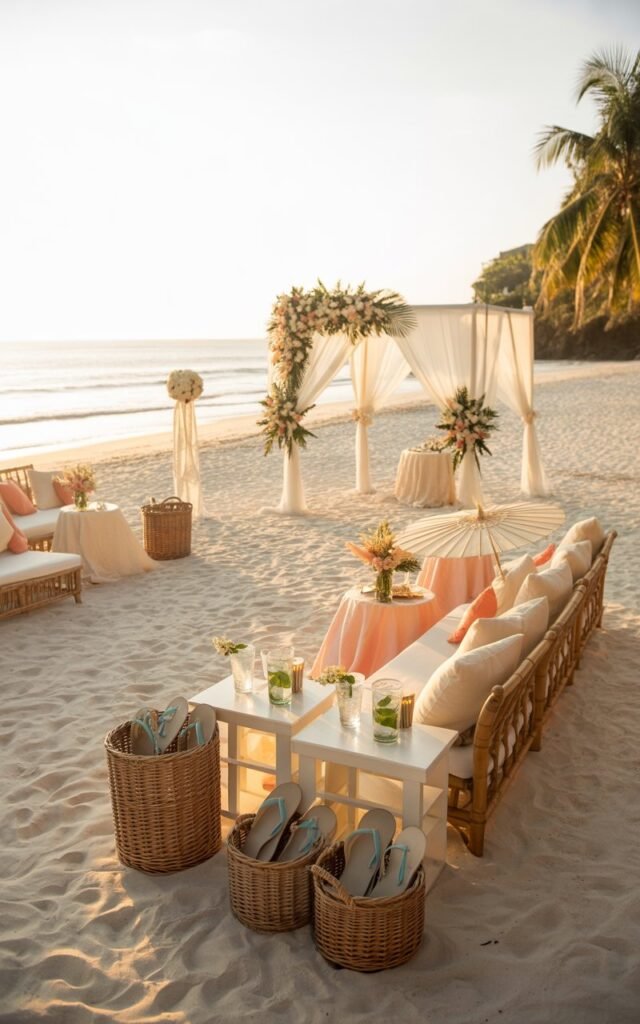
Your guests need ways to stay comfortable during your celebration. Heat, sun, and sand create challenges. Setting up stations with helpful items shows thoughtfulness. People remember these practical touches.
Create a sunscreen station near the entrance. Stock it with high SPF options. Include lip balm and aloe vera gel too. Label everything clearly so guests know what’s available. This prevents sunburn and keeps everyone happy.
Essential Comfort Items
Water stations are crucial for beach events. Dehydration happens quickly in the sun. Set up coolers with cold drinks throughout your venue. Add fruit slices to water for extra flavor. Coconut water is another refreshing option.
Provide fans for guests to use during the ceremony. Paper or fabric fans match your color scheme. They serve as both functional items and keepsakes. Print your wedding date or a sweet message on them.
Cooling towels help guests feel refreshed. Keep them chilled in a cooler. Place baskets near seating areas. These small touches make a big difference in guest comfort.
Extra Thoughtful Additions
Bug spray becomes necessary at certain times of year. Place bottles at comfort stations. Choose unscented options that won’t clash with perfumes. Mosquitoes and other insects can ruin an outdoor event.
Consider shade options for the ceremony area. Umbrellas or a tent provide relief from direct sun. This matters especially for older guests or those with sun sensitivity. Position seating to maximize natural shade when possible.
First aid supplies should be accessible. Band-aids help with shoe blisters or minor cuts. Include pain relievers and antacids. Someone will need them.
Nautical-Themed Decor Elements
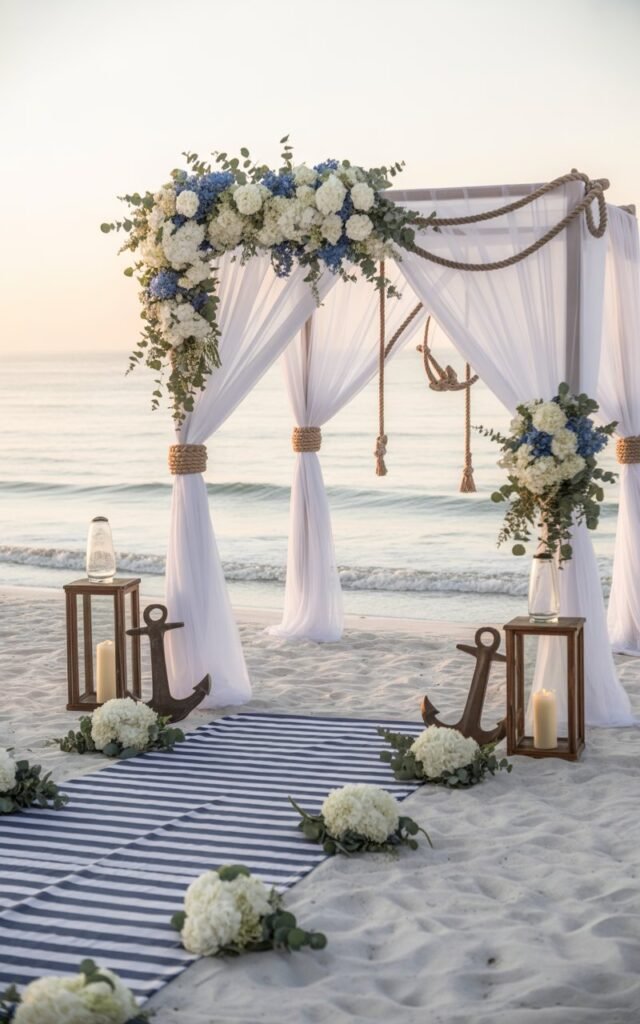
Ocean-inspired decorations tie your wedding to the beach setting. Nautical elements add character without overwhelming the natural beauty. Anchors, ropes, and compass designs work as subtle accents. These details create cohesion throughout your event.
Incorporating Maritime Touches
Use rope in creative ways throughout your decor. Wrap it around centerpiece vases. Tie it in sailor knots as napkin rings. This material costs little but adds authentic beach character. Natural fiber rope looks better than synthetic options.
Anchor motifs appear on many items. Signs pointing to different areas can feature anchor graphics. Table numbers shaped like anchors serve a practical purpose. Keep these decorations tasteful and simple.
Driftwood makes excellent decor material. Use pieces as table runners or signs. The weathered wood texture looks natural on the beach. You can collect driftwood yourself before the wedding. This saves money and adds personal meaning.
Color Palette Choices
Stick to blues, whites, and sandy neutrals. These colors reflect the ocean and beach. Navy blue adds depth to your palette. Coral or turquoise work as accent colors. Avoid colors that clash with the natural setting.
Striped patterns fit the nautical theme well. Use them sparingly so they don’t overpower. Striped table runners or napkins add visual interest. Mix stripes with solid colors for balance.
Here’s how to add nautical touches effectively:
Rope Details: Wrap natural rope around centerpieces, chairs, or signs for texture.
Shell Accents: Scatter real shells on tables or use them as place card holders.
Lanterns: Hanging or tabletop lanterns create maritime ambiance and provide lighting.
Compass Designs: Add compass graphics to programs, menus, or directional signage.
Glass Bottles: Display messages, flowers, or sand in vintage bottles for decoration.
Think about your table settings too. Blue and white china looks classic. Burlap table runners add rustic beach charm. Layer different textures for visual interest.
Making Your Beach Wedding Unforgettable
Your beach wedding reflects your personal style and love story. The ocean provides a stunning backdrop that needs little enhancement. Focus on comfort for you and your guests. Choose elements that feel authentic to your relationship.
Planning ahead prevents last-minute stress. Check weather forecasts as your date approaches. Have backup plans ready for wind or rain. These preparations let you relax and enjoy your celebration. The most important part is celebrating your commitment in a beautiful setting that feels right for both of you.
Frequently Asked Questions
Q: What time of day works best for a beach wedding?
A: Late afternoon ceremonies offer the best combination of comfortable temperatures and beautiful lighting. Schedule your vows about 30 minutes before sunset to take advantage of golden hour. This timing keeps guests cooler while providing gorgeous natural light for photographs.
Q: Should we go barefoot or provide sandals for our beach ceremony?
A: Going barefoot creates an authentic beach experience, but some guests prefer footwear. Set up a shoe station where people can choose. Offering flip-flops as favors gives guests options while keeping with your theme.
Q: How do we keep floral arrangements fresh in beach heat?
A: Choose tropical flowers like orchids, proteas, and hibiscus that handle warmth better. Keep arrangements in water until the last minute. Work with a local florist who understands coastal conditions and can recommend the best options for your specific location.
Q: What’s the best way to handle sand during the ceremony?
A: Lay down aisle runners or outdoor rugs in your ceremony space. This gives guests a more comfortable place to stand. Set up rinse stations with buckets of water and towels for after the ceremony.
Q: How can we protect guests from sun exposure?
A: Create comfort stations with sunscreen, hats, and sunglasses. Provide shade through umbrellas or a tent over seating areas. Hand out fans to help guests stay cool. Schedule your ceremony during less intense sun hours.
Q: What happens if it rains on our beach wedding day?
A: Always have an indoor backup location secured. Check with your venue about covered areas nearby. Monitor weather forecasts closely in the week before your wedding. Consider renting a clear-top tent that maintains beach views while providing protection.
Q: Are beach weddings more expensive than traditional venues?
A: Beach weddings can cost less since nature provides the decor. However, you might spend more on items like tent rentals, portable bathrooms, or permits. The total cost depends on your location and what amenities the beach provides.
Q: How do we deal with wind affecting decorations and hair?
A: Weight down all decorations securely. Use fishing line to attach items. Choose hairstyles that work with wind rather than fighting it. Loose waves or braided styles look beautiful and stay in place better than intricate updos.
Q: What should bridesmaids wear to a beach wedding?
A: Lightweight, flowing fabrics like chiffon or cotton work best. Choose shorter hemlines or dresses with slits for easier walking in sand. Let bridesmaids pick their own styles within your color scheme for comfort and personal preference.
Q: Do we need special permits for a beach wedding?
A: Most public beaches require permits for gatherings. Contact your local parks department or beach management office several months ahead. Permit requirements and costs vary by location. Some private beaches or resorts handle permits as part of their wedding packages.