
Dog intelligence varies dramatically across breeds, with some picking up new commands after just a handful of repetitions while others need weeks of patient practice. The remarkable ability of certain breeds to learn commands in five tries or fewer stems from centuries of selective breeding for specific working roles that demanded quick thinking and responsiveness. These quick-learning breeds share common traits like intense focus, strong desire to please their owners, and exceptional memory retention that sets them apart from their canine cousins.
The science behind canine learning reveals fascinating patterns in how different breeds process information and respond to training. Working breeds developed alongside humans for tasks requiring independent decision-making show the fastest command acquisition rates. Their brains have evolved specialized neural pathways that allow rapid association between verbal cues, hand signals, and desired behaviors, making training sessions remarkably efficient compared to breeds developed primarily for companionship or appearance.
Throughout the following sections, you’ll discover which breeds consistently demonstrate this exceptional learning speed, understand what drives their cognitive abilities, and learn specific training approaches that maximize their natural talents. Whether you’re choosing your first dog or looking to understand your current companion better, knowing which breeds master commands almost instantly can transform your training experience and deepen the bond with your four-legged friend.
- What Makes a Dog Breed Exceptionally Smart
- The Border Collie's Legendary Learning Speed
- Poodles and Their Remarkable Problem-Solving Skills
- German Shepherds as Natural Command Masters
- Golden Retrievers and Labrador Retrievers' Eager Intelligence
- Training Your Quick Learner Successfully
- Frequently Asked Questions
What Makes a Dog Breed Exceptionally Smart

Intelligence in dogs manifests differently than human intelligence, focusing primarily on problem-solving, memory, and social learning capabilities. Research from canine cognition labs worldwide shows that the smartest breeds possess enhanced working memory, allowing them to hold multiple pieces of information simultaneously while executing complex tasks. These dogs demonstrate superior pattern recognition, understanding sequences and predicting outcomes based on past experiences.
Working Intelligence vs Instinctive Intelligence
Stanley Coren’s groundbreaking research identified three distinct types of canine intelligence that determine how quickly dogs learn new commands. Working intelligence measures how well dogs learn from humans and follow instructions, while instinctive intelligence relates to behaviors they were bred to perform without training. The third type, adaptive intelligence, reflects their problem-solving abilities in novel situations.
Dogs scoring highest in working intelligence typically need fewer than five repetitions to understand new commands and obey them at least 95% of the time. This contrasts sharply with breeds showing primarily instinctive intelligence, who might excel at herding or hunting without instruction but struggle with basic obedience commands.
Role of Breeding History
Centuries of selective breeding created dramatic differences in learning capacity between breeds. Dogs bred for complex working roles like herding sheep, retrieving game, or performing military duties developed enhanced cognitive abilities through generations of selection for trainability. Their ancestors who couldn’t quickly grasp instructions simply weren’t chosen for breeding programs.
Modern DNA studies reveal that these super-learner breeds share genetic markers associated with enhanced neural plasticity and neurotransmitter production. These biological advantages translate directly into faster command acquisition and better retention of learned behaviors.
How Training Responsiveness is Measured
Professional trainers and researchers use standardized protocols to assess learning speed across breeds. The most common measurement involves teaching a completely novel command and counting repetitions needed before the dog performs correctly 85% of the time.
Testing conditions remain consistent across breeds, with factors controlled including:
Trainer Experience: Professional handlers with equal experience across all breeds
Environment: Quiet, distraction-free spaces for initial learning
Motivation Type: Standardized reward systems using food or play
Command Complexity: Starting with simple behaviors before advancing
Session Length: Limited to prevent fatigue affecting results
These assessments consistently identify the same handful of breeds as exceptional learners, with remarkable agreement between independent studies conducted across different countries and decades.
The Border Collie’s Legendary Learning Speed
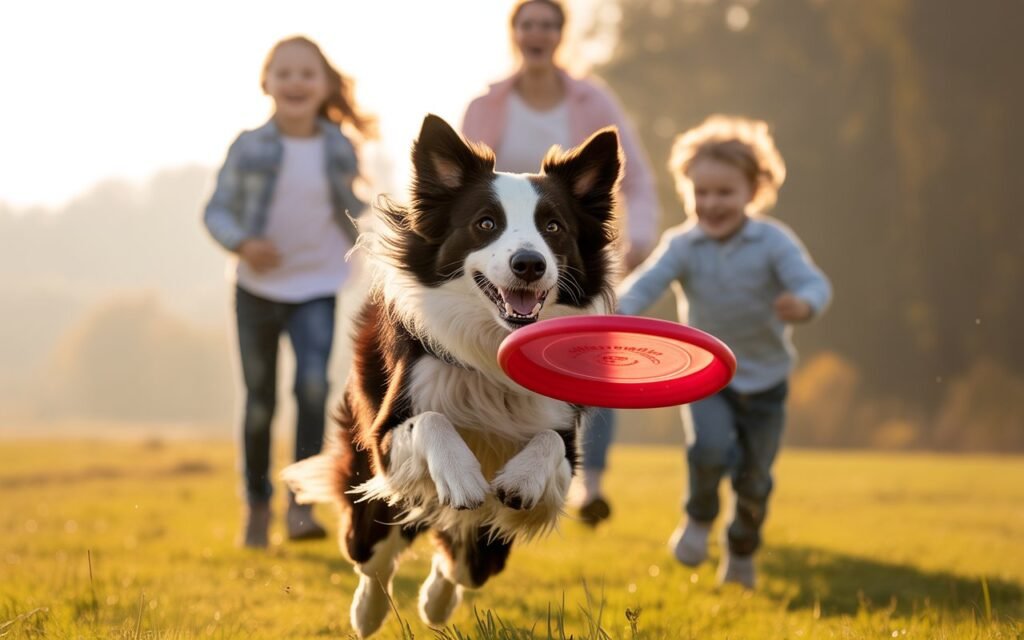
Scientists consistently rank Border Collies as the most intelligent dog breed, with some individuals learning new commands after hearing them just once. Their extraordinary mental capacity evolved from centuries of shepherding work in the Scottish and Welsh borderlands, where split-second decisions and complex problem-solving meant the difference between successful herding and scattered flocks.
Origins and Working Background
The harsh terrain and unpredictable weather of the British borderlands demanded dogs capable of independent thinking while maintaining responsiveness to shepherd commands. These dogs needed to simultaneously track multiple sheep, anticipate their movements, and adjust strategies based on terrain and weather conditions. This selective pressure created a breed with unmatched focus and learning ability.
Modern Border Collies retain this intensity even in pet homes. Their brains process information at remarkable speeds, allowing them to form associations between commands and actions faster than any other breed. Research shows they can learn over 1,000 distinct words, rivaling the vocabulary of a three-year-old child.
Mental Stimulation Needs
Without adequate mental challenges, these brilliant dogs develop destructive behaviors born from boredom and frustration. A Border Collie learning commands in five tries sounds wonderful until you realize they need constant new challenges to stay satisfied.
Their exceptional intelligence demands creative training approaches. Simple commands like sit, stay, and come barely scratch the surface of their capabilities. These dogs thrive learning complex sequences, distinguishing between dozens of toys by name, or mastering agility courses with minimal guidance.
Owners often underestimate the time commitment required for mental exercise. Physical activity alone won’t tire a Border Collie – their minds need exhaustion too. Puzzle toys, scent work, and advanced trick training become daily necessities rather than occasional enrichment activities.
Training Techniques That Work Best
The breed’s intense desire to work makes positive reinforcement incredibly effective. They respond to the subtlest changes in voice tone, hand position, or body language, often learning hand signals simultaneously with verbal commands without specific instruction.
Precision matters more with Border Collies than other breeds. Inconsistent commands or unclear expectations frustrate them quickly. They’ll often attempt to fill gaps in training by creating their own rules, which can lead to unwanted behaviors if not properly guided.
Short, frequent training sessions work better than long drilling periods. Their intense focus can lead to mental exhaustion, reducing learning efficiency. Five-minute sessions scattered throughout the day yield better results than hour-long training marathons.
Common Commands They Master Quickly
Border Collies typically learn basic obedience commands in 1-3 repetitions, including sit, down, stay, come, and heel. More impressively, they grasp complex directional commands like “go left,” “go right,” “walk backwards,” and “circle” with equal speed.
Many owners report their Border Collies learning commands accidentally through observation. The dog might learn “get your leash” simply by watching the pre-walk routine a few times, without formal training. This observational learning extends to household routines, with many Border Collies anticipating their owners’ needs based on subtle behavioral patterns.
Poodles and Their Remarkable Problem-Solving Skills
Standard, Miniature, and Toy Poodles all share the same impressive cognitive abilities, dispelling the myth that smaller varieties lack intelligence. Brain structure remains proportionally identical across sizes, with neural density actually increasing in smaller varieties to maintain cognitive function. This means your Toy Poodle possesses the same learning capacity as their Standard cousins, just packaged differently.
The consistency across sizes stems from careful breeding practices that prioritized temperament and trainability regardless of physical dimensions. Whether you’re working with a 70-pound Standard or a 6-pound Toy, expect similar learning curves and command retention rates.
Historical Roles Requiring Intelligence
Originally developed as water retrievers in Germany, Poodles needed exceptional intelligence to work independently in challenging conditions. Their job required memorizing multiple fallen birds’ locations, determining efficient retrieval order, and navigating through water without losing track of their objectives. This complex task demanded both working memory and strategic thinking abilities.
French circus performers later discovered Poodles’ exceptional trainability, featuring them in elaborate performances requiring dozens of sequential tricks. These entertainment roles further refined the breed’s ability to learn complex command chains quickly. The famous dancing Poodles of 18th-century European courts could perform choreographed routines with over 50 distinct movements.
Military forces employed Poodles during both World Wars for message delivery and sentry duty. Their ability to quickly learn patrol routes, recognize friendly versus enemy uniforms, and respond to silent commands made them invaluable in combat situations.
Memory Retention Abilities
Research demonstrates Poodles retain learned commands longer than most breeds, often performing tricks taught months earlier without practice. Their memory systems excel at both procedural memory (how to perform tasks) and associative memory (connecting cues with actions).
Studies tracking command retention show Poodles maintaining 90% accuracy on commands unused for six months, compared to 60-70% retention in average breeds. This exceptional memory reduces retraining time and allows for building increasingly complex behavioral chains.
Advanced Tricks and Commands They Excel At
Poodles master multi-step commands that would confuse many breeds. Teaching them to “bring the red ball from the bedroom” involves object discrimination, color recognition, spatial memory, and sequential task completion.
Their problem-solving extends beyond simple command following. Poodles excel at tasks requiring inference and adaptation:
Object Permanence: Understanding hidden objects still exist
Selective Retrieval: Choosing specific items from groups
Sequential Tasks: Following multi-step instructions in order
Adaptive Problem-Solving: Modifying learned behaviors for new situations
Social Reading: Interpreting human emotional states and adjusting behavior accordingly
Service dog organizations frequently choose Poodles for complex assistance roles. Medical alert Poodles learn to detect blood sugar changes, oncoming seizures, or allergen presence through minimal training repetitions. Their ability to generalize from specific training to real-world situations surpasses most working breeds.
German Shepherds as Natural Command Masters
German Shepherds dominate professional working dog roles worldwide, from police K-9 units to military special operations, precisely because they grasp new commands with stunning speed. Their balanced combination of intelligence, courage, and loyalty creates ideal conditions for rapid learning and reliable performance under pressure.
Police and Military Training Success
Law enforcement agencies report German Shepherds typically complete basic patrol training 30% faster than other breeds attempted for similar roles. The accelerated learning curve stems from their ability to understand context and intent behind commands, not just mechanical responses.
A German Shepherd learning “search” comprehends the concept of systematically checking areas for hidden objects or people. Other breeds might need extensive repetition to cover all variations, but German Shepherds generalize the core concept after minimal examples. This conceptual understanding dramatically reduces training time for complex police procedures.
Protective Instincts Combined with Trainability
The breed’s natural protective drive enhances rather than interferes with their learning ability. Unlike some guardian breeds whose instincts override training, German Shepherds seamlessly integrate learned commands with innate behaviors. They can switch from playful family pet to focused protector based on specific cues, demonstrating remarkable emotional regulation and situational awareness.
This controlled intensity means protection commands need minimal repetition before becoming reliable. Commands like “watch,” “guard,” and “release” often stick after 3-4 properly timed repetitions because they align with natural inclinations.
Training protection work requires exceptional discrimination abilities. German Shepherds must differentiate between genuine threats and normal situations, responding appropriately to each. Their ability to learn these nuanced distinctions quickly prevents dangerous overreactions while maintaining effectiveness.
Focus and Attention Span Advantages
German Shepherds maintain laser focus during training sessions significantly longer than most breeds. While many dogs lose concentration after 10-15 minutes, German Shepherds often work productively for 30-45 minute sessions without mental fatigue.
Their attention span allows for teaching complex command chains in single sessions. Where other breeds might need commands broken into components taught over multiple days, German Shepherds can learn entire sequences like “go to your bed, lie down, and stay until released” as one fluid behavior.
This sustained focus translates into fewer total repetitions needed for command mastery. Instead of needing multiple sessions to overcome distraction and wandering attention, German Shepherds lock onto training tasks immediately.
Commands They Learn Fastest
Certain commands align so naturally with German Shepherd psychology that they often learn them in under five repetitions:
Directional commands prove especially easy, with “left,” “right,” “back,” and “forward” often understood after 2-3 guided repetitions. Their spatial intelligence and body awareness accelerate learning of positional commands like “heel,” “side,” and “behind.”
Scent-related commands click almost instantly. “Find it,” “track,” and “search” tap into natural abilities, requiring minimal instruction before the dog understands the basic concept. Refinement happens through practice, but initial comprehension occurs remarkably fast.
German Shepherds also excel at discriminating between similar-sounding commands, reducing confusion during training. They’ll reliably differentiate between “down” and “bow,” “wait” and “stay,” or “speak” and “quiet” faster than breeds with less auditory discrimination ability.
Golden Retrievers and Labrador Retrievers’ Eager Intelligence
Both Golden Retrievers and Labrador Retrievers share remarkable similarities in their learning abilities, consistently ranking among the top ten smartest breeds. Their combination of intelligence with unwavering eagerness to please creates optimal conditions for rapid command acquisition.
Service Dog Capabilities
Guide dog schools report that Labs and Goldens complete training programs with higher success rates than any other breeds, often mastering complex navigation commands within days rather than weeks. The intricate task of intelligent disobedience – refusing unsafe commands like walking into traffic – typically takes these breeds fewer than ten training scenarios to understand completely.
Their success in service roles extends beyond guide work. Both breeds excel as hearing dogs, mobility assistance dogs, and medical alert dogs. The ability to learn subtle cues distinguishing medical emergencies from normal variations often develops after just a handful of training examples.
Food Motivation and Training
The notorious food drive in both breeds accelerates learning when properly channeled. Unlike some breeds requiring varied rewards to maintain interest, Labs and Goldens remain enthusiastically motivated by food rewards throughout extended training sessions.
This consistent motivation creates ideal conditions for rapid learning:
Predictable Responses: Trainers can rely on food rewards working every time
Extended Sessions: Food motivation sustains attention longer than toy rewards
Clear Communication: The dog immediately understands when they’ve succeeded
Positive Associations: Commands become linked with pleasant experiences
Eager Repetition: Dogs actively seek opportunities to perform learned behaviors
Research shows food-motivated dogs form stronger neural pathways between commands and responses. The anticipation of rewards triggers dopamine release, enhancing memory formation and recall. This biological advantage means fewer repetitions needed for permanent learning.
Social Intelligence Factors
Both breeds possess exceptional social intelligence, reading human body language and emotional states with remarkable accuracy. This awareness accelerates learning because they pick up on subtle trainer cues beyond verbal commands.
A Golden or Lab often learns hand signals accidentally while learning verbal commands, simply by observing natural gestures. Their attention to human faces means they notice approval or disappointment immediately, self-correcting behaviors based on facial expressions alone.
The social nature of these breeds makes group training particularly effective. Watching other dogs perform commands provides additional learning opportunities through observation. Many trainers report Labs and Goldens learning new behaviors simply by watching demonstrations with other dogs.
Commands for Everyday Life
Practical household commands seem almost intuitive to these breeds. “Bring me the newspaper,” “get your bowl,” or “find dad” often need minimal formal training. Their desire to participate in family activities motivates them to learn household routines without structured instruction.
Both breeds excel at learning names for different family members, specific toys, and household objects. A typical Golden or Lab can learn to discriminate between 20-30 different objects by name, retrieving specific items on command after very limited training.
Their gentle mouth control, bred for carrying game birds without damage, translates into quickly learning “gentle,” “drop it,” and “give” commands. These crucial safety commands often solidify after fewer than five repetitions when taught with positive methods.
Training Your Quick Learner Successfully
Puppies from intelligent breeds show learning readiness earlier than their slower-learning counterparts. Border Collies, Poodles, and German Shepherds often demonstrate command comprehension as young as seven weeks old, though formal training typically begins around eight to ten weeks.
Starting too early can overwhelm young puppies, but waiting too long wastes critical learning periods. The sweet spot for these quick learners falls between eight and sixteen weeks, when their brains rapidly form neural connections. During this window, commands learned often become permanent after just two or three repetitions.
Avoiding Boredom and Frustration
Intelligent breeds grow frustrated with excessive repetition once they’ve mastered a command. Continuing to drill “sit” after your Border Collie has demonstrated perfect compliance twenty times creates negative associations with training.
Watch for signs of boredom: yawning, looking away, offering different behaviors, or reluctance to engage. These indicate your dog has already learned the material and needs new challenges. Smart dogs often start improvising or adding flourishes to commands when bored, like spinning before sitting or dramatically throwing themselves down for “lie down.”
Mental Exercise Requirements
Physical exercise alone won’t satisfy these brilliant breeds. A tired body with an active mind creates destructive behaviors as dogs seek mental stimulation through chewing, digging, or creating their own “jobs” around the house.
Puzzle feeders, scent work, and trick training provide necessary mental workouts. Rotating through different activities prevents habituation and maintains engagement. Consider teaching useful tasks like carrying groceries, finding lost items, or turning lights on and off to channel their intelligence productively.
Common Training Mistakes to Avoid
Inconsistency confuses intelligent dogs more than slower learners. These breeds notice every variation in your commands, tone, and body language. Using “down” sometimes for lying down and sometimes for getting off furniture creates lasting confusion that requires extensive retraining to correct.
Over-treating becomes problematic with smart breeds who quickly learn to perform only when food appears. Gradually phase out treats once commands are learned, replacing them with praise, play, or life rewards like door opening or leash attachment.
Building on Basic Commands
Once your quick learner masters basics, immediately progress to combinations and variations. Transform “sit” into “sit-stay,” then “sit-stay with distractions,” then “sit-stay while I leave the room.” This progression maintains engagement while reinforcing foundational skills.
Chain commands together for practical applications. “Go to your bed, lie down, and wait” becomes one fluid behavior rather than three separate commands. Smart breeds excel at these behavior chains, often anticipating the next step before you cue it.
Advanced discrimination tasks challenge intelligent dogs appropriately. Teach them to distinguish between “bring the red ball” and “bring the blue ball,” or to respond differently to subtle hand signal variations. These exercises prevent boredom while building impressive repertoires of commands that showcase their cognitive abilities.
Frequently Asked Questions
Q: Which dog breed learns commands the absolute fastest?
A: Border Collies consistently top every study on canine intelligence and learning speed. They often master new commands in fewer than five repetitions and sometimes learn behaviors just by watching them performed once.
Q: Can mixed breeds be as smart as purebred quick learners?
A: Absolutely. Mixed breeds with German Shepherd, Poodle, or Border Collie ancestry often inherit the same rapid learning abilities. Many shelter dogs surprise their adopters with how quickly they pick up training.
Q: How young can you start training these intelligent breeds?
A: Basic training can begin as early as 7-8 weeks old with these smart breeds. They show learning readiness earlier than most dogs, though training sessions should be very short and positive at this young age.
Q: Do smarter dogs actually need more training than other breeds?
A: Yes, intelligent breeds require more mental stimulation and ongoing training throughout their lives. Without adequate mental exercise, they often develop behavioral problems from boredom and frustration.
Q: What happens if you don’t challenge these smart breeds enough?
A: Under-stimulated intelligent dogs frequently develop destructive behaviors like excessive chewing, digging, barking, or even obsessive-compulsive behaviors. They’ll create their own “jobs” if you don’t provide appropriate mental challenges.
Q: Are there any downsides to owning such a quick-learning breed?
A: These breeds can be overwhelming for first-time owners. They learn bad habits just as quickly as good ones, require significant time investment for mental stimulation, and may outsmart owners who aren’t prepared for their intelligence level.
Q: How can you tell if your dog is bored with training?
A: Signs include yawning, looking away, offering different behaviors than requested, slow responses to known commands, or leaving the training area. Smart dogs also sometimes add unnecessary flourishes to commands when bored.
Q: Do these intelligent breeds work well for apartment living?
A: Physical space matters less than mental stimulation for intelligent breeds. A Border Collie in an apartment with adequate mental exercise often thrives better than one in a large yard without proper engagement.