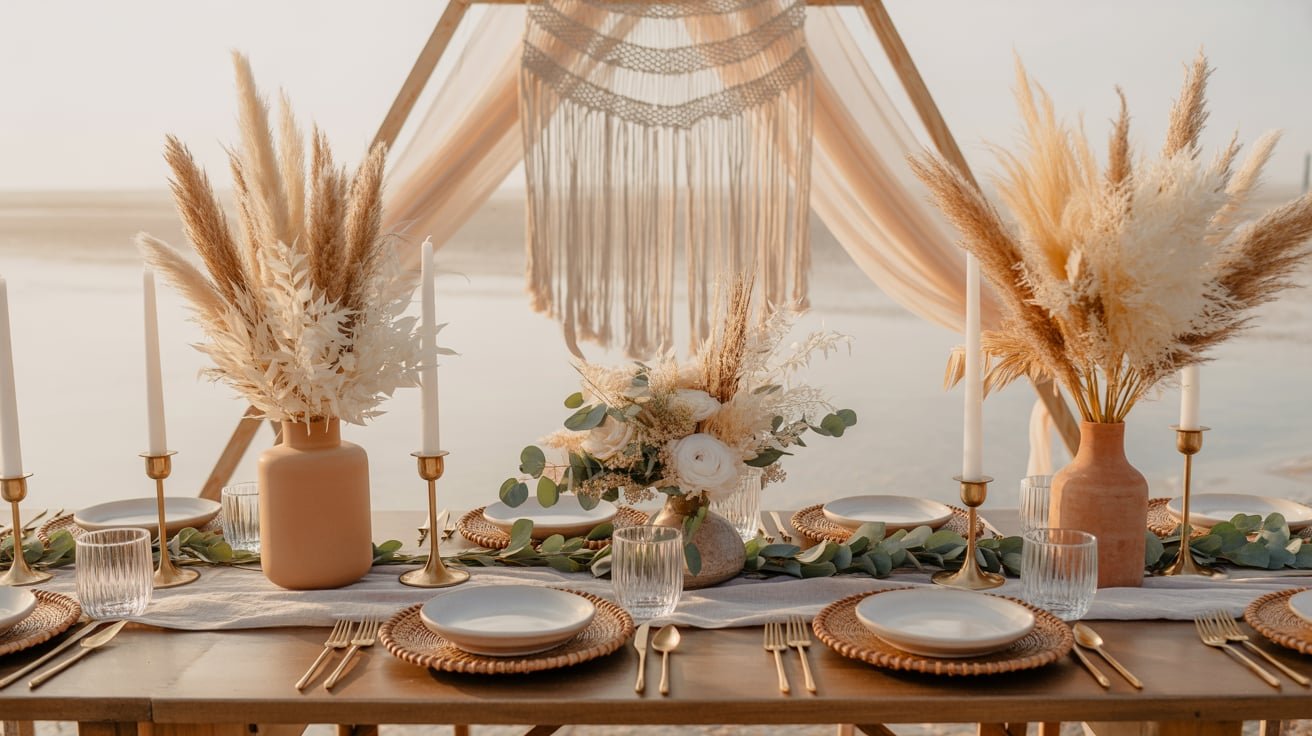
Modern boho wedding style represents a sophisticated evolution of free-spirited celebration, blending refined luxury with artistic expression. This aesthetic moves beyond traditional bohemian weddings by incorporating structured elements, contemporary color palettes, and sustainable materials that speak to today’s conscious couples. The style maintains its roots in creative freedom while adding polish and intentionality that feels fresh and relevant.
Couples gravitating toward this trend appreciate the balance between curated design and organic beauty. Modern boho allows for personal expression without sacrificing elegance, creating celebrations that feel both intimate and impressive. The aesthetic works equally well in urban lofts, desert landscapes, coastal venues, or countryside barns, adapting seamlessly to different settings while maintaining its distinctive character.
Let’s guide you through the essential elements defining this wedding style this year, from ceremony settings and bridal fashion to reception styling and catering trends. Whether you’re planning a full modern boho celebration or simply incorporating select elements into your wedding design, you’ll discover practical ideas for bringing this sophisticated yet relaxed vision to life.
- What Makes Modern Boho Different from Traditional Bohemian Weddings
- How to Create the Perfect Modern Boho Ceremony Setting
- Which Fashion Elements Define Modern Boho Bridal Style
- How to Style Your Reception with Modern Boho Elements
- What Catering and Menu Trends Complement Modern Boho Weddings
- The Beauty of Modern Boho Style
- Frequently Asked Questions
What Makes Modern Boho Different from Traditional Bohemian Weddings
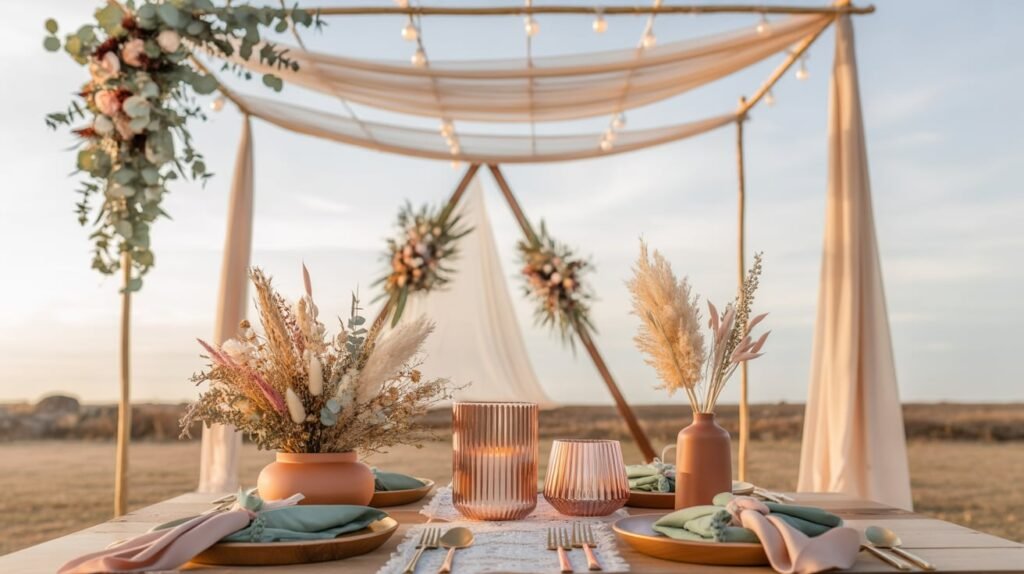
Modern boho weddings reimagine the classic bohemian aesthetic through a contemporary lens, creating something entirely new while honoring the original spirit. The transformation goes beyond surface-level styling, representing a fundamental shift in how couples approach wedding design and celebration.
The evolution from classic to contemporary boho
Traditional bohemian weddings celebrated unbridled creativity with macramé hangings, dreamcatchers, and flowing fabrics in every corner. The modern interpretation strips away excessive decoration, focusing instead on carefully chosen statement pieces. Where classic boho might feature multiple tapestries and layered rugs, contemporary versions select one stunning installation or architectural element as the focal point.
The shift reflects broader design movements toward intentional minimalism without losing warmth or personality. Modern couples want their weddings to feel curated rather than cluttered, artistic without appearing haphazard. This evolution means each design choice serves a specific purpose, whether creating visual impact, improving guest comfort, or telling the couple’s story.
Quality takes precedence over quantity in every aspect. Instead of filling spaces with numerous small decorative items, the modern approach invests in fewer, more impactful pieces. A single large-scale floral installation replaces scattered arrangements. One beautiful lounge area substitutes for multiple seating vignettes.
Refined color palettes replacing earthy tones
Gone are the predictable browns, oranges, and deep reds that once defined bohemian celebrations. Modern boho introduces unexpected color combinations that feel sophisticated yet playful. Think blush paired with terracotta, sage green alongside dusty blue, or cream mixed with muted metallics.
Neutral bases provide grounding for these refined palettes. Warm whites, soft beiges, and gentle grays create canvas-like backdrops that allow accent colors to shine without overwhelming the overall design. The approach maintains visual cohesion while offering opportunities for creative expression through selective color placement.
Structured elements within free-spirited designs
The integration of geometric shapes and clean lines distinguishes modern boho from its predecessor. Hexagonal arches, triangular installations, and rectangular table arrangements bring order to organic elements. These structured components provide visual anchors that prevent the design from feeling too loose or undefined.
Furniture selection exemplifies this balance perfectly. Sleek wooden tables might be topped with wildly abundant floral runners. Modern acrylic chairs could surround tables dressed in textured linens and natural elements. The juxtaposition creates visual interest while maintaining sophistication.
Consider the following structured elements that work beautifully in modern boho settings:
Metal Frameworks: Copper or brass geometric shapes for ceremony backdrops or reception installations
Clean-Lined Furniture: Mid-century modern pieces mixed with vintage finds
Architectural Florals: Arrangements that follow specific shapes rather than appearing completely wild
Grid Layouts: Organized seating or display arrangements that provide structure to organic elements
Minimalist touches balancing maximalist textures
Texture plays a crucial role in modern boho design, but the application differs significantly from traditional approaches. Instead of layering every possible textile, the contemporary version chooses specific textural elements for maximum impact. A smooth silk runner might contrast with rough-hewn wooden tables. Delicate lace could appear against industrial metal fixtures.
The key lies in creating breathing room between textural elements. Open space becomes as important as decorated areas, allowing each texture to be properly appreciated. This restraint prevents sensory overload while maintaining the tactile richness that makes bohemian style so appealing.
Sustainable luxury materials and choices
Environmental consciousness drives many material choices in modern boho weddings. Couples select rentable items over single-use decorations, choose locally sourced flowers, and opt for vintage or reclaimed materials when possible. This sustainable approach doesn’t mean sacrificing luxury – instead, it redefines what luxury means.
High-quality, ethically sourced materials replace mass-produced decorations. Handcrafted ceramics substitute for disposable plates. Potted plants that guests can take home replace cut flower favors. These choices reflect values while creating authentic, meaningful celebrations.
The focus on sustainability extends to vendor selection too. Modern boho couples often prioritize working with local artisans, small businesses, and vendors who share their environmental values. This community-centered approach adds depth and authenticity to the celebration beyond visual aesthetics.
How to Create the Perfect Modern Boho Ceremony Setting
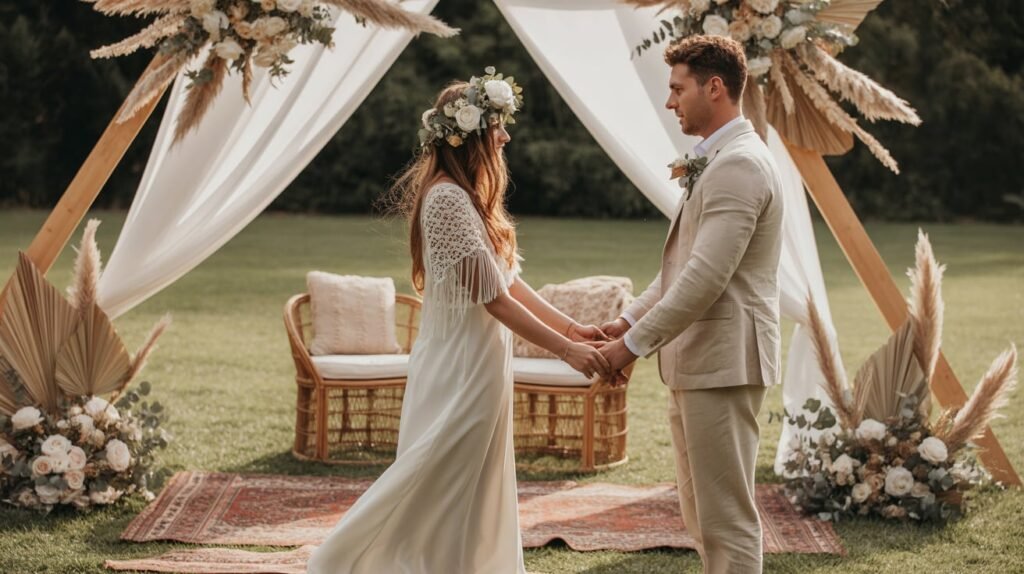
The ceremony space sets the emotional tone for your entire wedding day, and modern boho design offers countless possibilities for creating meaningful, visually stunning settings. This approach moves away from traditional altar arrangements toward more immersive, experiential designs that surround guests with beauty from every angle.
Architectural installations versus traditional arches
Modern boho ceremonies feature bold architectural elements that command attention while maintaining elegance. Asymmetrical wooden structures, metal grid backdrops, and suspended geometric shapes replace predictable fabric-draped arches. These installations often extend beyond the ceremonial focal point, creating immersive environments rather than single backdrop pieces.
The scale of these installations tends toward the dramatic. Tall vertical elements draw eyes upward, making outdoor spaces feel more intimate while adding grandeur to indoor venues. Materials combine in unexpected ways – perhaps bleached wood meets oxidized metal, or concrete elements pair with delicate dried grasses.
Consider how your installation can serve multiple purposes throughout your celebration. A ceremony structure might later frame the sweetheart table or photo booth area. This practical approach maximizes both visual impact and budget efficiency. Some couples even design installations that can be partially disassembled and repurposed as reception décor.
Lighting integration transforms these structures from day to evening. Built-in spotlights, wrapped string lights, or hidden LED strips add dimension and drama as natural light fades.
Mixed seating arrangements for intimate feels
Traditional row seating gives way to creative configurations in modern boho ceremonies. Circular arrangements place the couple at the center, surrounded by their community. Semicircles create amphitheater-like settings that improve sightlines while fostering connection. Scattered groupings of chairs, benches, and cushions encourage a relaxed, gathered feeling.
The mixing extends to seating types themselves. Vintage wooden benches might alternate with modern ghost chairs. Moroccan poufs could supplement traditional seating in the front rows. Some couples provide blankets for ground seating, creating picnic-like atmospheres for outdoor ceremonies.
Height variation adds visual interest while accommodating different comfort levels. Standard chairs for elderly guests, low cushions for children, and standing room for those who prefer it. This inclusive approach ensures everyone feels welcome and comfortable.
Natural and dried florals in unexpected combinations
Floral design in modern boho ceremonies challenges conventional arrangements. Dried elements – pampas grass, bunny tails, preserved eucalyptus – mix seamlessly with fresh blooms. The combination creates texture and visual interest while often reducing costs and environmental impact.
Installation methods break from tradition too. Florals might cascade from overhead structures, emerge from ground-level gardens, or float in suspended installations. Asymmetrical designs feel more organic and less formulaic than balanced traditional arrangements. Single-variety groupings make bold statements – imagine hundreds of white roses or a wall of preserved ferns.
Color stories stay cohesive but unexpected. Perhaps all florals remain within a monochromatic cream palette, or bold single colors punctuate otherwise neutral designs. The modern approach treats florals as artistic medium rather than obligatory decoration.
Lighting that transforms outdoor spaces
Strategic lighting design elevates modern boho ceremonies from pretty to magical. The approach goes beyond basic string lights to incorporate multiple lighting layers that shift atmosphere as daylight changes. Uplighting on trees creates drama. Lanterns scattered at ground level add warmth. Edison bulbs strung at varying heights provide ambient glow without overwhelming natural beauty.
For daytime ceremonies, lighting might seem unnecessary, but subtle additions enhance photography and create focal points. Metallic elements that catch and reflect sunlight. Mirror installations that bounce light into shaded areas. Even battery-powered fairy lights hidden in floral arrangements add sparkle in daylight.
Technical considerations matter as much as aesthetic ones. Ensure adequate lighting for reading vows, signing documents, and safely navigating spaces. Work with your venue to understand power availability and restrictions.
Ground-level designs and floor arrangements
Modern boho ceremonies often focus attention downward as much as upward. Elaborate aisle designs replace simple runners – perhaps geometric patterns created with flower petals, rugs layered to create pathways, or painted designs directly on grass or flooring.
The ceremony space extends beyond the aisle. Area rugs define seating zones. Scattered cushions create casual gathering spots. Ground-level floral installations form natural boundaries between spaces. These elements make the entire area feel considered and designed rather than focusing solely on the altar area.
This ground-focused approach works particularly well for outdoor ceremonies where the natural setting provides the primary backdrop. By concentrating design elements at ground level, you avoid competing with scenic views while still creating distinctive, photogenic spaces.
Weather contingencies require extra consideration with ground-level designs. Have plans for protecting rugs from moisture, securing lightweight elements against wind, and providing comfortable seating if ground conditions change. The investment in these details pays off in guest comfort and photo opportunities.
Which Fashion Elements Define Modern Boho Bridal Style
Modern boho bridal fashion represents a sophisticated departure from both traditional wedding gowns and classic bohemian dresses. This contemporary interpretation combines architectural design with flowing elements, creating looks that feel fresh, personal, and effortlessly elegant.
Structured bodices with flowing skirts
The modern boho bride often chooses gowns that contrast fitted, architectural bodices with soft, movement-rich skirts. These designs provide the support and shaping many brides want while maintaining the free-spirited essence of bohemian style. Corsetry details might be visible and celebrated rather than hidden. Geometric necklines and angular seaming add contemporary edge to romantic silhouettes.
Fabric choices reinforce this structured-meets-soft approach. Crisp mikado or structured crepe bodices flow into layers of soft tulle or silk chiffon. The transition between structured and flowing elements becomes a design feature itself – perhaps marked by a beaded belt, an asymmetrical seam, or a dramatic fabric change.
Separates offer another route to this aesthetic. Brides mix structured crop tops with flowing skirts, or pair fitted bodysuits with detachable overskirts. This modular approach allows for outfit changes throughout the celebration without complete costume swaps.
Statement sleeves and contemporary silhouettes
Sleeves become focal points in modern boho bridal design, moving far beyond simple coverage to become the gown’s defining feature. Dramatic bishop sleeves in sheer fabrics add romance without weight. Angular, architectural sleeves bring modern edge. Detachable sleeve options let brides transform their look from ceremony to reception.
The silhouettes themselves challenge traditional wedding dress shapes. Jumpsuits with flowing overlay skirts offer movement with practicality. High-low hemlines show off statement shoes while maintaining train drama. Column dresses with strategic cutouts feel both modest and modern. Cape details attached at shoulders or wrists add drama without permanent commitment to sleeves.
These contemporary shapes often feature unexpected design elements:
Asymmetrical Hemlines: Creating visual interest and showing off footwear choices
Strategic Transparency: Illusion panels and sheer overlays that feel modern rather than overtly sexy
Geometric Cutouts: Angular shapes that reveal skin in architectural patterns
Layered Lengths: Multiple hem levels that create dimension and movement
Mixing textures: lace, tulle, and crepe
Texture mixing defines modern boho bridal style, but the approach feels intentional rather than haphazard. Instead of all-over lace gowns, designers place lace strategically – perhaps just on sleeves, or as unexpected pants under a plain overskirt. The key lies in creating conversation between textures rather than competition.
Three-dimensional elements add another textural layer. Laser-cut leather appliqués might accent a tulle skirt. Macramé details could edge a crepe gown. Feathers appear as subtle accents rather than overwhelming trim. These additions feel organic to the design rather than applied as afterthoughts.
The mixing philosophy extends to multiple pieces worn together. A silk slip dress might layer under a beaded mesh overdress. A simple crepe gown could be transformed with a textured cape or jacket. These combinations allow brides to adjust their level of detail and coverage throughout their celebration.
Hair accessories beyond flower crowns
While flower crowns remain beautiful, modern boho brides explore diverse hair adornment options. Metallic headpieces range from delicate star-scattered pins to bold geometric crowns. Natural elements like preserved butterfly wings or crystal formations create unique focal points. Vintage brooches repurposed as hair accessories add personal history to bridal looks.
Veils receive modern updates too. Instead of traditional tulle, consider silk scarves that drape and flow differently. Capes attached at the crown create dramatic alternatives to standard veils. Some brides opt for multiple smaller veils or hair scarves that can be rearranged throughout the day.
Hair accessory placement moves beyond traditional crown positioning. Side-swept arrangements feel fresh and photograph beautifully from multiple angles. Back-focused designs complement updo hairstyles while leaving the face unobstructed. Multiple small accessories scattered throughout the hair create constellation-like effects.
Footwear choices that break tradition
Modern boho brides reject the notion that wedding shoes must be white satin pumps. Boots – from delicate lace-up Victorian styles to sturdy leather versions – make perfect sense for outdoor celebrations. Embellished sandals showcase pedicures while ensuring comfort for dancing. Some brides change footwear throughout the day, starting with statement heels for photos before switching to decorated sneakers for reception comfort.
Color in footwear adds personality without overwhelming the overall look. Blush suede boots, sage green sandals, or metallic gold platforms peek out from flowing skirts. Some brides match their shoes to their bouquet colors or wedding party palette rather than their dress.
Customization transforms simple shoes into personal statements. Hand-painted designs, added embellishments, or custom embroidery make even basic footwear special. Some brides involve their wedding parties in decorating reception shoes as a pre-wedding activity. Others commission artists to create one-of-a-kind pieces that become treasured keepsakes beyond the wedding day.
How to Style Your Reception with Modern Boho Elements
Reception styling brings modern boho aesthetic to life through thoughtful layering of textures, unexpected furniture arrangements, and creative use of both color and space. The approach prioritizes guest comfort and experience while maintaining visual impact throughout the celebration.
Table settings that mix vintage and contemporary
Modern boho tablescapes abandon matchy-matched place settings in favor of curated collections that tell stories. Vintage brass chargers might support contemporary matte ceramic plates. Hand-dyed silk napkins could contrast with minimalist flatware. The key lies in finding common threads – perhaps a color, finish, or design element – that unify disparate pieces.
Centerpiece vessels showcase this mixing philosophy perfectly. Mercury glass compotes might alternate with raw ceramic vases. Brass geometric structures could hold traditional garden roses. Some couples collect vessels throughout their engagement, creating tablescapes with personal meaning beyond aesthetic appeal.
The modern approach often includes unexpected elements at each place setting. Small potted succulents double as place cards and favors. Vintage postcards feature table numbers and menu information. Natural elements like stones or shells might mark special seats or dietary preferences.
Lounge areas with eclectic furniture pieces
Reception spaces extend beyond dining tables in modern boho design. Carefully curated lounge areas encourage mingling and provide comfortable alternatives to traditional seating. These spaces mix furniture periods and styles – perhaps mid-century modern sofas with Moroccan poufs, or Victorian settees alongside contemporary acrylic tables.
Strategic placement of lounge areas serves multiple purposes. Near the dance floor, they offer rest between songs. Adjacent to bars, they encourage conversation. In outdoor spaces, they define smaller gathering zones within larger venues.
Textiles unify eclectic furniture collections. Coordinated throw pillows tie together disparate seating styles. Layered rugs define spatial boundaries while adding comfort underfoot. Throws and blankets prepare for temperature changes while adding textural interest. These soft elements can be rented or purchased affordably, making lounge areas achievable for various budgets.
Color-blocked florals and geometric patterns
Floral design in modern boho receptions moves beyond traditional mixed arrangements toward bold, color-blocked statements. Single-variety arrangements create impact through repetition. Gradients of one color family down long tables add sophisticated drama. Geometric vessels and structured arrangements contrast with organic blooms.
Pattern mixing follows similar principles of intentional contrast. A geometric runner might top a table dressed in flowing fabric. Moroccan tile patterns could appear on dance floors while organic shapes define lounge areas. The patterns converse without competing, each holding its designated space.
Installation-style florals replace traditional centerpieces on some tables. Suspended arrangements free up table space for family-style dining. Floral chandeliers create focal points without blocking sightlines. Ground-based installations between tables add interest to empty spaces while maintaining flow.
This bold approach to florals often reduces overall costs. Single-variety bulk purchases cost less than mixed arrangements. Dramatic impact from one large installation might replace dozens of smaller centerpieces. Dried and preserved elements supplement fresh flowers, extending budgets while adding textural variety.
Alternative centerpiece ideas
Moving beyond traditional floral centerpieces, modern boho receptions feature creative alternatives that reflect couples’ personalities and values. Stacked vintage books topped with single blooms tell literary love stories. Collections of candles in varied heights create ambiance without blocking conversation. Terrariums or miniature gardens bring natural elements indoors while serving as guest favors.
Some couples forgo centerpieces entirely, instead focusing on elaborate table runners or painted table designs. Others create interactive centerpieces – perhaps questions prompting table conversation, or supplies for a reception activity. These alternatives often cost less than traditional florals while creating more memorable experiences.
Food itself becomes centerpiece when beautifully presented. Shared platters down table centers encourage passing and conversation. Bread sculptures or fruit displays add visual interest while serving practical purposes.
Consider these creative centerpiece alternatives:
Art Installations: Small sculptures or collaborative pieces guests contribute to throughout the reception
Memory Displays: Photos or mementos representing different aspects of your relationship
Living Elements: Potted herbs guests can take home or air plants in geometric containers
Lighting Features: Battery-powered lamps, lantern collections, or LED installations
Natural Collections: Interesting stones, shells, or dried specimens arranged artfully
Dance floor and entertainment spaces
Modern boho receptions reimagine traditional dance floor setups through creative design and varied entertainment zones. The dance floor itself might feature painted patterns, projected designs, or even temporary tattoo-style decals that create Instagram-worthy moments. Surrounding areas include multiple entertainment options beyond dancing.
Acoustic performance spaces with vintage rugs and floor cushions host intimate musical moments. Game zones with oversized versions of classic games encourage playful interaction. Craft stations where guests create takeaway memories add interactive elements. These varied spaces ensure every guest finds comfortable ways to celebrate, regardless of their dancing enthusiasm.
Lighting design transforms these spaces as the evening progresses. What begins as subtle ambient lighting intensifies into party atmosphere. Color-changing LEDs hidden in installations shift mood throughout the reception. Sparkler send-offs or glow stick moments create memorable finale opportunities.
What Catering and Menu Trends Complement Modern Boho Weddings
The modern boho approach extends beyond visual design into culinary experiences that prioritize quality, creativity, and conscious choices. Food and beverage selections reflect the same thoughtful curation seen throughout the celebration, with presentations that enhance the overall aesthetic.
Farm-to-table meets global cuisine
Modern boho menus combine local sourcing with international flavors, creating unique culinary experiences that reflect our interconnected world. A locally raised lamb might be prepared with North African spices. Seasonal vegetables could be presented in Asian-inspired preparations. The approach honors both sustainability and adventure.
Menus often tell stories through food choices. Perhaps appetizers represent places the couple has traveled together. Main courses might showcase family recipes reimagined with contemporary techniques. Desserts could feature childhood favorites elevated with artisanal ingredients.
Transparency in sourcing appeals to conscious couples and guests. Menus might list farms providing ingredients. Place cards could include stories about chosen vendors. Some couples arrange pre-wedding venue visits to farms or food producers, creating deeper connections to their celebration meals.
Dietary accommodations go beyond basic vegetarian options in this approach. Plant-based tasting menus stand equal to traditional offerings. Allergen-free options are crafted with the same creativity as standard fare. The inclusive approach ensures all guests enjoy memorable dining experiences.
Interactive food stations and grazing tables
Static buffets give way to dynamic food experiences in modern boho receptions. Live cooking stations let guests watch preparations while chatting with chefs. Build-your-own bars for tacos, pasta, or desserts encourage customization and conversation. These interactive elements become entertainment beyond mere sustenance.
Grazing tables epitomize the abundant yet curated modern boho aesthetic. These elaborate displays layer foods at varying heights, creating visual landscapes of edible beauty. Local cheeses might nestle among imported olives. Seasonal fruits could cascade between artisanal breads. The key lies in thoughtful arrangement that encourages exploration while maintaining hygiene and accessibility.
Timing of food service breaks from traditional patterns too. Instead of distinct courses, food might appear throughout the celebration. Late-night snacks arrive just as dancing peaks. Morning-after brunches extend celebrations into the next day. This fluid approach keeps energy consistent while accommodating different preferences.
Cocktail presentations with botanical elements
Bar programs in modern boho weddings treat cocktails as additional design opportunities. Drinks incorporate fresh herbs, edible flowers, and unusual garnishes that echo reception florals. Presentation matters as much as taste – perhaps drinks served in vintage glassware, or garnishes that require tableside preparation.
Seasonal ingredients drive creative cocktail menus. Spring celebrations might feature elderflower and fresh strawberry combinations. Fall weddings could showcase apple cider reductions and warming spices. These thoughtful connections between drinks and seasons add cohesion to overall celebration design.
Non-alcoholic options receive equal creative attention. Mocktails feature complex flavor profiles and beautiful presentations. Specialty sodas or kombuchas offer sophisticated alternatives. Coffee and tea services become experiences themselves, perhaps with pour-over stations or traditional tea ceremonies.
Some couples design signature cocktails that tell their story:
First Date Drinks: Recreating beverages from meaningful moments
Heritage Cocktails: Incorporating spirits or flavors from cultural backgrounds
Color-Matched Creations: Drinks that coordinate with wedding palettes
Interactive Elements: Cocktails guests customize with flavor drops or garnish selections
Dessert alternatives to traditional cakes
While some modern boho couples choose elaborately decorated naked or semi-naked cakes, many opt for alternative dessert presentations that better reflect their style. Dessert tables featuring multiple options let guests sample various treats. Pie bars showcase seasonal fruits in rustic crusts. Donut walls create playful, photogenic moments.
Individual desserts eliminate cake-cutting ceremonies while ensuring portion control. Parfaits in vintage glasses, tarts on beautiful plates, or cookies in personalized boxes all provide sweet endings. Some couples offer dessert stations where guests create their own sundaes or s’mores.
Presentation transforms simple desserts into memorable experiences. Suspended installations of hanging donuts or cookies create edible art. Desserts displayed on vintage furniture pieces become focal points. Live dessert preparation – perhaps flambéed fruit or nitrogen ice cream – adds theatrical elements.
Late-night comfort food with sophisticated twists
As receptions extend into late evening, modern boho celebrations often feature comfort food arrivals that reenergize dancers and delight lingering guests. These offerings balance nostalgia with elevation – think truffle mac and cheese, gourmet grilled cheese with artisanal breads, or wood-fired pizzas with seasonal toppings.
Presentation maintains style standards even for casual foods. Mini portions in beautiful vessels keep things elegant. Food trucks or pop-up stations add excitement without sacrificing aesthetic. Branded packaging makes even simple snacks feel special.
Global comfort foods expand options beyond American classics. Late-night ramen bars warm cool evening receptions. Churro stations with multiple dipping sauces add sweetness and fun. Mediterranean mezze spreads provide lighter options for extended celebrations.
The timing and presentation of these late-night offerings often surprise guests, creating memorable moments that extend celebration energy. Whether appearing after cake cutting or as send-off fuel, these thoughtful additions show hospitality extending throughout the entire event.
The Beauty of Modern Boho Style
The beauty of modern boho style lies in its flexibility and personal expression. Rather than following rigid rules, this aesthetic encourages couples to blend elements that resonate with their story, values, and vision. The sophisticated evolution from traditional bohemian weddings opens endless possibilities for creating celebrations that feel both timeless and completely contemporary.
Remember that successful modern boho design comes from thoughtful curation rather than accumulation. Each element should earn its place through beauty, meaning, or function. This intentional approach creates cohesive celebrations that photograph beautifully and provide meaningful experiences for you and your guests. The investment in quality over quantity, sustainability over single-use, and experience over tradition will result in a wedding that reflects who you are as a couple while creating lasting memories for everyone involved.
Frequently Asked Questions
Q: How much does a modern boho wedding typically cost compared to traditional weddings?
A: Modern boho weddings can actually be more budget-friendly than traditional celebrations. The emphasis on quality over quantity means you might invest in fewer, more impactful pieces. Dried florals, vintage rentals, and DIY elements often cost less than traditional wedding decorations. However, custom installations and high-quality sustainable materials can increase costs if those are priorities for you.
Q: Can modern boho style work for formal evening receptions?
A: Absolutely. Modern boho adapts beautifully to formal settings by emphasizing luxe textures, sophisticated color palettes, and elegant lighting. Swap macramé for metallic installations, choose jewel tones over earth colors, and incorporate crystal and candlelight for evening glamour.
Q: What venues work best for modern boho weddings?
A: This versatile style suits almost any venue. Industrial lofts, art galleries, botanical gardens, desert landscapes, beachfront properties, rustic barns, and even traditional ballrooms can all host modern boho celebrations. The key lies in adapting design elements to complement rather than compete with your venue’s existing character.
Q: How do I keep my modern boho wedding from looking too casual for older relatives?
A: Balance casual elements with sophisticated touches. Choose structured furniture over floor seating for older guests, ensure proper lighting for evening events, and maintain traditional elements like assigned seating and formal dinner service. The modern aspect of this style actually helps elevate it beyond casual bohemian aesthetics.
Q: What season works best for modern boho weddings?
A: Every season offers unique opportunities for modern boho design. Spring and summer naturally complement the style with outdoor options and abundant florals. Fall provides rich textures and warm colors. Winter celebrations can feature cozy lounge areas, candlelight, and dramatic dried installations.
Q: Should bridesmaids wear matching dresses in modern boho weddings?
A: Mix-and-match approaches align perfectly with modern boho aesthetics. Consider choosing a color palette and letting bridesmaids select their own styles, or provide different dresses in complementary shades. This creates visual interest while allowing everyone to feel comfortable and authentic.
Q: How far in advance should I start planning a modern boho wedding?
A: Planning timelines remain similar to traditional weddings – typically 12-18 months for full celebrations. However, if you’re collecting vintage items or commissioning custom pieces, starting earlier allows time for sourcing special elements. Seasonal considerations for florals and outdoor elements might also impact your timeline.
Q: Can modern boho style work for religious or cultural ceremonies?
A: Yes, modern boho elements can beautifully complement religious and cultural traditions. The style’s flexibility allows you to incorporate meaningful symbols, traditional colors, or ceremonial elements while maintaining the overall aesthetic through textures, florals, and styling choices.