
Mexico offers families an ideal blend of adventure, relaxation, and cultural discovery just a short flight from most US cities. With warm weather year-round, welcoming locals, and attractions that appeal to every age group, this vibrant country provides the perfect backdrop for creating lasting family memories. Parents often worry about traveling internationally with children, but Mexico’s tourism infrastructure caters specifically to families, making it surprisingly easy to navigate even for those venturing beyond US borders for the first time.
The variety of experiences available means you can choose destinations that match your family’s interests and energy levels. Beach-loving families might prefer the Caribbean coast’s turquoise waters and soft sand, while those seeking cultural immersion could find themselves wandering through colonial cities filled with colorful buildings and fascinating history. Many Mexican destinations offer both relaxation and adventure, allowing parents to unwind while kids stay entertained with supervised activities, water sports, and interactive cultural programs designed specifically for young travelers.
In the following sections, you’ll discover five outstanding Mexican destinations that consistently delight first-time family visitors. From the resort-lined beaches of Cancún to the artistic streets of San Miguel de Allende, each location offers unique attractions, family-friendly accommodations, and activities that bring different generations together. Whether your children are toddlers needing gentle beach slopes and shallow pools or teenagers craving adventure and independence, these destinations provide safe, engaging environments where the entire family can thrive. Let’s explore what makes each of these Mexican cities perfect for your first international family adventure.
Why Mexico Makes Sense for Family Travel

Traveling to Mexico with children offers advantages that many parents don’t initially consider. The country’s proximity to the United States means shorter flight times, reducing the stress of long-haul travel with restless kids. Most major Mexican tourist destinations sit within a three to five-hour flight from US cities, making the journey manageable even with toddlers who struggle with extended sitting periods. Direct flights from numerous US airports eliminate complicated connections, and the minimal time difference prevents jet lag from ruining the first days of your vacation.
Safety Considerations for Families
Tourist areas in Mexico maintain high safety standards specifically designed to protect international visitors. Resort zones and popular family destinations employ dedicated tourist police who speak English and understand the unique concerns of traveling families. Hotels and resorts implement strict security measures, including gated entrances, security personnel, and controlled beach access. Most family-oriented destinations feature well-lit streets, monitored public spaces, and established emergency response systems that provide peace of mind for parents exploring with children.
Choosing established tourist destinations significantly reduces safety concerns. Cities like Playa del Carmen, Puerto Vallarta, and San Miguel de Allende have decades of experience hosting international families. These locations invest heavily in maintaining their reputation as safe havens for tourists, with local businesses depending on positive visitor experiences. Staying within recommended areas and using registered transportation services keeps families secure while still allowing authentic cultural experiences.
Budget-Friendly Options
Mexico stretches vacation budgets further than most international destinations. Favorable exchange rates mean US dollars go considerably farther, allowing families to afford experiences that might be cost-prohibitive elsewhere. All-inclusive resorts eliminate budget surprises by bundling accommodation, meals, activities, and entertainment into one upfront price. This pricing structure particularly benefits families with teenagers who seem to eat constantly or younger children who waste half their meals.
Beyond resorts, local restaurants offer delicious meals at fraction of US prices. A family of four can enjoy a substantial dinner at a quality restaurant for under $40, including beverages and dessert. Street food provides even more economical options, though parents should exercise caution and choose vendors with high turnover and proper food handling practices. Many attractions offer family packages or free admission for young children, further reducing overall vacation costs.
Transportation costs remain reasonable throughout Mexico. Taxis charge regulated rates in tourist zones, and ride-sharing apps work reliably in larger cities. Public transportation, while requiring more planning with children, costs mere dollars for entire family trips. Many destinations feature compact tourist zones where walking eliminates transportation costs entirely.
Cultural Experiences for Kids
Mexican culture naturally incorporates children into daily life, creating welcoming environments where young travelers feel included rather than tolerated. Restaurants routinely accommodate families with high chairs, children’s menus, and patient staff who genuinely enjoy interacting with kids. Markets become educational adventures where children practice Spanish phrases while selecting tropical fruits or choosing handmade toys. Local festivals frequently feature activities specifically designed for young participants, from piñata making to traditional dance lessons.
Interactive cultural experiences help children understand and appreciate different ways of life. Consider these engaging activities available across Mexico:
Cooking Classes: Family-friendly sessions teach children to make tortillas, guacamole, and simple Mexican dishes
Artisan Workshops: Kids create their own pottery, painted tiles, or woven crafts alongside local artists
Archaeological Sites: Many ruins offer special children’s tours with treasure hunts and hands-on activities
Music and Dance: Free performances in town squares let children experience mariachi, folklorico, and regional music styles
Wildlife Encounters: Butterfly sanctuaries, sea turtle releases, and whale watching create unforgettable nature connections
Proximity and Convenience
The geographical closeness between Mexico and the United States simplifies family travel logistics considerably. Similar time zones mean children maintain regular sleep schedules without lengthy adjustment periods. Parents can easily call home to check on pets or house sitters without calculating complicated time differences. Should emergencies arise, returning home quickly remains feasible, providing reassurance for first-time international travelers.
Modern Mexican airports serving tourist destinations rival US facilities in amenities and efficiency. Immigration and customs processes, while requiring patience during peak periods, generally move families through quickly. Many airports feature play areas, family bathrooms with changing tables, and restaurants with familiar chain options for picky eaters. Car seat rentals, stroller-friendly facilities, and priority boarding for families make airport navigation smoother.
Credit cards work widely in tourist areas, reducing the need to carry large amounts of cash. ATMs dispense both pesos and dollars in many locations. Most hotels, restaurants, and shops in tourist zones accept US dollars, though exchange rates favor those using pesos. Pharmacies stock familiar brands of diapers, formula, and children’s medications, eliminating the need to pack entire suitcases of supplies.
Language and Hospitality
While Spanish remains Mexico’s primary language, tourist destinations accommodate English-speaking families remarkably well. Hotel staff, tour guides, and restaurant servers in popular areas typically speak functional English. More importantly, Mexicans show remarkable patience with language barriers, using gestures, smartphone translation apps, and genuine warmth to communicate with visitors attempting basic Spanish phrases.
Children often find language differences less intimidating than adults. Simple Spanish words learned during vacation become sources of pride, with kids excitedly ordering “agua” or saying “gracias” at every opportunity. Many resorts offer Spanish lessons designed for young learners, turning language acquisition into entertaining vacation activities. These early positive experiences with foreign languages can spark lifelong interest in cultural exploration.
Mexican hospitality extends particularly warmly toward families with children. Locals frequently stop to admire babies, offer assistance with strollers on cobblestone streets, or share candy with young travelers. This cultural appreciation for children creates comfortable environments where parents need not worry about disturbing others when babies cry or toddlers have meltdowns. Hotels routinely provide cribs, arrange babysitting services, and offer special amenities like children’s pools and kids’ clubs without additional charges.
Cancún and Riviera Maya: Beach Paradise for All Age

The Caribbean coast of Mexico’s Yucatan Peninsula delivers exactly what most families picture when imagining a tropical vacation. Powdery white sand beaches stretch for miles, while crystal-clear turquoise water maintains comfortable temperatures year-round. This region encompasses Cancún’s hotel zone, Playa del Carmen’s laid-back atmosphere, and numerous smaller beach communities, each offering distinct advantages for traveling families. The area’s development specifically around tourism means infrastructure supports family needs exceptionally well.
Best Family Resorts and Hotels
Selecting appropriate accommodation shapes your entire Riviera Maya experience. All-inclusive resorts dominate the landscape, though boutique hotels and vacation rentals provide alternatives for families preferring more independence. The Hotel Zone in Cancún concentrates large resorts along a narrow strip of land between the Caribbean Sea and Nichupté Lagoon, creating a contained environment where everything families need sits within walking distance or a short shuttle ride.
Moon Palace Cancún stands out for its comprehensive kids’ facilities, including a water park, bowling alley, and supervised clubs divided by age group. Parents appreciate the spacious rooms accommodating families of five or six, eliminating the expense of booking multiple rooms. Grand Velas Riviera Maya takes luxury family travel seriously, offering a dedicated kids’ pool area, teen club with gaming consoles, and baby amenities including bottle warmers and sterilizers in rooms.
For budget-conscious families, Iberostar Selection Paraiso provides excellent value with its massive complex featuring multiple pools, extensive beach frontage, and included access to an on-site water park. The property’s wave pool and lazy river keep children entertained for hours while parents relax on nearby loungers. Smaller children enjoy the pirate ship playground and supervised activities allowing parents occasional adult time.
Playa del Carmen offers more intimate options away from Cancún’s sometimes overwhelming scale. Hotel Xcaret combines all-inclusive convenience with included access to the company’s adventure parks, potentially saving families hundreds of dollars in attraction tickets. The property’s river channels allow guests to float between different areas, turning transportation into entertainment.
Kid-Friendly Beaches and Water Activities
The Riviera Maya’s beaches naturally accommodate young swimmers with gentle slopes and minimal waves. Playa Norte on Isla Mujeres provides exceptionally calm, shallow water extending far from shore, perfect for toddlers and nervous swimmers. The beach’s proximity to restaurants and shops means families don’t need to pack extensive supplies for day visits. Ferries from Cancún take just 20 minutes, turning the island visit into an easy day trip.
Akumal Bay offers unparalleled snorkeling opportunities suitable for children as young as six or seven. Sea turtles feed on seagrass in shallow water, allowing easy viewing without strong swimming skills. Local guides provide life jackets and basic instruction, ensuring safe experiences. The bay’s protected status limits visitor numbers, preventing overcrowding that might overwhelm young snorkelers.
Cenotes, the region’s famous freshwater sinkholes, provide unique swimming experiences impossible to replicate elsewhere. Dos Ojos near Tulum features easy entry points and crystal-clear water where families can snorkel among stalactites and fish. Gran Cenote offers both open swimming areas for beginners and cave sections for adventurous families. Most cenotes provide life jackets in children’s sizes and maintain lifeguards during operating hours.
Beach clubs solve multiple challenges for families spending days away from resorts. Facilities like Paradise Beach in Cozumel or Mamita’s Beach Club in Playa del Carmen offer chair rentals, restaurants, restrooms, and freshwater showers in one location. Some include water trampolines, kayak rentals, and supervised activity programs. Day passes typically cost less than individual chair rentals plus lunch would elsewhere.
Theme Parks and Attractions
The Riviera Maya revolutionized Mexican tourism by developing elaborate theme parks blending nature, culture, and adventure. Xcaret leads this category, offering experiences ranging from butterfly pavilions to underground river floats. The park’s Mexican folklore show in the evening provides cultural education through spectacular costumes and performances. Arriving early and planning routes minimizes walking for families with young children.
Xel-Há creates a natural aquarium experience where families snorkel alongside tropical fish in a protected inlet. The all-inclusive format includes equipment, food, and beverages, simplifying budgeting. Cliff jumping, zip lines, and cenote exploration satisfy thrill-seeking teenagers while calmer lagoon areas accommodate younger children. Stroller-friendly paths connect major attractions, though the park provides wagons for tired little legs.
Day Trips and Excursions
Chichén Itzá, one of the New Seven Wonders of the World, sits within reasonable driving distance for a day trip. While the main pyramid no longer allows climbing, children enjoy exploring the massive ball court and learning about ancient Mayan culture. Private tours departing early beat both crowds and intense afternoon heat. Many tours include cenote swimming stops, breaking up the educational content with refreshing swim breaks.
Cozumel’s ferry connection from Playa del Carmen opens additional family adventures. The island’s Chankanaab Beach Adventure Park combines beach access with botanical gardens, sea lion shows, and cultural performances. Discover Mexico Park provides air-conditioned relief while teaching children about Mexican history through elaborate miniature models. The island’s western coast offers beginner-friendly snorkeling and beach clubs away from cruise ship crowds.
Tulum’s clifftop ruins provide Instagram-worthy backdrops while remaining compact enough for young children to explore without exhaustion. The site’s beach access allows families to combine historical education with swimming. Arriving at opening time provides cooler temperatures and fewer crowds. The nearby Tulum town offers numerous family-friendly restaurants and shops selling everything from handmade toys to tropical fruit.
Practical Tips for Families
Success in the Riviera Maya requires understanding the region’s unique characteristics. Seaweed seasonally affects some beaches, particularly between May and October. Checking current conditions prevents disappointment, and many resorts employ crews to clear beaches daily. Hotels typically provide alternative pool activities when swimming conditions deteriorate.
Sun protection demands serious attention in the tropical climate. Reef-safe sunscreen protects both children’s skin and the delicate ecosystem. Rash guards reduce the amount of sunscreen needed while providing better protection during extended water activities. Scheduling beach time for mornings and late afternoons avoids the most intense midday sun. Many resorts offer shaded palapas, but arriving early secures these coveted spots.
Staying hydrated requires constant attention in the humid climate. Most resorts provide unlimited beverages, but families exploring beyond hotel properties should carry water bottles. Ice from established businesses generally proves safe, though some parents prefer giving young children bottled water exclusively. Electrolyte packets help replace minerals lost through sweating, particularly important for active children.
Currency and tipping customs sometimes confuse first-time visitors. While dollars work widely, small peso bills prove useful for tips and small purchases. Resort staff typically receive tips at the end of stays rather than daily, though exceptional service merits immediate recognition. Tour guides and transfer drivers expect tips, with $5-10 per family being standard for satisfactory service.
Puerto Vallarta: Pacific Coast Family Fun
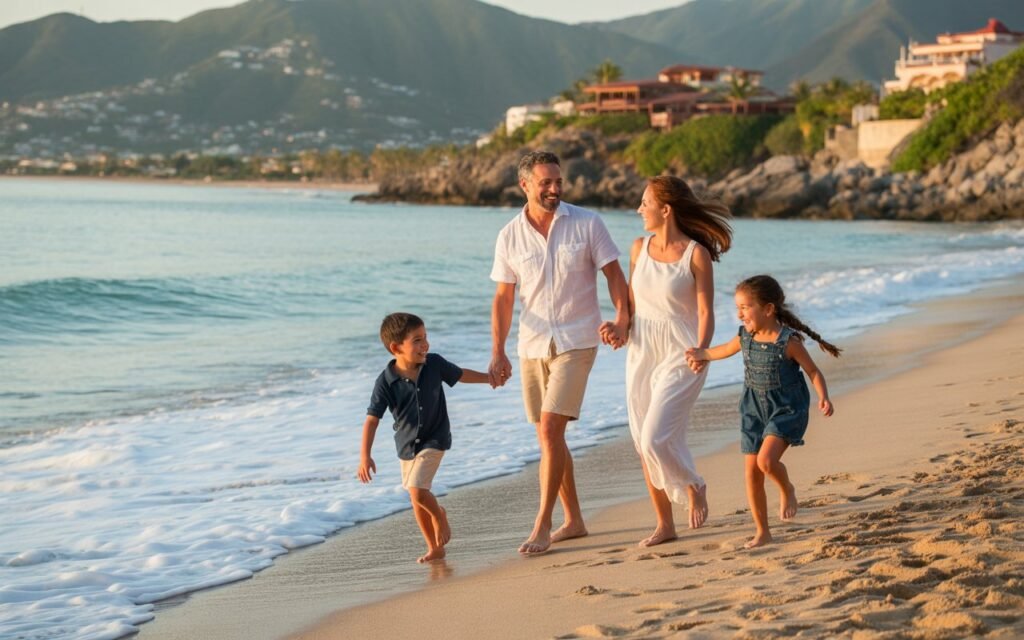
Puerto Vallarta brings together mountain scenery, Pacific Ocean beaches, and authentic Mexican culture in one family-friendly destination. Unlike the Riviera Maya’s relatively recent development, this city boasts decades of experience hosting international families while maintaining its original charm. The compact downtown area preserves cobblestone streets and colonial architecture, while modern resorts line the beaches north and south of the city center. This combination allows families to choose between cultural immersion and beach relaxation, often experiencing both in a single day.
Family Neighborhoods and Accommodations
The Hotel Zone north of downtown concentrates family-friendly resorts along a series of beaches. This area provides easy beach access, numerous restaurants, and proximity to the airport without requiring navigation through busy city streets. Properties here range from budget-friendly options to luxury resorts, with most offering kids’ clubs and pool areas designed for different age groups. The relatively flat terrain makes pushing strollers easier than in hillier neighborhoods.
Marina Vallarta appeals to families seeking a contained environment with everything within walking distance. The marina boardwalk connects restaurants, shops, and activity providers while providing safe areas for children to burn energy. Condominiums here often include full kitchens, allowing families to prepare some meals themselves. The adjacent golf course provides open green space rare in more densely developed areas.
Downtown Puerto Vallarta offers cultural authenticity at lower prices than beachfront locations. The Romantic Zone (Zona Romántica) places families within walking distance of Los Muertos Beach, numerous restaurants, and the famous Malecón boardwalk. Boutique hotels and vacation rentals in this area cost significantly less than comparable beachfront properties. The neighborhood’s numerous taco stands, ice cream shops, and casual restaurants accommodate various budgets and dietary preferences.
Nuevo Vallarta technically sits in a different state but functions as an extension of Puerto Vallarta for tourists. This planned development features wide beaches, modern infrastructure, and numerous all-inclusive resorts. Families with young children appreciate the calm water and gentle beach slope. The flat bicycle paths connecting resorts provide safe cycling opportunities rare in hillier Puerto Vallarta proper.
For families preferring house or condo rentals, the neighborhoods of Versalles and Fluvial Vallarta offer authentic Mexican experiences with modern amenities. These primarily residential areas feature local markets, neighborhood restaurants, and parks where Mexican families gather. Vacation rentals here cost fraction of beachfront prices while providing more space and kitchen facilities. The location requires transportation to beaches but offers cultural immersion impossible in resort zones.
Beach Activities for Different Age Groups
Playa Los Muertos, despite its unfortunate name (Beach of the Dead), provides Puerto Vallarta’s most family-friendly beach experience. The gentle waves suit beginning swimmers, while the beach’s length allows families to find quieter spots away from the main entrance. Beach vendors sell everything from fresh fruit to sand toys, though polite “no gracias” responses stop persistent sellers. The numerous beachfront restaurants provide bathrooms, shade, and cold beverages without requiring long walks.
Conchas Chinas Beach offers a more secluded experience just south of downtown. The small, protected coves create natural kiddie pools during low tide where toddlers can safely explore. Older children enjoy searching for shells and small sea creatures among the rocks. The beach lacks commercial development, so families must bring supplies, but the peaceful atmosphere and clearer water compensate for the extra planning required.
Water sports proliferate along Puerto Vallarta’s coastline, with options suitable for various ages and skill levels. Parasailing operators accommodate children as young as six when flying tandem with adults. The experience provides spectacular views while remaining surprisingly gentle. Jet ski rentals allow teenagers to experience high-speed thrills under parental supervision. Many operators offer banana boat rides, where entire families ride together while being pulled behind a speedboat.
Stand-up paddleboarding gains popularity as a family activity suitable for calm mornings. Several beaches offer rentals and basic instruction, with boards large enough for parent-child tandems. The activity builds core strength and balance while providing peaceful ocean exploration. Protected bays around Mismaloya and Boca de Tomatlán offer ideal conditions for beginners.
Cultural Activities and Experiences
The Malecón boardwalk stretches over a mile along the waterfront, providing free entertainment and exercise opportunities. Bronze sculptures dot the pathway, creating scavenger hunt possibilities for children. Street performers, from musicians to living statues, appear during evening hours when temperatures cool. The Thursday and Sunday ArtWalk events feature local artists displaying work while galleries offer refreshments and children’s activities.
Puerto Vallarta’s numerous festivals throughout the year welcome family participation:
Day of the Dead (November): Elaborate altars, face painting, and traditional foods teach children about this important Mexican tradition
Festival Gourmet (November): Cooking demonstrations and tastings introduce young palates to Mexican cuisine
Xiutla Dancers: Traditional performances happen regularly at Los Arcos amphitheater, free for all attendees
Sea Turtle Release (August-December): Families help release baby turtles while learning about conservation
Carnival (February): Parades, music, and costumes create excitement for all ages
Cooking classes designed for families teach traditional Mexican recipes in entertaining formats. Children learn to make their own tortillas, prepare salsa, and understand ingredients like chocolate and vanilla that originated in Mexico. Several restaurants offer these experiences, including market tours where families select ingredients before cooking. These hands-on activities create lasting memories beyond typical vacation photos.
Wildlife Encounters and Nature Tours
Puerto Vallarta’s location between mountains and ocean creates diverse ecosystem exploration opportunities. Whale watching season from December through March brings humpback whales close to shore. Tour operators specializing in families use stable boats and provide education about marine mammals. Shorter tours accommodate attention spans and potential seasickness, while hydrophones allow children to hear whale songs.
Los Veranos Canopy Tour introduces families to zipline adventures with courses designed for different comfort levels. Children as young as eight can participate with parental consent. The location includes animal exhibits featuring local species and a tequila museum parents might appreciate. River crossings and suspension bridges add variety beyond just zip lines.
Vallarta Botanical Gardens showcases regional plants while providing hiking trails suitable for various fitness levels. The orchid conservatory fascinates children with unusual shapes and colors. Natural swimming holes along the river offer cooling breaks during hot afternoons. The restaurant serves excellent Mexican cuisine with ingredients grown on-site, introducing children to farm-to-table concepts.
Getting Around with Children
Puerto Vallarta’s public bus system costs mere pesos but requires understanding routes and comfort with crowded conditions. Buses lack car seat attachments, concerning safety-conscious parents. However, for short trips along main routes, buses provide authentic local experiences and minimal costs. Drivers generally show patience with families figuring out payments and stops.
Taxis remain abundant throughout Puerto Vallarta, though agreeing on fares before entering prevents disputes. Most drivers know major hotels and attractions by name. Car seats rarely appear in standard taxis, though some families bring portable versions for longer trips. Uber operates reliably in Puerto Vallarta, often costing less than traditional taxis while providing upfront pricing and driver tracking.
Walking works well within neighborhoods but becomes challenging when covering longer distances in heat and humidity. The Malecón provides stroller-friendly pathways, but colonial downtown’s cobblestones and sidewalk obstacles challenge wheeled conveyances. Baby carriers often prove more practical for exploring historic areas. Comfortable walking shoes with good traction prevent slips on wet surfaces common during rainy season.
Mexico City: Urban Adventures for Curious Families
Mexico City shatters preconceptions about traveling with children in massive urban environments. This sprawling metropolis offers world-class museums, expansive parks, and cultural experiences that engage young minds while maintaining surprisingly family-friendly atmospheres. The city’s elevation at 7,350 feet provides comfortable temperatures year-round, eliminating concerns about tropical heat exhausting young travelers. Modern infrastructure, including an extensive metro system and abundant Uber availability, simplifies navigation despite the city’s intimidating size.
Museums and Educational Attractions
Papalote Museo del Niño (Children’s Museum) ranks among the world’s best interactive museums for young visitors. Children touch, build, and experiment with hundreds of exhibits covering science, technology, and human body functions. The IMAX dome theater adds educational entertainment, while the outdoor garden provides running space after intensive indoor learning. Separate areas for toddlers prevent older children from overwhelming the youngest visitors.
The National Museum of Anthropology deserves its reputation as one of the world’s finest museums. While the scale might seem daunting for families, focusing on specific halls prevents exhaustion. The Aztec Hall’s massive stone calendar and Montezuma’s headdress captivate children studying ancient civilizations. The outdoor courtyard provides rest areas and a restaurant when energy flags. Sunday free admission for nationals and residents creates crowds, so paying the modest entrance fee on other days ensures a more comfortable experience.
Museo Soumaya’s distinctive architecture alone justifies a visit, with its windowless aluminum tile exterior creating an otherworldly appearance. The free admission removes budget pressure, allowing families to leave when attention wanes. The top floor’s Rodin sculpture collection includes “The Thinker,” which most children recognize. The circular ramps between floors turn navigation into an adventure rather than tedious stair climbing.
KidZania presents an entirely different museum concept where children role-play adult occupations in a miniature city. Kids work as firefighters, doctors, or journalists, earning and spending kidZos (the facility’s currency) while learning about economics and career options. Parents can participate or observe from designated areas. The experience works best for children between 4 and 14, with activities scaled for different age groups.
Parks and Outdoor Spaces
Chapultepec Park functions as Mexico City’s green lung, covering more area than New York’s Central Park. The park contains multiple attractions beyond open green spaces, including a zoo, lakes with paddle boats, and several museums. Families easily spend entire days here without exhausting possibilities. The zoo’s free admission makes repeat visits feasible, allowing families to explore different sections without pressure to see everything at once.
The park divides into sections, with the first section containing most family attractions. Chapultepec Castle perches atop a hill providing spectacular city views. While the climb challenges young legs, the castle’s rooms filled with period furniture and carriages reward the effort. The castle grounds offer numerous photo opportunities and space for children to explore safely.
Xochimilco’s famous trajineras (colorful boats) provide unique experiences impossible elsewhere. These flat-bottomed boats navigate ancient Aztec canals while mariachi bands and food vendors pull alongside. Families can rent entire boats, controlling the experience’s pace and duration. Weekend afternoons get crowded and party-focused, so morning trips provide calmer experiences better suited for young children.
Parque Lincoln in Polanco neighborhood offers a more refined park experience with modern playgrounds, dog parks, and weekend cultural events. The surrounding area’s upscale restaurants and shops provide convenient amenities. The park’s modest size allows parents to supervise children easily while relaxing on benches. An aviary and reflection pools add interest beyond standard playground equipment.
Family-Friendly Neighborhoods
Condesa and Roma Norte neighborhoods blend tree-lined streets, sidewalk cafes, and parks, creating perfect environments for family exploration. These areas suffered earthquake damage in 2017 but have largely recovered, maintaining their bohemian character while improving infrastructure. Wide sidewalks accommodate strollers, while numerous parks provide play spaces. The neighborhoods’ restaurant density means finding child-friendly options never requires long searches.
Coyoacán preserves colonial architecture and cobblestone streets in a more manageable scale than the historic center. The weekend craft market in the main plazas offers handmade toys and treats. Street performers entertain while families enjoy ice cream from numerous shops. The Frida Kahlo Museum (Casa Azul) welcomes children, though advance tickets prevent long waits that test patience.
Polanco represents Mexico City’s upscale side with international restaurants, luxury shopping, and modern hotels. While potentially expensive, the neighborhood provides familiar comfort for families nervous about venturing too far from known quantities. Parks and wide sidewalks make walking pleasant. The area’s numerous museums, including the previously mentioned Soumaya, provide cultural activities without leaving the neighborhood.
Santa Fe’s modern development includes shopping malls, chain restaurants, and contemporary architecture dramatically different from colonial areas. Families seeking familiar brands and air-conditioned comfort find them here. The KidZania location and several other children’s attractions make this area worth visiting despite lacking traditional Mexican character.
Food Experiences for Picky Eaters
Mexico City’s food scene accommodates various preferences and dietary restrictions. International chains operate throughout the city for times when children refuse local cuisine. However, many Mexican dishes naturally appeal to young palates once parents move beyond stereotypes of everything being spicy. Quesadillas (without spicy additions), fresh fruit with lime and salt, and churros typically win over even selective eaters.
Street food requires caution but shouldn’t be completely avoided. Choose vendors with high turnover ensuring fresh ingredients:
Elote and Esquites: Corn on the cob or in cups with mayo, cheese, and chili (can request without spice)
Fresh Fruit: Vendors cut mango, pineapple, and watermelon to order
Marquesitas: Sweet crepes filled with Nutella, jam, or cheese
Paletas: Frozen fruit pops made with real fruit
Tamales: Corn dough with various fillings steamed in corn husks
Mercado Roma provides a sanitized market experience with gourmet food stalls in a hip atmosphere. Children can sample different cuisines while parents enjoy craft beer or wine. The indoor setting provides climate control and seating absent from traditional markets. Similar food halls throughout the city offer comparable experiences with varying price points and ambiences.
Traditional restaurants often surprise families with their child accommodation. Even upscale establishments typically welcome well-behaved children, providing high chairs and modifying dishes to remove spice. Mexican culture’s emphasis on family means children receive warm welcomes rather than disapproving stares common in some countries.
Transportation Tips
Mexico City’s metro system moves millions daily but presents challenges for families. Crowds during rush hours make stroller navigation nearly impossible. Pickpocketing risks increase with distracted parents managing children. However, outside peak times, the metro provides cheap, efficient transportation. Some stations feature cultural exhibits, turning transit into educational opportunities. Women and children-only cars during peak hours provide slightly less crowded conditions.
Uber revolutionized Mexico City transportation, providing safe, affordable rides with upfront pricing. Drivers rarely speak English but smartphone communication eliminates language barriers. Car seat availability remains limited, concerning safety-focused parents. Some families bring portable car seats for longer stays. Pool options reduce costs but add uncertainty about fellow passengers and routes.
The Turibus hop-on-hop-off tourist bus simplifies sightseeing with recorded narration in multiple languages. The circuit covers major attractions while eliminating navigation stress. Children enjoy the double-decker bus experience, particularly upper deck seats. Day passes allow unlimited boarding, accommodating nap schedules and varying attention spans. The service includes routes to attractions like Xochimilco and Teotihuacán typically requiring separate transportation arrangements.
Walking works well within neighborhoods but becomes impractical for cross-city travel. Mexico City’s altitude affects some visitors initially, causing fatigue and shortness of breath. Planning rest days early in trips allows acclimatization. Comfortable shoes prove essential on uneven sidewalks and cobblestone streets. Crosswalks and traffic lights generally receive respect, though maintaining vigilance remains important.
San Miguel de Allende: Colonial Charm for Families
San Miguel de Allende transports families into a fairy-tale setting with its colonial architecture, artistic community, and mountain location. This UNESCO World Heritage site maintains strict building codes preserving its historic character while providing modern amenities international families expect. The compact centro histórico allows exploration on foot, eliminating transportation hassles that complicate travel in larger cities. The year-round spring-like climate means comfortable temperatures for outdoor activities regardless of travel dates.
Walking Tours and Exploration
The city’s walkable scale makes self-guided exploration feasible even with young children. The central Jardin serves as a natural base, with its playground, benches, and surrounding restaurants providing necessary amenities. From here, families can venture in any direction, discovering hidden plazas, colorful doors perfect for photos, and architectural details that turn walks into treasure hunts. Churches remain open during daylight hours, offering quiet respites and opportunities to discuss different religious traditions.
Professional guides specializing in family tours adapt historical information for young attention spans. These guides incorporate games, stories, and hands-on activities maintaining engagement. Ghost tours designed for children provide mild thrills without genuine scares. Food tours introduce adventurous eaters to local specialties while accommodating dietary restrictions. Photography tours teach composition basics while exploring photogenic locations.
The Parroquia de San Miguel Arcángel, the city’s iconic pink church, fascinates children with its fairy-tale appearance. The story of its untrained architect studying European churches on postcards appeals to young imaginations. Climbing the church tower rewards families with panoramic views, though narrow stairs require careful supervision. The church’s bells ring throughout the day, creating a soundtrack for exploration.
El Charco del Ingenio botanical garden provides natural beauty and hiking trails minutes from downtown. The canyon setting includes a waterfall during rainy season and numerous bird species year-round. Conservation programs teach children about local ecology while providing space to run after concentrated cultural activities. The garden’s art installations add unexpected discoveries along trails.
Art and Craft Activities
San Miguel de Allende’s artistic tradition creates numerous opportunities for hands-on creativity. Workshops accommodate various ages and skill levels, from preschoolers finger painting to teenagers learning advanced techniques. Many studios offer single sessions perfect for vacation schedules without committing to lengthy courses. Materials are typically included, eliminating the need to transport art supplies.
Instituto Allende welcomes visitors to its campus, where families can observe art students working and explore beautiful grounds. The institute offers short-term classes in painting, sculpture, and crafts. Children’s summer programs combine art instruction with Spanish lessons and cultural activities. The campus murals provide free outdoor art galleries.
Local markets showcase traditional crafts while often allowing children to observe artisans working. The Mercado de Artesanias features:
Papel Picado: Children watch artisans cut intricate designs in colored tissue paper
Tin Work: Craftsmen create mirrors, frames, and ornaments from recycled tin
Textiles: Weavers demonstrate traditional techniques on backstrap looms
Pottery: Multiple styles from various Mexican regions
Wooden Toys: Traditional games and figures carved and painted by hand
Fabrica La Aurora converts a former textile factory into art galleries and studios. The industrial architecture contrasts with colonial downtown while providing accessible art experiences. Many galleries welcome children, with some offering workshops or demonstrations. The complex includes cafes and restaurants for refreshment breaks. Free admission to most galleries removes budget pressure.
Family Accommodations
San Miguel de Allende offers diverse lodging options suiting various family needs and budgets. Hotels in the historic center place families within walking distance of major attractions. Many colonial-era buildings convert courtyards into pools and garden areas where children play safely. Rooftop terraces provide adult spaces while maintaining supervision ability.
Casa Schuck boutique hotel specifically courts families with connecting rooms, cribs, and high chairs. The location just blocks from the Jardin allows easy returns for naps or forgotten items. Hotel Real de Minas offers apartment-style suites with kitchenettes, providing flexibility for families with specific dietary needs or preferring some home-cooked meals.
Vacation rentals through various platforms often provide better value for longer stays. Entire houses with multiple bedrooms, full kitchens, and private courtyards cost less than comparable hotel rooms. Many rentals include housekeeping services maintaining vacation relaxation. Neighborhoods like Guadalupe and San Antonio offer quieter settings while remaining walking distance to centro attractions.
Properties with pools become particularly valuable during warm afternoons when children need activity options. Several hotels outside the immediate centro offer resort-like amenities including kids’ clubs and organized activities. These properties provide shuttle services to downtown, balancing isolation with accessibility.
Festivals and Events
San Miguel de Allende celebrates numerous festivals throughout the year, most welcoming family participation. The city’s tradition of fireworks displays (castillos) creates spectacular shows, though the noise might disturb sensitive children. These pyrotechnic displays often include spinning wheels and towers of sparks unlike typical aerial fireworks.
Independence Day celebrations in September transform the already festive city into a patriotic party. The Grito ceremony on September 15th fills the Jardin with thousands celebrating Mexico’s independence. Parades, traditional dances, and food stalls continue festivities for days. The energy and crowds excite older children while potentially overwhelming toddlers.
Day of the Dead observations provide cultural education through beautiful traditions. Families can participate in altar creation, face painting, and cemetery visits that celebrate rather than mourn deceased loved ones. Many hotels and restaurants create elaborate altars explaining symbolism to interested visitors. The holiday’s focus on family resonates with children once they understand the celebration’s meaning.
Day Trips from the City
Cañada de la Virgen archaeological site opens windows into pre-Hispanic history just 30 minutes from San Miguel. The pyramids date from 540-1050 AD, with guided tours explaining astronomical alignments and ancient rituals. The moderate hiking required eliminates very young children but engages elementary-age kids interested in archaeology. Limited daily visitors preserve the site’s peaceful atmosphere.
Atotonilco sanctuary, known as the “Sistine Chapel of Mexico,” showcases extraordinary folk art murals covering nearly every surface. The pilgrimage site maintains spiritual significance while welcoming respectful tourists. Children marvel at the detailed paintings while learning about Mexican religious traditions. The adjacent hot springs provide refreshing conclusions to cultural exploration.
Dolores Hidalgo, the cradle of Mexican independence, combines history with unique local traditions. The town’s famous exotic ice cream flavors include shrimp, beer, and avocado alongside conventional options. Museums dedicated to independence hero Miguel Hidalgo provide educational opportunities. Talavera pottery workshops demonstrate traditional ceramic techniques perfected over centuries.
The nearby town of Pozos offers ghost town exploration with partially restored mining ruins. Children enjoy scrambling over safe structures while imagining the town’s silver mining heyday. Several hotels provide pool access for day visitors, combining adventure with relaxation. The minimal tourist development preserves authentic atmosphere while providing necessary services.
Making Mexico Memories That Last
Your first family trip to Mexico opens doors to adventures that grow richer with each generation. These five destinations provide ideal starting points, each offering unique combinations of relaxation, education, and excitement tailored to various family dynamics. Whether you choose Caribbean beaches, Pacific coastlines, urban exploration, or colonial charm, Mexico delivers experiences that bring families closer while expanding young horizons.
Planning your Mexican family vacation becomes less daunting when you focus on destinations designed for international visitors. The tourism infrastructure in these cities anticipates family needs, from baby equipment rentals to teen-friendly activities. Starting with these established destinations builds confidence for future travels, perhaps venturing into less-touristy areas as children grow and adapt to international travel. The memories created during these early adventures often inspire lifelong love of exploration, with children requesting returns to favorite Mexican destinations throughout their childhood and eventually bringing their own families to experience the magic.
Frequently Asked Questions
Q: Is Mexico safe for traveling with children?
A: Tourist destinations mentioned in this article maintain strong safety records for family visitors. Staying within resort areas and established tourist zones, using registered transportation, and following basic safety precautions create secure environments. These areas invest heavily in tourist safety, employing dedicated police and security measures specifically protecting international visitors.
Q: What documents do children need to enter Mexico?
A: US citizen children require valid passports for air travel or passport cards for land/sea entry. Birth certificates alone no longer suffice. When traveling with one parent or other adults, carry notarized consent letters from absent parents to prevent custody concerns at immigration.
Q: Should we drink the water in Mexico?
A: Stick to bottled or purified water for drinking and teeth brushing. Most hotels provide purified water systems, and restaurants in tourist areas use filtered water for ice. Avoid tap water, especially for young children with sensitive systems.
Q: What’s the best time of year to visit Mexico with kids?
A: November through April offers ideal weather with minimal rain and comfortable temperatures. Summer brings higher heat and humidity plus occasional storms but fewer crowds and lower prices. Mexican school holidays in July, December, and Easter create crowded conditions at family destinations.
Q: Do we need special vaccinations for Mexico?
A: No special vaccinations are required for Mexico beyond routine childhood immunizations. However, consult your pediatrician about Hepatitis A vaccination and ensure routine vaccines remain current. Bring copies of vaccination records for emergency medical situations.
Q: How much Spanish do we need to know?
A: Tourist areas accommodate English speakers well, but learning basic phrases enhances experiences and shows cultural respect. Children often pick up Spanish words quickly and enjoy practicing with patient locals. Translation apps help bridge communication gaps.
Q: What should we pack for kids that might be hard to find in Mexico?
A: Specific brands of formula, prescription medications, and specialized sunscreens should come from home. However, Mexico stocks most children’s necessities including diapers, wipes, and common medications. Pack light knowing you can purchase forgotten items locally.
Q: Are car seats required in Mexico?
A: Mexican law requires car seats, though enforcement varies. Rental car companies offer car seats for additional fees, but quality varies. Many families bring their own for extended stays or rely on resort transportation and taxis for shorter trips.