
Homeschooling has transformed from an alternative choice into a mainstream educational option for millions of families worldwide. Parents who choose this path discover both incredible rewards and unexpected challenges as they guide their children’s education from home. The flexibility to customize learning styles, pace lessons according to individual needs, and spend quality time together draws many families to this educational approach.
The biggest hurdle most homeschooling parents face isn’t motivation or curriculum choices – it’s finding resources that genuinely engage their children while making the teaching process manageable. Traditional textbooks and worksheets quickly lose their appeal, especially for younger learners who thrive on interaction and variety. Parents often spend countless hours searching for materials that balance educational value with genuine enjoyment, wondering if they’re providing enough enrichment across all subject areas.
The good news is that today’s homeschooling families have access to an unprecedented wealth of resources that turn learning into an adventure rather than a chore. From innovative digital platforms to hands-on materials, from budget-friendly library solutions to community programs you might not know exist, the following sections reveal practical tools that simplify your homeschooling journey while keeping your children excited about discovery. Read on to transform your homeschool into a dynamic learning environment where education feels like play.
- Digital Platforms That Transform Daily Lessons
- How to Build Your Home Library Without Breaking the Bank
- Which Hands-On Materials Bring Subjects to Life
- What Makes Screen Time Educational Instead of Empty
- Community Resources You're Probably Overlooking
- Final Thoughts on Your Homeschooling Adventure
- Frequently Asked Questions
Digital Platforms That Transform Daily Lessons
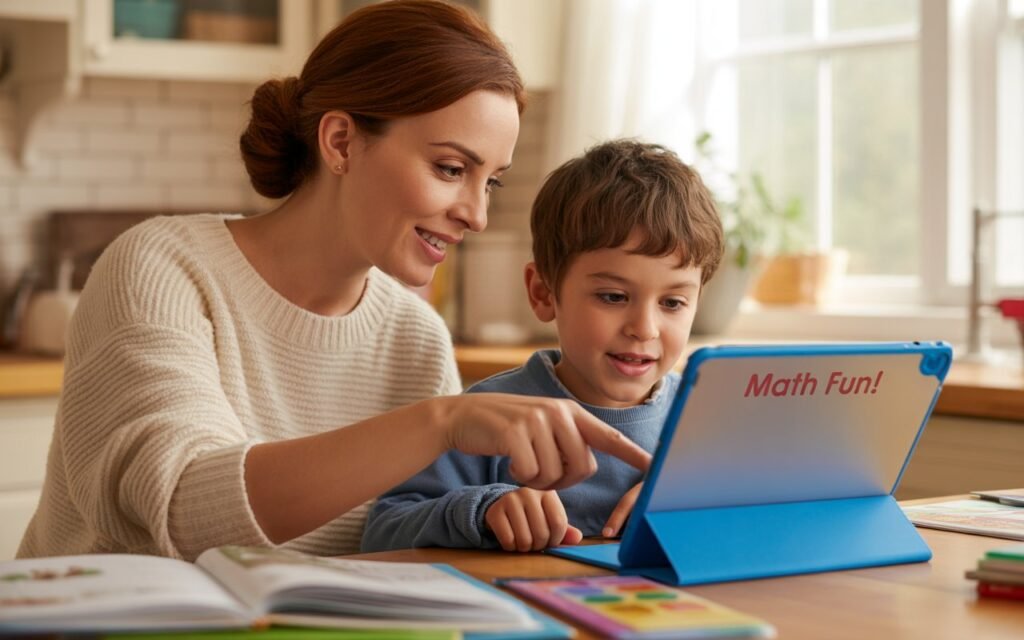
The digital revolution has completely changed how homeschooling families approach daily lessons. Gone are the days of relying solely on textbooks and workbooks – today’s online resources offer interactive experiences that adapt to your child’s learning pace and style. These platforms turn abstract concepts into engaging adventures, making even challenging subjects feel approachable and fun.
Interactive learning websites for core subjects
Math doesn’t have to mean endless drilling of multiplication tables. Websites like Khan Academy provide free, comprehensive coverage of mathematics from kindergarten through calculus, with colorful animations and immediate feedback that keeps children engaged. Each concept builds naturally on the previous one, allowing students to progress at their own speed without feeling rushed or left behind.
Reading and language arts come alive through platforms that combine games with systematic instruction. Programs track progress automatically, adjusting difficulty levels based on performance. This personalized approach means your third-grader working at a fifth-grade reading level gets appropriately challenging material, while your teenager who struggles with grammar receives extra support exactly where needed.
Science becomes an exploration rather than memorization when you use interactive simulations. Students can dissect virtual frogs, explore the solar system, or conduct chemistry experiments safely on screen before trying hands-on versions. These tools particularly benefit families without dedicated lab spaces or expensive equipment.
Virtual field trip resources
Physical field trips require planning, driving, and often significant expense. Virtual alternatives let you visit the Louvre before breakfast, explore the Great Barrier Reef after lunch, and tour NASA’s space center before dinner – all from your living room. Google Arts & Culture partners with thousands of museums and cultural sites worldwide, offering 360-degree tours and detailed exhibits.
Many institutions now offer live virtual programs specifically designed for homeschoolers. Zoos stream animal feedings with educator commentary, national parks provide ranger-led tours, and historical sites offer interactive sessions where students can ask questions in real-time. These experiences often surpass physical visits since cameras can go places visitors cannot, like inside animal enclosures or restricted archaeological areas.
Educational game platforms
Children learn best when they don’t realize they’re learning. Gaming platforms designed for education tap into natural competitiveness and desire for achievement while teaching core concepts. Spelling becomes a quest to defeat dragons, geography transforms into a race around the world, and history unfolds through time-travel adventures.
The key lies in finding platforms that balance entertainment with genuine educational value. Quality educational games include:
- Progress tracking: Parents can monitor which skills their children have mastered and where they need additional practice
- Adaptive difficulty: Games automatically adjust to keep children in the sweet spot between boredom and frustration
- Curriculum alignment: Content matches standard educational benchmarks, ensuring comprehensive coverage
- Offline capabilities: Downloaded games work without internet access, perfect for travel or areas with poor connectivity
Video-based learning channels
YouTube and similar platforms host countless educational channels that explain complex topics through engaging visuals and storytelling. Channels run by actual teachers break down everything from basic phonics to advanced physics using animations, experiments, and real-world examples. Unlike traditional lectures, these videos can be paused, rewound, and rewatched until concepts click.
Subject-specific channels cater to different learning styles and interests. Visual learners gravitate toward channels with detailed animations, while kinesthetic learners prefer those featuring hands-on demonstrations. Many creators specifically target homeschooling families, providing downloadable worksheets and activity suggestions to extend learning beyond the screen.
Online curriculum management tools
Keeping track of multiple children’s progress across various subjects can overwhelm even organized parents. Digital planning tools designed for homeschoolers streamline this process, automatically generating transcripts, tracking attendance, and storing samples of student work. These systems eliminate hours of paperwork while ensuring you meet state reporting requirements.
Cloud-based storage means your records remain safe even if your computer crashes. Many platforms also facilitate portfolio creation for year-end assessments, compile reading lists, and generate customized reports showing academic progress over time. This documentation proves invaluable for college applications or if your family transitions back to traditional schooling.
How to Build Your Home Library Without Breaking the Bank

Books form the foundation of any successful homeschool, yet building a comprehensive library seems financially impossible when new children’s books cost $15-20 each. Smart homeschooling families know that creating an impressive collection doesn’t require a massive budget – it requires strategy, patience, and knowing where to look.
Free and low-cost book sources
Library book sales offer incredible value, with most books priced between fifty cents and two dollars. These sales typically happen quarterly or annually, with librarians culling older editions, duplicates, and donated books to make room for new materials.
Arrive early for the best selection, and don’t overlook slightly worn copies – children rarely notice minor damage when engrossed in a story. Some libraries even offer “fill a bag” deals on the final sale day, letting you stuff a paper grocery bag for five dollars.
Digital library access and apps
Your local library card unlocks far more than physical books. Most library systems now provide free access to thousands of digital titles through apps like Libby, Hoopla, and OverDrive. These platforms offer instant borrowing without late fees – books automatically return after the loan period expires. Many include audiobook versions, perfect for car rides or quiet time.
Digital collections often include materials your physical library doesn’t carry. Popular series always available digitally might have months-long waiting lists for physical copies. Educational publishers increasingly release interactive ebooks with embedded videos, quizzes, and activities that enhance comprehension. Your children can highlight passages, look up definitions instantly, and adjust font sizes for easier reading.
Online book swapping communities connect families looking to refresh their collections without spending money. Websites facilitate trades where you mail books you’ve finished in exchange for credits toward books you want. Homeschool co-ops often organize local book swaps where families bring books their children have outgrown and take home age-appropriate replacements.
Thrift stores price children’s books at a fraction of retail cost, typically between twenty-five cents and three dollars. Estate sales and garage sales offer even better deals, especially when sellers want everything gone by day’s end. Building relationships with thrift store staff can lead to notifications when homeschooling materials arrive.
Book rotation strategies
Too many books displayed at once overwhelm young readers and make choosing difficult. Rotating selections every few weeks keeps your collection fresh and exciting. Store most books in bins or closets, displaying only 20-30 titles on accessible shelves. When you swap them out, previously hidden books feel new again.
Age-appropriate reading lists
Quality matters more than quantity when building your library. Classic literature, award-winning titles, and books that support your curriculum should take priority over trendy series that might quickly lose appeal. Caldecott and Newbery award winners consistently deliver exceptional storytelling and educational value. These recognized titles also hold their value better if you eventually decide to sell or donate them.
Create balanced collections covering fiction and non-fiction across various subjects. Biographies inspire children while teaching history, science books feed curiosity about the natural world, and poetry collections develop language appreciation. Including books slightly above and below your child’s current reading level accommodates growth and provides comfort reading options for tired days.
Creating reading spaces that inspire
Physical environment significantly impacts reading habits. Dedicated reading nooks signal that books matter in your home. These spaces don’t require elaborate decoration or expensive furniture. A comfortable chair near a window, floor cushions in a quiet corner, or a tent made from sheets can become magical reading retreats.
Consider different spaces for different types of reading. A desk area works well for textbooks and reference materials, while a cozy corner suits pleasure reading. Outdoor reading spots under trees or on porches connect literature with nature. Good lighting prevents eye strain, and nearby baskets for current reads keep books accessible without creating clutter.
Organization systems that make sense to children encourage independent selection. Lower shelves for younger readers, spine labels with colored dots indicating reading levels, and separate sections for different subjects help children find appropriate books without constant assistance. Picture books displayed cover-out attract pre-readers, while chapter books organized by series or author help older children track their reading progress.
Which Hands-On Materials Bring Subjects to Life
Abstract concepts become concrete understanding when children can touch, manipulate, and experiment with physical materials. While worksheets have their place, hands-on resources engage multiple senses simultaneously, creating deeper connections and longer retention. The right materials transform your dining table into a science lab, your backyard into a geography classroom, and everyday objects into mathematical tools.
Science experiment kits and supplies
You don’t need an expensive microscope or professional lab equipment to conduct meaningful science experiments at home.
A basic collection of household supplies opens countless experimental possibilities. Baking soda and vinegar demonstrate chemical reactions, food coloring reveals water movement patterns, and simple magnifying glasses turn backyard exploration into biological research. Keeping these supplies organized in a designated science box means spontaneous learning moments never get delayed by hunting for materials.
Investing in a few quality tools pays dividends across years of learning. A good digital scale serves chemistry experiments, cooking lessons, and math problems involving weight. Basic microscopes suitable for elementary through high school cost less than many textbooks yet provide years of discovery. Weather monitoring tools like thermometers, rain gauges, and wind vanes turn daily observations into data collection exercises.
Subscription boxes designed for homeschoolers deliver monthly experiments with all necessary supplies and clear instructions. While pricier than gathering materials yourself, these boxes save planning time and introduce concepts you might not otherwise cover. They also prevent the frustration of starting an experiment only to discover you’re missing a crucial component.
Math manipulatives for every grade
Mathematics becomes tangible when students physically move objects to solve problems. Counting bears and blocks serve preschoolers learning basic numbers, while algebra tiles help teenagers visualize equations. These materials bridge the gap between concrete and abstract thinking, especially crucial for learners who struggle with traditional number-based instruction.
Everyday items work as effectively as purchased manipulatives. Dried beans count just as well as commercial counters, playing cards teach probability and statistics, and measuring cups demonstrate fractions during baking sessions. The kitchen becomes a practical math classroom where mistakes result in lumpy muffins rather than red marks on papers. These real-world applications show children why mathematical understanding matters beyond textbooks.
Pattern blocks, tangrams, and geometric shapes develop spatial reasoning while providing artistic outlets. Children create designs while unconsciously absorbing concepts about symmetry, angles, and proportions. These materials work across multiple age levels – younger children sort by color and shape while older students calculate areas and explore tessellations. A single set of quality wooden pattern blocks serves your homeschool for over a decade.
Art and craft essentials
Creativity shouldn’t be limited to designated art time. Quality supplies readily available encourage spontaneous expression and integration across subjects. Historical timelines come alive when children illustrate major events, science journals benefit from detailed sketches, and creative writing improves when students design book covers for their stories.
Start with basics that offer maximum versatility:
- Quality colored pencils: Better pigmentation means less hand fatigue and more satisfying results
- Watercolor sets: Portable and less messy than acrylics while teaching color theory
- Construction paper variety: Different textures and weights expand project possibilities
- Reliable scissors: Age-appropriate tools that actually cut prevent frustration
- Washable markers: Bold colors for posters and presentations without permanent stains
Building gradually prevents overwhelming storage issues and unused supplies. Add specialized materials as interests develop – calligraphy pens for a child fascinated by lettering, polymer clay for aspiring sculptors, or fabric scraps for those drawn to textile arts. Local businesses often donate manufacturing scraps perfect for projects. Frame shops discard mat board samples, fabric stores give away small pieces, and printing companies sometimes share paper offcuts.
Geography and history resources
Maps belong on walls where children see them daily, not folded in drawers. Large world and country maps spark natural conversations about current events, family heritage, and literature settings. Laminated versions allow marking with dry-erase markers – trace explorer routes, mark countries you’re studying, or play geography games during lunch.
Globes provide three-dimensional understanding that flat maps cannot convey. Inflatable versions work well for younger children who might drop them, while desktop globes suit older students studying time zones, latitude, and weather patterns. Historical maps showing changing borders help students understand that political boundaries shift over time.
Timeline materials make history tangible rather than a list of dates. Commercial timeline figures provide consistent imagery, but creating your own using printed pictures personalizes learning. Adding artifacts like reproduction coins, historical newspapers (many available free online to print), and costume pieces brings different eras to life. A simple clothesline across a wall becomes an interactive timeline where children physically arrange events in chronological order.
Sensory learning materials
Not all learners process information effectively through visual or auditory channels alone. Tactile experiences help many children, particularly those with learning differences, grasp concepts that would otherwise remain abstract. Sensory materials benefit all students by providing brain breaks and alternative learning pathways.
Playdough and kinetic sand serve multiple educational purposes beyond entertainment. Form letters and numbers for early literacy, create topographical maps for geography, or model cell structures for biology. These materials provide stress relief during challenging lessons while keeping hands busy during read-aloud time helps many children focus better on stories.
Texture boards, sandpaper letters, and raised-line drawing boards support children learning to write. Feeling letter shapes while saying sounds creates multiple neural pathways for memory formation. Water writing boards allow endless practice without paper waste, particularly helpful for perfectionists who want multiple attempts before committing to paper.
What Makes Screen Time Educational Instead of Empty
Screen time debates plague modern parents, particularly homeschoolers who rely on digital resources yet worry about excessive device use. The distinction lies not in quantity alone but in quality and intentionality. Strategic screen use enhances learning rather than replacing real-world experiences, providing access to experts, places, and resources impossible to reach otherwise.
Documentary platforms worth subscribing to
Netflix, Amazon Prime, and Disney+ offer extensive documentary collections often overlooked in favor of entertainment programming. These platforms regularly add educational content, from nature documentaries narrated by renowned scientists to historical series examining ancient civilizations. Setting up dedicated profiles for educational viewing helps children distinguish learning time from leisure watching.
Specialized streaming services cater specifically to educational content. CuriosityStream costs less than a single movie ticket monthly yet provides thousands of documentaries covering science, history, technology, and nature. The platform organizes content by topic and age appropriateness, making lesson planning straightforward.
PBS remains an exceptional free resource through their website and app. Full episodes of Nova, Nature, and American Experience provide broadcast-quality educational content without subscription fees.
Their kids’ section includes programs specifically designed to meet educational standards while entertaining young viewers. Many episodes include downloadable discussion guides and activity suggestions.
Educational apps that actually teach
The app marketplace overflows with programs claiming educational value, yet many simply dress up mindless tapping with numbers and letters. Genuine educational apps demonstrate clear learning objectives, provide meaningful feedback, and adapt to student progress. They supplement rather than replace hands-on learning, offering practice opportunities that would be impractical with physical materials.
Reading apps that record children reading aloud help identify problem areas while building confidence. Parents can review recordings to hear improvement over time, and children enjoy creating audio books for younger siblings. Spelling apps that use spaced repetition ensure words move from short-term memorization to long-term retention. These programs track which words cause difficulty and revisit them at optimal intervals for memory formation.
Coding and technology resources
Programming skills increasingly matter across career fields, not just technology sectors. Children as young as four can begin understanding coding logic through apps that use visual blocks rather than text commands. These early experiences with sequencing, debugging, and problem-solving translate into improved performance in mathematics and general reasoning.
Free platforms make coding accessible regardless of budget. Scratch, developed by MIT, lets children create animations, games, and interactive stories while learning fundamental programming concepts. Khan Academy offers JavaScript courses that progress from basic drawing to complex animations. Hour of Code provides themed activities featuring popular characters that make annual participation exciting.
Physical coding tools bridge the gap between screen-based learning and tangible manipulation. Programmable robots respond to coded commands, providing immediate visual feedback about programming success or errors. Board games teaching coding logic work entirely screen-free while developing computational thinking. These tools particularly benefit kinesthetic learners who need movement and manipulation to process information effectively.
Language learning tools
Mastering additional languages opens cultural doors and enhances cognitive development. Modern language apps surpass traditional textbook methods by providing immediate pronunciation feedback, gamified lessons, and conversation practice with native speakers worldwide. Starting language learning early takes advantage of young brains’ superior ability to distinguish and reproduce unfamiliar sounds.
Different platforms suit different learning styles and goals. Some focus on conversational skills through story-based lessons, while others emphasize grammar and writing. Many offer free versions with optional premium upgrades, letting you test effectiveness before committing financially:
- Audio-focused apps: Perfect for auditory learners and building pronunciation skills
- Visual vocabulary builders: Use image associations rather than translations
- Grammar-intensive programs: Suit analytical learners who want to understand language structure
- Conversation exchanges: Connect with native speakers for authentic practice
- Story-based learning: Develop comprehension through engaging narratives
Supplementing apps with authentic media accelerates language acquisition. Children’s shows in target languages provide contextual learning, foreign music develops pronunciation and rhythm, and international pen pal programs motivate continued study. Many streaming services offer multiple language tracks for familiar movies, letting children watch beloved films while absorbing new vocabulary.
Screen time management strategies
Structure prevents educational screen time from spiraling into endless device use. Designated learning hours distinguish educational activities from entertainment, while screen-free meals and bedtimes protect family connection and sleep quality. Using larger screens for educational content reduces eye strain and allows collaborative viewing where siblings learn together.
Physical activity breaks between screen sessions reset attention and prevent sedentary habits. Simple movement activities like jumping jacks, yoga poses, or brief walks refresh focus while reinforcing that learning involves whole-body engagement. Timer apps help children self-regulate, building awareness of time passage that device use often obscures.
Creating weekly screen schedules involves children in planning their educational technology use. They might choose documentary nights, coding afternoons, or language app sessions during breakfast. This ownership increases buy-in while teaching time management skills. Recording favorite educational shows for later viewing teaches delayed gratification while ensuring quality content doesn’t get missed due to scheduling conflicts.
Community Resources You’re Probably Overlooking
Homeschooling doesn’t mean learning in isolation. Communities offer abundant educational resources, many free or low-cost, that enrich your curriculum while providing social interaction. These opportunities exist in every town, though sometimes require detective work to uncover. Building connections with local organizations multiplies learning possibilities while reducing the pressure to provide everything yourself.
Local museum programs and passes
Museums design programs specifically for homeschoolers, recognizing this growing demographic’s unique needs and flexibility. These offerings typically include hands-on workshops, behind-the-scenes tours, and educator-led classes scheduled during traditional school hours when venues are less crowded.
Many museums offer deeply discounted or free memberships for homeschooling families. Even without special programs, membership benefits like unlimited visits, guest passes, and gift shop discounts quickly offset costs.
Reciprocal agreements between museums mean one membership might provide free admission to hundreds of institutions nationwide. Association of Science and Technology Centers members honor each other’s memberships, turning vacation trips into educational opportunities. Similarly, children’s museum networks and art museum associations maintain reciprocal agreements. Planning road trips around participating venues maximizes your membership value while exposing children to diverse collections and teaching styles.
Small, specialized museums often provide more personalized experiences than famous institutions. Local historical societies maintain archives perfect for genealogy projects, industrial museums demonstrate historical manufacturing processes, and cultural centers share immigrant experiences often absent from textbooks. Volunteers at these smaller venues frequently have time for extended conversations, sharing expertise and passion that brings subjects alive.
Library beyond books
Modern libraries offer far more than book lending. Maker spaces equipped with 3D printers, laser cutters, and sewing machines provide access to expensive equipment and expert instruction. Technology classes teach everything from basic computer skills to advanced coding. Some libraries loan unusual items like telescopes, musical instruments, or camping gear, letting families try expensive activities before investing.
Librarians curate resources specifically for educators, including themed activity kits, educational games, and teaching materials. Many maintain separate educator collections with extended borrowing periods. Building relationships with children’s librarians leads to personalized recommendations, advance notice about programs, and sometimes input into purchasing decisions.
Co-op opportunities
Homeschool cooperatives pool family resources to offer classes impossible individually. Parents teach subjects matching their expertise while children benefit from specialized instruction and peer interaction. Co-ops range from informal playgroups to structured academic programs with hired teachers and formal curricula.
Finding the right co-op match requires understanding your family’s needs and capacity. Some focus on academic enrichment with rigorous classes and homework expectations. Others prioritize social connections through park meetings and field trips. Many fall between these extremes, offering optional classes alongside regular gatherings:
- Academic co-ops: Parents with specific expertise teach advanced subjects
- Activity-based groups: Focus on art, drama, sports, or music
- Support networks: Provide encouragement and resource sharing for parents
- Inclusive communities: Welcome diverse learning styles and special needs
- Faith-based cooperatives: Integrate religious instruction with academics
Starting your own group becomes an option when existing co-ops don’t match your needs. Begin small with a few like-minded families meeting monthly. As relationships develop, expand offerings based on member interests and abilities. Online platforms simplify scheduling, communication, and cost-sharing for group activities.
Park and recreation programs
Municipal recreation departments offer exceptional value for homeschooling families. Daytime programs designed for preschoolers or retirees often welcome homeschooled children when space permits. Swimming lessons, art classes, and sports clinics scheduled during school hours cost less than evening or weekend equivalents while providing certified instruction.
Nature centers and parks employ educators who lead programs about local ecology, wildlife, and conservation. These naturalists bring expertise about your specific region that generic curriculum cannot match. Seasonal programs track environmental changes throughout the year, building deep understanding of natural cycles. Many parks offer junior ranger or naturalist programs that provide structured learning goals and achievement recognition.
Community gardens teach botany, nutrition, and responsibility while producing fresh food. Plot rental fees are minimal, and experienced gardeners gladly share knowledge with newcomers. Children learn patience, observation, and problem-solving while watching seeds transform into harvest.
Athletic facilities often sit empty during school hours, making them available for homeschool sports programs. Ice rinks, bowling alleys, and climbing gyms offer special homeschool rates and instruction. These activities develop physical skills while providing social interaction with peers who share similar educational approaches.
Professional networks for support
Professional organizations increasingly recognize homeschoolers as legitimate educators deserving support and resources. Teaching associations sometimes offer associate memberships providing access to conferences, publications, and professional development. Science teacher organizations share lesson plans and activity ideas. Museum educator networks welcome parents seeking to improve their teaching skills.
Online communities connect homeschoolers worldwide, providing encouragement during challenging periods and celebrating successes. Veteran homeschoolers share curriculum reviews, teaching tips, and troubleshooting advice. Subject-specific groups help parents tackle areas outside their comfort zones. Local social media groups announce events, organize field trips, and facilitate resource sharing.
Final Thoughts on Your Homeschooling Adventure
Your homeschooling journey doesn’t require perfection or unlimited resources to succeed. The tools and materials explored throughout this guide prove that effective education happens through thoughtful selection rather than excessive spending. Digital platforms provide world-class instruction, libraries offer treasures beyond books, hands-on materials make abstract concepts concrete, intentional screen time opens global classrooms, and communities surround you with support you might never have noticed.
The beauty of homeschooling lies in its flexibility to match your family’s unique needs, interests, and circumstances. Some days will involve elaborate science experiments and virtual museum tours, while others might simply feature reading together on the couch. Both approaches have value when they connect with your children’s natural curiosity and enthusiasm for learning. Trust your instincts, adapt resources to fit your situation, and remember that the most powerful educational tool you possess is your dedication to your children’s growth and development.
Frequently Asked Questions
Q: How much should I budget annually for homeschooling resources and materials?
A: Homeschooling costs vary dramatically based on approach and resourcefulness. Families successfully homeschool on $300-500 per child annually using free online resources, library materials, and community programs. Others spend $2000+ per child on curriculum packages, activities, and supplements. Start conservatively and add resources as you identify genuine needs.
Q: Which subjects can I realistically teach without expertise or special training?
A: Most parents successfully teach all elementary subjects using quality curriculum and online resources as guides. Middle and high school math, science, and foreign languages often benefit from video instruction, online courses, or co-op classes. Your role shifts from lecturer to learning facilitator who ensures comprehension and provides support.
Q: How do I know if my children are keeping pace with traditional school standards?
A: Annual standardized testing provides objective progress measurements, though many states don’t require it. Free assessment tools online evaluate grade-level performance in core subjects. Portfolio reviews by certified teachers offer qualitative evaluation. Remember that homeschooled children often progress at different rates than classroom peers, advancing quickly in some areas while taking extra time in others.
Q: What technology do we absolutely need to homeschool effectively?
A: Reliable internet access and at least one device (computer or tablet) per family enables use of free educational resources. Printers help but aren’t essential since most work can be done digitally or on plain paper. Additional devices per child increase convenience but aren’t necessary for successful homeschooling.
Q: Should I buy a complete curriculum package or piece together resources?
A: Complete packages provide structure and reduce planning time, particularly helpful for new homeschoolers or multiple children. Piecing together resources allows customization and often costs less but requires more research and organization. Many families use packaged curriculum for challenging subjects while customizing others.
Q: How do homeschooled children get socialization without daily classroom interaction?
A: Homeschooled children often have more diverse social interactions than traditional students. They engage with various ages through co-ops, activities, and community programs rather than primarily same-age peers. Sports teams, clubs, volunteer work, and neighborhood friendships provide abundant social opportunities.
Q: Can children transition successfully from homeschool to traditional school if needed?
A: Children regularly transition between homeschooling and traditional schooling successfully. Maintaining records of curriculum covered and work completed simplifies placement. Many children find transition easier having developed self-direction and study skills through homeschooling.
Q: How do I teach multiple children at different grade levels simultaneously?
A: Combine subjects like history, science, and art across ages, adjusting expectations for different levels. Use independent learning programs for skill-based subjects like math and reading. Older children can help teach younger siblings, reinforcing their own learning while you work individually with others.