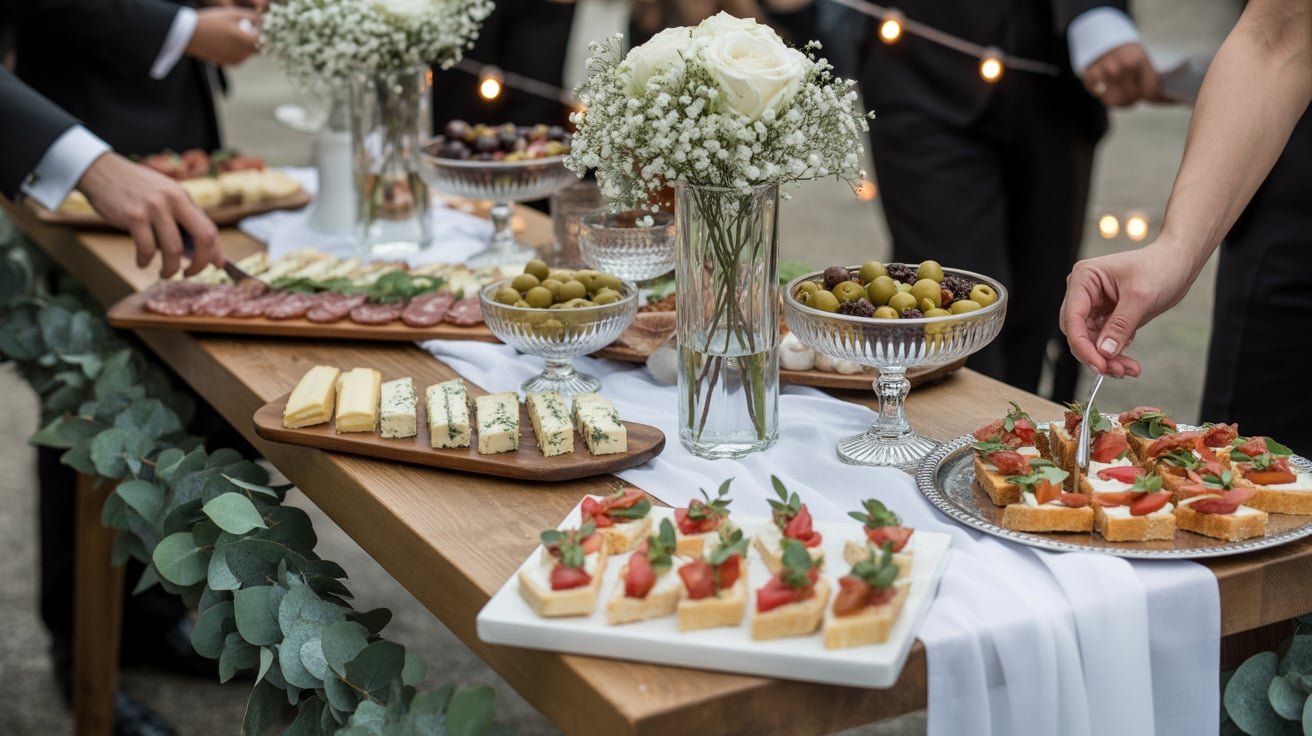
Wedding receptions have evolved far beyond the traditional sit-down dinner or standard buffet line. Food stations have become the secret ingredient that transforms ordinary receptions into extraordinary culinary experiences. These interactive dining setups create natural gathering points where guests mingle, sample different flavors, and actually enjoy the food portion of your celebration instead of just waiting for dancing to begin.
The shift toward food stations reflects how modern couples want their weddings to feel more like sophisticated parties than formal events. Guests appreciate the freedom to eat what they want, when they want it, without being locked into a single plated meal option. This flexibility means your vegetarian cousin can load up at the Mediterranean station while your steak-loving uncle heads straight for the carving station, and everyone leaves satisfied.
Throughout the following sections, we’ll walk through savory stations that become conversation starters, dessert displays that double as entertainment, late-night options that keep the party going, and practical setup tips that help everything run smoothly. Whether you’re planning an intimate gathering or a grand celebration, these food station ideas will help you create those delicious moments your guests will still be talking about years later.
Why Food Stations Transform Wedding Receptions
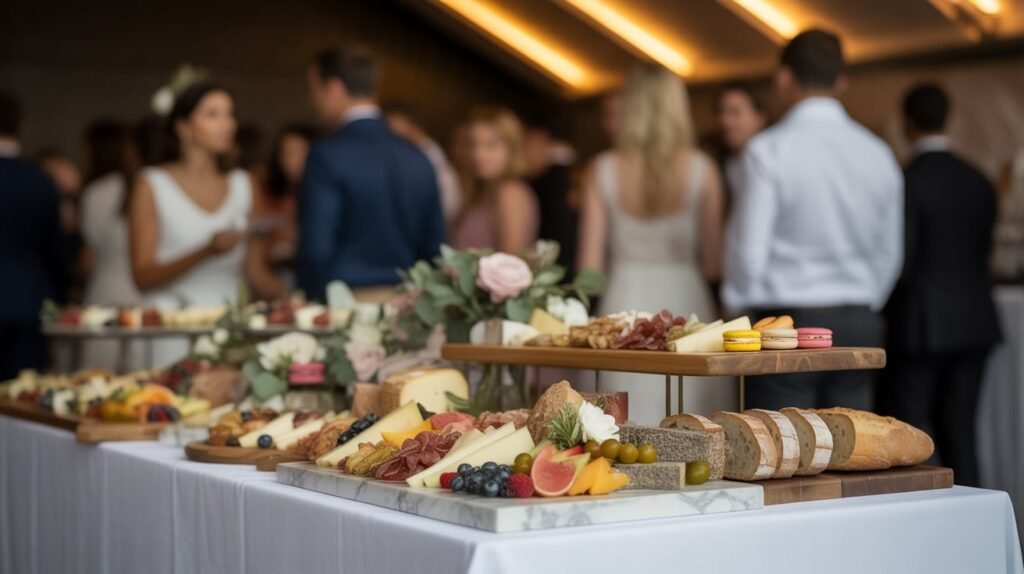
Food stations do something magical at weddings that traditional catering simply cannot match. They turn eating from a passive activity into an active experience where guests become part of the celebration rather than just observers. The energy shifts when people move around the room, discovering new flavors and chatting with different groups instead of staying seated at assigned tables for hours.
Interactive dining experiences
The beauty of food stations lies in their ability to create memorable moments through participation. Watching a chef prepare your pasta to order or choosing your own taco toppings turns a meal into entertainment. Guests love having control over their plates, whether that means loading up on their favorites or trying tiny tastes of everything available.
These interactive elements naturally break up the reception timeline too. Instead of everyone eating simultaneously during a designated dinner hour, food stations allow for a more relaxed flow throughout the evening. Some guests might start with appetizers at one station, take a dance break, then visit another station later. This staggered approach keeps energy levels consistent rather than having the typical post-dinner lull.
Guest engagement benefits
Food stations give your shy guests an automatic conversation starter. Standing next to someone at the sushi bar naturally leads to discussions about favorite rolls or recommendations for what to try next. These casual interactions help different social circles blend together, creating connections between your college friends and your partner’s work colleagues who might never have spoken otherwise.
The movement required by food stations also prevents that awkward situation where someone gets stuck at a table with people they have nothing in common with. Guests can politely excuse themselves to visit another station whenever conversations lag, maintaining the social flow without anyone feeling trapped or excluded from the fun.
Flow and timing advantages
Traditional plated dinners require precise coordination with every table served within minutes of each other. Food stations eliminate this pressure entirely. Your catering team can maintain stations throughout designated time periods, refilling as needed rather than rushing to get 150 identical plates out simultaneously.
This flexibility proves especially valuable when ceremonies run long or photo sessions take extra time. With food stations ready to go, hungry guests can start eating immediately upon entering the reception rather than waiting for everyone to be seated and served. No one feels frustrated about delays when delicious options await them.
Budget flexibility
Contrary to popular belief, food stations can actually stretch your catering budget further than traditional plated meals. You control portions more effectively since guests serve themselves only what they’ll actually eat. Less food gets wasted when people choose their own selections rather than receiving preset plates with items they might not enjoy.
Stations also let you mix high-end offerings with budget-friendly options strategically. Perhaps you splurge on a raw bar but balance it with an affordable pasta station. Guests perceive the overall experience as luxurious without you spending top dollar on every single item served.
Dietary accommodation
Modern weddings often include guests with various dietary restrictions, allergies, and preferences. Food stations simplify accommodating everyone without creating logistical nightmares for your catering team. Each station can clearly mark vegetarian, vegan, gluten-free, and other options, allowing guests to self-select appropriate choices.
This approach eliminates those awkward moments when servers can’t remember which guest ordered the special meal or when someone with restrictions feels singled out by receiving a different plate than everyone else at their table. Food stations let everyone participate equally in the dining experience regardless of their dietary needs.
Savory Food Station Concepts That Wow
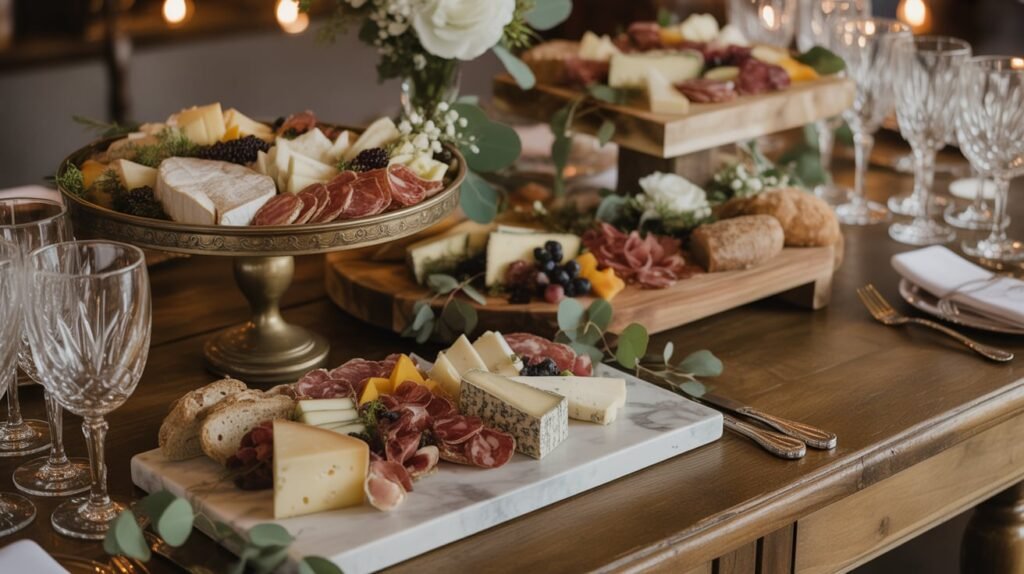
Savory stations form the foundation of your reception’s culinary landscape. These substantial offerings satisfy hungry guests while showcasing your personality as a couple through creative flavor combinations and unexpected presentations.
Taco and nacho bars
A well-executed taco station goes far beyond basic ground beef and shredded lettuce. Think about offering multiple protein options like citrus-marinated chicken, slow-cooked carnitas, beer-braised beef, and lime-seasoned black beans for vegetarian guests. Warm both corn and flour tortillas on a flat-top griddle right in front of guests, filling the air with that irresistible toasted corn aroma.
The toppings bar becomes an artwork display with colorful arrangements. Set out different salsas ranging from mild pico de gallo to fiery habanero versions. Include unexpected additions like pickled radishes, roasted corn salsa, multiple cheese options, and various crema drizzles. Small signs identifying heat levels help guests avoid surprises while encouraging adventurous eaters to try new combinations.
Consider adding a nachos component where guests can request custom plates built to order. Use sturdy tortilla chips that won’t break under toppings, and keep cheese sauce properly heated in warmers. Individual nacho portions served in small cast-iron skillets or paper boats prevent the mess of everyone reaching into a communal platter.
Mediterranean mezze stations
Mediterranean spreads naturally lend themselves to beautiful presentations with their vibrant colors and varied textures. Arrange different hummus varieties in shallow bowls – classic, roasted red pepper, beet, and perhaps a surprising flavor like chocolate hummus for adventurous palates. Surround these with warm pita bread, crispy vegetables, and an array of olives and pickled items.
Build height and visual interest using tiered displays for items like stuffed grape leaves, falafel, and various cheese selections. Include both hot and cold elements to create contrast – perhaps grilled lamb skewers alongside cool tzatziki sauce, or warm spinach pies next to refreshing tabbouleh salad.
The beauty of Mediterranean stations lies in their natural accommodation of different dietary preferences. Vegans, vegetarians, and meat-eaters all find plenty to enjoy without feeling limited. Label items clearly, noting which contain dairy or meat so guests can navigate options easily.
Mac and cheese bars
Comfort food reaches new heights with a customizable mac and cheese station. Start with a base of perfectly creamy classic cheese sauce, then offer additional varieties like white truffle mac, spicy pepper jack version, or a sophisticated gruyere and caramelized onion combination.
Toppings transform basic mac and cheese into gourmet creations:
Proteins: Crumbled bacon, pulled pork, grilled chicken strips, or lobster chunks for luxury
Crunch Elements: Toasted breadcrumbs, crushed chips, fried onions, or everything bagel seasoning
Vegetables: Roasted broccoli, sautéed mushrooms, sun-dried tomatoes, or caramelized onions
Finishing Touches: Hot sauce selection, truffle oil drizzle, fresh herbs, or additional cheese crumbles
Serve portions in individual mini skillets or small mason jars to prevent the sharing issues that come with large communal dishes. Keep multiple warmers going so the cheese sauce maintains its perfect consistency throughout service. This station works particularly well for late-night snacking when guests crave something substantial after dancing.
Sushi and raw bars
A sushi and raw bar instantly elevates your reception’s sophistication level. Work with experienced sushi chefs who can prepare rolls to order, providing both entertainment and fresh-as-possible seafood. Display ingredients beautifully in refrigerated cases so guests can see the quality of fish and vegetables available.
Include options for guests who might feel intimidated by raw fish. Vegetable rolls, California rolls with imitation crab, and cooked shrimp tempura rolls provide gateway options. Meanwhile, sashimi and nigiri selections satisfy true sushi aficionados. Don’t forget the accompaniments – pickled ginger, wasabi, soy sauce, and perhaps some specialty sauces like spicy mayo or eel sauce.
Raw bars featuring oysters, clams, and shrimp require proper ice displays and knowledgeable staff to guide guests through selections. Regional varieties of oysters let guests compare flavors from different waters. Include mignonette sauce, cocktail sauce, horseradish, and lemon wedges so everyone can customize their experience.
Carving stations
Nothing says celebration quite like a professional chef carving meat to order. The visual impact of a beautifully roasted prime rib or herb-crusted pork loin creates an immediate focal point. The key lies in offering multiple options so guests with different preferences all find something appealing.
Position carving stations strategically where the aroma can permeate the room without overwhelming other food areas. Beef tenderloin, turkey breast, honey-glazed ham, and even whole roasted salmon provide variety. Each protein needs appropriate accompaniments – horseradish cream for beef, cranberry sauce for turkey, mustard selection for ham.
Temperature maintenance proves crucial for carving stations. Heat lamps keep carved portions warm while resting meats stay at proper temperatures. Small plates and fresh rolls let guests create their own sandwiches if desired, adding versatility to what could otherwise be a very formal station.
Sweet Dessert Stations Beyond Traditional Cake
Dessert stations have revolutionized wedding receptions by offering variety and visual impact that a single cake, no matter how elaborate, simply cannot match. These sweet displays become Instagram-worthy moments while satisfying every type of sweet tooth among your guests.
Donut walls and displays
Donut walls have captured couples’ imaginations for good reason – they’re playful, photogenic, and utterly delicious. A well-designed donut wall becomes functional art, with rows of pegs holding glazed rings that guests can grab throughout the evening. Mix flavors and colors strategically to create patterns or gradients that complement your wedding palette.
Beyond basic glazed varieties, consider offering artisanal flavors that reflect your personalities or love story. Maybe maple bacon for the partner who loves breakfast foods, or champagne-glazed for a touch of elegance. Mini donuts allow guests to sample multiple flavors without committing to a full-sized pastry.
The presentation possibilities extend beyond traditional walls. Tiered stands create centerpiece-worthy displays, while individual bags hanging from decorative trees let guests take treats home. Late-night donut stations with fresh-fried options and multiple toppings turn dessert into an interactive experience. Provide small bags or boxes so guests can create their own combinations to enjoy immediately or save for later.
Ice cream sundae bars
An ice cream station brings out everyone’s inner child while offering sophisticated flavor options for adult palates. Start with premium ice cream in both classic and unexpected flavors. Vanilla and chocolate anchor the selection, but add intrigue with lavender honey, bourbon caramel, or olive oil varieties.
The toppings spread determines whether your sundae bar feels elegant or playful. Arrange options in beautiful glass containers with proper serving spoons. Hot fudge and caramel sauces need warming stations to maintain perfect drizzling consistency. Fresh fruit, especially berries, adds color and freshness. Nuts, sprinkles, cookie crumbles, and candy pieces let guests customize their creations.
Consider these special touches that elevate a basic sundae bar:
Homemade Waffle Cones: Fresh-made cones fill the air with vanilla scent
Boozy Toppings: Bourbon caramel or rum-soaked cherries for adults
Specialty Items: Edible flowers, gold leaf, or torched meringue
Alternative Bases: Brownie bowls or cookie cups instead of regular dishes
Temperature control requires planning. Work with your venue to ensure adequate freezer space and consider dry ice displays for outdoor summer weddings. Assign staff to help scoop for elderly guests or children who might struggle with hard-frozen ice cream.
S’mores stations
S’mores stations bring campfire nostalgia to elegant receptions, creating an interactive dessert experience that gets guests mingling. Table-top flames using gel fuel or small burners provide safe roasting options indoors, while outdoor venues might accommodate actual fire pits for authentic ambiance.
Upgrade traditional ingredients for a gourmet twist. Offer multiple chocolate options like dark, milk, white, and flavored varieties such as sea salt caramel or mint. Homemade marshmallows in vanilla, strawberry, or champagne flavors replace store-bought versions. Graham cracker alternatives might include chocolate cookies, gingersnaps, or stroopwafels.
Safety considerations matter with open flames. Provide long skewers to prevent burns, and position stations away from high-traffic areas or flowing fabrics. Staff members can assist younger guests and monitor flame levels throughout the evening.
Pre-assembled s’mores bars offer an alternative for venues that prohibit open flames. Layer ingredients in jars or create deconstructed versions with torched marshmallows added to order. These options maintain the flavor experience even without the roasting element.
Cookie decorating stations
Cookie decorating combines dessert with entertainment, particularly appealing for weddings with many children or playful adults. Sugar cookies in wedding-themed shapes like hearts, rings, or your initials provide blank canvases for creativity.
Set up stations with different icing colors in squeeze bottles for easy application. Royal icing in bags with various tips allows for detailed work. Provide extensive decorating options including sprinkles, edible pearls, metallic dust, and small candies. Clear labels help guests identify different decorating elements.
Organization keeps this station from becoming chaotic. Individual decorating mats or plates contain mess while designated drying areas let guests leave cookies to set while they dance. Small boxes or bags let guests take home their creations as edible favors.
Professional cookie artists can offer demonstrations or assist guests who want guidance. This added element turns the station into entertainment beyond just dessert, creating memorable interactions between your guests and vendors.
Candy buffets
Candy buffets remain popular because they’re visually stunning and completely customizable. The key lies in thoughtful curation rather than random selection. Choose candies in your wedding colors, or select types that hold special meaning – perhaps candy from your honeymoon destination or childhood favorites.
Glass apothecary jars of varying heights create visual interest while keeping candy fresh and accessible. Label each variety, especially for guests with allergies. Provide scoops rather than having everyone reach into jars with their hands.
Layer your candy selection to appeal to different preferences. Include chocolate options, gummy varieties, hard candies, and nostalgic choices. Sugar-free options show consideration for diabetic guests. Regional or international candies add unexpected elements that get people talking.
Small bags or boxes with your wedding date or monogram let guests create favor bags to take home. Position the candy buffet where it won’t get ransacked immediately – perhaps revealing it after dinner keeps it special for later in the reception.
Late-Night Food Stations for Dancing Fuel
After hours of celebrating, dancing guests develop serious appetites. Late-night food stations provide the perfect second wind, keeping energy high and preventing early departures. These stations typically open around 10 or 11 PM, just when dance-floor enthusiasm might otherwise start flagging.
Pizza stations
Nothing satisfies late-night cravings quite like hot, fresh pizza. Mobile pizza ovens create theatrical presentations with flames dancing as chefs slide pies in and out. The aroma alone re-energizes the room. Personal-sized pizzas let guests order exactly what they want without sharing or compromise.
Offer a range from classic margherita to creative combinations that reflect your tastes. Perhaps fig and prosciutto for sophistication, or mac and cheese pizza for pure indulgence. Vegetarian and vegan options using cashew cheese ensure everyone can participate. Simple cheese and pepperoni options satisfy less adventurous eaters.
The beauty of pizza lies in its portability – guests can grab a slice and keep dancing rather than sitting down for a formal meal. Provide sturdy plates and plenty of napkins. Standing cocktail tables near the dance floor let people eat without leaving the party atmosphere.
Slider bars
Sliders pack maximum flavor into portable packages perfect for eating while socializing. Three or four varieties give options without overwhelming choice. Classic beef with traditional toppings, pulled pork with tangy slaw, fried chicken with pickles, and black bean for vegetarians cover most preferences.
Quality matters more than quantity with sliders. Soft, fresh buns that don’t fall apart, properly seasoned patties, and thoughtful toppings elevate these from basic to memorable. Set up a toppings bar where guests customize their sliders – different cheeses, pickles, onions, special sauces.
These handheld options work particularly well when dance floor action stays hot. Guests can eat one-handed while holding drinks, and the small size means people can try multiple varieties without feeling overstuffed. Position napkin stations strategically since slider sauces tend to drip.
Breakfast-for-dinner stations
Breakfast foods at midnight tap into comfort food cravings while providing substantial fuel for continued celebrating. A chef preparing made-to-order omelets or crepes creates entertainment value beyond just food service. The sizzle of eggs and bacon brings immediacy and freshness that reheated foods lack.
Structure this station with both quick-grab items and made-to-order options:
Ready Items: Mini pancake stacks, French toast sticks, breakfast sandwiches
Custom Orders: Omelets with chosen fillings, fresh waffles with toppings
Sides: Crispy bacon, breakfast potatoes, fresh fruit
Beverages: Coffee bar, fresh orange juice, maybe breakfast cocktails
The contrast between elegant evening wear and casual breakfast foods creates fun photo opportunities. Guests love the unexpected nature of eating pancakes in formal attire. This station particularly shines at morning-after brunches but works equally well as a late-night surprise.
Comfort food corners
Regional comfort foods tell your story while satisfying serious hunger. Southern couples might offer fried chicken and waffles, while New England weddings could feature mini lobster rolls. These familiar flavors ground the celebration in place and tradition.
Think about foods that require zero explanation – everyone knows what to do with French fries, mozzarella sticks, or loaded potato skins. These items might feel too casual for dinner service but hit perfectly when inhibitions have lowered and guests just want satisfying food.
Temperature maintenance becomes crucial for fried foods. Nothing disappoints like soggy, lukewarm fries. Use proper warming equipment and cook in small batches rather than preparing everything in advance. The sound and smell of fresh frying adds energy to late-night proceedings.
Provide ranch, honey mustard, and other familiar dipping sauces. These casual touches give permission for guests to relax formal behavior and just enjoy themselves. Comfort food stations often generate the most genuine smiles and satisfied sounds of any reception food.
International street food
Street food from around the world brings adventure to late-night dining. Set up different stations representing various cuisines – perhaps Korean rice bowls, Mexican street corn, German pretzels with mustard, or Vietnamese banh mi sandwiches. This approach works particularly well for couples from different cultural backgrounds or those who love traveling together.
Each station needs clear signage explaining unfamiliar dishes. Not everyone knows what elote is or how to eat soup dumplings properly. Staff members who can guide guests through new experiences prevent hesitation and encourage trying new flavors.
Keep portions small so guests can sample multiple options without overcommitting. Street food’s casual nature gives permission to eat with hands, making it perfect for maintaining party atmosphere. Provide wet wipes or hand-washing stations since many street foods get messy.
The variety inherent in international stations means even picky eaters find something appealing. While one guest tries takoyaki for the first time, another might stick with familiar spring rolls. This inclusive approach keeps everyone fed and happy.
Setting Up Food Stations for Maximum Impact
The success of food stations depends as much on setup and logistics as on the food itself. Strategic planning ensures smooth traffic flow, maintains food safety, and creates those picture-perfect moments you’ve envisioned.
Strategic placement and flow
Room layout determines whether food stations enhance or hinder your reception. Spread stations throughout the venue rather than clustering them together. This distribution prevents bottlenecks and encourages mingling as guests move between options. However, keep stations away from the dance floor where they might get bumped or create obstacles.
Consider sight lines when positioning stations. That beautiful seafood display deserves a prominent spot where entering guests immediately see it. Tuck messier stations like s’mores or items requiring extensive preparation into corners where the behind-the-scenes action won’t detract from elegant ambiance.
Traffic patterns matter enormously. Guests should approach stations from one side and exit from another, preventing the awkward dance of people trying to move in opposite directions. Mark paths subtly with runner rugs or strategic furniture placement. Leave adequate space around each station for groups to gather without blocking access.
Height variation creates visual interest while improving functionality. Tall displays for items like donut walls draw eyes upward, while low stations for interactive elements like taco assembly keep workspace at comfortable levels. This variety prevents the monotonous feeling of everything existing at table height.
Decoration and presentation
Food stations offer incredible opportunities for creative decoration that reinforces your wedding theme. The station itself becomes part of the decor, not just a serving area. Coordinate linens, signage, and serving pieces with your overall design scheme while ensuring each station has its own personality.
Natural elements soften utilitarian serving equipment. Greenery garlands along table edges, flower arrangements between dishes, or herbs as functional decoration for Mediterranean stations bring life to displays. Just ensure decorative elements don’t interfere with food service or create hygiene concerns.
Lighting transforms ordinary food into spectacular displays. Uplighting behind translucent ice sculptures at raw bars creates drama. String lights above dessert stations add whimsy. Spotlights on carving stations highlight the chef’s skill. Work with your lighting designer to ensure each station gets appropriate illumination without harsh shadows or glare.
Props and backgrounds create Instagram-worthy moments. A vintage door becomes a donut wall. Reclaimed wood forms rustic backdrops for comfort food stations. Copper moscow mule mugs display ingredients at taco bars. These thoughtful touches show attention to detail that guests remember.
Staffing considerations
Professional attendants at each station improve guest experience dramatically. They guide choices, maintain cleanliness, replenish supplies, and manage portion control. One attendant per 25-30 guests per station typically provides adequate coverage without overcrowding service areas.
Assign staff members specific roles rather than expecting everyone to do everything. One person might handle cooking or carving while another plates and serves. This specialization increases efficiency and reduces confusion during busy periods.
Chef action stations require experienced professionals comfortable with performance aspects. Guests enjoy watching skilled preparation, but only if the chef engages pleasantly while working. Interview potential staff about their experience with interactive service, not just cooking skills.
Communication systems between stations and kitchen prevent shortages. Staff need ways to request replenishment before completely running out. Whether through headsets, runners, or scheduled check-ins, maintain connections between front and back of house.
Timing throughout reception
Stagger station openings to maintain interest and prevent overwhelming guests immediately. Perhaps appetizer stations open during cocktail hour, dinner stations after toasts, and dessert displays following first dances. This progression creates anticipation while managing crowd flow.
Late-night stations require special timing consideration:
Opening Time: Usually 2-3 hours after dinner ends
Announcement Method: DJ mentions availability or servers circulate with samples
Duration: Typically 60-90 minutes or until dancing winds down
Cleanup: Begin breaking down empty stations to maintain neat appearance
Coordinate timing with other reception elements. Don’t open the candy buffet during speeches when rustling bags would distract. Save the s’mores station until after sunset for better flame visibility. These small adjustments maximize each station’s impact.
Signage and labels
Clear signage prevents confusion and accommodates dietary restrictions. Every station needs a main sign identifying its offerings, with individual labels for each item. Maintain consistent formatting across all signage for professional appearance.
Include key information on labels without overwhelming readers. Note major allergens, indicate spice levels, and mark vegetarian or vegan options. Use symbols alongside words for quick recognition – perhaps leaves for vegetarian items or flames for spicy dishes.
Creative signage adds personality while serving practical purposes. Chalkboard signs feel casual and changeable. Printed cards in frames look formal and elegant. Handwritten calligraphy adds personal touches. Match signage style to station theme while maintaining readability.
Position signs at eye level when possible, angled for easy reading as guests approach. Backlighting or small spotlights help signs remain visible in dimmed reception lighting. Test readability from typical viewing distances before finalizing designs.
Your Perfect Food Station Reception
Creating an exceptional food station experience requires balancing creativity with practicality, elegance with fun. The right combination of stations transforms your reception from a standard party into an engaging celebration where every guest finds something to love. These interactive dining experiences break down social barriers, accommodate diverse preferences, and keep energy flowing throughout your event.
The stations you choose tell your story as a couple while ensuring guests stay satisfied from cocktail hour through last dance. Whether you opt for sophisticated sushi bars or comforting late-night breakfast stations, the key lies in thoughtful planning and quality execution. Your food stations become more than just sustenance – they create the delicious memories that define your celebration for years to come.
Frequently Asked Questions
Q: How many food stations do I need for 150 guests?
A: Plan for 4-6 stations minimum for 150 guests to prevent long lines. Include at least 2-3 dinner stations, 1-2 dessert options, and consider a late-night station. Each station should have adequate space and staffing to serve 25-30 guests smoothly during peak times.
Q: Are food stations more expensive than traditional plated dinners?
A: Food stations can actually cost less than plated dinners depending on your selections. You save on service staff for synchronized plating and reduce waste since guests self-select portions. However, premium stations like raw bars or carving stations may increase costs compared to basic buffets.
Q: How do we handle dietary restrictions with food stations?
A: Food stations actually simplify dietary accommodations. Label everything clearly with allergens and dietary indicators. Include at least one substantial option at each station for vegetarians/vegans. Position alternative options prominently so restricted guests don’t feel like afterthoughts.
Q: What’s the best timeline for opening different stations?
A: Open appetizer stations during cocktail hour, dinner stations after toasts (around 60-90 minutes into reception), dessert stations after first dances, and late-night stations 2-3 hours after dinner. Staggering prevents overwhelming guests and maintains excitement throughout the evening.
Q: Should we still have a traditional wedding cake with dessert stations?
A: Many couples choose a small cutting cake for tradition and photos while relying on dessert stations for actual guest servings. This approach provides the ceremonial moment without the expense of a massive tiered cake that might go uneaten with other dessert options available.
Q: How do we prevent food stations from looking messy?
A: Assign dedicated staff to maintain each station, refreshing displays and cleaning spills immediately. Use proper serving utensils with designated spots. Schedule complete station refreshes between dinner and dancing. Strategic lighting hides less attractive equipment while highlighting beautiful displays.
Q: Can food stations work for formal black-tie weddings?
A: Absolutely! Elevate stations with premium ingredients, elegant displays, and professional chef attendants. Choose sophisticated options like raw bars, carving stations, and attended pasta stations rather than casual self-serve setups. Premium linens, flowers, and serving pieces maintain formality.
Q: What happens to leftover food from stations?
A: Discuss takeaway options with your caterer beforehand. Some couples arrange donation to shelters, though health regulations vary by location. Others provide takeout containers for guests or arrange delivery to their hotel for next-day enjoyment.