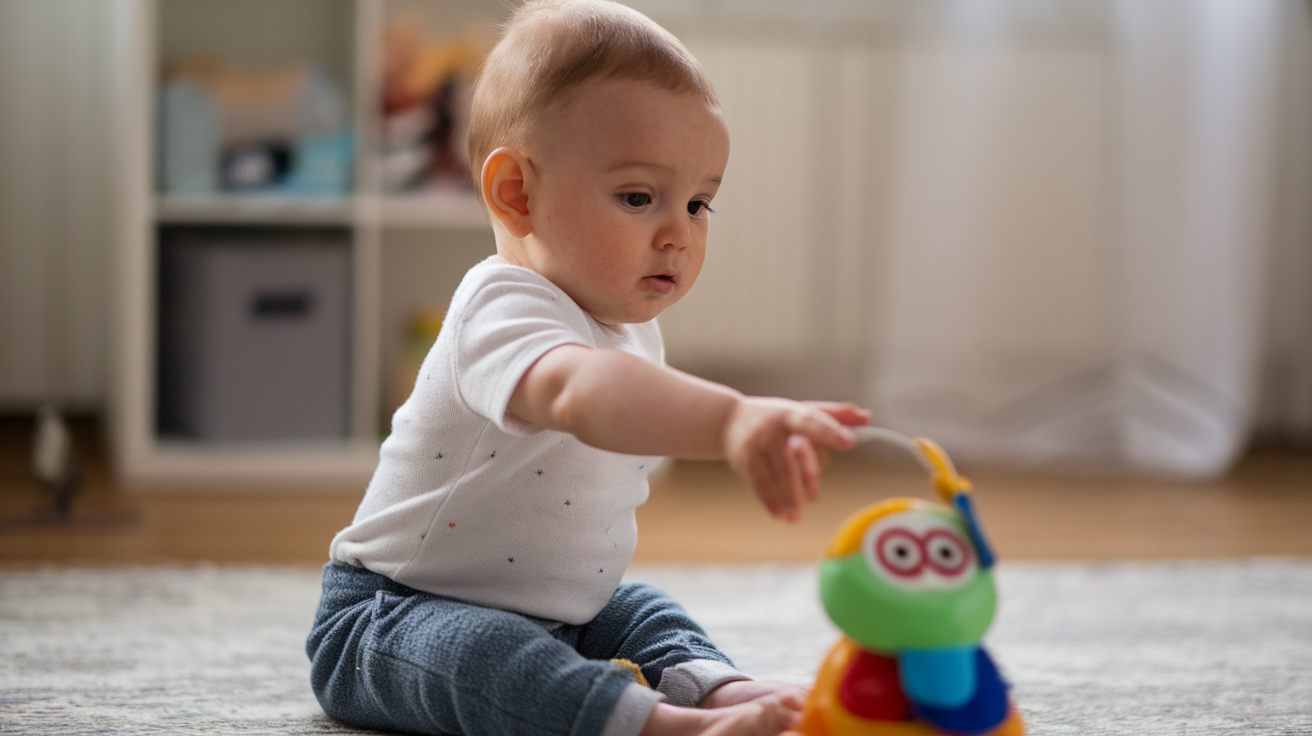
Watching your baby grow brings countless moments of wonder and occasional waves of uncertainty. Each gurgle, smile, and wobbly attempt at sitting up marks another step in your child’s journey through infancy. Parents naturally compare their baby’s progress to others, wondering if their little one is developing at the right pace. This curiosity about developmental milestones reflects your deep love and concern for your child’s wellbeing.
The first year of your baby’s life involves rapid changes that happen so quickly you might miss them if you blink. One day your newborn can barely focus on your face, and seemingly overnight they’re reaching for toys and babbling away. Understanding these developmental markers helps you appreciate the incredible transformation happening right before your eyes. Rather than causing anxiety, knowledge about typical development patterns can actually reduce your worries by showing you what to expect and when.
In the following sections, you’ll discover practical ways to observe and support your baby’s growth without turning parenting into a competitive sport. From physical achievements like rolling over to social skills like responding to their name, we’ll cover the major milestones that typically occur during infancy. You’ll also learn how to track progress in a relaxed way that celebrates your unique child rather than creating unnecessary pressure. Let’s start this journey of understanding your baby’s amazing development.
What Are Developmental Milestones and Why They Matter

Developmental milestones represent skills and behaviors that most children display by certain ages. Think of them as guideposts along your baby’s growth journey rather than strict deadlines. These markers help pediatricians and parents understand if a child’s development follows typical patterns. Every baby grows at their own pace, yet certain abilities tend to appear within predictable age ranges.
Understanding the purpose of milestone tracking
Tracking milestones serves several important purposes beyond satisfying parental curiosity. Your pediatrician uses these markers during well-baby visits to assess overall development and identify any areas that might benefit from extra support. Early identification of developmental differences allows for timely intervention when needed, which can significantly improve outcomes. Regular observation also helps you become more attuned to your baby’s unique strengths and needs.
The process of monitoring development strengthens your bond with your baby. You become an expert observer of their subtle changes and emerging abilities. This careful attention helps you provide appropriate stimulation and support at each stage. You’ll notice when your baby seems ready for new challenges or when they need more practice with current skills.
Different types of developmental domains
Child development occurs across multiple interconnected areas simultaneously. Physical development includes both large muscle movements like crawling and fine motor skills like grasping objects. Cognitive development involves thinking, learning, and problem-solving abilities. Social and emotional development encompasses bonding, expressing feelings, and interacting with others. Language development covers both understanding words and producing sounds or speech.
These domains influence each other in fascinating ways. A baby who masters sitting independently suddenly has free hands to explore objects, boosting cognitive development. Social smiles encourage more interaction with caregivers, supporting language exposure. Understanding these connections helps you see your baby’s development as an integrated whole rather than separate achievements.
The wide range of normal development
What qualifies as “normal” development spans a surprisingly broad timeline. Some babies walk at nine months while others take their first steps at fifteen months – both fall within typical ranges. This variation stems from multiple factors including genetics, temperament, opportunities for practice, and individual interests. Your friend’s baby might excel at physical milestones while yours focuses energy on verbal skills.
Cultural backgrounds and family dynamics also shape developmental patterns. Babies in cultures that practice extended carrying might sit or walk slightly later but show advanced social engagement. Birth order matters too – younger siblings often develop language skills faster through interaction with older children. These variations remind us that development isn’t a race but a unique unfolding of each child’s potential.
When milestone concerns warrant professional consultation
While variation is normal, certain signs suggest consulting your pediatrician. Regression – losing previously acquired skills – always deserves evaluation. Missing multiple milestones within one developmental area might indicate the need for assessment. Trust your instincts if something seems significantly different about your baby’s development compared to typical patterns.
Your observations provide valuable information that helps healthcare providers understand your child. Keep notes about specific behaviors or concerns to share during appointments. Many parents worry unnecessarily, but pediatricians prefer to address concerns early rather than adopt a “wait and see” approach for too long. Professional evaluation can either reassure you that everything’s fine or connect you with helpful resources.
How genetics and environment influence timing
Your baby arrives with a genetic blueprint that influences their developmental trajectory. Family history of early or late walkers, talkers, or readers often repeats across generations. Temperament, largely innate, affects how babies approach new skills. Cautious babies might observe extensively before attempting physical challenges, while adventurous ones leap into action.
Environmental factors powerfully shape how genetic potential unfolds. Responsive caregiving, adequate nutrition, and safe spaces for exploration support optimal development. Regular interaction, varied experiences, and appropriate challenges help babies reach their potential. Premature birth, health conditions, or limited stimulation might slow certain aspects of development. Understanding these influences helps you provide the best possible environment while accepting your baby’s individual timeline.
Physical Development: From Reflexes to First Steps

Your newborn enters the world equipped with reflexes that ensure survival and set the stage for voluntary movement. These automatic responses gradually give way to purposeful actions as your baby gains control over their body. Physical development follows predictable patterns, generally progressing from head to toe and from core to extremities. This systematic progression allows babies to build strength and coordination methodically.
Newborn reflexes and early movements
Those seemingly random arm and leg movements in your newborn actually follow important patterns. The startle reflex, where babies throw their arms wide when startled, typically fades by four months. The rooting reflex helps newborns find food by turning toward touches on their cheek. These reflexes serve immediate needs while laying groundwork for later voluntary movements.
Tummy time plays a crucial role from the earliest weeks. Initially, your baby might only tolerate brief periods on their stomach, lifting their head momentarily. Gradually, they develop neck strength to hold their head steady and look around. This foundational strength supports all future physical development. Many parents underestimate how much tummy time influences later milestones like sitting and crawling.
Watch for early signs of intentional movement around two to three months. Your baby might start batting at hanging toys or bringing hands together at midline. These early attempts at coordination mark the beginning of voluntary motor control. Some babies discover their feet around four months, beginning a delightful phase of foot exploration that strengthens core muscles.
Rolling, sitting, and core strength development
The journey from lying flat to sitting independently involves complex coordination and strength building. Most babies master rolling from tummy to back between four and six months, though some skip this milestone entirely. Rolling from back to tummy typically follows, requiring more coordination and strength. Each successful roll builds confidence and muscle memory for future movements.
Sitting presents a significant challenge requiring balance, core strength, and protective reflexes. Around four to five months, babies often enjoy supported sitting, leaning forward on their hands in a tripod position. True independent sitting, where they can play with toys without toppling, usually develops between six and eight months. This achievement opens new worlds of play and interaction.
Consider the following progression of sitting skills:
Supported Sitting: Baby needs full back support but shows interest in upright position
Tripod Sitting: Baby props forward on hands for balance
Brief Independent Sits: Baby sits alone for seconds before toppling
Functional Sitting: Baby sits while playing with toys
Transitional Movements: Baby moves in and out of sitting position independently
Your baby’s core strength develops through all these stages, preparing them for crawling and walking. Activities like reaching for toys while on their tummy or sitting strengthen these essential muscles. Some babies develop strong preferences for certain positions, which might temporarily slow progress in other areas.
Crawling variations and mobility patterns
Mobility takes many forms, and your baby might surprise you with their chosen method of getting around. Traditional crawling on hands and knees represents just one option. Some babies prefer army crawling, pulling themselves forward with their arms while their belly stays on the ground. Others skip crawling altogether, moving directly from sitting to standing.
Alternative mobility patterns include bottom scooting, where babies shuffle forward while seated, and bear crawling with straight arms and legs. Rolling across rooms to reach destinations shows creative problem-solving. Each method builds different muscle groups and coordination patterns. The specific technique matters less than the drive to explore and move independently.
Most babies develop some form of mobility between seven and ten months, though timing varies widely. Motivation plays a huge role – a desired toy just out of reach provides powerful incentive. Baby-proofing becomes essential once mobility begins, as your little explorer will quickly find every hazard you overlooked.
Standing, cruising, and preparing for walking
Pulling to stand marks a thrilling milestone that typically occurs between eight and ten months. Initially, babies might struggle with getting back down, sometimes crying in frustration while clinging to furniture. Learning to lower themselves safely takes practice and confidence. This phase strengthens leg muscles essential for walking while developing balance and spatial awareness.
Cruising – stepping sideways while holding furniture – bridges standing and walking. Your baby experiments with weight shifting and stepping motions while maintaining support. The distance between furniture pieces gradually increases as confidence grows. Some babies cruise for months before taking independent steps, while others quickly progress to walking.
Watch for signs of walking readiness like standing without support, bouncing while standing, or taking tentative steps between close furniture pieces. Most babies take first independent steps between twelve and fifteen months, though the range extends from nine to eighteen months. Those magical first steps often happen when babies focus on reaching something they want rather than concentrating on walking itself. The wobbling, wide-legged gait of new walkers reflects their ongoing balance development.
Fine motor skills and hand control
While gross motor skills capture obvious attention, fine motor development proves equally important. Your newborn’s tight fist gradually relaxes, allowing exploration of fingers and eventually purposeful grasping. The progression from reflexive gripping to precise pincer grasp involves months of practice and neural development.
Around three to four months, babies begin reaching for and batting at objects, though accuracy remains limited. By five to six months, they transfer objects between hands and bring everything to their mouth for exploration. The raking grasp, using all fingers to pull objects closer, develops around six months. True pincer grasp, using thumb and forefinger to pick up small items, typically appears between eight and twelve months.
These developing hand skills enable self-feeding, first with fingers and eventually with utensils. Playing with blocks, turning board book pages, and pointing at interesting objects all depend on fine motor control. Activities like picking up cereal pieces or playing with textured toys support this development. Your baby’s dominant hand preference might not become clear until toddlerhood or later.
Cognitive and Social Growth in the First Year
The remarkable changes in your baby’s thinking and social abilities during their first year reveal the incredible capacity of the developing brain. From recognizing familiar faces to understanding that hidden objects still exist, cognitive leaps happen constantly. These mental developments intertwine closely with social growth as your baby learns to navigate relationships and communication. Each smile, babble, and gesture represents neural connections forming at an astonishing rate.
Early social connections and attachment
Your baby arrives ready to form deep connections with caregivers. Those early weeks of gazing into each other’s eyes, responding to cries, and providing comfort establish foundations for all future relationships. Attachment develops through countless small interactions rather than single dramatic moments. The way you respond to your baby’s needs shapes their understanding of relationships and trust.
Social smiling, appearing around six to eight weeks, marks the beginning of intentional social interaction. This differs from earlier reflexive smiles by engaging the entire face and responding to specific stimuli like your voice or face. Your baby starts differentiating between familiar and unfamiliar people around three to four months. They might show clear preferences for certain people, brightening noticeably when favorite caregivers appear.
Stranger anxiety typically develops between six and twelve months as babies become more aware of unfamiliar faces. This completely normal phase reflects sophisticated cognitive development – your baby now remembers and categorizes people. Some babies show intense stranger reactions while others remain relatively comfortable with new people. Temperament influences these responses more than parenting style.
The quality of early attachments influences emotional regulation, exploration, and future relationships. Secure attachment develops when caregivers respond consistently and appropriately to babies’ needs. This doesn’t mean immediate response to every sound, but rather reliable, warm caregiving that helps babies learn the world is generally safe and predictable.
Memory development and object permanence
Your newborn’s memory initially spans mere seconds, but capacity expands rapidly throughout infancy. By three months, babies remember familiar faces, voices, and routines. They anticipate regular events like feeding or bedtime, showing excitement or preparation behaviors. This emerging memory allows them to learn from experiences and build understanding of their world.
Object permanence – understanding that things exist even when out of sight – develops gradually over the first year. Young babies live entirely in the present moment. If something disappears from view, it ceases to exist for them. Around four to seven months, babies begin searching briefly for dropped toys or partially hidden objects. They haven’t yet grasped that completely hidden items still exist.
The classic peek-a-boo game perfectly illustrates this concept’s development. Initially, your baby genuinely believes you disappear when covering your face. As object permanence strengthens around eight to twelve months, they begin anticipating your reappearance, showing delight at their prediction’s accuracy. This cognitive leap enables more sophisticated play and problem-solving.
Memory and object permanence together support separation tolerance. Babies who understand that you continue existing when out of sight can better manage brief separations. They develop mental representations of loved ones, carrying internal comfort even when alone. This cognitive achievement typically emerges around eight to ten months but varies considerably between individual babies.
Cause and effect understanding
The discovery that their actions produce predictable results thrills babies and drives extensive experimentation. Early cause-and-effect learning happens through accidental discoveries. Your two-month-old kicks their legs and notices a mobile moves. Repeated kicking confirms the connection, building understanding of personal agency. These early lessons lay groundwork for intentional action and problem-solving.
Around four to six months, babies begin deliberate experimentation with cause and effect. Dropping spoons from highchairs becomes fascinating research rather than mere messiness. Your baby observes different sounds from dropped items, your reactions, and retrieval patterns. What seems like annoying repetition actually represents scientific investigation. They’re learning about gravity, sound, object properties, and social responses simultaneously.
Toy preferences often reflect cause-and-effect interest. Buttons that produce sounds, toys that light up when shaken, and activities with clear results captivate babies. Between six and nine months, they begin combining actions to achieve goals. They might shake a rattle to make noise, then bang it to produce different sounds. This experimentation builds problem-solving skills and understanding of tool use.
Your reactions teach social cause and effect alongside physical principles. Babies learn that crying brings comfort, smiling generates positive responses, and certain sounds capture attention. They begin modifying behaviors based on your responses, showing early social intelligence. This reciprocal interaction teaches them about communication effectiveness and relationship dynamics.
Problem-solving abilities and exploration strategies
Basic problem-solving emerges surprisingly early as babies encounter obstacles to their desires. A three-month-old might persistently bat at a toy until accidentally grasping it. By six months, babies show more deliberate strategies, pulling blankets to bring distant toys closer. These early solutions might seem simple, but they represent complex cognitive processing.
Exploration strategies become increasingly sophisticated throughout the first year. Young babies explore primarily through mouthing and visual examination. As motor skills develop, they add shaking, banging, and dropping to their investigative repertoire. By eight to ten months, babies systematically explore objects, turning them to examine all sides and testing various actions. This methodical investigation reveals emerging scientific thinking.
Watch how your baby approaches new challenges for insights into their developing problem-solving style. Some babies persist with single strategies while others quickly try alternatives. Some seek adult help readily while others prefer independent exploration. These individual differences in problem-solving approach often persist into childhood and beyond.
The ability to use tools emerges late in the first year. Around ten to twelve months, babies might use one object to obtain another – pulling a placemat to reach a toy or using a spoon to knock something closer. This represents sophisticated understanding of objects as means to achieve goals. Such problem-solving requires memory, planning, and understanding of spatial relationships.
Emotional regulation and expression skills
Your baby’s emotional life grows increasingly complex throughout their first year. Newborns experience basic states of distress and contentment, but the emotional palette expands rapidly. By three months, babies show clear joy, anger, and interest. Fear, surprise, and more nuanced emotions emerge over subsequent months. Learning to manage these feelings represents a major developmental task.
Self-soothing abilities develop gradually with your support. Newborns rely entirely on caregivers for comfort, but by three to four months, many babies discover thumb-sucking or specific positions that provide comfort. Some babies develop attachments to comfort objects around six to eight months. These self-soothing strategies don’t replace caregiver comfort but supplement it, building emotional resilience.
Your response to your baby’s emotions teaches them about emotional regulation. Calm responses to distress model regulation strategies. Labeling emotions helps babies begin understanding their internal experiences. Providing comfort while allowing some frustration tolerance builds coping skills. The balance between support and independence varies based on temperament and developmental stage.
Social referencing appears around eight to ten months as babies look to trusted adults for emotional cues about new situations. They check your face when encountering something unfamiliar, using your expression to gauge safety. This sophisticated skill shows understanding that others’ emotions provide valuable information. Your calm confidence during new experiences helps your baby approach novelty with curiosity rather than fear.
Communication Milestones: From Coos to First Words
Language development begins long before your baby speaks their first recognizable word. The journey from crying as sole communication to understanding and producing words involves remarkable neural development. Your baby processes thousands of hours of language input, gradually decoding patterns and meanings. This complex learning happens through everyday interactions rather than formal instruction.
Pre-verbal communication signals
Crying serves as your newborn’s primary communication tool, with different cries gradually becoming distinguishable. By one month, many parents recognize hunger cries versus tired or uncomfortable cries. Your baby also communicates through body language – arching away when overstimulated or turning toward desired objects. These early signals teach you to read your baby while showing them that communication brings results.
Alert states provide windows for communication development. During quiet alert periods, babies absorb language and practice sound production. Watch for these precious moments when your baby seems calm but engaged. They might move their mouth mimicking your speaking movements or maintain steady eye contact while you talk. These interactions, though wordless, build communication foundations.
Intentional communication emerges around four months through directed sounds and gestures. Your baby might vocalize specifically to get attention or reach toward desired objects while looking at you. They begin understanding that sounds and movements convey meaning. This represents a cognitive leap from reflexive responses to deliberate communication attempts.
The progression of babbling
Those sweet cooing sounds around two months mark the beginning of vocal experimentation. Initially, babies produce simple vowel sounds like “aah” and “ooh.” These vocalizations occur during content moments, often in response to your talking. By three to four months, consonant sounds join the mix, creating combinations like “goo” and “gaa.”
Canonical babbling – repetitive consonant-vowel combinations like “babababa” or “dadadada” – typically starts between six and ten months. This stage excites parents who hear “mama” or “dada,” though babies don’t yet connect these sounds with specific meanings. They’re practicing the mouth movements and sound combinations that will become words. Different languages influence babbling patterns, with babies beginning to sound more like their native language.
Variegated babbling follows, mixing different consonant-vowel combinations in single vocalizations. Your nine-month-old might produce complex strings like “bagidabu” with adult-like intonation. This jargon sounds remarkably like real conversation, complete with pauses and emphasis. Babies often “converse” at length in this private language, practicing conversational rhythms.
The transition from babbling to words happens gradually. Around ten to twelve months, certain sound combinations become consistently associated with objects or people. “Baba” might always mean bottle, even if pronunciation differs from adult speech. These proto-words count as real communication when used intentionally and consistently.
Understanding receptive language
Your baby understands far more than they can express throughout the first year. Receptive language – comprehension of others’ words – develops months before expressive language emerges. Newborns recognize their mother’s voice from prenatal exposure. By one month, they differentiate between language sounds and other noises, showing preference for speech.
Around four to six months, babies respond to their name and familiar words like “mommy” or “milk.” They might not understand exact meanings but recognize these as important sounds. Tone of voice conveys significant meaning at this stage. Your baby responds appropriately to warm encouragement versus sharp warnings, learning emotional communication alongside vocabulary.
By eight to ten months, comprehension expands dramatically. Babies follow simple commands like “wave bye-bye” or “give me the ball” when accompanied by gestures. They understand “no,” though compliance varies. Common words from daily routines – “bath,” “eat,” “sleep” – carry clear meaning. This comprehension occurs through repeated exposure in consistent contexts.
Word comprehension typically reaches 50-100 words by the first birthday, far exceeding expressive vocabulary. Your baby might only say two or three words but understand references to family members, body parts, familiar objects, and routine activities. This comprehension gap is completely normal and gradually narrows during toddlerhood.
The following skills show developing receptive language:
Responding to Name: Turning when called, usually by 6-7 months
Following Gaze: Looking where you point, around 9-10 months
Simple Commands: Responding to “come here” or “sit down” with gestures
Identifying Objects: Looking at named items when asked “Where’s the dog?”
Anticipating Routines: Getting excited when hearing “bath time” or “let’s eat”
First words and vocabulary building
Those magical first words typically emerge between ten and fourteen months, though some babies speak earlier or later. First words often include names for important people (“mama,” “dada”), favorite foods (“baba” for bottle), or social words (“hi,” “bye”). Animal sounds like “woof” or “moo” count as words when used consistently to refer to animals.
Early words might sound quite different from adult pronunciation. Your baby might say “nana” for banana or “gog” for dog. Consistency matters more than accuracy – if “gog” always means dog, it’s a real word in your baby’s vocabulary. These approximations gradually refine as oral motor control improves. Accepting these early attempts encourages continued verbal attempts.
Vocabulary growth starts slowly with one or two words, then gradually accelerates. Most babies have three to five words by their first birthday, though ranges vary from zero to twenty words. Each word represents massive cognitive achievement – connecting specific sounds with consistent meaning. Your baby must remember the sound-meaning connection and coordinate mouth movements to produce approximations.
Environmental factors strongly influence vocabulary development. Babies exposed to rich language through conversation, singing, and reading typically develop larger vocabularies. Responsive communication, where you expand on your baby’s vocalizations, supports word learning. Simply narrating daily activities exposes your baby to varied vocabulary in meaningful contexts.
Non-verbal communication and gestures
Gestures provide crucial communication bridges before words emerge. Pointing, developing around nine to twelve months, revolutionizes your baby’s ability to share interests and make requests. This seemingly simple gesture requires understanding that others have attention that can be directed. Early pointing might be whole-hand reaching, refining to index finger pointing over time.
Conventional gestures like waving, clapping, and shaking head “no” typically develop between nine and twelve months. These culturally specific movements must be learned through observation and practice. Your baby might wave at inappropriate times initially, gradually learning social conventions. Some babies develop extensive gesture vocabularies, creating signs for specific wants or observations.
Joint attention – sharing focus on objects with others – underlies meaningful communication. Your baby shows you interesting things, checks if you’re watching their activities, and follows your attention to objects. This three-way interaction between baby, adult, and object forms the foundation for word learning. Labels become meaningful when both parties attend to the same thing.
Gesture use predicts later language development. Babies who point and use other gestures frequently often develop strong verbal skills. Combining gestures with vocalizations, like pointing while saying “dat,” shows sophisticated communication understanding. Some families successfully use baby sign language to enhance early communication, though this isn’t necessary for typical language development.
How to Track Progress Without Stress
Monitoring your baby’s development should enhance your parenting experience rather than create anxiety. The key lies in observation without obsession, celebrating progress without comparison. Modern parents face unique challenges with constant access to information and social media highlighting other babies’ achievements. Finding balance between awareness and acceptance takes intentional effort.
Creating developmental observation routines
Natural observation during daily activities provides the most accurate picture of your baby’s abilities. Bath time reveals motor skills as your baby splashes and reaches for toys. Mealtime shows fine motor development through self-feeding attempts. Diaper changes offer moments to observe physical development and social engagement. These routine observations feel less like testing and more like engaged parenting.
Weekly photo or video sessions capture subtle developmental changes you might otherwise miss. Recording your baby attempting new skills provides valuable documentation for pediatrician visits. These visual records also become treasured memories. Avoid turning recording sessions into performance pressure – capture natural play and exploration instead.
Consider keeping a simple development journal with brief weekly notes. Record new skills, funny moments, and your observations without judgment. Note the date your baby first rolled over, but also record their unique way of scooting backward or their hilarious attempts at self-feeding. This personal record celebrates your individual child rather than checking standardized boxes.
Share observations with other caregivers to get complete pictures of your baby’s development. Daycare providers, grandparents, or babysitters might notice different skills or behaviors. Your baby might demonstrate abilities in various settings that don’t appear at home. This collaborative approach provides comprehensive understanding while distributing observation responsibility.
Using milestone checklists appropriately
Developmental checklists serve as helpful guides rather than rigid requirements. Think of them as general roadmaps showing typical routes babies travel, not mandatory paths every child must follow. Most checklists provide age ranges rather than specific dates, acknowledging normal variation. Use these tools to familiarize yourself with upcoming developments rather than creating deadlines.
When reviewing checklists, focus on overall patterns rather than individual items. A baby who meets most physical milestones but fewer social ones might simply have temperamental preferences. Look for progress within domains rather than expecting uniform advancement across all areas. Celebrating strengths while monitoring areas needing support creates balanced perspectives.
Avoid checking milestones daily or weekly – monthly or bi-monthly reviews suffice for typically developing babies. Frequent checking increases anxiety without providing useful information since development occurs gradually. Mark achieved milestones without dwelling on unmet ones. Your baby might accomplish skills in different orders than listed, which is perfectly acceptable.
Remember that many checklists reflect average achievement ages, meaning half of typical babies accomplish skills later than listed. Published ranges often exclude normal outliers who still develop typically. Cultural and environmental factors influence which skills babies prioritize. Your pediatrician can provide context for your specific child’s pattern.
Celebrating individual progress patterns
Your baby’s unique developmental journey deserves recognition regardless of timing. The baby who walks at fifteen months isn’t “behind” the nine-month walker – they’re following their individual timeline. Celebrating when YOUR baby achieves milestones, rather than when charts suggest they should, creates positive family dynamics.
Document and celebrate developmental attempts, not just achievements. Your baby’s determined effort to crawl, even if unsuccessful, represents important progress. Those wobbling almost-steps show developing balance and confidence. Recognizing effort encourages persistence while reducing performance pressure. Progress happens through practice, and attempts deserve acknowledgment.
Create family traditions around milestone achievements that focus on joy rather than competition. Take special photos, call grandparents with updates, or create a celebration ritual that works for your family. These celebrations should feel natural and fun rather than obligatory or stressful. Small acknowledgments often mean more than elaborate productions.
Individual progress patterns often reveal emerging interests and strengths. The baby fascinated by books might develop language skills early. The constant mover might excel at physical milestones. Observing these patterns helps you provide appropriate support and enrichment. Your baby’s unique profile shapes the person they’re becoming.
Building supportive parent networks
Connecting with other parents provides perspective and emotional support during developmental monitoring. Choose communities that celebrate diversity in development rather than fostering competition. Online groups, local playgroups, or parent classes offer opportunities for connection. Seek spaces where questions receive support rather than judgment.
Parent friends at various stages offer valuable perspective. Those with older children remind you that developmental concerns often resolve naturally. Those with younger babies help you remember recent stages. Parents with children the same age provide commiseration and celebration partners. Building diverse networks prevents echo chambers of anxiety.
Professional support networks extend beyond pediatricians. Early intervention specialists, developmental therapists, and parent educators provide valuable resources. Many communities offer free developmental screenings or parent education programs. These professionals can address concerns before they become significant worries. Building relationships with supportive professionals creates safety nets.
Remember that every parent worries about their child’s development at some point. Sharing concerns with trusted friends often reveals that others harbor similar worries. Normalizing developmental variation through honest conversations reduces isolation and anxiety. Your concerns deserve validation while maintaining perspective on typical development.
Knowing when concerns need evaluation
Trust your instincts when something seems significantly different about your baby’s development. Parents often notice subtle differences before standardized assessments identify concerns. Your daily observations provide valuable data that brief pediatric visits might miss. Document specific concerns with examples rather than vague worries.
Red flags warranting immediate evaluation include loss of previously acquired skills, absence of social smiling by three months, lack of babbling by twelve months, or no response to name by twelve months. These signs don’t guarantee problems but deserve professional assessment. Early evaluation either provides reassurance or enables helpful intervention.
Regular pediatric visits include developmental screening, but don’t hesitate to raise concerns between scheduled appointments. Pediatricians prefer addressing worries promptly rather than waiting months for routine visits. Many concerns resolve with simple strategies or watchful waiting. Others benefit from early intervention services that work best when started young.
Here are situations that warrant professional discussion:
Regression: Loss of words, social engagement, or motor skills at any age
Asymmetry: Significant differences in movement between body sides
Sensory Concerns: Extreme reactions to sounds, textures, or lights
Feeding Difficulties: Persistent problems with sucking, swallowing, or transitioning to solids
Social Disconnection: Lack of eye contact, social smiling, or interest in people
Remember that seeking evaluation doesn’t mean something is wrong. Many evaluated babies receive reassurance that their development falls within normal ranges. Others receive helpful services that support optimal development. Either outcome provides valuable information and peace of mind.
Your Baby’s Journey Is Uniquely Theirs
As you navigate your baby’s first year, remember that developmental milestones provide helpful guidance without defining your child’s worth or potential. Each baby brings their own timeline, temperament, and talents to their developmental journey. Your role involves providing loving support, appropriate stimulation, and celebrating the incredible person your baby is becoming. The skills they develop matter less than the secure, loved foundation you’re building together.
The knowledge you’ve gained about typical development patterns equips you to observe and support your baby effectively. Yet flexibility and acceptance remain equally important as you discover your unique child’s path. Some days will bring exciting new achievements while others seem to show little progress. Both experiences are normal parts of the developmental process. Trust that your baby’s internal drive to grow and learn, combined with your responsive caregiving, creates optimal conditions for healthy development.
Frequently Asked Questions
Q: What should I do if my baby seems behind in reaching certain milestones?
A: First, remember that “behind” is relative since normal development spans wide ranges. Document your specific concerns and discuss them with your pediatrician during regular visits or schedule a separate appointment if you’re particularly worried. Many babies who seem delayed in certain areas catch up naturally, while others benefit from early intervention services.
Q: How much do premature babies’ milestones differ from full-term babies?
A: Premature babies typically follow adjusted age calculations until around age two. Calculate adjusted age by subtracting weeks of prematurity from chronological age. A baby born two months early might reach four-month milestones at six months chronological age. Most premature babies eventually catch up to peers, though timing varies.
Q: Can I do exercises or activities to help my baby reach milestones faster?
A: While you can’t rush development, appropriate activities support your baby’s natural progression. Tummy time strengthens muscles needed for rolling and crawling. Reading supports language development. Interactive play encourages social skills. Focus on providing opportunities rather than pushing achievement, as pressure can create stress without accelerating development.
Q: Should I be concerned if my baby skips certain milestones like crawling?
A: Some babies skip typical milestones without any developmental concerns. Many babies never crawl traditionally, moving directly from sitting to walking. As long as your baby shows progress in gaining mobility and meets other milestones appropriately, skipping specific skills usually isn’t worrisome. Discuss patterns with your pediatrician for reassurance.
Q: How do screen time and electronic toys affect developmental milestones?
A: Research suggests minimal screen exposure for babies under eighteen months, except for video chatting. Electronic toys with lights and sounds might entertain but don’t replace interactive play with caregivers and simple toys. Real-world exploration, human interaction, and hands-on play provide richer developmental experiences than screens or electronic devices.
Q: What’s the difference between gross motor and fine motor delays?
A: Gross motor delays affect large muscle movements like sitting, crawling, or walking. Fine motor delays involve small muscle control for grasping, manipulating objects, or later skills like writing. Babies might show delays in one area while excelling in another. Isolated delays in single areas often resolve with time or targeted support.
Q: How reliable are online milestone trackers and apps?
A: Quality varies significantly among digital tracking tools. Apps based on recognized developmental guidelines from pediatric organizations offer reliable general information. However, they can’t replace professional evaluation or account for individual variations. Use them as supplementary tools rather than diagnostic instruments, and always consult healthcare providers with concerns.
Q: Do bilingual households affect speech milestone timing?
A: Babies in bilingual homes might mix languages initially or have slightly smaller vocabularies in each individual language early on. However, their combined vocabulary across languages typically matches monolingual peers. Bilingual exposure doesn’t cause speech delays and provides cognitive benefits. True language delays appear regardless of the number of languages spoken at home.