
Your baby’s skin is incredibly delicate and requires special care to maintain its natural glow. Unlike adult skin, baby skin is thinner and more sensitive to environmental factors. Many new mothers wonder how to keep their little one’s skin soft, healthy, and radiant. The good news is that achieving glowing skin for your baby doesn’t require expensive products or complicated routines.
Understanding what your baby’s skin needs can make a significant difference in its appearance and health. Simple changes to your daily care routine can help prevent dryness, irritation, and other common skin issues. From choosing the right products to establishing healthy habits, each step plays an important role in maintaining that natural baby glow.
Here are nine practical tips that will help you care for your baby’s skin effectively. These approaches focus on gentle care, natural solutions, and avoiding common mistakes that many parents make. You’ll learn how to create a routine that keeps your baby’s skin looking its best while protecting it from potential irritants.
Gentle Cleansing Routine

Your baby doesn’t need a bath every single day. In fact, bathing too frequently can strip away natural oils that protect and nourish the skin. Two to three times per week is enough for most babies, especially newborns.
Choose the Right Temperature
Water that’s too hot can dry out your baby’s skin quickly. Test the water with your elbow or wrist before placing your baby in the bath. The water should feel warm but not hot. Keep bath time short, around 5 to 10 minutes, to prevent excessive drying.
Use Minimal Soap
Babies don’t get dirty the way older children do. A small amount of mild, unscented baby wash is all you need. Focus on areas that actually need cleaning, like the diaper area, hands, and neck folds. The rest of your baby’s body can be cleaned with just water most of the time.
Moisturize Daily

Applying moisturizer to your baby’s skin helps lock in hydration and creates a protective barrier. The best time to moisturize is right after bath time while the skin is still slightly damp. This helps trap moisture and keeps skin soft throughout the day.
Pick the Right Product
Look for thick, creamy formulas rather than thin lotions. Products labeled as “ointments” or “creams” typically provide better moisture retention than lotions. Apply a generous layer to your baby’s entire body, paying extra attention to areas that tend to get dry like elbows, knees, and cheeks.
Don’t Skip Winter Months
Cold weather and indoor heating can be particularly harsh on baby skin. You may need to apply moisturizer more frequently during winter months. Some parents find that applying a thin layer twice daily works better than one heavy application.
Protect from Sun Exposure

Baby skin has less melanin than adult skin, making it much more susceptible to sun damage. Direct sunlight can harm your baby’s delicate skin in just minutes. Babies under six months should be kept out of direct sunlight whenever possible.
Physical Barriers Work Best
Dress your baby in lightweight, long-sleeved clothing when outdoors. Wide-brimmed hats provide excellent protection for the face and neck. Strollers with canopies or umbrellas offer additional shade during walks or outdoor time.
For babies over six months, you can use a mineral-based sunscreen with zinc oxide or titanium dioxide. Apply it to any exposed skin at least 15 minutes before going outside. Reapply every two hours or after your baby gets wet.
Choose Fragrance-Free Products

Fragrances in baby products often contain chemicals that can irritate sensitive skin. Even products marketed as having a “baby fresh” scent may contain unnecessary additives. Reading ingredient labels helps you avoid these potential irritants:
- Synthetic Fragrances: Often listed as “fragrance” or “parfum” on labels, these can cause redness and irritation.
- Dyes and Colorants: Artificial colors serve no purpose in baby care products and may trigger reactions.
- Parabens: These preservatives have been linked to skin sensitivity in some babies.
Many brands now offer fragrance-free options that clean and protect just as well as scented versions. Your baby will still smell naturally sweet without added perfumes.
Keep Baby Hydrated

Proper hydration affects skin health from the inside out. For babies under six months who are exclusively breastfed or formula-fed, milk provides all the hydration they need. You don’t need to offer water unless your pediatrician recommends it.
Watch for Dehydration Signs
Dry skin can sometimes indicate that your baby isn’t getting enough fluids. Other signs include fewer wet diapers, a dry mouth, and decreased tears when crying. If you notice these symptoms, consult your pediatrician right away.
Once your baby starts eating solid foods around six months, you can begin offering small amounts of water. This additional hydration supports skin health and overall wellness. Always follow your doctor’s guidance on appropriate amounts for your baby’s age.
Use Natural Oils

Natural oils have been used for centuries to nourish baby skin. Coconut oil, for example, has antimicrobial properties that can help protect against certain skin infections. It absorbs easily and doesn’t leave a greasy residue.
Application Tips
Warm a small amount of oil between your palms before applying it to your baby’s skin. This makes the oil spread more easily and feel more comfortable. You can use natural oils as a moisturizer after bath time or as a gentle massage oil.
Almond oil is another popular choice because it’s rich in vitamin E and absorbs quickly. Some parents prefer olive oil, which is usually already available in the kitchen. Always do a patch test on a small area of skin first to make sure your baby doesn’t have a reaction.
Maintain Proper Nutrition

If you’re breastfeeding, what you eat directly impacts the nutrients your baby receives. A balanced diet rich in vitamins A, C, and E supports healthy skin development. These vitamins help with cell regeneration and protection against environmental damage.
Foods That Help
Include plenty of fruits and vegetables in your meals. Leafy greens, sweet potatoes, and berries are particularly beneficial. Omega-3 fatty acids found in fish, walnuts, and flaxseeds also contribute to skin health.
For formula-fed babies, make sure you’re using a high-quality formula that meets all nutritional needs. As your baby transitions to solid foods, offer a variety of nutrient-rich options. Avocados, for instance, provide healthy fats that support skin health.
Avoid Harsh Chemicals
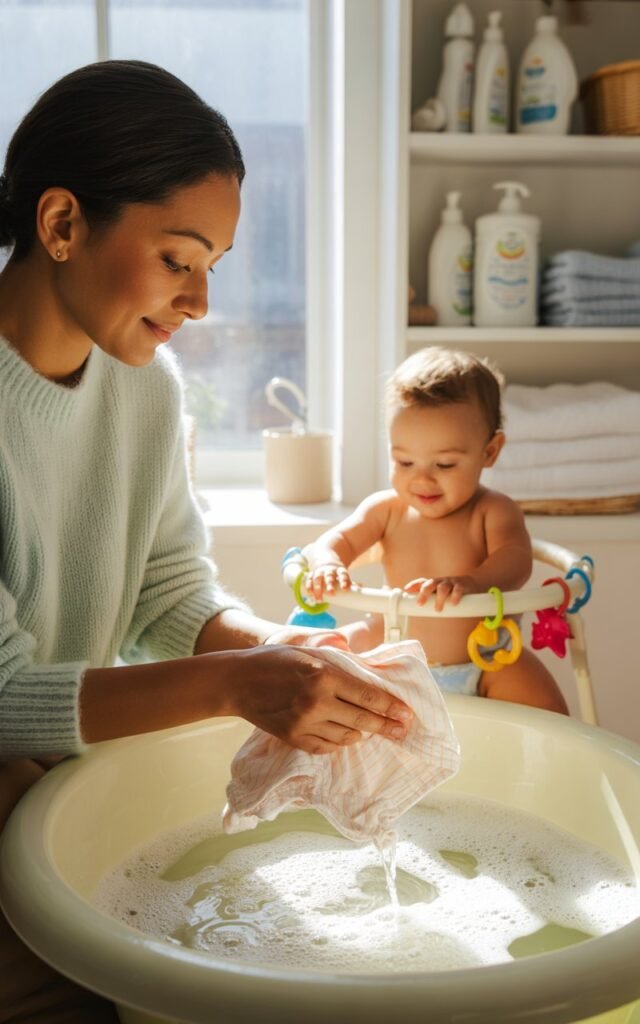
Many common household products contain ingredients that can irritate your baby’s skin. Laundry detergents are a frequent culprit. Switch to a gentle, hypoallergenic detergent specifically designed for baby clothes.
Rinse Thoroughly
Running an extra rinse cycle helps remove any detergent residue from clothing and bedding. This simple step can prevent skin irritation caused by leftover soap. Skip fabric softeners and dryer sheets, as these products often contain fragrances and chemicals that aren’t necessary.
Household cleaners used on surfaces your baby touches should also be baby-safe. Natural cleaning solutions like vinegar and baking soda work well for most cleaning tasks. If you must use commercial cleaners, make sure surfaces are completely dry before your baby comes into contact with them.
Ensure Proper Sleep

Quality sleep is critical for skin repair and regeneration. During deep sleep, your baby’s body produces growth hormones that help repair skin cells. Babies who don’t get enough sleep may show signs of dull or irritated skin.
Create a Calm Environment
Keep your baby’s sleeping area at a comfortable temperature, around 68-72°F. The room should be dark and quiet to promote restful sleep. Soft, breathable bedding made from natural fibers like cotton helps prevent skin irritation and overheating.
Most newborns need 14-17 hours of sleep per day, while older babies typically need 12-15 hours. Establishing a consistent bedtime routine helps your baby get the rest needed for healthy skin and overall development. A well-rested baby is more likely to have that natural, healthy glow that every parent loves to see.
Nurturing Your Baby’s Natural Radiance
Caring for your baby’s skin doesn’t have to be complicated or expensive. The tips shared here focus on gentle, natural approaches that work with your baby’s skin rather than against it. Simple changes like using fragrance-free products, moisturizing regularly, and protecting from sun exposure can make a noticeable difference in how your baby’s skin looks and feels.
The most important thing to remember is that every baby’s skin is different. What works perfectly for one baby might not work as well for another. Pay attention to how your baby’s skin responds to different products and routines. If you notice persistent redness, rashes, or other concerns, don’t hesitate to consult your pediatrician. With consistent care and attention, you can help your baby’s skin maintain its natural, healthy glow.
Frequently Asked Questions
Q: How often should I bathe my baby to keep their skin glowing?
A: Bathing your baby 2-3 times per week is sufficient for most babies. Daily baths can actually dry out the skin by removing natural protective oils. Focus on keeping the diaper area clean between baths and only use soap where needed.
Q: Can I use coconut oil on my newborn’s skin?
A: Yes, coconut oil is generally safe for newborns and can be an excellent natural moisturizer. Always do a patch test on a small area first to ensure your baby doesn’t have a sensitivity. Warm it between your palms before applying for easier absorption.
Q: When can I start using sunscreen on my baby?
A: Babies under six months should be kept out of direct sunlight rather than relying on sunscreen. For babies over six months, use a mineral-based sunscreen with zinc oxide or titanium dioxide. Apply it 15 minutes before sun exposure and reapply every two hours.
Q: What ingredients should I avoid in baby skincare products?
A: Avoid products containing synthetic fragrances, parabens, sulfates, phthalates, and artificial dyes. These ingredients can irritate sensitive baby skin. Look for products labeled as fragrance-free and hypoallergenic instead.
Q: Is baby powder necessary for glowing skin?
A: No, baby powder is not necessary and many pediatricians now recommend against using it. Talc-based powders can be harmful if inhaled, and cornstarch-based powders can promote yeast growth in moist areas. Keeping skin clean and dry without powder is safer.
Q: How can I tell if my baby’s skin is properly hydrated?
A: Well-hydrated baby skin should feel soft and smooth, not tight or flaky. Gently pinch a small area of skin on your baby’s arm or leg. It should spring back immediately. If it stays pinched or returns slowly, your baby may need more hydration.
Q: Are natural oils better than commercial baby lotions?
A: Both can be effective, depending on your baby’s needs. Natural oils like coconut, almond, or olive oil are simple and free from additives. Commercial lotions may provide longer-lasting moisture for very dry skin. Choose based on what works best for your baby.
Q: Why does my baby’s skin look dull even though I follow a routine?
A: Several factors could contribute to dull-looking skin, including dehydration, lack of sleep, overly frequent bathing, or using products that don’t suit your baby’s skin. Review your routine and make adjustments. If the problem persists, consult your pediatrician.
Q: Can my diet affect my breastfed baby’s skin?
A: Yes, the nutrients you consume pass through breast milk to your baby. Eating a balanced diet rich in vitamins A, C, and E, along with omega-3 fatty acids, supports healthy skin development. Stay hydrated and include plenty of fruits and vegetables in your meals.