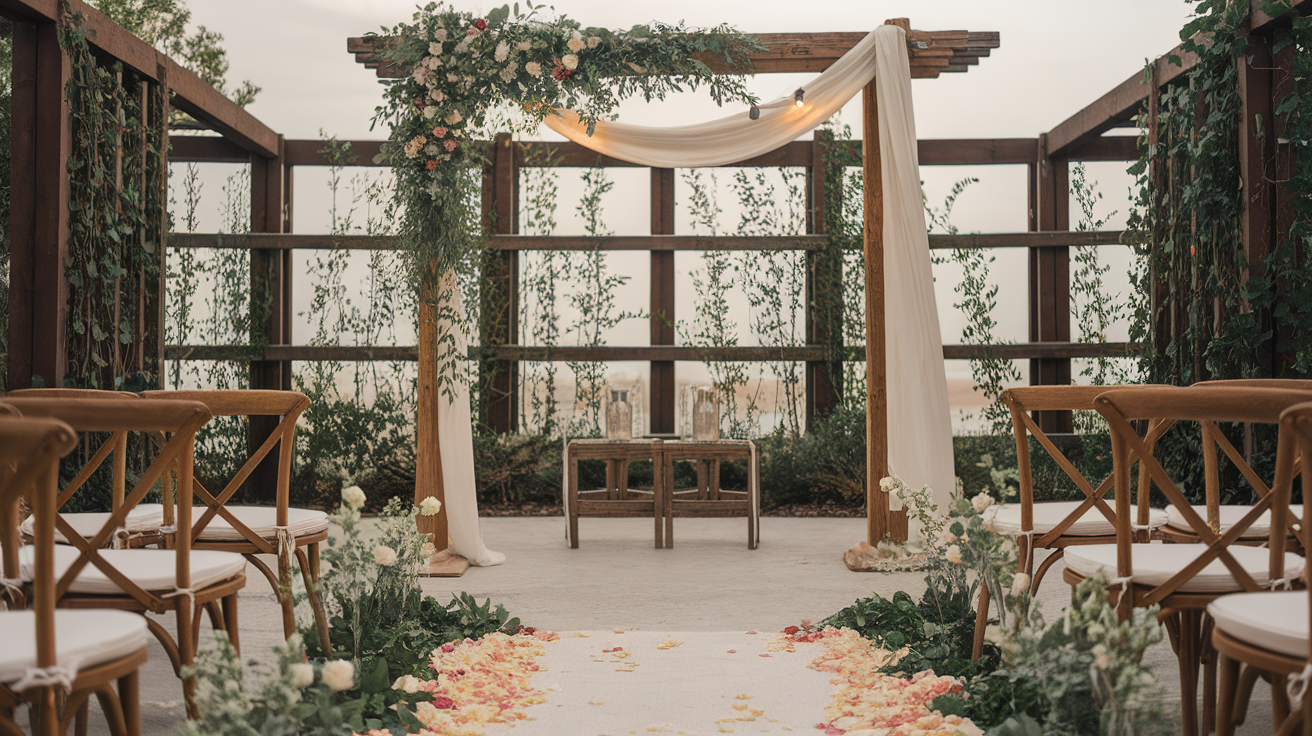
Rustic wedding decor brings an authentic, down-to-earth feel that transforms any celebration into something truly special. The beauty lies in combining natural materials, vintage touches, and handcrafted elements that tell your unique love story. Whether you’re planning a barn wedding, garden party, or simply want to incorporate country charm into your big day, these decor ideas will help you create the perfect atmosphere.
The appeal of this decorating style goes beyond just aesthetics. It creates a warm, inviting environment where guests feel instantly comfortable and connected to the celebration. Natural textures, soft lighting, and organic materials work together to build spaces that feel both elegant and relaxed. You don’t need an enormous budget or professional design team to achieve this look – many of the most stunning rustic weddings feature simple, thoughtful details that couples create themselves.
In the following sections, we’ll share nine practical decor ideas that will transform your wedding venue into a romantic countryside dream. From ceremony backdrops to reception details, each suggestion focuses on achievable projects that make a big impact. These ideas work whether you’re hosting 30 guests or 300, and they adapt beautifully to different seasons and settings. Let’s discover how to bring that coveted rustic charm to your celebration.
- Natural Elements That Define Rustic Wedding Style
- Lighting Ideas to Create Warm Rustic Ambiance
- DIY Rustic Centerpieces and Table Settings
- Ceremony Backdrop Ideas With Country Charm
- Reception Space Transformations Using Rustic Elements
- Final Thoughts on Creating Your Rustic Wedding
- Frequently Asked Questions
Natural Elements That Define Rustic Wedding Style
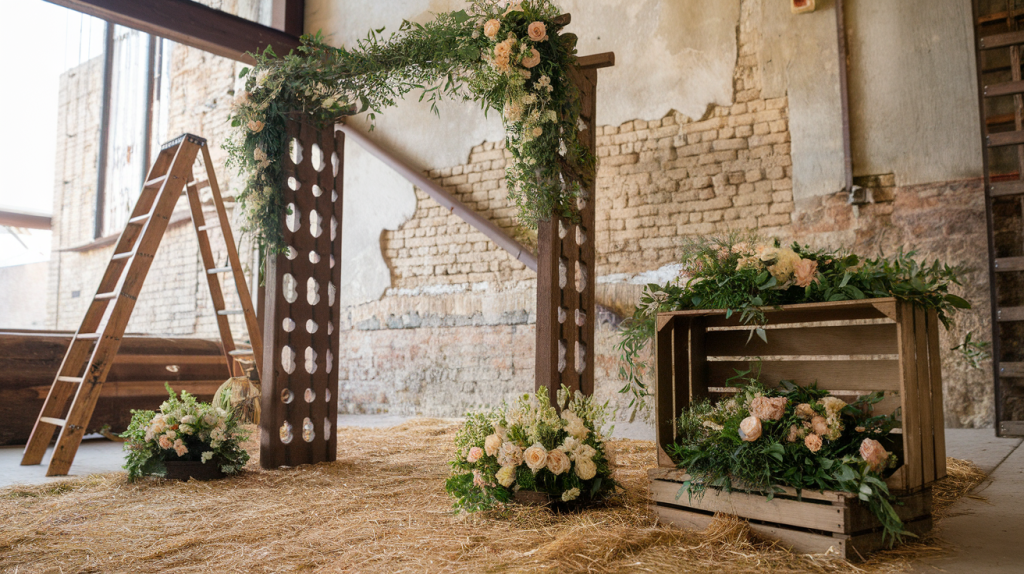
Raw materials from nature form the foundation of any countryside-inspired wedding design. Wood, stone, greenery, and other organic elements create that sought-after rustic atmosphere without requiring elaborate installations or expensive decorations. The key is selecting materials that feel authentic to your venue and personal style while maintaining a cohesive look throughout your celebration.
Wood Accents and Raw Timber Features
Wooden elements instantly establish a rustic foundation for your decor. Tree slices make perfect bases for centerpieces, adding height variation and natural texture to table settings. You can source these from local lumber yards or fallen trees on family property. Different wood types bring distinct character – pine offers light, bright tones while walnut provides rich, dark contrast.
Reclaimed barn wood serves multiple purposes throughout your venue. Old planks become stunning signage backgrounds for welcome messages, seating charts, or directional signs. Weathered wood frames highlight table numbers, menu cards, or favorite photos of you as a couple. These pieces often cost less than traditional wedding signage while delivering far more visual impact.
Consider incorporating wooden crates and boxes as versatile decor elements. Stack them to create unique display areas for favors, cards, or floral arrangements. Vintage apple crates work wonderfully as risers for dessert tables or ceremony aisle markers. Paint them, leave them natural, or add simple stenciled designs to match your color palette.
Fresh Greenery and Wildflower Arrangements
Nothing says rustic quite like abundant greenery spilling across tables and draping from beams. Eucalyptus, olive branches, and ferns cost significantly less than traditional flowers while creating lush, organic displays. Mix different textures and shades of green for visual interest – combine delicate baby’s breath with bold magnolia leaves or wispy asparagus fern.
Wildflowers bring untamed beauty that perfectly complements country settings. Local blooms picked from fields or purchased from farmers’ markets add authentic charm while supporting your community. Sunflowers, Queen Anne’s lace, lavender, and daisies arranged loosely in mason jars or vintage bottles create effortless centerpieces. This approach feels more genuine than formal floral designs.
Stone and Natural Textures
Incorporate river rocks, pebbles, or rough stones as unexpected decor accents. Fill clear vases with smooth stones before adding water and floating candles. Use flat rocks as place cards with guests’ names written in metallic markers. Larger stones can anchor ceremony aisle arrangements or mark pathways between venue spaces.
Incorporating Seasonal Elements
Let the time of year guide your natural decor choices. Fall weddings might feature mini pumpkins, colorful leaves, and wheat stalks. Spring celebrations could highlight budding branches, fresh herbs, and pastel wildflowers. Summer offers endless options with berries, citrus fruits, and garden roses. Winter weddings shine with pinecones, evergreen boughs, and dried flowers.
Natural materials often come free or cheap when you know where to look. Walk through parks or forests (with permission) to gather pinecones, interesting branches, or moss. Visit local farms for seasonal produce that doubles as decor. Ask friends with gardens for cuttings from their plants. These personal touches make your wedding feel more intimate and meaningful.
The beauty of working with natural elements lies in their imperfection. Crooked branches, weathered wood, and wildly growing greenery create visual interest that polished decor can’t match. Let materials speak for themselves rather than forcing them into rigid arrangements. This relaxed approach saves time during setup while achieving that effortlessly elegant rustic look.
Lighting Ideas to Create Warm Rustic Ambiance
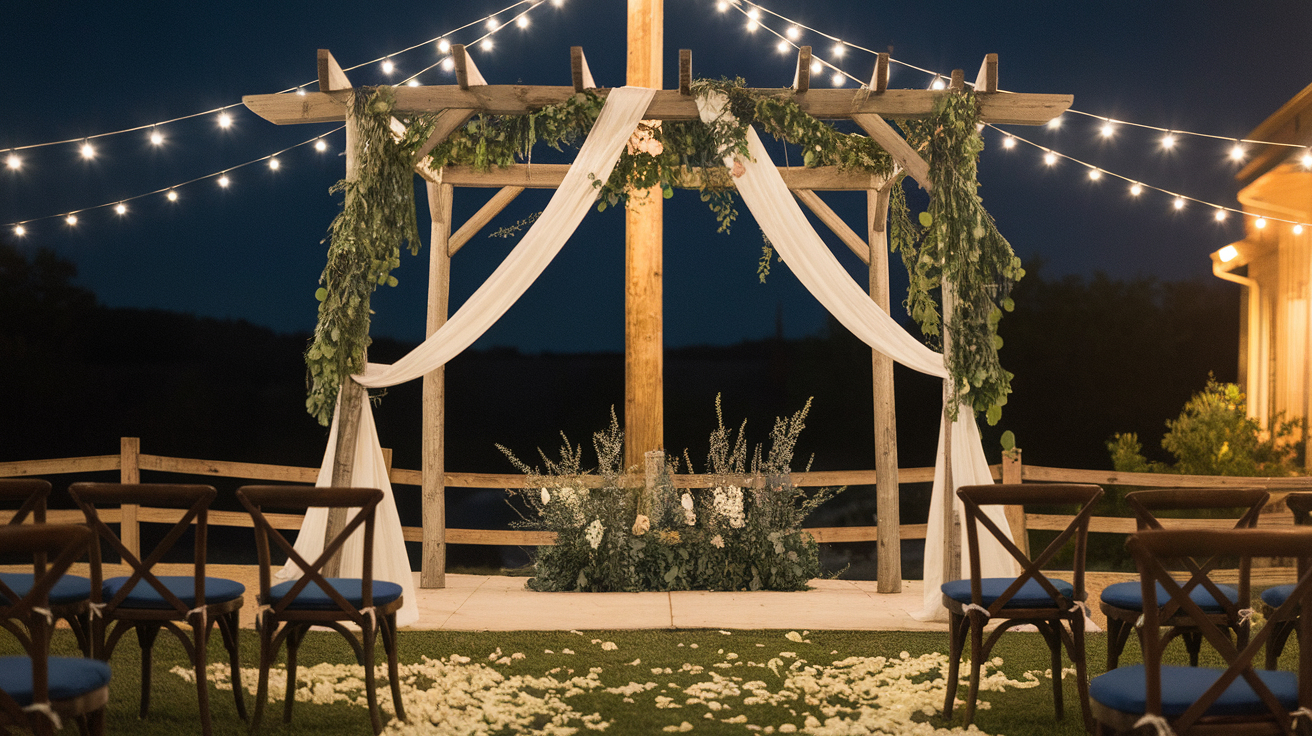
Lighting transforms any space from ordinary to magical, especially when creating that warm, inviting rustic atmosphere. The right illumination makes venues feel intimate regardless of size, highlighting your carefully chosen decor while casting romantic shadows. Soft, layered lighting sources work better than harsh overhead fixtures, creating depth and dimension throughout your celebration spaces.
String Lights and Fairy Light Installations
String lights remain the most versatile lighting option for rustic weddings. Drape them across barn ceilings, wrap them around tent poles, or zigzag them between trees for instant ambiance. Market lights with larger bulbs create a festival feel, while delicate fairy lights add whimsical touches. Mix both styles for varied visual interest throughout different venue areas.
The placement of these lights matters as much as the style you choose. Create a canopy effect by stringing lights in parallel lines across outdoor reception areas. This technique defines the space while maintaining an open, airy feeling. For indoor venues, swag lights from corner to corner, allowing gentle draping that softens hard architectural lines.
Mason Jar Luminaries
Mason jars filled with battery-operated tea lights or fairy lights offer safe, stunning lighting solutions. Wrap wire around jar necks to create handles for hanging from shepherd’s hooks along ceremony aisles. Group different sized jars on tables for glowing centerpiece accents. Fill jars with sand or coffee beans to anchor candles while adding textural interest.
Transform ordinary jars into extraordinary luminaries with simple additions. Wrap them in lace or burlap for added texture. Paint them in soft metallics that catch and reflect light. Frost the glass with spray paint for diffused illumination. These customizations take minutes but dramatically change the overall effect.
Lanterns and Candle Displays
Vintage lanterns bring old-world charm while providing practical lighting. Mix metal and wooden styles in varying heights for dynamic displays. Place them at ceremony entrance points, along pathways, or clustered on reception tables. Battery-operated candles inside eliminate fire concerns while maintaining the flickering effect.
Real candles create unmatched ambiance when venue rules allow them. Arrange pillar candles of different heights on wooden rounds for simple yet striking centerpieces. Float tea lights in water-filled bowls with flower petals or greenery. Line windowsills, mantels, or bar areas with votive collections for layers of warm light.
Firepit and Outdoor Lighting Options
Fire features add both light and gathering spots for guests. Portable fire pits work in most outdoor venues, providing warmth during cooler evenings while creating natural conversation areas. Position them strategically between ceremony and reception spaces or near outdoor bars and dessert stations.
Consider these creative outdoor lighting solutions:
Torch Stakes: Bamboo torches filled with citronella oil provide light while deterring insects naturally.
Solar Path Lights: These eco-friendly options charge during daytime ceremonies for evening illumination.
Luminaria Bags: Paper bags with sand and candles create enchanting walkway borders.
Hanging Chandeliers: Suspend battery-operated chandeliers from tree branches for unexpected elegance.
Projected Patterns: Gobo lights cast leaf patterns, monograms, or stars onto walls and dance floors.
The key to successful rustic lighting involves layering multiple sources at different heights. Overhead string lights provide general illumination. Table-level candles and lanterns create intimate conversation lighting. Ground-level path lights ensure safe navigation. This combination eliminates harsh shadows while maintaining the soft, romantic glow essential to rustic celebrations.
Time your lighting installation carefully. Test all electrical connections during daylight for safety. Position candles away from high-traffic areas and flowing fabrics. Have backup battery packs for LED options. Designate someone to light real candles just before guests arrive for maximum impact without premature burnout.
DIY Rustic Centerpieces and Table Settings

Table decor sets the tone for your entire reception, and rustic centerpieces offer endless opportunities for creativity without breaking your budget. These focal points should feel collected over time rather than purchased all at once, mixing textures, heights, and materials for visual richness. The most memorable tablescapes tell stories through thoughtful details that reflect your personality as a couple.
Wooden Box and Crate Displays
Small wooden boxes make excellent foundations for centerpiece arrangements. Fill them with moss as a base, then add potted succulents, air plants, or fresh flowers in water tubes. These containers work especially well for long banquet tables where traditional round centerpieces might feel too formal. Paint numbers directly onto boxes for table identification that doubles as decor.
Layer different sized boxes to create dimension on each table. Place a larger crate in the center, flanked by smaller boxes at varying angles. This arrangement provides multiple levels for displaying candles, flowers, and decorative elements. Weathered fruit crates from flea markets or antique shops bring authentic vintage character that new boxes can’t replicate.
The versatility of wooden containers extends beyond flowers. Fill them with seasonal fruits for colorful, edible displays. Arrange collections of vintage books, family photos, or items representing shared hobbies. One couple who loved hiking filled boxes with smooth river stones, mini potted ferns, and tiny wooden signs featuring trail names from their favorite adventures.
Burlap and Lace Combinations
This classic pairing never goes out of style for country-inspired weddings. Run burlap strips down table centers as runners, leaving edges raw for casual texture. Layer white or ivory lace on top for feminine contrast. This simple combination costs far less than traditional linens while creating more visual interest.
Wrap burlap around glass vases or jars before securing with lace ribbon. This treatment transforms inexpensive containers into cohesive design elements. Add pearl pins, wooden buttons, or small brooches at ribbon intersections for extra detail. These wrapped vessels work equally well holding flowers, candles, or silverware for buffet stations.
Vintage Bottle and Jar Arrangements
Mismatched glass bottles create charming displays when grouped in odd numbers. Scout thrift stores, garage sales, and recycling bins for interesting shapes and colors. Clear, amber, and soft blue glass work beautifully together. Place single stem flowers or small branch cuttings in each bottle for an effortless wildflower meadow effect.
Transform ordinary jars into extraordinary centerpieces through creative styling. Wrap twine around necks, add paper doilies under metal lids, or tie on small wooden tags with table numbers. Mix canning jars, baby food jars, and large pickle jars for variety. Some tables might feature tall arrangements while others stay low for easy conversation.
Natural Runner Alternatives
Fresh greenery garlands make stunning table runners that smell as lovely as they look. Eucalyptus, olive branches, and ruscus stay fresh throughout long receptions. Weave battery-operated micro lights through garlands for evening sparkle. This living runner approach works particularly well for farm tables where you want to highlight beautiful wood grain.
Consider unexpected materials for table runners that reflect your venue or season. Strips of birch bark, collections of fall leaves preserved between wax paper, or lengths of Spanish moss create unique focal points. One winter wedding featured runners made from evergreen branches studded with silver pinecones and white berries.
Mix and match centerpiece styles across your reception for collected-over-time appeal. Some tables might feature tall branches in vintage bottles while others showcase low succulent gardens in wooden boxes. This variety keeps guests interested as they move between tables for mingling. Just maintain consistent elements like candle styles or runner materials to tie everything together.
Don’t forget practical considerations when designing centerpieces. Keep arrangements below eye level on dining tables so guests can converse easily. Secure lightweight elements that might blow away at outdoor receptions. Choose unscented candles to avoid competing with food aromas. Test your designs during planning stages to identify any issues before the big day.
Ceremony Backdrop Ideas With Country Charm
Your ceremony backdrop frames the most important moment of your wedding day, making it worth special attention and creativity. This focal point appears in countless photos and creates the visual foundation for your vows. The perfect rustic backdrop combines natural materials with personal touches, whether you’re marrying outdoors under open sky or bringing countryside elements into an indoor venue.
Wooden Arch Designs
A wooden arch serves as both structural support and decorative statement for outdoor ceremonies. Simple branch constructions using birch or willow create organic frames that blend seamlessly with natural surroundings. Secure branches with twine or zip ties hidden by strategic greenery placement. This DIY approach costs a fraction of rental arches while providing completely customized sizing.
Reclaimed lumber offers another route for creating memorable ceremony structures. Old barn doors mounted on sturdy frames make dramatic backdrops, especially when decorated with climbing greenery or draped fabric. Paint them in soft whites or leave natural wood exposed for authentic rustic appeal. These pieces often become cherished keepsakes, repurposed in your home garden after the wedding.
For indoor ceremonies, consider hexagonal or triangular wooden frames as modern rustic alternatives. These geometric shapes feel current while maintaining country warmth through natural wood tones. Decorate them asymmetrically with flowers concentrated in one corner for contemporary styling that photographs beautifully.
Barn Door Installations
Vintage barn doors instantly establish rustic atmosphere without requiring extensive decoration. Source them from architectural salvage yards, farm auctions, or online marketplaces. The patina and weathering tell stories that new reproductions can’t match. Mount them on wheeled stands for easy positioning and transport between ceremony and reception spaces.
Paint meaningful quotes, song lyrics, or your wedding date directly onto barn doors for personalization. Chalk paint allows for easy customization while maintaining rustic texture. Some couples display their initials in large letters created from artificial flowers or moss. Others hang family wedding photos from previous generations, honoring tradition while creating conversation pieces.
Fabric Draping Techniques
Flowing fabric softens hard edges while adding romance to any backdrop structure. Cheesecloth, gauze, or lightweight cotton in neutral tones provides ethereal movement in outdoor breezes. Secure fabric at varying heights for dynamic draping rather than uniform swags. This creates more visual interest and photographs with beautiful depth.
Layer different fabric textures for richness without overwhelming your natural elements. Combine smooth cotton with nubby linen or add vintage lace panels for delicate detail. Dye fabrics in tea or coffee for aged ivory tones that complement wooden elements better than stark white. This subtle coloring also reduces glare in bright outdoor photography.
Floral and Greenery Walls
Living walls make stunning ceremony backdrops that double as photo booth backgrounds during receptions. Create frameworks from wooden lattice or wire mesh, then weave fresh greenery through openings. Start with hearty base layers like salal or lemon leaf, then add delicate accents like jasmine vine or smilax.
Dried flower installations offer lasting beauty without wilting concerns. Pampas grass, dried palms, and preserved eucalyptus create textured backdrops with bohemian rustic vibes. These materials actually improve with age, developing richer colors and interesting shapes. Arrange them in tall floor vases flanking your ceremony space or create full walls using chicken wire frameworks.
Budget-conscious couples might consider paper flower walls that mimic fresh blooms. Craft them during wedding planning gatherings with friends, turning preparation into memorable bonding experiences. Coffee filter roses, book page peonies, or tissue paper ranunculus provide texture and color at minimal cost. Mix paper flowers with real greenery for enhanced realism.
Your backdrop doesn’t need to be massive to make an impact. Sometimes simple touches create the most meaningful moments. A single tree decorated with hanging mason jars, family photos, and ribbon streamers can be just as powerful as elaborate installations. Focus on elements that reflect your story rather than trying to recreate Pinterest perfection.
Position your backdrop with photography in mind. Consider sun direction during your ceremony time to avoid harsh shadows or squinting. Test different angles during venue visits, noting how natural light interacts with your chosen materials. Beautiful backdrops become even more special when captured perfectly in photos you’ll treasure forever.
Reception Space Transformations Using Rustic Elements

Reception venues come alive through thoughtful rustic touches that guide guests through your celebration while creating Instagram-worthy moments at every turn. These decorative elements serve practical purposes – helping people navigate spaces, entertaining during cocktail hours, and establishing comfortable gathering areas. The most successful reception transformations feel intentional yet effortless, as if the countryside charm naturally belongs in your chosen venue.
Signage and Directional Displays
Wooden signs add personality while serving essential communication needs. Hand-lettered directions on reclaimed wood guide guests from parking to ceremony to reception areas. Paint directly onto boards or use vinyl lettering for cleaner looks. Prop signs against hay bales, lean them on easels, or hang from shepherd’s hooks along pathways.
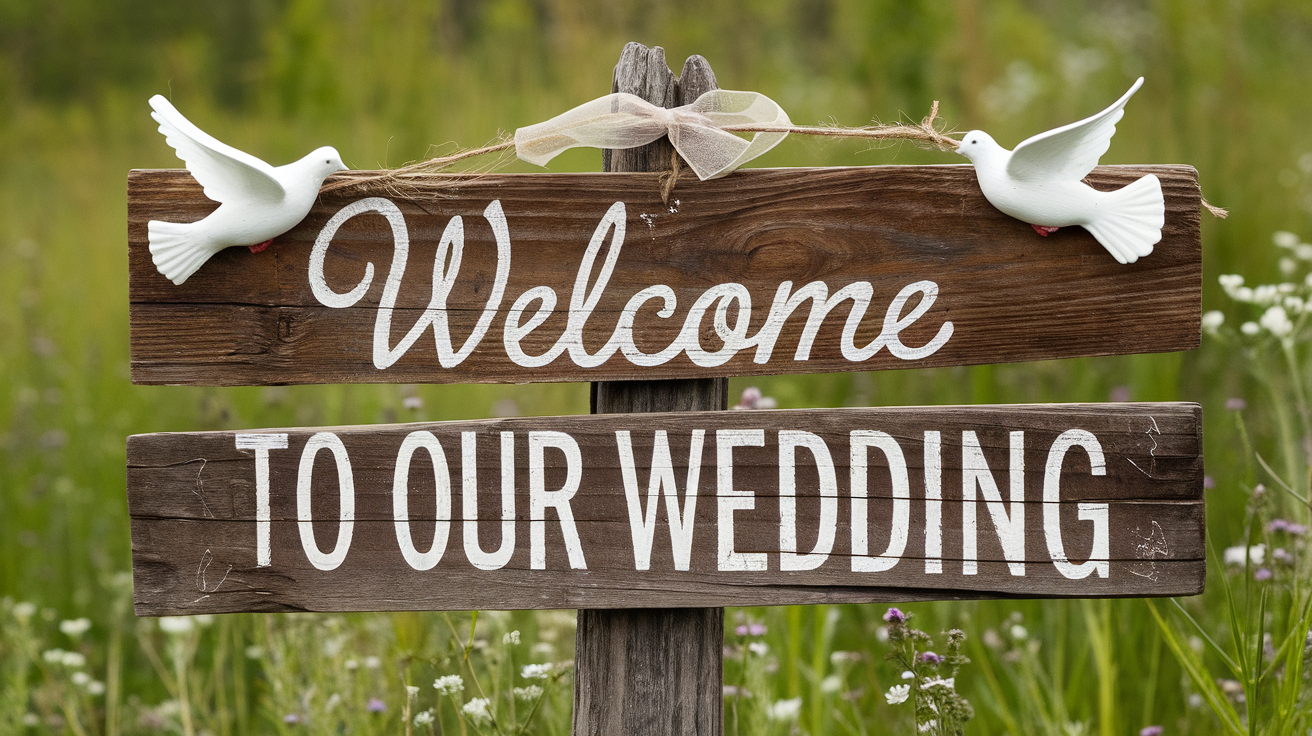
Welcome signs set the tone immediately upon arrival. Large barn wood pieces displaying your names and wedding date become keepsakes for your home afterward. Add flourishes like painted flowers, attached greenery, or string light borders for extra charm. Position these at venue entrances where they’ll appear in arrival photos.
Create cohesive signage suites using consistent materials throughout your venue. If your welcome sign features dark-stained wood with white lettering, carry this combination through bar menus, bathroom basket notices, and dance floor invitations. This repetition ties spaces together while reinforcing your rustic theme.
Photo Display Ideas
Memory lanes celebrating your relationship add personal touches guests love exploring. String wire or twine between posts, trees, or walls, then clip photos with miniature clothespins. Mix childhood pictures, dating adventures, and engagement shots for complete storytelling. This display doubles as entertainment during cocktail hours.
Vintage window frames make gorgeous photo galleries when wire or string creates grid patterns across openings. Lean multiple windows against walls or suspend them from ceiling beams at varying heights. Each pane becomes a frame for different memories, creating artistic installations from simple materials.
Ladder displays offer vertical solutions for smaller spaces. Wooden orchard ladders or painted stepladders provide rungs for hanging photos, signs, or small potted plants. Position them near guest books or gift tables where people naturally congregate. Some couples use ladders to display table assignments, with cards hanging from each rung.
Lounge Area Styling
Comfortable seating areas encourage mingling while providing rest spots for older guests or those needing breaks from dancing. Arrange vintage furniture in conversational groupings – mismatched chairs around low tables, hay bales with blankets and pillows, or wooden benches with soft cushions.
Define these spaces using area rugs that add pattern and warmth. Layer multiple rugs for collected-over-time appeal rather than matching everything perfectly. Persian-style prints, geometric patterns, and solid jute varieties work together when they share similar color families. These textile additions particularly help outdoor lounges feel like actual rooms.
Here are essential elements for inviting lounge spaces:
Soft Lighting: Table lamps, floor lanterns, or string lights create ambient illumination for evening conversation.
Throw Pillows: Mix patterns and textures in your color palette for comfort and visual interest.
Side Tables: Provide surfaces for drinks and small plates using wooden crates, tree stumps, or vintage suitcases.
Blanket Baskets: Offer cozy wraps for outdoor receptions when temperatures drop after sunset.
Entertainment: Place conversation starter cards, vintage board games, or photo albums on coffee tables.
Dance Floor and Bar Decorations
Transform standard dance floors into rustic showpieces through creative borders and overhead treatments. Line perimeters with potted plants, lanterns, or hay bales that define the space without creating barriers. Hang paper lanterns, fabric swags, or greenery garlands overhead for intimate atmosphere that encourages dancing.
Bar areas benefit from rustic styling that makes them destination spots rather than just service stations. Wooden signs listing signature cocktails, draped greenery across bar fronts, and mason jar dispensers for water or lemonade all contribute to cohesive design. Display drinks on wooden crates at different heights for visual interest.
Behind-the-bar styling matters too. Cover plastic bottles with burlap sleeves, display garnishes in vintage bowls, and use galvanized buckets for ice. String lights or Edison bulbs above bar areas ensure good visibility while maintaining mood lighting. These details elevate standard bar setups into memorable design features.
Consider how spaces will transform throughout your reception timeline. Ceremony backdrops might relocate behind sweetheart tables. Cocktail hour lounges could open onto dance floors as the party progresses. Plan these transitions during venue walkthroughs, ensuring decorative elements serve multiple purposes throughout your celebration.
Final Thoughts on Creating Your Rustic Wedding
Every rustic wedding tells a unique story through carefully chosen natural elements, vintage treasures, and handcrafted details that reflect your personal journey together. The ideas we’ve explored – from wooden ceremony arches to twinkling mason jar lights – work together to build an atmosphere where love feels tangible and memories bloom naturally. Your guests will remember the warmth and authenticity of your celebration long after the last dance ends.
The true magic of rustic wedding decor lies not in perfection but in the imperfect beauty of natural materials and the love poured into every DIY project. Whether you’re transforming a barn, garden, or traditional venue into a countryside dream, these elements create spaces where everyone feels welcomed home. Start with a few key pieces that speak to your heart, then build layers of texture, light, and meaningful details that make your wedding unmistakably yours.
Frequently Asked Questions
Q: How far in advance should I start collecting rustic decor elements for my wedding?
A: Begin gathering items 6-8 months before your wedding date. This timeline allows you to shop sales, visit multiple thrift stores and flea markets, and take advantage of seasonal items. Starting early also gives you time to DIY projects without stress.
Q: Can I achieve a rustic look in a modern or traditional venue?
A: Absolutely! Focus on portable rustic elements like wooden signage, burlap table runners, mason jar centerpieces, and string lights. These items transform any space without permanent changes. Bring in potted plants, vintage furniture pieces, and natural textures to override modern architecture.
Q: What’s the average cost difference between rustic DIY decor and traditional wedding decorations?
A: DIY rustic decor typically costs 40-60% less than traditional wedding decorations. A professional floral centerpiece might cost $75-150, while a rustic DIY version with mason jars, wildflowers, and wooden elements could cost $15-30. The savings multiply across all decoration categories.
Q: How do I keep outdoor rustic decorations from looking messy or unfinished?
A: Create intentional groupings rather than scattering items randomly. Use odd numbers (groups of 3, 5, or 7) for visual appeal. Maintain consistent color palettes and repeat materials throughout different areas. Add finishing touches like ribbon, paint, or metallic accents to elevate raw materials.
Q: Which rustic elements work best for each season?
A: Spring weddings shine with fresh wildflowers, pastel fabrics, and budding branches. Summer calls for bright sunflowers, citrus accents, and flowing white fabrics. Fall celebrations feature pumpkins, rich jewel tones, and dried wheat. Winter weddings sparkle with evergreen boughs, pinecones, and warm candlelight.
Q: Should I hire a coordinator if I’m doing mostly DIY rustic decor?
A: Consider hiring a day-of coordinator even with DIY decorations. They ensure your handmade pieces get displayed properly, manage setup volunteers, and handle any last-minute adjustments. This investment lets you enjoy your day rather than worrying about decoration placement.
Q: How do I transport and store rustic decorations before and after the wedding?
A: Label boxes clearly by reception area (ceremony, cocktail hour, dinner tables). Use plastic bins for items like mason jars that might break. Pack delicate elements like dried flowers in tissue paper. Many rustic items like wooden signs and lanterns become home decor afterward, so store them carefully for future use.
Q: What lighting options work best for evening rustic receptions?
A: Layer multiple light sources for the best effect. Start with string lights or market lights for overall illumination. Add lanterns or candles on tables for intimate lighting. Include uplighting on trees or architectural features for drama. Battery-operated options provide flexibility without electrical access concerns.