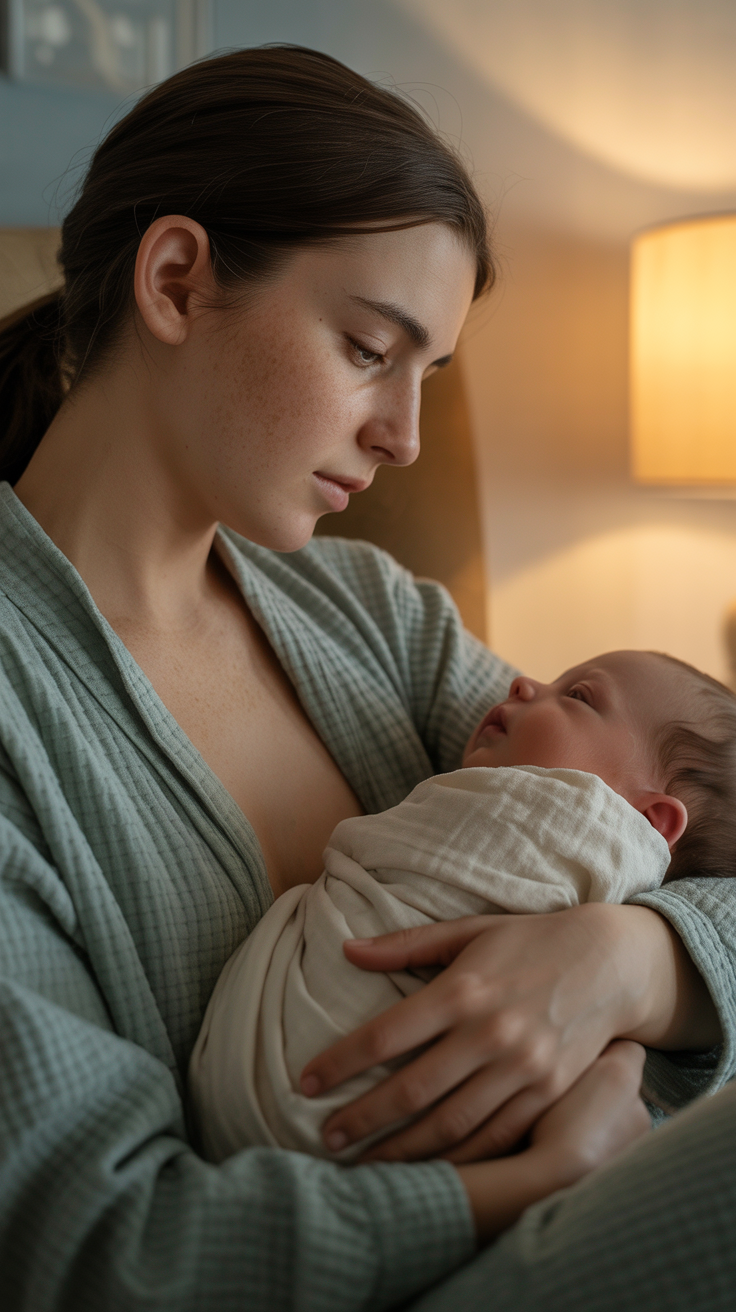
Nobody fully prepares you for what it feels like to be awake at 3 a.m. with a newborn who has no interest in sleeping. You’ve fed her, changed her, checked her temperature, and she’s still wide-eyed — staring at the ceiling like she has somewhere to be. It’s exhausting, disorienting, and a little bit funny in hindsight, but in the moment? It’s a lot.
Here’s what helps to know: newborns don’t have a sense of day and night. They’re not being difficult — their brains simply haven’t learned the difference yet. Newborns sleep anywhere from 12 to 18 hours a day, but only one or two hours at a time. That’s not a bug, it’s just how they’re built. Their stomachs are tiny, they need to eat often, and their sleep cycles are short. It does get better — usually around three to four months, babies start stringing together longer stretches. But until then, there’s a lot you can do to make nighttime smoother and help your baby settle faster.
These eight strategies are backed by pediatric research and real-world parenting experience. Some will make a difference right away; others take a few days to click. Either way, they’re worth trying.
- 1. Use the "Drowsy but Awake" Method
- 2. Swaddle Correctly (and Safely)
- 3. Add White Noise to the Sleep Environment
- 4. Make Days Bright and Nights Boring
- 5. Start a Simple Bedtime Routine — Earlier Than You Think
- 6. Watch for Sleep Windows (and Don't Miss Them)
- 7. Try a Pacifier
- 8. Keep the Bassinet Close — But Not in Your Bed
- Getting Through the Newborn Stage, One Night at a Time
- Frequently Asked Questions
1. Use the “Drowsy but Awake” Method

This is one of the most repeated pieces of sleep advice for a reason: it works. The idea is to put your baby down when she’s sleepy — eyes drooping, movements slowing — but before she’s fully asleep in your arms. That way, she learns to drift off in her crib rather than associating sleep with being held.
If she always falls completely asleep on you and then wakes up in her bassinet, she’s disoriented. She went to sleep one place and woke up somewhere else. That would startle any of us. Putting her down drowsy but still aware of her surroundings teaches her that the crib is a safe place to sleep — and that’s a skill she’ll keep building on.
It takes practice. She might fuss the first few times. Give her a minute or two to settle before rushing in — babies often make noise while drifting off, and that’s completely normal.
2. Swaddle Correctly (and Safely)

Swaddling is one of the oldest baby-calming techniques in the book, and it genuinely helps most newborns. A snug swaddle mimics the feeling of being in the womb — contained, warm, and secure. It also stops the startle reflex (that involuntary arm-flinging motion) from waking your baby up mid-sleep.
The key word is snug, not tight. A proper swaddle keeps baby’s arms close to her body but leaves plenty of room for her legs and hips to move. The Mayo Clinic recommends making sure her hips can still bend, since too-tight swaddling can affect hip development over time.
A few things to keep in mind:
- Always place a swaddled baby on her back to sleep — never the stomach or side.
- Stop swaddling once she starts showing signs of rolling over, typically around 4 months.
- Zip-up swaddle sacks can be easier to use consistently than blankets, especially at 3 a.m. when your brain isn’t fully functioning.
3. Add White Noise to the Sleep Environment
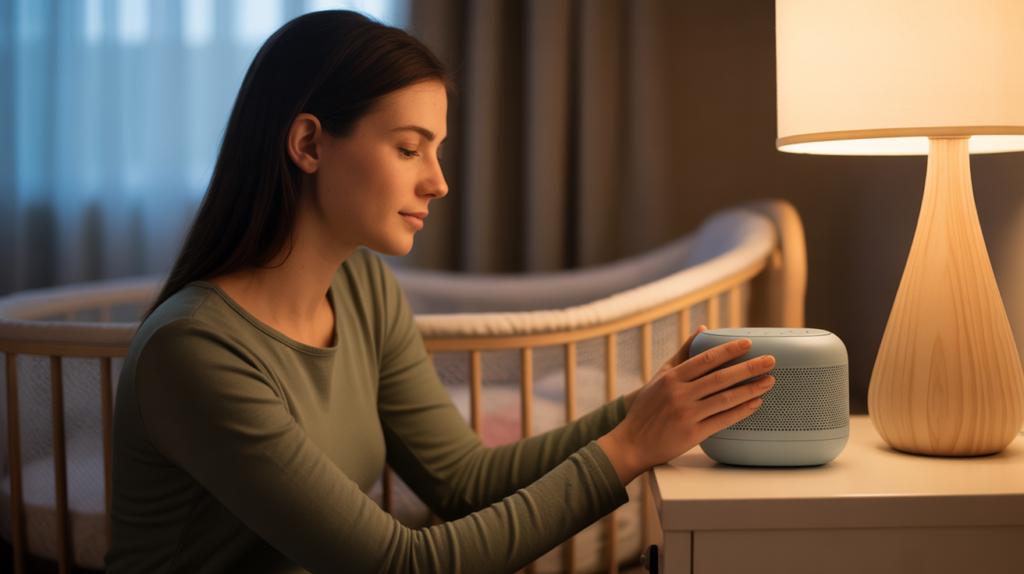
The womb is loud. Like, really loud — blood flow, heartbeats, muffled voices. So the total silence of a nursery at night can actually feel strange and unsettling to a newborn. White noise fills that gap.
A well-cited 1990 study published in the Archives of Disease in Childhood found that 80 percent of newborns fell asleep within five minutes of hearing white noise, compared to just 25 percent who fell asleep on their own without it. That’s a significant difference for sleep-deprived parents looking for any edge.
White noise also blocks out the unpredictable sounds of daily life — older siblings, doors closing, TV in the next room — so baby stays asleep longer once she’s down. Use a dedicated sound machine rather than a phone app when possible, and keep it at a safe distance of at least seven feet from the crib. Volume should stay below 50 decibels — roughly the sound of a quiet conversation.
4. Make Days Bright and Nights Boring

Day/night confusion is real, and it’s one of the main reasons some newborns have their schedule completely flipped — sleeping all day and partying all night. You can start correcting this early by making a clear distinction between the two.
During the day, keep curtains open and let natural light into whatever room the baby is in. Talk to her, play with her during her awake windows, and don’t tiptoe around — let normal daytime sounds happen. At night, do the opposite. Keep lights low (an LED push light works well for feedings without waking your own brain up too much), speak in quiet voices, skip the eye contact during middle-of-the-night feeds, and get her back down with minimal stimulation.
It usually takes a few weeks for this to click, but it’s worth starting early. The contrast between active, bright days and calm, dark nights teaches her circadian rhythm what’s what.
5. Start a Simple Bedtime Routine — Earlier Than You Think
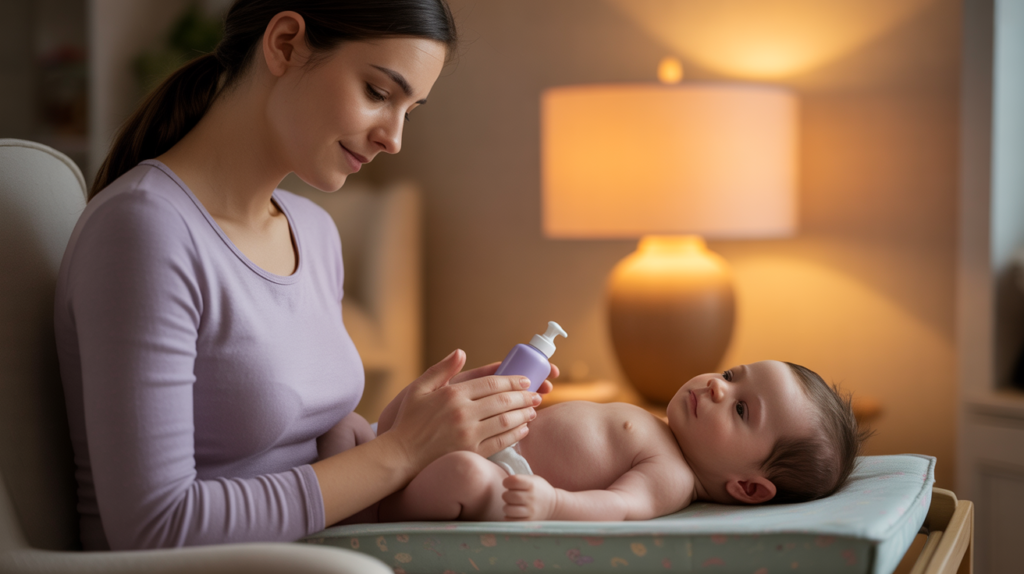
Most people assume a bedtime routine is something you do once a baby is older. But research shows babies as young as 8 to 12 weeks begin recognizing patterns. Starting a short, consistent routine now plants the seed for better sleep habits as she grows.
It doesn’t have to be elaborate. Something like:
- Warm bath
- Gentle massage or lotion application
- Feeding
- Swaddle
- White noise on, lights dim
Do it in the same order every night. After a few weeks, each step starts signaling to her brain that sleep is coming. Think of it as a runway — each part of the routine is another step bringing her closer to landing.
6. Watch for Sleep Windows (and Don’t Miss Them)

Newborns have wake windows of roughly 30 to 60 minutes in the first few weeks of life. That’s how long they can comfortably stay awake before getting overtired. And overtired is a trap — when babies pass their sleep window, they become harder to settle, not easier, because their stress hormones kick in.
Learning to spot tiredness cues before she reaches the fussing stage makes everything easier. Watch for:
- Yawning
- Staring blankly or losing interest in her surroundings
- Rubbing her eyes or face
- Slowing down movements
- A shift in her cry — more whiny than demanding
When you see two or three of those cues together, start winding down immediately. Acting early, before she hits the full cry, makes the whole settling process faster.
7. Try a Pacifier
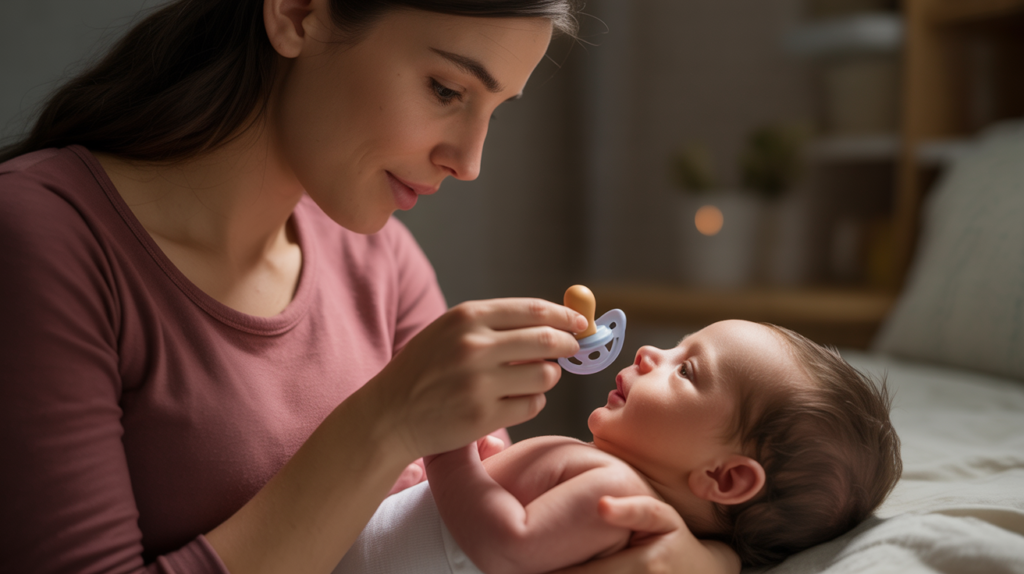
Pacifiers have gotten mixed reviews in parenting circles, but the pediatric research is actually pretty favorable for newborns. The Mayo Clinic notes that pacifier use during sleep is associated with a reduced risk of SIDS, and many babies find the sucking motion genuinely soothing — it’s one of their built-in comfort responses.
If you’re breastfeeding, most lactation consultants recommend waiting until breastfeeding is well-established (usually around three to four weeks) before introducing a pacifier, to avoid nipple confusion. But after that, it’s fair game. Some babies take to them immediately; others never care. If yours falls into the second group, don’t force it.
One practical note: babies will wake when the pacifier falls out during the night. That’s a real thing and a real inconvenience. For now, just do a gentle re-offer and see if she settles. She’ll get better at self-soothing as she grows.
8. Keep the Bassinet Close — But Not in Your Bed

Room-sharing without bed-sharing is the official recommendation from the American Academy of Pediatrics, and it makes practical sense too. Having the bassinet right next to your bed means you can tend to her quickly and get back to sleep faster — without walking down a hallway, flipping on lights, or fully waking up.
Bed-sharing is a different situation. Despite how tempting it feels at 4 a.m. when you’re exhausted, the AAP advises against it because of the documented risk of accidental suffocation. A bedside bassinet or a bassinet that attaches directly to the bed frame gives you closeness without the safety risk.
And if you have a partner? Work out a shift system — even an informal one. One of you handles the first half of the night, the other takes over at a set time. It sounds simple, but splitting the load rather than both of you waking for every feeding is one of the most effective ways to protect your own sleep.
Getting Through the Newborn Stage, One Night at a Time

Sleep deprivation with a newborn is genuinely hard — not because you’re doing anything wrong, but because it’s a demanding phase that takes time. The hacks above won’t make your baby sleep through the night by next week. What they will do is shorten the time it takes her to settle, reduce the number of unnecessary wake-ups, and help both of you build the habits that lead to better sleep in the weeks and months ahead.
Be patient with yourself and with her. Try one or two things at a time rather than overhauling everything at once. And if something isn’t working after a week or two, set it aside and try something else. Every baby is different, and finding what works for yours is part of the process — one that, exhausting as it is right now, you are absolutely capable of figuring out.
Frequently Asked Questions
Q: How many hours should a newborn sleep in a day?
A: Most newborns sleep between 12 and 18 hours in a 24-hour period, but only in short stretches of one to two hours at a time. There’s no predictable pattern at first — they wake to feed, fall back asleep, and repeat around the clock.
Q: When do newborns start sleeping longer at night?
A: Many babies start sleeping in four to six hour stretches sometime between eight and twelve weeks, though it varies widely. By six months, most babies are sleeping through a significant portion of the night, but the timeline looks different for every child.
Q: Is white noise safe to use every night for a newborn?
A: Yes, with some precautions. Keep the sound machine at least seven feet from the crib and at a volume below 50 decibels — about the level of a quiet conversation. Use it during sleep only, and turn it off during awake time so baby gets plenty of exposure to natural sounds and voices.
Q: What is the “drowsy but awake” method and why does it matter?
A: It means putting your baby down before she fully falls asleep in your arms, while she’s still slightly aware of her surroundings. This teaches her to fall asleep in her own sleep space rather than associating sleep with being held — a habit that becomes harder to change the longer it’s established.
Q: When should I stop swaddling my baby?
A: Stop swaddling as soon as your baby shows signs of rolling over, which typically happens around four months. A baby who can roll but is still swaddled can’t reposition herself if she ends up on her stomach, which creates a safety risk.
Q: Is it safe to use a pacifier with a newborn?
A: The American Academy of Pediatrics and the Mayo Clinic both support pacifier use for newborns during sleep, and research links it to a lower risk of SIDS. If you’re breastfeeding, most experts suggest waiting three to four weeks until nursing is well established before offering one.
Q: Should my baby sleep in the same room as me?
A: The American Academy of Pediatrics recommends room-sharing without bed-sharing for at least the first six months. A bassinet or co-sleeper next to your bed gives your baby a separate, safe sleep space while keeping her close enough to tend to quickly.
Q: My baby has her days and nights mixed up. What can I do?
A: Keep daytime bright, active, and stimulating — open curtains, talk to her, don’t shush normal household sounds. At night, be calm, keep lights low, minimize interaction during feedings, and get her back down without engaging her. The contrast between the two will gradually help reset her internal clock.
Q: When is the right time to start a bedtime routine?
A: You can start as early as six to eight weeks. Babies begin recognizing patterns around 8 to 12 weeks, so a consistent, short routine — bath, feeding, swaddle, white noise — will start signaling to her brain that sleep is coming, even at this young age.