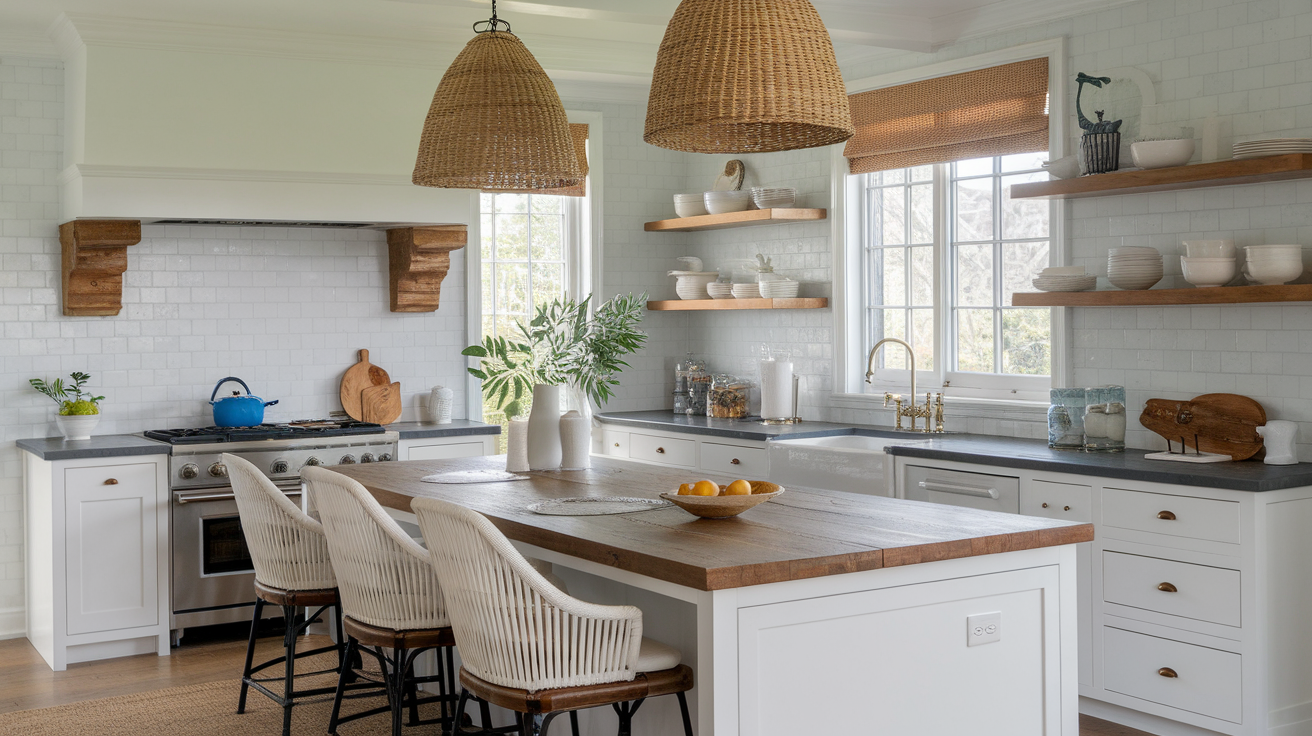
Creating a kitchen that captures the relaxed sophistication of coastal living while maintaining contemporary functionality requires thoughtful planning and design choices. Modern coastal kitchens move beyond nautical clichés of anchors and sailboats, instead focusing on natural materials, abundant light, and a refined color palette that evokes seaside tranquility. This design approach combines the casual comfort of beach house style with clean lines and current trends, resulting in spaces that feel both timeless and fresh.
The beauty of modern coastal design lies in its versatility and practicality. Unlike traditional beach house kitchens that might feel out of place in urban or suburban settings, this contemporary interpretation works beautifully in any location. You’ll find that incorporating these design elements creates an atmosphere of calm and openness, making your kitchen feel larger, brighter, and more inviting regardless of whether you live near the ocean or hundreds of miles inland.
In the following sections, you’ll discover eight essential tips for achieving this coveted aesthetic in your own kitchen. From selecting the perfect color palette to choosing materials that capture beach vibes without resorting to tired stereotypes, these strategies will help you create a space that feels like a permanent vacation. You’ll learn about maximizing natural light, implementing smart storage solutions, and adding those finishing touches that make all the difference. Ready to transform your kitchen into a modern coastal retreat? Let’s explore these design principles that will bring contemporary beach style home.
- What Defines a Modern Coastal Kitchen Style
- How to Choose the Right Color Palette for Coastal Kitchens
- Which Materials Bring Beach Vibes Without Looking Clichéd
- How to Maximize Natural Light in Your Coastal Kitchen
- What Storage Solutions Keep Your Beach Kitchen Clutter-Free
- Finishing Your Modern Coastal Kitchen
- Frequently Asked Questions
What Defines a Modern Coastal Kitchen Style
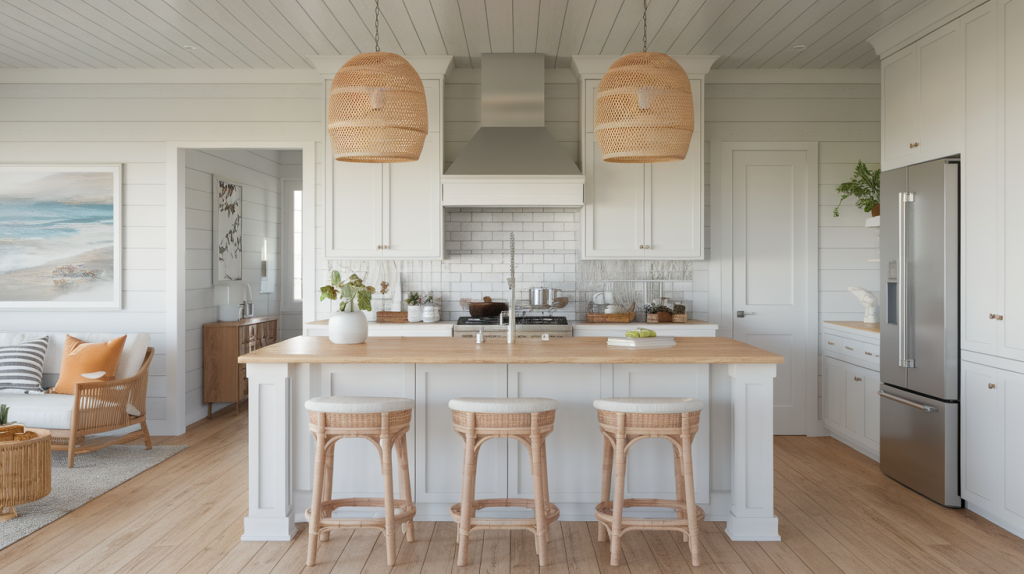
Modern coastal kitchen design represents a sophisticated evolution of traditional beach house aesthetics. This style strips away excessive nautical motifs and instead focuses on creating an atmosphere that captures the essence of seaside living through thoughtful material choices, color schemes, and spatial arrangements. The result is a kitchen that feels fresh, airy, and connected to nature without relying on obvious maritime decorations.
Understanding the Core Elements
The foundation of this design approach rests on several key principles that distinguish it from both traditional coastal and purely contemporary styles. Natural materials take center stage, with wood, stone, and organic textures creating warmth and authenticity. Clean lines and minimal ornamentation prevent the space from feeling cluttered or overly themed, while strategic use of color evokes ocean and sky without overwhelming the senses.
Light plays a crucial role in defining these spaces. Unlike darker, more enclosed traditional kitchens, modern coastal designs prioritize brightness and openness. This doesn’t mean everything must be white – rather, it’s about creating layers of light through windows, fixtures, and reflective surfaces that work together to produce an atmosphere of endless summer mornings.
The Balance Between Beach and Contemporary
Achieving the right equilibrium between coastal charm and modern functionality requires careful consideration. Too much beach influence risks creating a kitschy theme room, while excessive modernism can strip away the warmth and character that makes this style so appealing. The sweet spot lies in selecting elements that reference coastal living subtly – weathered wood that suggests driftwood without literally being driftwood, or glass tiles that catch light like sea glass without spelling out “BEACH” on your backsplash.
Contemporary elements manifest through sleek cabinetry profiles, integrated appliances, and sophisticated hardware choices. These modern touches prevent the kitchen from feeling dated or overly casual. Stainless steel appliances, for instance, provide a crisp contrast to softer coastal elements while maintaining the overall fresh aesthetic.
Natural Materials and Textures
The material palette forms the backbone of any successful modern coastal kitchen. Wood appears in various forms – from light oak flooring that mimics sun-bleached boardwalks to rich walnut islands that ground the space with natural warmth. These wooden elements should feel refined rather than rustic, with smooth finishes and careful grain selection replacing rough-hewn beams or distressed surfaces.
Consider incorporating these texture combinations for authentic coastal character:
Smooth Surfaces: Polished marble or quartz countertops that suggest sea-worn stones
Woven Elements: Rattan bar stools or pendant lights adding organic texture
Glass Features: Clear or frosted glass cabinet doors creating visual lightness
Metal Accents: Brushed nickel or matte black fixtures providing contemporary contrast
Natural Fibers: Jute rugs or linen window treatments softening hard surfaces
Creating Visual Flow and Openness
Modern coastal kitchens excel at creating a sense of spaciousness regardless of actual square footage. This illusion comes from thoughtful layout decisions and visual tricks that draw the eye upward and outward. Open shelving replaces some upper cabinets, reducing visual weight while displaying carefully curated dishware. Peninsula designs often work better than full islands in smaller spaces, maintaining flow while providing additional prep space and seating.
The connection between indoor and outdoor spaces becomes particularly important in this design style. Large windows, glass doors, or pass-throughs to outdoor dining areas reinforce the coastal lifestyle’s emphasis on fresh air and natural surroundings. Even without ocean views, these connections to the outdoors strengthen the beach house atmosphere through increased natural light and ventilation.
Avoiding Common Design Pitfalls
Many homeowners stumble when attempting to create modern coastal kitchens by either going overboard with beach motifs or creating spaces that feel cold and impersonal. Resist the temptation to incorporate every coastal element you love – selective restraint produces more sophisticated results. A single piece of coral displayed thoughtfully has more impact than shelves crowded with seashells and starfish.
Similarly, the modern aspect shouldn’t translate to sterility. Warm woods, soft textiles, and personal touches prevent the space from feeling like a showroom. Family photos in simple frames, a collection of vintage glass bottles, or handmade pottery can add personality without disrupting the overall aesthetic. The goal is a kitchen that feels both styled and lived-in, sophisticated yet welcoming.
How to Choose the Right Color Palette for Coastal Kitchens
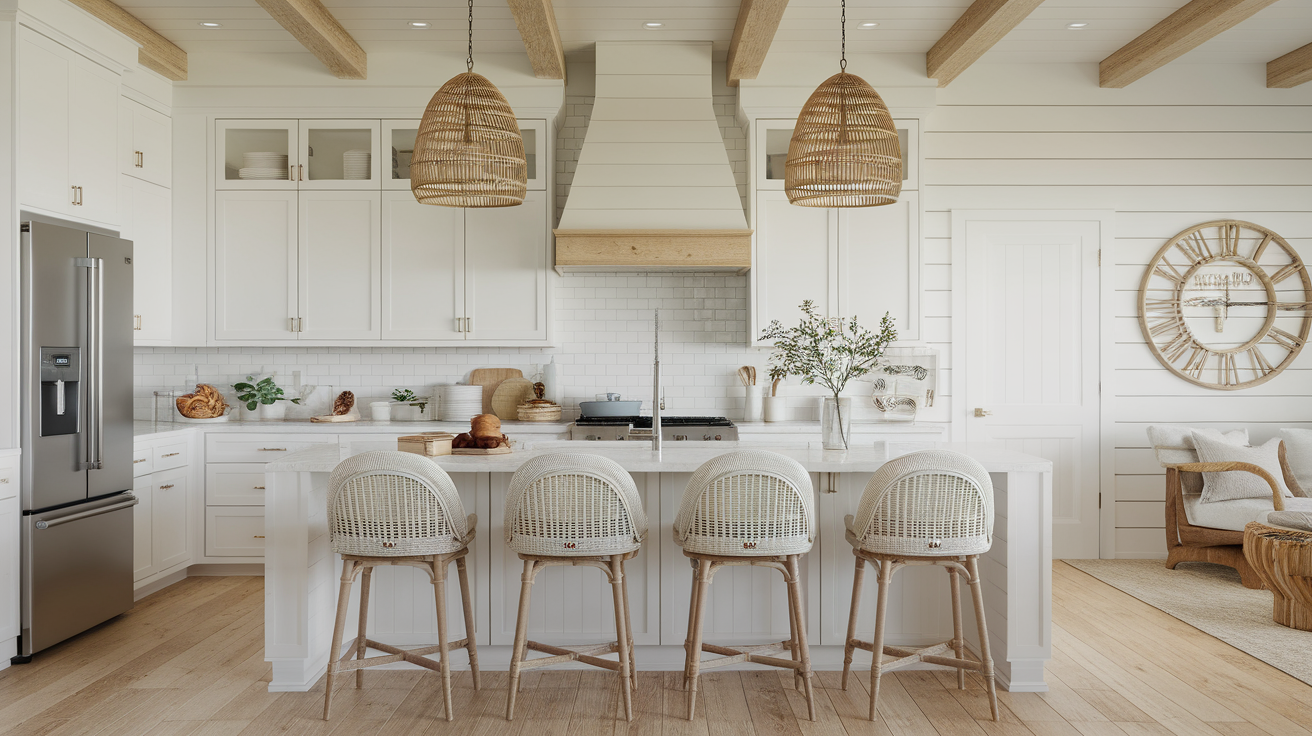
Color selection forms the foundation of any successful modern coastal kitchen design, setting the mood and tying together all other design elements. While traditional beach palettes often rely heavily on predictable navy and white combinations, contemporary coastal design explores a more nuanced range of hues inspired by natural seaside environments. The key lies in understanding how different colors work together to create depth, interest, and that unmistakable coastal atmosphere without falling into decorative clichés.
Moving Beyond Basic White and Blue
The modern coastal palette extends far beyond the expected white-and-blue formula, drawing inspiration from the full spectrum of beach landscapes. Sand tones ranging from warm beige to cool gray provide neutral foundations that feel both sophisticated and beach-appropriate. These subtle hues offer more visual interest than pure white while maintaining the light, airy quality essential to coastal design.
Soft greens pulled from sea glass and coastal vegetation bring unexpected freshness to the palette. Sage, eucalyptus, and seafoam shades work particularly well on kitchen islands or lower cabinets, grounding the space while maintaining the oceanic connection. These colors pair beautifully with both warm and cool neutrals, offering flexibility in your overall scheme.
Consider incorporating coral and blush tones for warmth and personality. These sunset-inspired hues appear in small doses through bar stools, artwork, or decorative accessories, preventing the kitchen from feeling too cool or monotonous. The trick is using these warmer tones sparingly – think of them as the design equivalent of finding a perfect shell on the beach.
Layering Neutrals for Sophistication
The most successful modern coastal kitchens build complexity through layered neutrals rather than bold color statements. Start with a primary neutral – perhaps warm white cabinets or soft gray walls – then add depth through varying shades within the same color family. This approach creates visual interest without overwhelming the space or competing with natural light.
Texture plays a crucial role when working with neutral palettes. Different materials in similar colors create distinction through their surface qualities. Matte painted cabinets, glossy subway tiles, and honed marble countertops might all be white, yet each contributes unique character to the overall design. This textural variety prevents neutral schemes from appearing flat or boring.
Strategic Use of Accent Colors
Accent colors in modern coastal kitchens should feel intentional rather than random. Choose one or two accent hues and repeat them throughout the space in different applications. A dusty blue might appear in pendant lights, chair cushions, and a few carefully chosen accessories. This repetition creates cohesion while allowing the accents to enhance rather than dominate the overall scheme.
Natural wood tones function as accent colors in many coastal kitchens. The warm browns of walnut or the golden hues of white oak provide organic contrast to cooler blues and grays. These wood elements might appear in open shelving, bar stools, or cutting boards displayed on countertops. Their natural variation adds complexity without requiring additional manufactured colors.
Creating Depth Through Color Placement
Where you place colors matters as much as which colors you choose. Darker tones typically work best below eye level – on lower cabinets, islands, or flooring – while lighter shades above create an sense of height and airiness. This natural gradient mimics outdoor light patterns and feels instinctively comfortable.
Backsplashes offer perfect opportunities for introducing pattern and color without overwhelming the space. Consider these approaches for adding visual interest:
Gradient Tiles: Tiles that transition from light to dark blue creating ocean depth
Mixed Neutrals: Combining various shades of white, cream, and gray in a random pattern
Subtle Pattern: Incorporating geometric designs in tone-on-tone colorways
Natural Stone: Using marble or quartzite with natural veining for organic color variation
Glass Tiles: Adding translucent elements that shift color with changing light
Considering Light and Color Interaction
Natural light dramatically affects how colors appear throughout the day, making it essential to test paint and material samples in your actual space. North-facing kitchens might benefit from warmer neutrals to counteract cool light, while south-facing spaces can handle cooler tones without feeling cold. The goal is achieving balance that feels consistent from morning coffee to evening dinner prep.
Artificial lighting also impacts color perception. Warm LED bulbs enhance beige and cream tones while potentially making blues appear greenish. Cool bulbs might make warm colors seem dull but allow blues and grays to shine. Consider installing dimmers to adjust both light levels and color temperature throughout the day, maintaining your desired atmosphere regardless of natural light conditions.
Window treatments influence both light quality and color scheme. Sheer white curtains diffuse harsh sunlight while maintaining brightness. Natural woven shades add textural interest and filter light with a warm, golden quality. Roman shades in a coordinating fabric can introduce pattern or reinforce accent colors while providing privacy when needed.
Which Materials Bring Beach Vibes Without Looking Clichéd
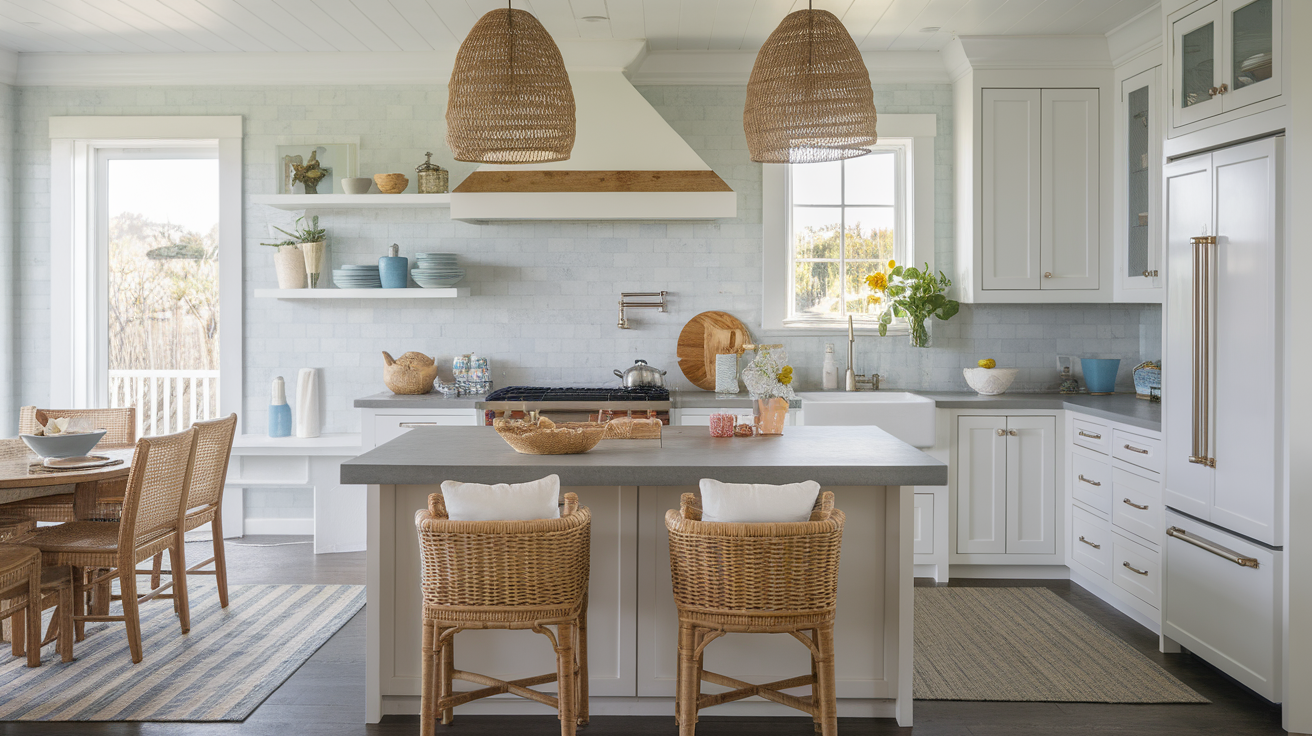
Selecting materials for a modern coastal kitchen requires striking a delicate balance between authentic beach house charm and sophisticated contemporary design. The goal is suggesting rather than stating – materials should whisper “coastal” rather than shout it. Smart material choices create the relaxed, natural atmosphere of seaside living while maintaining the refined aesthetic expected in modern kitchens. Success comes from understanding which materials truly capture coastal essence versus those that simply perpetuate tired beach house stereotypes.
Natural Wood Selections That Work
Wood brings warmth and organic beauty to coastal kitchens, but the type and treatment make all the difference between sophisticated and clichéd. Light-toned woods like white oak, ash, and maple suggest sun-bleached driftwood without requiring actual weathering or distressing. These species offer beautiful grain patterns that add visual interest while maintaining the clean lines essential to modern design.
Avoid overly rustic or heavily distressed wood finishes that scream “beach shack.” Instead, opt for smooth, sealed surfaces with subtle grain visibility. Natural or lightly whitewashed finishes work particularly well, allowing the wood’s character to show through without overwhelming the space. Rift-sawn white oak, with its straight grain pattern, provides especially elegant results for cabinet doors or open shelving.
For flooring, wider planks create a more relaxed, beach house feel than narrow strips. Light to medium wood tones help maintain the bright, airy atmosphere while providing enough contrast to ground the space. Consider engineered hardwood for better moisture resistance in coastal climates, or luxury vinyl plank that mimics wood beautifully while standing up to sandy feet and wet bathing suits.
Stone and Countertop Choices
Countertop selection significantly impacts both the look and functionality of your coastal kitchen. Quartz has become the go-to choice for many designers, offering durability and consistency with options that beautifully mimic natural stone. White quartz with subtle gray veining suggests marble without the maintenance concerns, while options with larger movement patterns can evoke sea foam or wave patterns.
Natural stones bring authentic character that manufactured materials can’t quite replicate. Marble, despite its maintenance requirements, offers unmatched elegance with veining patterns reminiscent of ocean currents. Quartzite provides similar beauty with better durability, making it ideal for busy coastal kitchens. Soapstone’s soft, matte finish and gentle gray tones create a quiet sophistication that complements both traditional and modern coastal aesthetics.
For a more unexpected approach, consider concrete countertops. Their industrial edge balances beautifully with softer coastal elements, and they can be customized with integral colors ranging from soft gray to warm sand tones. The slight imperfections and variations in concrete actually enhance the organic, natural feeling central to coastal design.
Hardware and Fixture Selections
Cabinet hardware and plumbing fixtures provide opportunities to reinforce your modern coastal aesthetic through thoughtful metal finishes and styles. Brushed gold or brass brings warmth without feeling overly traditional, while matte black creates contemporary contrast against light cabinets. Polished nickel and chrome remain safe choices, offering clean, reflective surfaces that enhance brightness.
The style of hardware matters as much as finish. Simple bar pulls and minimalist knobs maintain clean lines, while rope-detailed or shell-shaped hardware ventures into cliché territory. Look for pieces with subtle texture or interesting profiles that add character without literal nautical references. Mixed metals can work beautifully when thoughtfully combined – perhaps brushed gold on cabinets with matte black faucets.
Backsplash Options That Make a Statement
The backsplash offers a perfect canvas for introducing texture, pattern, and personality without overwhelming your coastal kitchen. Subway tiles remain popular for good reason – their clean lines and reflective surfaces enhance light while providing timeless appeal. Consider laying them in unexpected patterns like herringbone or vertical stack for modern interest.
Natural stone backsplashes bring organic beauty and unique character. Consider these distinctive options:
Marble Slabs: Full-height marble creates dramatic veining patterns suggesting ocean waves
Stacked Stone: Light-colored ledger stone adds texture without heaviness
Mother of Pearl: Iridescent tiles provide subtle shimmer reminiscent of seashells
Recycled Glass: Eco-friendly options in sea glass colors offer sustainability and style
Zellige Tiles: Handmade Moroccan tiles bring subtle variation and artisanal character
Combining Materials for Maximum Impact
The most successful modern coastal kitchens layer different materials thoughtfully rather than relying on a single star player. Pair smooth quartz countertops with textured tile backsplashes, or combine painted cabinets with natural wood open shelving. This variety creates visual interest while preventing any single material from dominating the space.
Consider how materials transition between surfaces. The edge where countertop meets backsplash, or where flooring meets cabinetry, offers opportunities for thoughtful detail. A thin metal edge strip, a carefully matched grout line, or a purposeful reveal can elevate the overall design from good to exceptional.
Temperature mixing – combining warm and cool materials – adds sophistication to coastal kitchens. Warm wood tones balance cool gray quartz, while brushed brass hardware warms up crisp white cabinets. This interplay prevents the space from feeling one-dimensional or too strongly weighted toward either warm or cool.
How to Maximize Natural Light in Your Coastal Kitchen
Natural light stands as the single most important element in achieving authentic modern coastal ambiance. More than any material or color choice, abundant daylight transforms ordinary kitchens into bright, welcoming spaces that capture the essence of beach house living. Maximizing natural light involves strategic decisions about windows, surfaces, and spatial arrangement that work together to amplify available daylight throughout the day.
Window Treatments That Enhance Rather Than Block
The relationship between privacy and light presents a common challenge in kitchen design. Traditional heavy curtains or dark blinds might provide privacy but sacrifice the brightness essential to coastal style. Modern solutions offer both without compromise.
Sheer curtains in white or natural linen allow diffused light to fill the space while maintaining privacy during daytime hours. These lightweight fabrics move gently with ocean breezes if you’re lucky enough to have them, adding life and movement to the space. For more control, layer sheers with roll-up shades that can be raised completely during the day and lowered for evening privacy.
Top-down, bottom-up cellular shades offer particular flexibility for kitchens. Lower the top portion for privacy while maintaining light from above, or raise the bottom for views while blocking direct sun on countertops. Light-filtering versions provide UV protection without creating darkness, protecting both your skin and your cabinet finishes from sun damage.
Café curtains covering only the lower half of windows provide another classic coastal solution. These maintain privacy at the working level while leaving upper windows completely unobstructed. Choose simple, tailored styles in white or natural fabrics rather than ruffled or overly decorative options that might feel dated.
Strategic Use of Reflective Surfaces
Reflective surfaces act as light multipliers, bouncing daylight deeper into the kitchen and eliminating dark corners. Glossy backsplashes, whether subway tile, glass, or polished stone, reflect both natural and artificial light throughout the space. Position these surfaces opposite windows when possible to maximize their light-enhancing properties.
Countertops contribute significantly to overall brightness. Light-colored quartz or marble with polished finishes reflect more light than honed or matte surfaces. While honed finishes offer their own appeal, saving them for smaller applications like an island top while using polished surfaces for perimeter counters can help maintain brightness without sacrificing textural variety.
Stainless steel appliances, despite not being white, actually enhance brightness through their reflective properties. Their metallic surfaces bounce light around the room while adding contemporary polish to the coastal aesthetic. Glass-front appliances or cabinet doors similarly contribute to the sense of openness and light flow.
Mirror Placement for Light Amplification
Mirrors deserve special consideration in coastal kitchens, where they can dramatically increase perceived light and space. A large mirror on a wall perpendicular to windows catches and redirects light throughout the room. Antiqued or lightly distressed mirrors add character while avoiding the harsh reflection of standard mirrors.
Here are strategic locations for incorporating mirrors effectively:
Backsplash Mirrors: Antiqued mirror tiles create glamour while doubling light
Cabinet Doors: Mirror inserts in upper cabinets reflect light at eye level
Decorative Panels: Large mirrors disguised as windows expand views and light
Ceiling Details: Tin ceiling tiles with reflective finishes bounce light downward
Open Shelving Backs: Mirror backing on open shelves creates depth and brightness
Choosing Light Fixtures That Complement Natural Light
Artificial lighting should enhance rather than compete with natural light. During daylight hours, fixtures should be subtle architectural elements rather than primary light sources. Choose fixtures with glass or light-colored shades that won’t create dark spots when unlit.
Pendant lights over islands work best in clear glass, white, or metallic finishes that maintain visual lightness. Avoid heavy, dark fixtures that create visual weight and block light flow. Multiple smaller pendants often work better than single large fixtures, allowing light and views to pass between them.
Under-cabinet lighting deserves particular attention in coastal kitchens. LED strips provide task lighting without creating heat, and when positioned properly, they eliminate shadows on work surfaces. Choose warm white LEDs that complement natural daylight rather than cool white options that can feel harsh and clinical.
Architectural Modifications for Maximum Light
Sometimes achieving optimal natural light requires structural changes. Adding or enlarging windows represents the most direct approach, though also the most costly. Transom windows above existing windows add light without sacrificing wall space for cabinets. Clerestory windows near the ceiling provide privacy while flooding the space with light from above.
Skylights or solar tubes bring daylight to kitchens without exterior walls. Modern skylights with built-in shades offer control over light levels and heat gain. Solar tubes, while providing less light than full skylights, require minimal structural modification and work well for smaller kitchens or specific task areas.
Interior modifications can also increase light flow. Removing upper cabinets on window walls prevents shadows and allows maximum light penetration. Replacing solid walls with half walls or pass-throughs to adjacent rooms shares light between spaces. Even something as simple as painting the ceiling white rather than a darker color can noticeably increase reflected light.
What Storage Solutions Keep Your Beach Kitchen Clutter-Free
A clutter-free kitchen is essential to maintaining the serene, open feeling that defines modern coastal design. Beach house living often means dealing with extra items like beach towels, sunscreen, and outdoor dining supplies alongside regular kitchen necessities. Smart storage solutions that hide chaos while keeping essentials accessible make the difference between a kitchen that looks like a magazine spread and one that actually functions for daily life.
Open Shelving Strategies That Work
Open shelving has become synonymous with coastal kitchen design, offering both practical storage and opportunities for styled displays. Success with open shelving requires discipline and careful curation – not everything belongs on display. Reserve these visible spaces for your most attractive dishes, glassware, and a few carefully chosen decorative pieces.
Group items by color or material for visual cohesion. All-white dishware creates a clean, unified look, while mixing cream and natural wood tones adds warmth without chaos. Glass storage containers for dry goods like pasta, rice, and flour maintain the organized aesthetic while keeping ingredients fresh and accessible. Label containers subtly with small tags or minimal text rather than large, bold labels that disrupt the calm visual flow.
The placement of open shelving matters significantly. Install floating shelves on walls without windows to avoid blocking natural light. Position them at heights that make sense for items stored – everyday dishes at easy reach, serving pieces or decorative items higher up. Consider the view from other rooms and ensure shelved items contribute to rather than detract from the overall aesthetic.
Hidden Storage Solutions for Everyday Chaos
While open shelving showcases beauty, hidden storage handles reality. Deep drawers with dividers organize everything from utensils to dish towels efficiently. Drawer organizers specifically designed for different items – knife blocks, spice inserts, pegboard systems for dishes – maximize capacity while maintaining order.
Pantry design can make or break kitchen organization. Walk-in pantries offer ideal storage, but even small closet pantries work well with proper organization. Install adjustable shelving to accommodate items of different heights. Pull-out drawers on lower shelves prevent items from getting lost in back corners. Door-mounted organizers hold spices, oils, and frequently used ingredients within easy reach.
Consider incorporating an appliance garage – a countertop cabinet with a roll-up or flip-up door – to hide small appliances while keeping them accessible. This solution maintains clean counter lines while avoiding the hassle of storing appliances in lower cabinets. Position these garages near outlets for convenient use without cord clutter.
Island Storage That Multitasks
Kitchen islands offer tremendous storage potential beyond basic cabinets and drawers. Design islands with specific storage needs in mind rather than accepting standard configurations. A combination of drawers, cabinets, and open shelving provides flexibility for different items and uses.
Specialized storage features maximize island functionality:
Wine Storage: Built-in wine racks or refrigerators for entertaining
Bookshelf Ends: Open shelving for cookbooks and decorative items
Microwave Drawer: Hidden microwave maintains clean sight lines
Trash Pull-Out: Concealed garbage and recycling bins
Tray Dividers: Vertical storage for cutting boards and baking sheets
The island’s seating side doesn’t have to sacrifice storage. Drawers facing the seating area can hold placemats, napkins, and casual dining items. Even the toe kick area can house shallow drawers for rarely used items like holiday linens or specialty baking tools.
Pantry Organization That Maintains Order
An organized pantry is crucial for maintaining a clutter-free coastal kitchen. Start by categorizing items logically – baking supplies together, canned goods in another area, snacks in an accessible spot. This system makes both cooking and restocking more efficient.
Clear containers serve multiple purposes in pantry organization. They allow you to see when supplies run low, prevent pests, and create visual uniformity. Choose square or rectangular containers over round ones to maximize shelf space. Transfer items like cereal, crackers, and chips to airtight containers immediately after shopping to maintain freshness and organization.
Lazy Susans work wonderfully for oils, vinegars, and condiments, making everything accessible without knocking over bottles. Tiered shelf inserts double visible storage space for canned goods or spices. Baskets corral similar items like snack bars or tea bags while making it easy to grab the entire category when needed.
Creative Solutions for Beach Gear and Extras
Coastal kitchens often need to accommodate items beyond typical kitchen supplies. Beach towels, picnic supplies, and outdoor entertaining essentials require dedicated storage to prevent them from overwhelming the space.
A dedicated beach supplies station keeps everything organized and ready for impromptu beach trips. Use a lower cabinet near the back door for easy access. Install hooks inside doors for reusable bags and lightweight items. Store sunscreen, bug spray, and other beach essentials in a portable caddy that can go directly to the beach.
Vertical space offers untapped storage potential. Ceiling-mounted pot racks free cabinet space while adding visual interest. Wall-mounted magnetic knife strips, paper towel holders, and rail systems with hooks for tools minimize counter clutter. Even the space above cabinets, often wasted, can discretely store rarely used serving pieces or seasonal items in attractive baskets.
Finishing Your Modern Coastal Kitchen
Your modern coastal kitchen transformation comes down to thoughtful execution of these design principles combined with your personal style preferences. The beauty of this aesthetic lies in its flexibility – you can adapt these guidelines to work with your existing space, budget, and lifestyle while still achieving that coveted beach house atmosphere. Whether you’re planning a complete renovation or making strategic updates, focusing on natural light, smart material choices, and organized storage will bring you closer to your coastal kitchen dreams.
The investment in creating a modern coastal kitchen pays dividends beyond aesthetic appeal. These bright, organized spaces inspire more home cooking, encourage gathering with family and friends, and provide a daily dose of vacation-like tranquility. By choosing quality materials, maximizing natural light, and implementing smart storage solutions, you’re creating a kitchen that will remain both beautiful and functional for years to come. The timeless nature of this design approach means your kitchen won’t feel dated as trends change, especially when you’ve avoided gimmicky nautical decorations in favor of authentic coastal elements.
Frequently Asked Questions
Q: Can I create a modern coastal kitchen if I don’t live near the beach?
A: Absolutely! Modern coastal design works beautifully anywhere. Focus on maximizing natural light, using a nature-inspired color palette, and incorporating organic materials like wood and stone. The style evokes a beach house feeling through atmosphere rather than location.
Q: What’s the best flooring choice for a modern coastal kitchen?
A: Light to medium-toned hardwood or luxury vinyl plank in wide planks works wonderfully. Both options provide the warm, natural look essential to coastal style while offering different benefits. Hardwood brings authentic character, while luxury vinyl offers superior water resistance and durability.
Q: How do I prevent my coastal kitchen from looking too themed or kitschy?
A: Avoid literal nautical decorations like anchors, ships wheels, or “beach” signs. Instead, suggest coastal living through materials, colors, and textures. Think weathered wood rather than ship wheels, sea glass colors rather than seashell collections.
Q: Should I choose white or wood cabinets for a coastal kitchen?
A: Both work beautifully in modern coastal design. White cabinets create maximum brightness and that classic beach house look. Light wood cabinets bring warmth and organic texture. Many successful designs combine both, using white upper cabinets with wood lowers or islands.
Q: What countertop materials work best for the modern coastal look?
A: White or light-colored quartz with subtle veining remains the most popular choice, offering durability and consistency. Natural stones like marble or quartzite provide unique character. For an unexpected twist, concrete countertops in light gray tones add contemporary edge.
Q: How can I add color without overwhelming the coastal aesthetic?
A: Choose one or two accent colors and repeat them throughout the space in small doses. Soft blues, sage greens, or coral tones work beautifully in bar stools, pendant lights, or artwork. Natural wood tones also function as warm accent colors.
Q: What’s the ideal lighting plan for a coastal kitchen?
A: Layer multiple light sources including pendants over islands, under-cabinet task lighting, and ambient ceiling fixtures. Choose fixtures in light finishes like white, clear glass, or brushed metals. Install dimmers to adjust mood throughout the day.
Q: How do I organize open shelving to look good all the time?
A: Display only your most attractive items and maintain consistent groupings. Stick to a limited color palette, use matching storage containers for dry goods, and leave some breathing room between items. Regular editing keeps shelves from becoming cluttered.