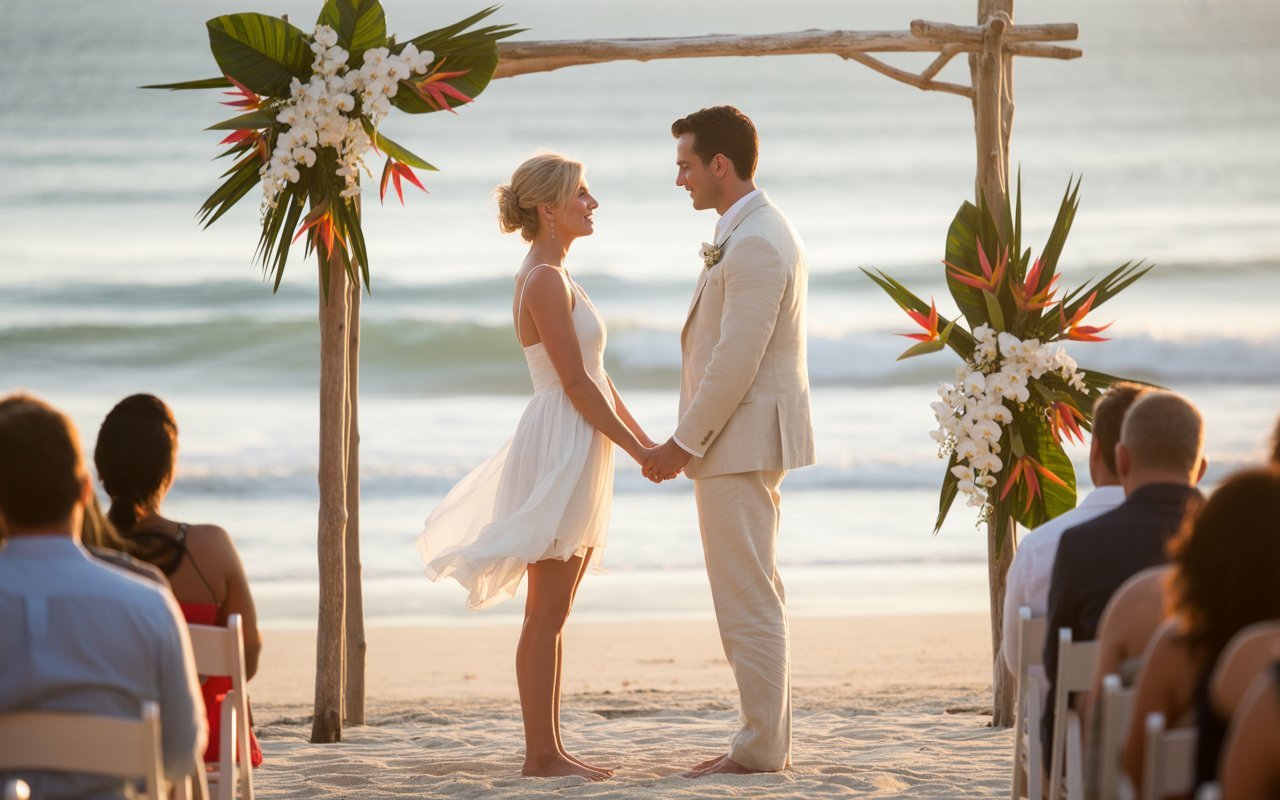
Planning a wedding at the beach sounds dreamy until reality sets in — permits, tides, wind, sand in the cake, and guests squinting into the sun. But when it all comes together, a beach wedding is genuinely one of the most beautiful settings a couple can choose. The light, the sound of the waves, the natural backdrop — no venue decor can replicate it.
The trick is planning ahead, and planning smart. Beach weddings have their own set of logistics that differ completely from ballroom or garden affairs. Knowing what works — and what doesn’t — before you start booking anything will save you a lot of stress down the line.
What follows are 11 ideas that actually work in real beach wedding settings, drawn from what couples and planners have found most effective. Whether you’re eyeing a tropical shoreline in Hawaii or a rugged coastal cliffside in Maine, these ideas will help you build a wedding that looks as good as it feels.
- 1. Lean Into the Natural Backdrop Instead of Fighting It
- 2. Choose a Tide-Smart Ceremony Time
- 3. Go for Barefoot or Semi-Formal Dress Codes
- 4. Plan Your Seating Around Sun and Wind Direction
- 5. Build Your Floral Choices Around Salt Air
- 6. Consider a Sunset Ceremony Followed by a Bonfire Reception
- 7. Hire a Local Coordinator Who Knows the Specific Beach
- 8. Use Sand Ceremony Alternatives That Travel Well
- 9. Think Carefully About Your Sound Setup
- 10. Create a Wedding Welcome Bag That Addresses the Beach Environment
- 11. Have a Real Backup Plan — Not Just "We'll Figure It Out"
- Make It Personal, Make It Practical
- Frequently Asked Questions
1. Lean Into the Natural Backdrop Instead of Fighting It
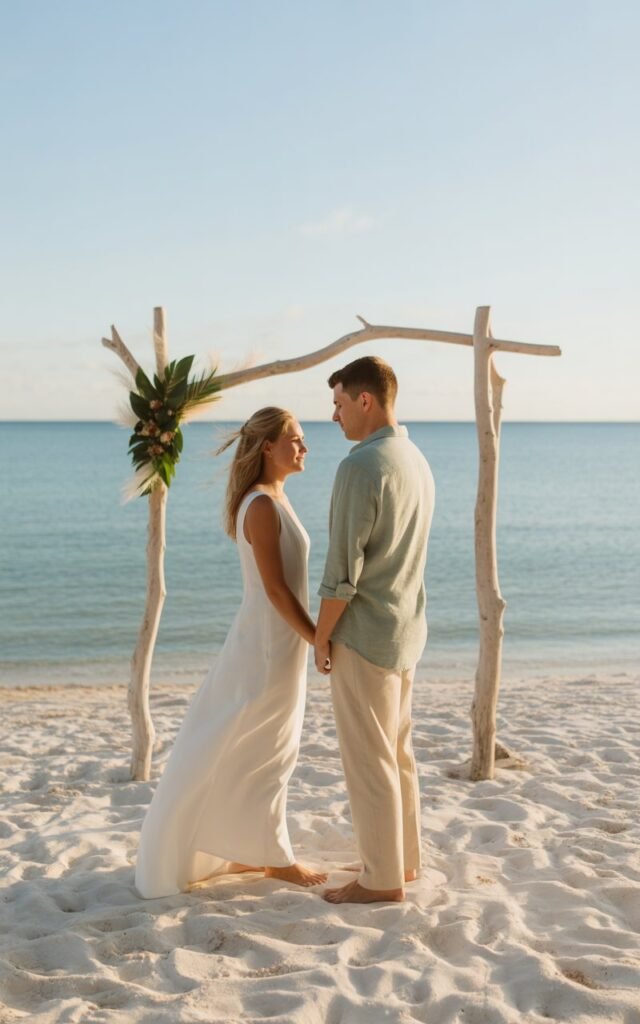
The biggest mistake couples make is over-decorating a beach setting. The ocean is already doing the heavy lifting. Instead of competing with it, use the environment as your primary visual element.
Choose ceremony positioning so that the water frames the couple from the guest perspective. Face the officiant toward the ocean so guests are looking toward the horizon during the ceremony. Simple bamboo or driftwood arches without heavy floral arrangements work better on sandy ground than elaborate constructed structures that risk tipping in coastal wind.
2. Choose a Tide-Smart Ceremony Time
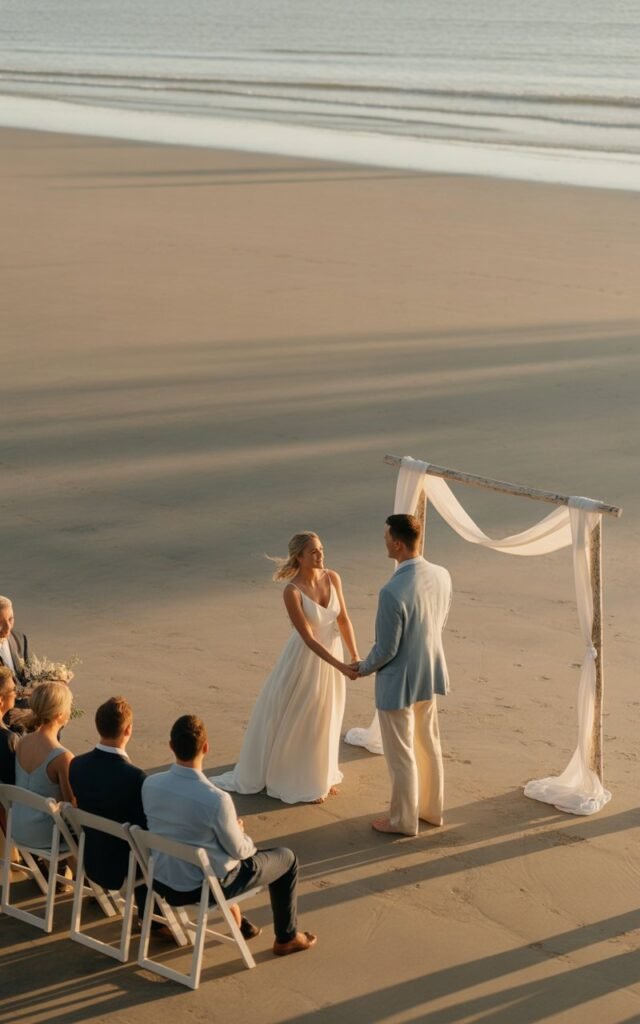
This one gets overlooked more than you’d think. The ceremony time should be coordinated with the local tide schedule — not the other way around. A low tide gives you more usable beach space and calmer, shallower water at the shoreline.
Check the NOAA tide charts (or local equivalent for international destinations) for your wedding date as early as possible. Late afternoon tends to offer the best combination of low tide, softer light, and cooler temperatures on most coastlines.
3. Go for Barefoot or Semi-Formal Dress Codes
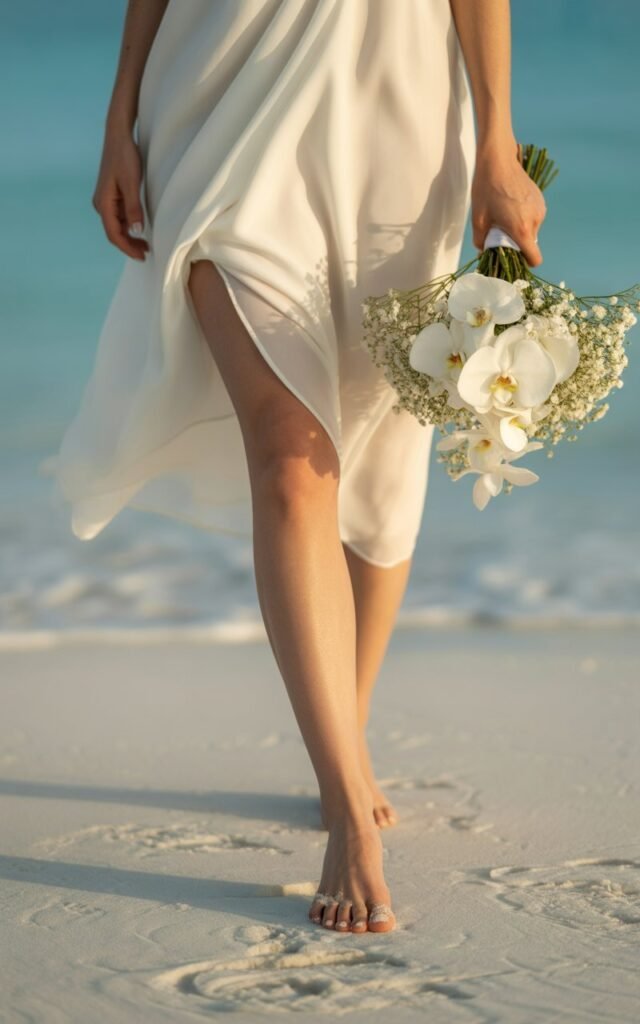
Heels and sand are a miserable combination. A beach wedding gives couples full permission to drop the formal footwear requirement, and guests genuinely appreciate it. Set expectations early in the invitation — “beach casual,” “barefoot-friendly,” or “coastal formal” all signal what to expect.
For the bride, consider a lighter gown with a shorter hemline, flowy fabric like chiffon or crepe, or even a two-piece set that won’t drag through wet sand. Strappy sandals or going barefoot for the ceremony are both completely acceptable and increasingly popular.
4. Plan Your Seating Around Sun and Wind Direction
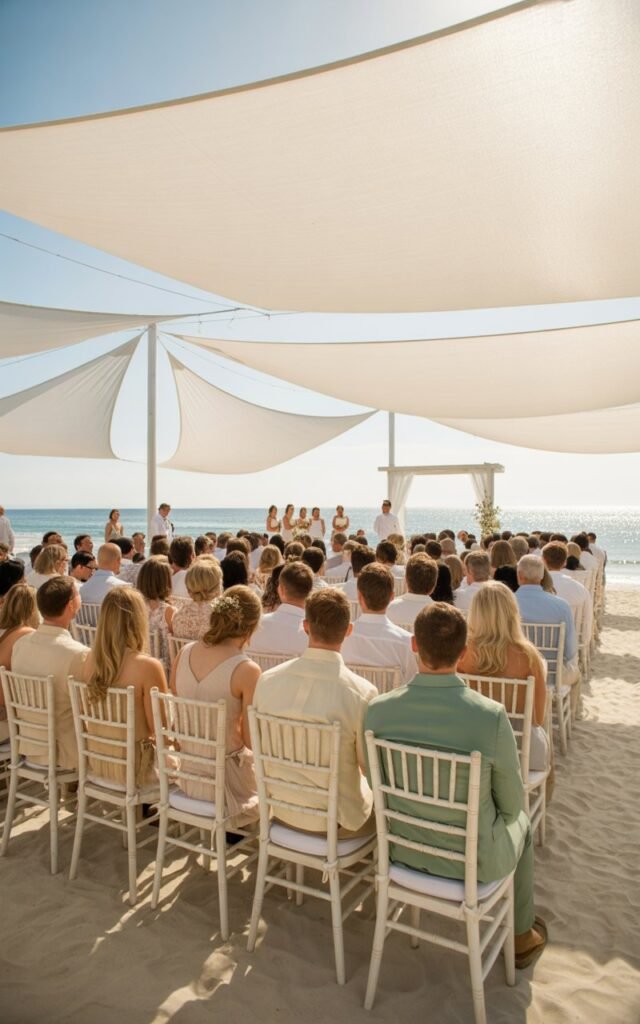
At most beach locations, the afternoon sun and prevailing wind come from a predictable direction. Orienting your seating layout so guests aren’t squinting directly into the light makes a significant difference in both comfort and photos.
Use a site visit — or detailed research into the location’s orientation — to map out where the sun sits during your ceremony time. Shaded seating options like large umbrellas, pergolas, or sail shade structures give guests relief without disrupting the open-air feel. Weighted or staked chairs handle wind much better than traditional wooden ones.
5. Build Your Floral Choices Around Salt Air
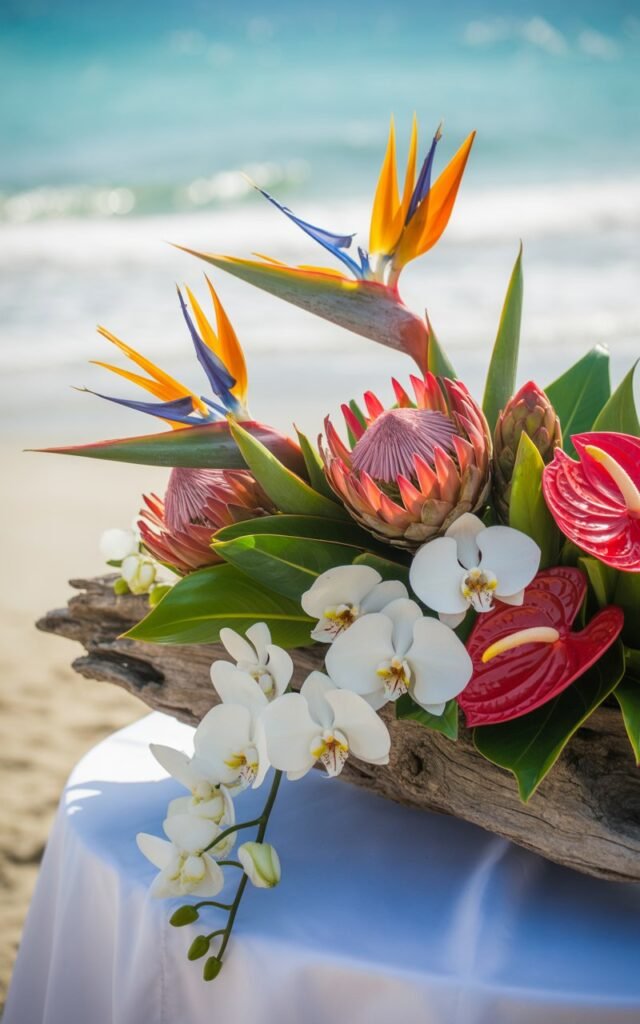
Not all flowers hold up equally in salty, humid coastal air. Tropical blooms like birds of paradise, protea, anthuriums, and orchids were practically made for beach settings — they’re hearty, they look the part, and they handle heat and humidity without wilting.
Avoid delicate flowers like garden roses or sweet peas for centerpieces that will sit outdoors for hours. If you love the look of soft florals, save them for the bouquet, which stays in controlled conditions longer, and use more resilient species for table arrangements and ceremony decor.
6. Consider a Sunset Ceremony Followed by a Bonfire Reception
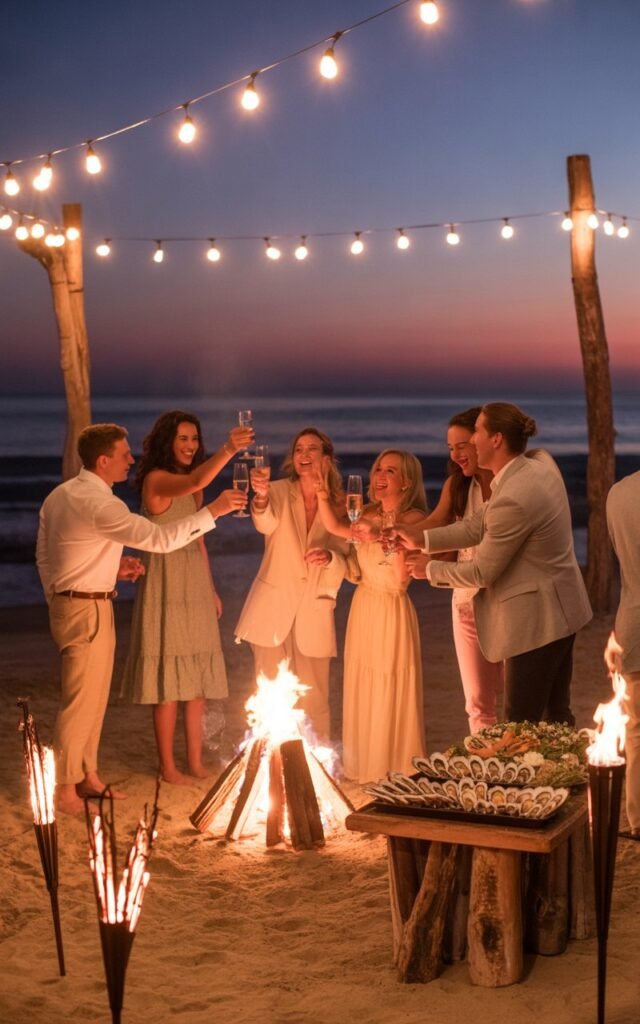
If your venue allows open fires on the beach (check local regulations well in advance), a bonfire reception is one of the most memorable ways to close out a beach wedding day. After a late-afternoon ceremony timed to the sunset, guests transition naturally from cocktail hour to a fire-lit reception as the sky darkens.
String lights strung between beach posts, lanterns, and fire torch lighting create an atmosphere that no indoor reception can match. Food stations built around the bonfire — think seafood boils, grilled skewers, or s’mores dessert bars — keep the casual, communal feel going all night.
7. Hire a Local Coordinator Who Knows the Specific Beach
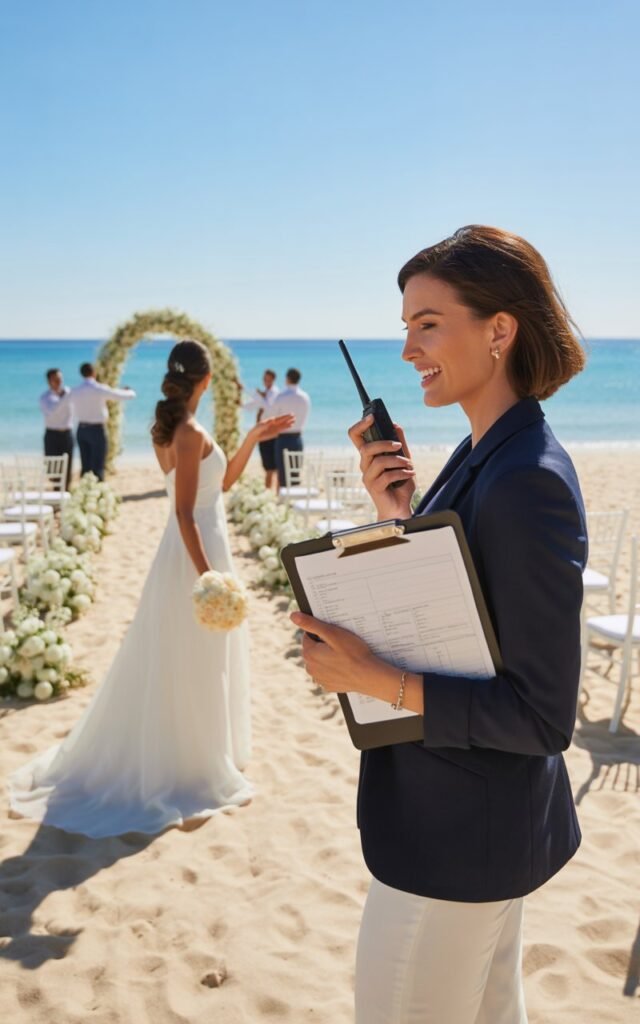
A coordinator with experience in your actual destination is worth every penny. Beach permitting, vendor access rules, noise ordinances, parking logistics, and relationships with local rental companies are all things that vary dramatically by location. Someone who has worked that specific beach before knows exactly what to expect.
This is especially true for destination weddings abroad. A local coordinator in Tulum or the Algarve or Bali isn’t just convenient — they’re often the only people who know which vendors are reliable, which permits take weeks to process, and what backup plans actually work in that environment.
8. Use Sand Ceremony Alternatives That Travel Well
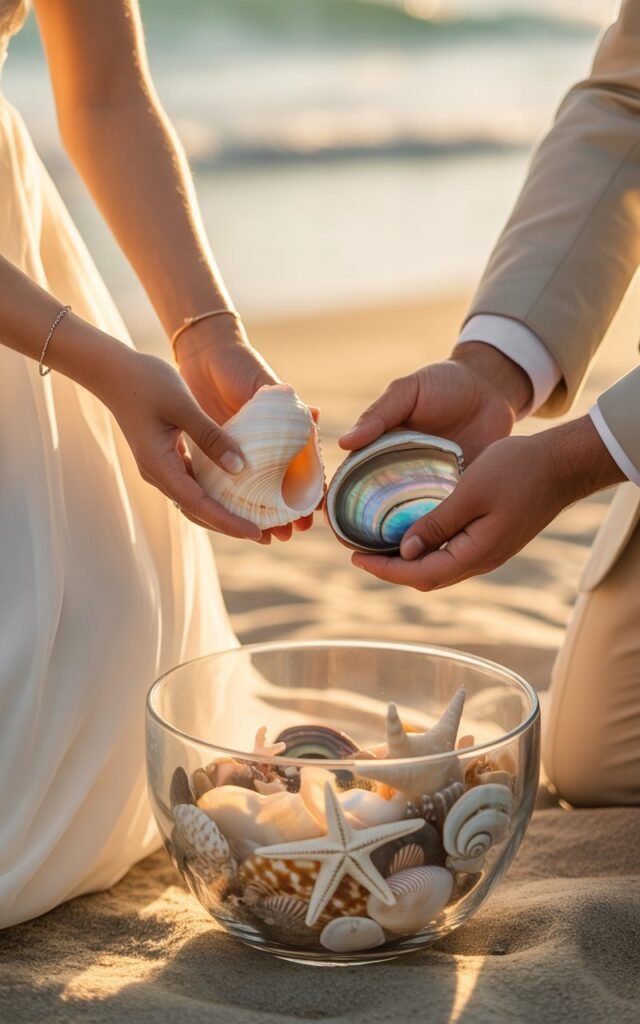
The classic sand ceremony is beautiful, but bringing glass vases and colored sand through airport security or across international borders is genuinely inconvenient. There are meaningful alternatives that work just as well visually and are easier to execute.
A shell collection ritual — where guests each place a shell into a bowl that the couple keeps — is one option. A sea glass arrangement, stones inscribed by guests, or even a driftwood signing piece can all serve the same symbolic purpose without the logistics headache.
9. Think Carefully About Your Sound Setup
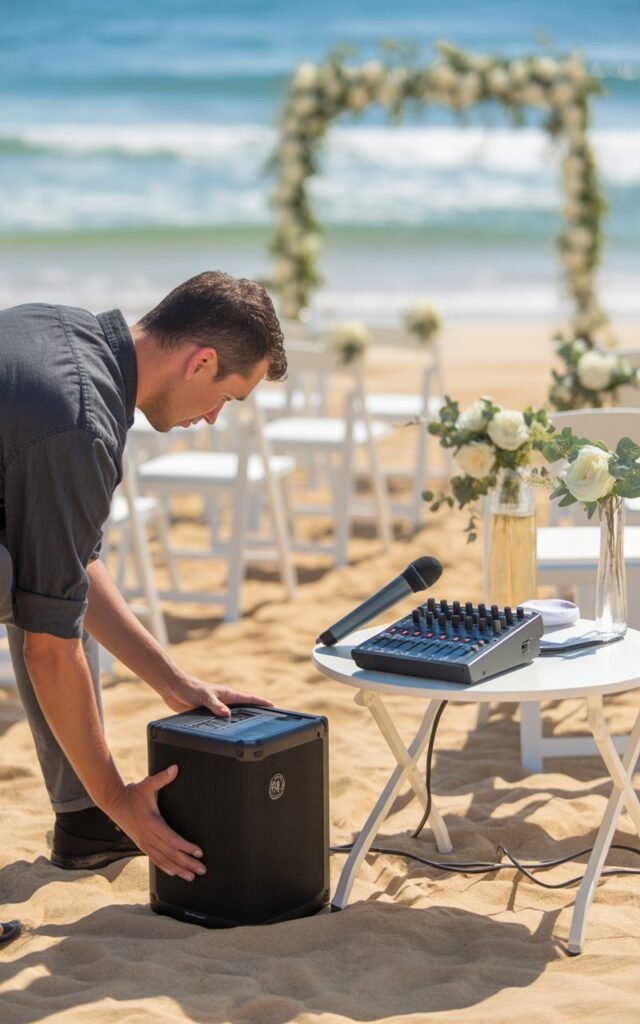
Ocean waves are louder than most couples anticipate. A string quartet, acoustic guitar, or ukulele player — which all sound wonderful in photos and on paper — can be completely overwhelmed by crashing waves and coastal wind if the setup isn’t right.
A professional sound system with a wireless lapel mic for the officiant and quality speakers positioned around the ceremony area is worth the added cost. Guests should be able to hear the vows clearly, and that requires actual audio equipment, not just a talented musician. Discuss the specific beach conditions with your audio vendor ahead of time.
10. Create a Wedding Welcome Bag That Addresses the Beach Environment
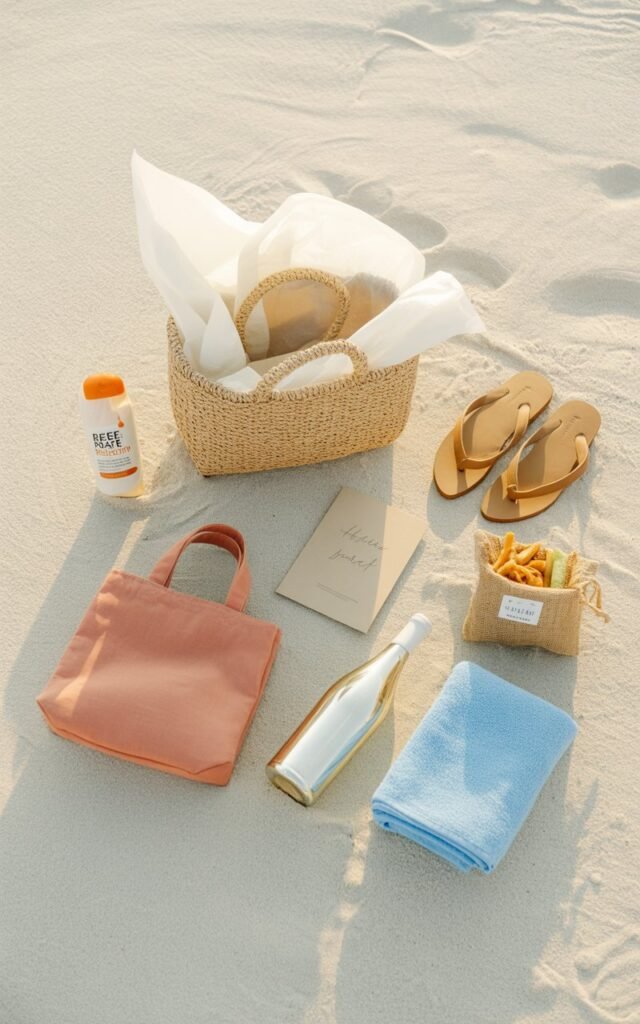
A thoughtful welcome bag for a beach wedding goes beyond the usual snacks and itinerary card. Include practical items guests will actually use: reef-safe sunscreen, a small fan or cooling towel, flip flops in a range of sizes, a light tote, and a card with the tide schedule and weather forecast for the day.
For destination weddings where guests have traveled far, adding local snacks, a small bottle of local rum or wine, and a handwritten note goes a long way. It tells guests you thought about their comfort, not just the aesthetic.
11. Have a Real Backup Plan — Not Just “We’ll Figure It Out”

Every beach wedding needs a specific, pre-arranged backup plan for weather. Not a vague “we’ll move inside if it rains” statement, but an actual confirmed venue, with a timeline for making the call, a vendor communication plan, and a clear way to notify guests quickly.
Book a nearby indoor or covered space as a backup from the very beginning — ideally something within a ten-minute transportation window. The decision to move the ceremony indoors should be made no later than 24 hours before the event based on a clear weather threshold you define ahead of time, not on the morning of while everyone is panicking.
Make It Personal, Make It Practical
A beach wedding works best when the couple stops trying to replicate a ballroom wedding on sand and starts building something that genuinely belongs to that setting. The best ones feel effortless — not because they weren’t planned carefully, but because every decision was made with that specific beach in mind.
Start with the practical constraints: the tide, the sun, the wind, the permits. Build your aesthetic choices around those realities, not the other way around. When the logistics are handled, the beauty of the setting takes care of itself. That’s what makes beach weddings worth all the planning.
Frequently Asked Questions
Q: Do you need a permit to get married on a beach?
A: In most cases, yes. Public beaches in the United States and many international locations require event permits, and some restrict the number of guests, amplified sound, or open flames. Apply for permits as early as possible — some locations require six months or more of lead time.
Q: What’s the best time of year for a beach wedding?
A: It depends on the location. In the Caribbean and Mexico, November through April tends to avoid hurricane season. In the US, late spring and early fall offer milder temperatures and lower humidity on most coastlines. Always check historical weather data for your specific destination before booking.
Q: How do guests dress for a beach wedding?
A: Set clear expectations on the invitation. “Beach casual,” “coastal formal,” or “cocktail attire, sand-friendly footwear recommended” are all useful phrases. Guests appreciate knowing whether to expect a formal event or a more relaxed celebration.
Q: Can you have a traditional ceremony on the beach?
A: Absolutely. Many officiants, including religious ones, can perform ceremonies on the beach. The main adjustments are practical — sound amplification, seating stability, and sun orientation — rather than ceremonial.
Q: What flowers work best for beach weddings?
A: Tropical and hearty blooms hold up best in coastal conditions. Orchids, protea, anthuriums, plumeria, and birds of paradise are popular choices. Avoid delicate flowers like peonies or sweet peas for outdoor arrangements that will sit in heat and humidity for hours.
Q: How do you keep guests comfortable at an outdoor beach ceremony?
A: Shade structures, fans or hand fans, chilled water stations, and timing the ceremony during cooler parts of the day all help. Welcome bags with sunscreen and cooling items are a practical touch that guests genuinely appreciate.
Q: How far in advance should you book a destination beach wedding?
A: At minimum 12 to 18 months out, especially for popular beach destinations. Permits, venues, and in-demand vendors — particularly photographers and coordinators with local experience — book up quickly. International destinations may require even more lead time for legal documentation.
Q: What’s the best wedding food for a beach setting?
A: Food that holds up in heat and doesn’t require heavy plates or utensils tends to work best. Seafood stations, passed appetizers, taco bars, and family-style coastal fare are popular. Avoid anything with heavy cream sauces or temperature-sensitive components for outdoor service.