
Scandinavian kitchen design has gained popularity for good reason. The Nordic approach creates spaces that feel calm, functional, and warm without unnecessary clutter. Clean lines meet natural materials, and neutral tones provide a backdrop that makes cooking and gathering feel effortless.
These kitchens prove you don’t need bold colors or ornate details to create a space with character. Wood tones, white surfaces, and thoughtful lighting work together to make rooms that feel both modern and timeless. The beauty lies in simplicity—every element serves a purpose while contributing to an atmosphere that feels welcoming rather than sterile.
Below you’ll find ten practical ideas to bring Scandinavian style into your kitchen. From color choices to storage solutions, each approach helps create a space that balances function with the cozy, uncluttered aesthetic Nordic homes are known for.
- All-White Base with Natural Wood Accents
- Minimalist Open Shelving
- Black Metal Fixtures and Hardware
- Simple Ceramic Dishware Display
- Natural Textiles in Neutral Tones
- Functional Pendant Lighting
- Greenery and Natural Elements
- Clean Lines and Decluttered Surfaces
- Cozy Hygge Elements
- Simple Subway Tile Backsplash
- Bringing It All Together
- Frequently Asked Questions
All-White Base with Natural Wood Accents

An all-white foundation sets the stage for authentic Scandinavian style. White walls, cabinets, and countertops create brightness that’s especially valuable during darker months. This isn’t about creating a cold, clinical space—the warmth comes from what you layer on top.
Choosing Your White Tones
Not all whites are equal. Warm whites with creamy or ivory undertones work better than stark, cool whites. They soften the space and pair beautifully with wood. Consider white subway tiles for backsplashes, matte white cabinets, and light-colored countertops in quartz or marble.
Adding Wood Elements
Bring in natural wood through flooring, open shelving, or a butcher block countertop on your island. Light woods like birch, ash, or pine are traditional choices. Even small touches matter—wooden cutting boards, utensil holders, or a wooden stool add warmth without overwhelming the palette. The contrast between white surfaces and natural wood grain creates visual interest while maintaining the clean aesthetic.
Minimalist Open Shelving
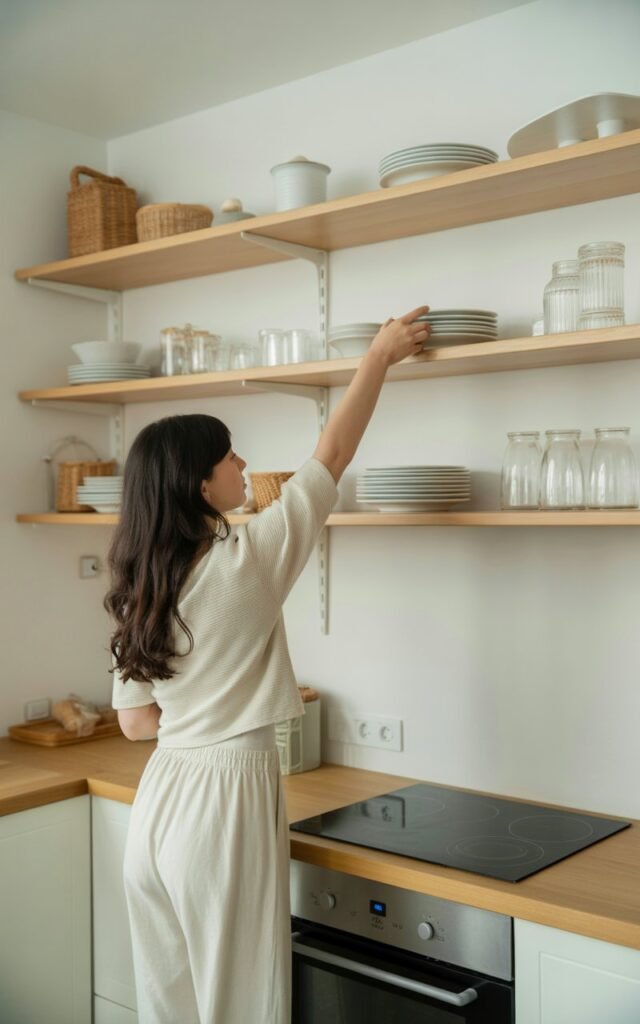
Open shelving strips away visual weight while keeping essentials within reach. You’ll display what you use daily, which naturally encourages you to keep only what matters.
Planning Your Shelves
Install floating shelves in light wood or white-painted wood. Two or three shelves work better than covering an entire wall. Place them where you naturally reach for dishes or glasses. The goal is function first, display second.
Consider these placement ideas:
- Above the Counter: Easy access to everyday plates and bowls
- Near the Stove: Keeps oils, spices, and cooking tools handy
- By the Sink: Perfect spot for dish soap, mugs, and glasses
Keep items organized but not overly styled. Stack white plates, line up glass jars with dry goods, and arrange a few ceramic pieces. The beauty comes from useful objects displayed thoughtfully, not from decorative items you never touch.
Black Metal Fixtures and Hardware
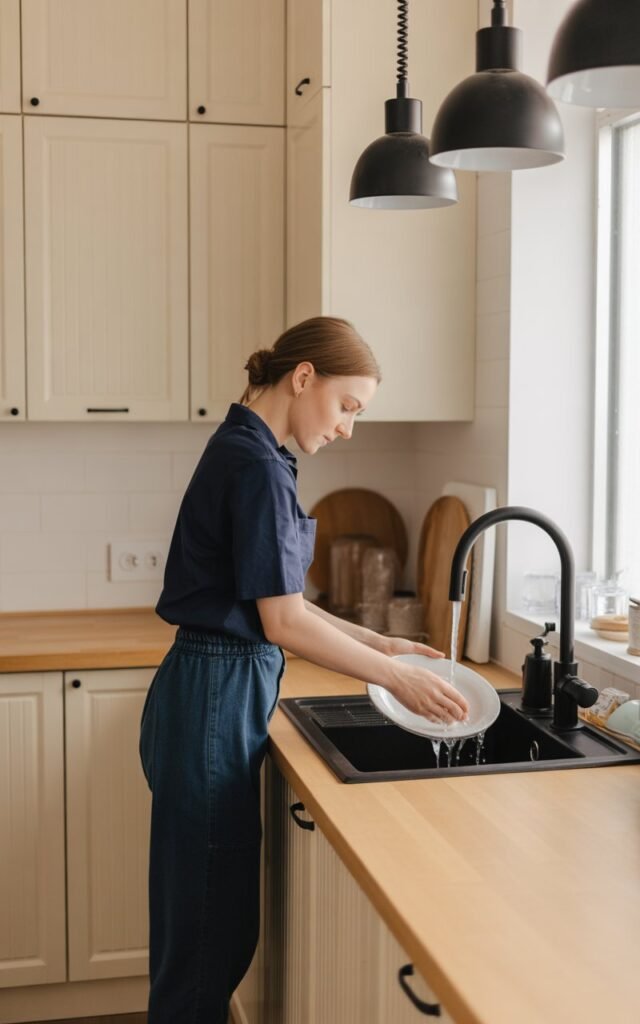
Black accents ground an all-white kitchen and add definition. This contrast is key to preventing the space from feeling washed out.
Where to Add Black
Replace cabinet hardware with matte black pulls and knobs. Install black faucets in the sink area. Black pendant lights over an island or dining table make a strong statement while staying minimal. Even black-framed windows, if possible, create striking lines against white walls.
The matte finish matters more than you might think. It feels modern without being shiny or industrial. Black elements create anchor points that guide your eye through the space and add depth to the neutral palette.
Simple Ceramic Dishware Display
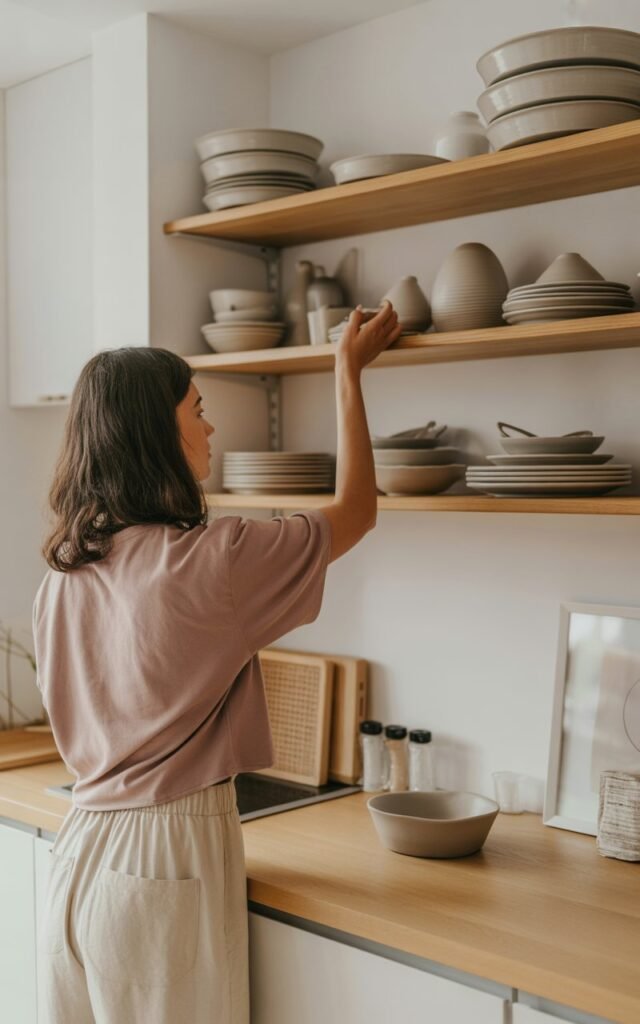
Scandinavian kitchens often showcase beautiful, functional dishware rather than hiding everything behind cabinet doors. Simple ceramics in neutral tones become part of the decor.
Choose handmade or artisan pieces in whites, grays, and earth tones. Stoneware bowls, ceramic plates, and simple mugs with organic shapes work perfectly. Display them on open shelves or in glass-front cabinets.
Mixing and Matching
You don’t need matching sets. Mix different pieces that share a similar aesthetic—neutral colors, simple shapes, natural finishes. This creates an effortless, collected-over-time look rather than a purchased-all-at-once feel. Stack bowls by size, arrange plates vertically using plate stands, and group mugs together for a cohesive display that’s still practical.
Natural Textiles in Neutral Tones
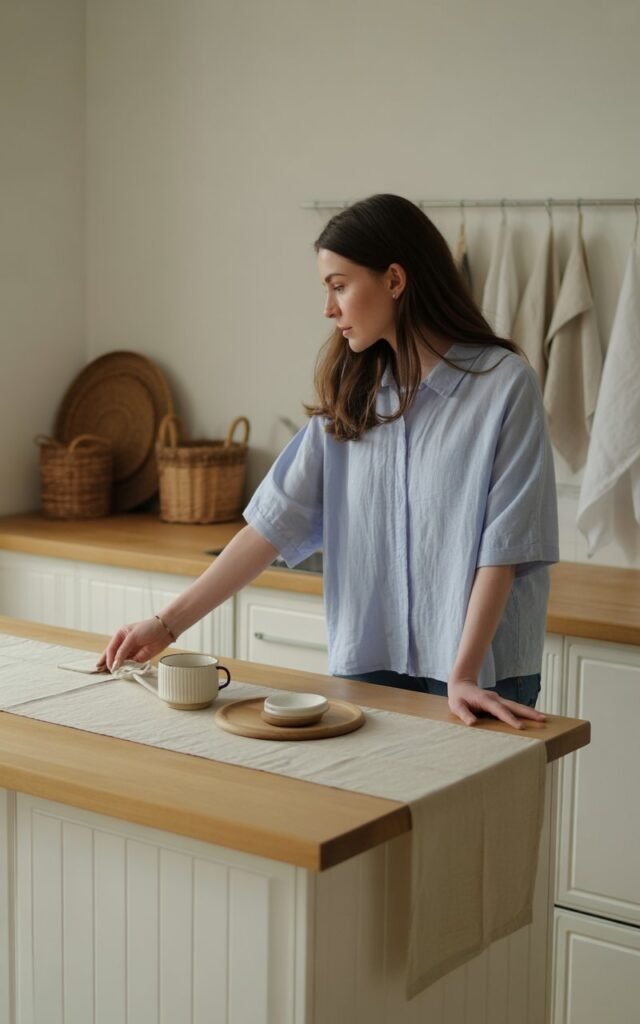
Fabric softens hard surfaces and adds warmth. Linen is the go-to textile in Nordic kitchens for good reason—it’s durable, natural, and ages beautifully.
What to Add
Hang linen tea towels in white, gray, or natural beige. Place a linen table runner on your dining table or island. Consider linen curtains if you have windows, keeping them simple and unlined for a casual drape.
Cotton and wool work too. A sheepskin on a dining chair, a cotton rug under the table, or woven baskets for storage all bring texture. Stick to natural fibers and neutral colors. The tactile quality of these materials makes the kitchen feel lived-in and comfortable without adding visual clutter.
Functional Pendant Lighting
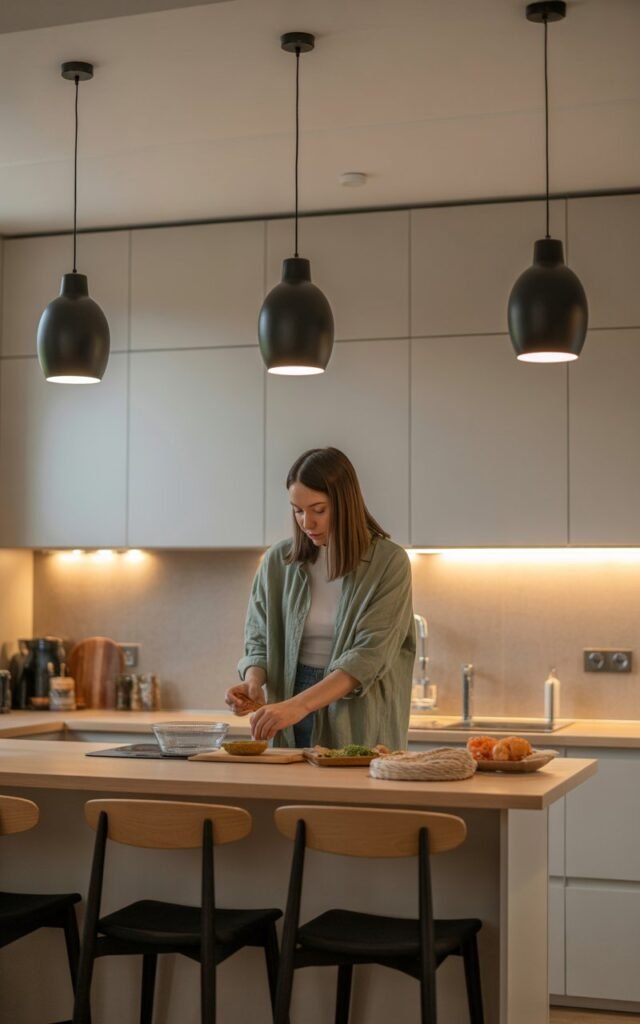
Lighting shapes the entire mood of your kitchen. Scandinavian design favors simple, functional fixtures that provide good light while looking beautiful.
Pendant lights work well over islands, dining tables, or sink areas. Choose designs with clean lines—think glass globes, metal shades in black or brass, or simple cone shapes. Avoid ornate or overly decorative styles.
Layering Your Light
Combine pendant lights with other sources. Under-cabinet lighting helps with food prep. A simple ceiling fixture provides overall illumination. The goal is bright, functional light that can be adjusted based on time of day. During darker months, good lighting becomes essential for both function and mood. Install dimmer switches where possible to control the atmosphere as daylight changes.
Greenery and Natural Elements

Plants bring life into minimalist spaces. They add color and texture without breaking the color scheme.
Best Plants for Kitchens
Herbs are practical and pretty. Grow basil, rosemary, or thyme in simple terracotta or white ceramic pots on your windowsill or open shelves. Pothos or snake plants work well if you have counter space—they tolerate varying light conditions and need minimal care.
Fresh flowers in a simple vase add seasonal beauty. Eucalyptus branches, dried grasses, or bare branches also fit the Nordic aesthetic. Keep arrangements simple and natural rather than overly styled. A single stem in a glass bottle can be as effective as a full bouquet. The key is bringing organic shapes and natural elements into a space dominated by straight lines and manufactured materials.
Clean Lines and Decluttered Surfaces
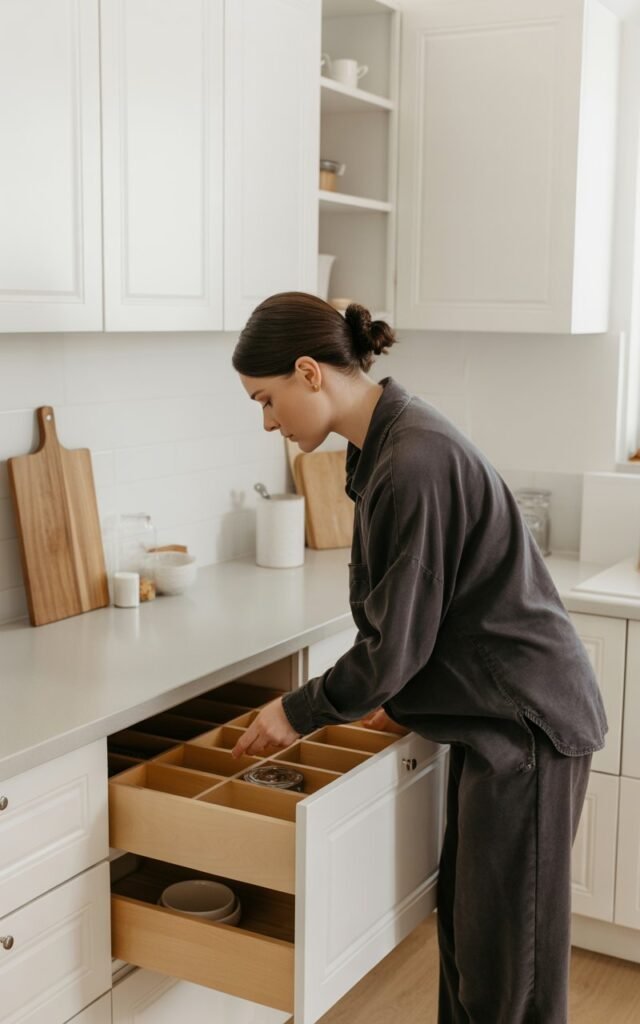
Scandinavian design is built on the principle that less is more. Clear countertops create calm and make the kitchen more functional.
Store appliances you don’t use daily. Keep only essential items visible—a knife block, cutting board, or frequently used cooking tools. Everything else goes in cabinets or pantries.
Creating Storage Solutions
Drawer dividers keep utensils organized and easy to find. Cabinet organizers maximize vertical space. Hooks under cabinets hold mugs or measuring cups. Pull-out pantry shelves make everything accessible without requiring deep digging. These solutions keep surfaces clear while ensuring you can still reach what you need quickly. The goal isn’t perfection but creating systems that make maintaining clear spaces effortless rather than constantly fighting clutter.
Cozy Hygge Elements
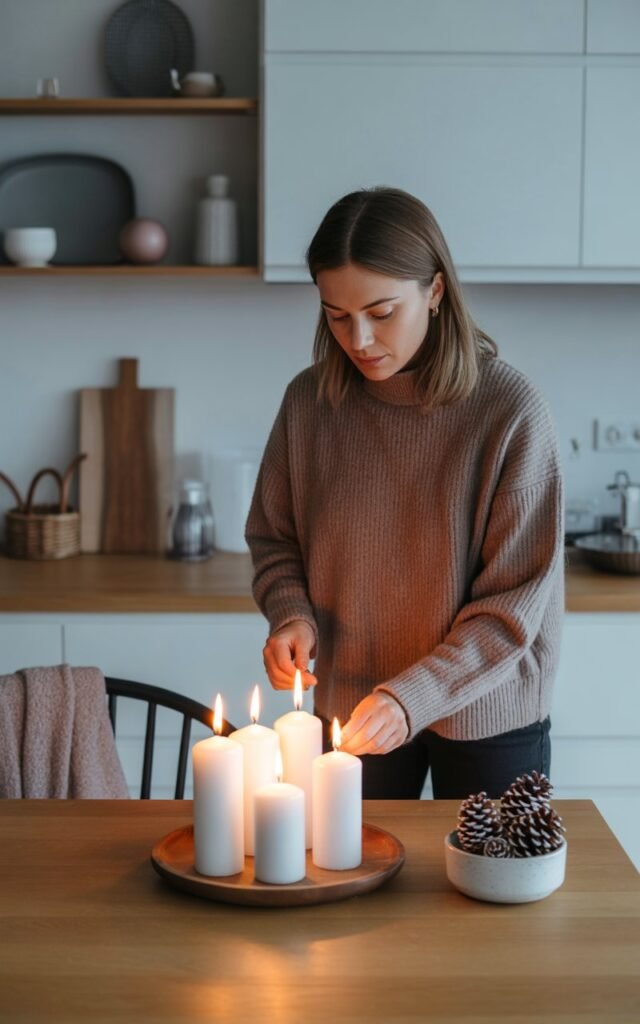
Hygge—the Danish concept of coziness—softens minimalist design. It’s about creating warmth and comfort through small, intentional touches.
Adding Warmth
Candles are essential. Use unscented white or cream pillar candles in simple holders. Group several on a tray for impact. Soft, warm lighting from lamps creates ambiance in the evening. A small bowl of seasonal items—pinecones in winter, shells in summer—connects the space to nature and the changing seasons.
Layer in comfort through small details. A soft throw over a dining chair invites lingering. A wooden tray with coffee supplies makes morning routines feel special. These touches create warmth without adding clutter, maintaining the clean aesthetic while making the space feel like home rather than a showroom.
Simple Subway Tile Backsplash
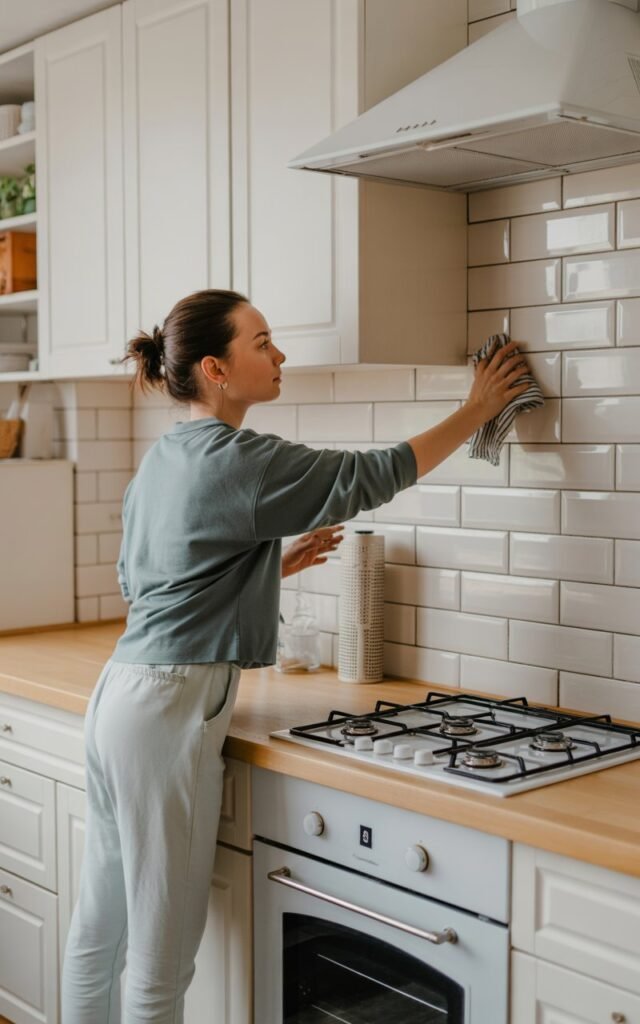
Subway tiles are a Scandinavian kitchen staple. They’re practical, timeless, and work with the minimalist aesthetic.
White subway tiles in a traditional brick pattern create a classic backdrop. The slight texture and grout lines add visual interest without being busy. They’re also incredibly practical—easy to clean and resistant to water and heat.
Installation Patterns
Standard horizontal brick layout works best for the Nordic look. Keep grout lines minimal and use white or light gray grout to maintain the seamless feel. Consider running tiles to the ceiling in the backsplash area rather than stopping partway—this elongates the space and creates a cleaner, more intentional look. The simplicity of subway tiles lets other elements shine while providing a durable, attractive surface that will look current for decades.
Bringing It All Together
Creating a Scandinavian kitchen isn’t about following rigid rules. It’s about understanding the principles—simplicity, functionality, natural materials, and light—then applying them in ways that work for your space and life. Start with what feels most important to you, whether that’s clearing countertops, adding wood warmth, or improving lighting.
The beauty of this approach is its flexibility. You can achieve the Nordic aesthetic whether you’re renovating completely or just making small updates. Focus on quality over quantity, choose items that serve real purposes, and trust that simplicity often creates more impact than excess. Your kitchen should feel like a place where you want to spend time, where cooking feels easy and gathering feels natural.
Frequently Asked Questions
Q: What colors are used in Scandinavian kitchens?
A: White forms the foundation, paired with natural wood tones. Black accents add contrast, while soft grays and beiges appear in textiles and accessories. The palette stays neutral and light to maximize brightness.
Q: Do I need to replace all my cabinets to get a Scandinavian look?
A: No. You can paint existing cabinets white, replace hardware with matte black options, and add open shelving. These changes create the aesthetic without full replacement.
Q: What type of wood works best for Scandinavian kitchens?
A: Light woods like birch, ash, pine, or oak are traditional choices. They bring warmth without darkening the space. Natural, unstained finishes show the wood grain beautifully.
Q: Are Scandinavian kitchens practical for families?
A: Yes. The focus on function and smart storage actually makes these kitchens very practical. Clear surfaces and organized systems make cleaning and cooking easier, while durable materials withstand daily use.
Q: How do I add personality without breaking the minimalist aesthetic?
A: Choose a few quality pieces that matter to you—handmade ceramics, a special cutting board, or artisan dishware. Personal items displayed thoughtfully add character without creating clutter.
Q: What’s the difference between Scandinavian and minimalist design?
A: Scandinavian design includes minimalist principles but adds warmth through natural materials and cozy touches. It’s less austere than pure minimalism, with more emphasis on creating a welcoming, lived-in feeling.
Q: Can I use color in a Scandinavian kitchen?
A: Small amounts work if they come from natural sources—green plants, wooden tones, or food items. The base stays neutral, but organic colors add life without overwhelming the space.
Q: How much does it cost to create a Scandinavian kitchen?
A: Costs vary widely. You can start with small changes like new hardware, paint, and decluttering for under $500. Full renovations cost more but focus on quality materials that last, making them worthwhile investments.
Q: What lighting is best for dark winter months?
A: Layer different light sources—overhead fixtures, under-cabinet lights, and pendant lights. Choose warm white bulbs and add dimmers to adjust brightness. Good lighting is essential for function and mood during darker seasons.