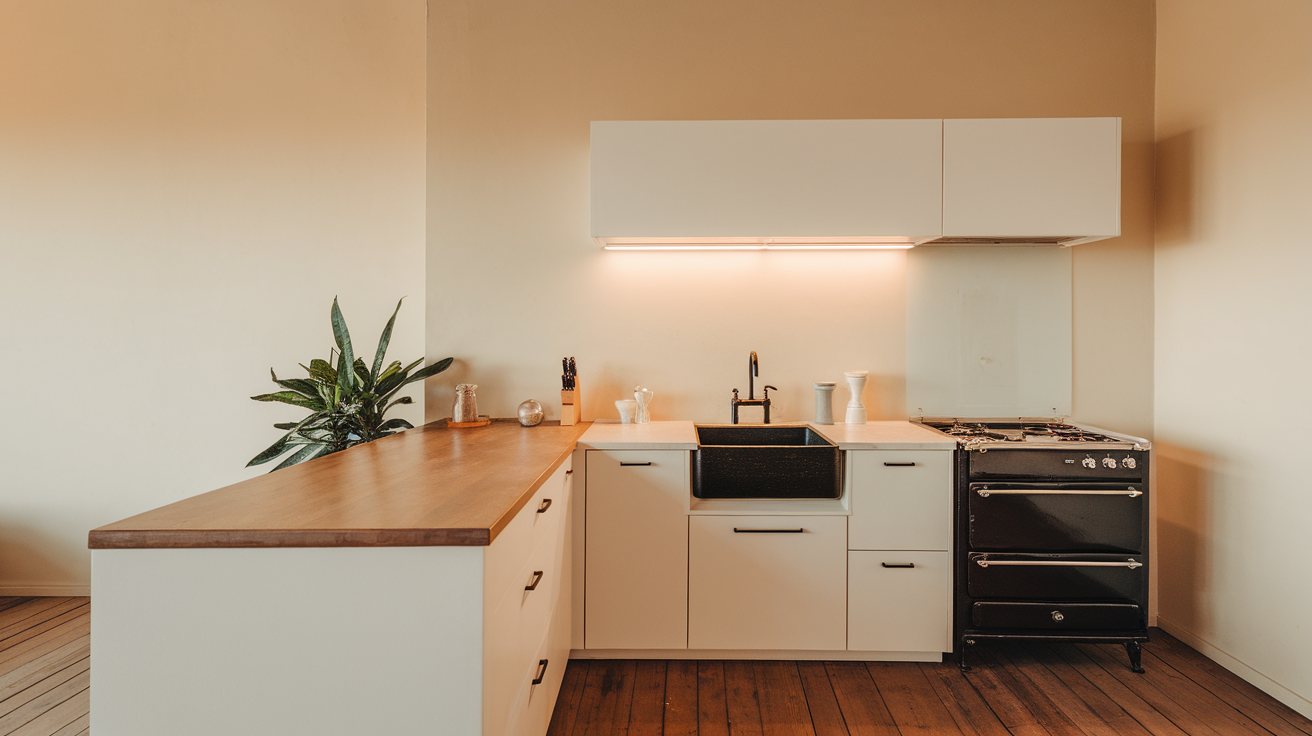
A minimalist kitchen transforms cooking spaces into serene environments where functionality meets sophisticated simplicity. This design philosophy strips away excess decoration and unnecessary items, leaving only what serves a purpose while maintaining visual appeal. The result creates a space that feels both modern and timeless, where clean lines and thoughtful organization make daily cooking tasks more enjoyable.
The beauty of minimalist kitchen design lies in its ability to make small spaces feel larger and cluttered kitchens feel peaceful. By reducing visual noise through careful selection of colors, materials, and storage solutions, these spaces become easier to maintain and more pleasant to use. This approach doesn’t mean sacrificing personality or warmth – instead, it focuses attention on quality materials, thoughtful details, and the subtle interplay of light and shadow.
In the following sections, we’ll walk through practical strategies for achieving this coveted aesthetic in your own kitchen. From selecting the perfect color palette to mastering the art of selective display, these ideas will help you create a kitchen that feels both spacious and sophisticated. Whether you’re starting from scratch or refining an existing space, these minimalist principles will guide you toward a kitchen that serves as both a functional workspace and a calming retreat.
What Makes a Kitchen Truly Minimalist?
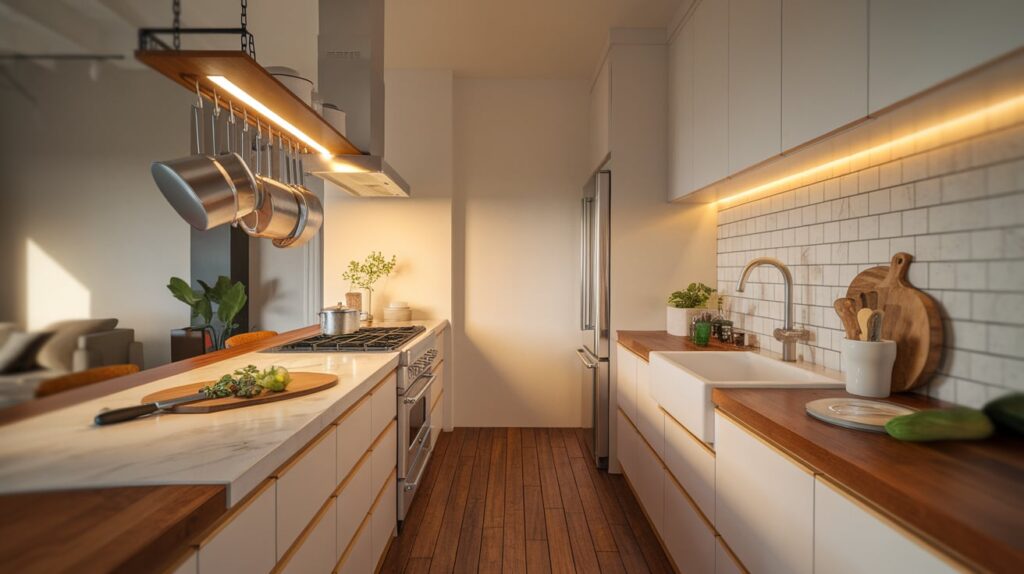
Creating a minimalist kitchen requires understanding the core principles that distinguish this style from simply having an empty or sparse space. The philosophy centers on intentional choices, where every element earns its place through both function and form.
Essential Characteristics of Minimalist Kitchens
The foundation of minimalist kitchen design rests on several key characteristics that work together to create the signature clean aesthetic. Straight lines dominate the visual landscape, from cabinet doors to countertop edges. Hardware often disappears entirely, replaced by touch-latch mechanisms or integrated pulls that maintain unbroken surfaces. Open floor plans allow movement to flow freely, while carefully chosen materials create subtle textural interest without overwhelming the senses.
Quality becomes paramount when fewer elements occupy the space. A single beautiful cutting board displayed on the counter makes more impact than multiple mediocre ones hidden away. This principle extends to every aspect, from the grain of wood shelving to the finish on stainless steel appliances.
The Difference Between Minimal and Empty
Many people mistake minimalism for stark emptiness, but successful minimalist kitchens feel complete rather than lacking. The distinction lies in purposeful selection versus arbitrary removal. An empty kitchen lacks personality and warmth, while a minimalist one carefully curates elements that serve multiple purposes.
Consider how a single potted herb on the windowsill adds life without creating clutter. Or how a beautifully designed knife block becomes sculpture as well as storage. These thoughtful touches prevent the space from feeling cold or institutional while maintaining the clean aesthetic.
The key lies in restraint paired with intention. Each item should answer yes to at least two questions: Does it serve a practical purpose? Does it contribute to the visual harmony? Does it bring joy or beauty to the space?
Color Psychology in Minimalist Spaces
Color choices profoundly impact how minimalist kitchens feel and function. White remains the classic choice, reflecting light and creating an sense of expansiveness that smaller kitchens particularly benefit from. But minimalism doesn’t require monochrome – soft grays, warm beiges, and even deep charcoals can anchor these spaces beautifully.
The psychological effects of color become more pronounced in simplified spaces. Cool tones promote calm and focus, making them ideal for busy households. Warmer neutrals create coziness without cluttering the visual field. Black accents add sophistication and help define zones within open layouts.
What matters most is consistency and restraint. Limiting the palette to two or three colors maximum prevents visual fragmentation. This discipline in color selection allows architectural features and quality materials to shine.
Balancing Function with Aesthetics
The greatest challenge in minimalist kitchen design involves maintaining full functionality while achieving visual simplicity. Every cook needs tools, ingredients, and equipment readily accessible, yet these necessities can quickly destroy the clean lines minimalists prize.
Smart solutions bridge this gap through dual-purpose design. A magnetic knife strip serves as both storage and wall art. Beautiful ceramic canisters hold dry goods while adding subtle texture. A wooden cutting board left on the counter provides workspace and warm visual interest.
The balance shifts based on how you use your kitchen. Passionate bakers might display a stand mixer as sculpture, while those who rarely bake would store it away. Understanding your cooking habits helps determine what stays visible and what hides behind closed doors.
How Do You Choose the Right Color Palette?
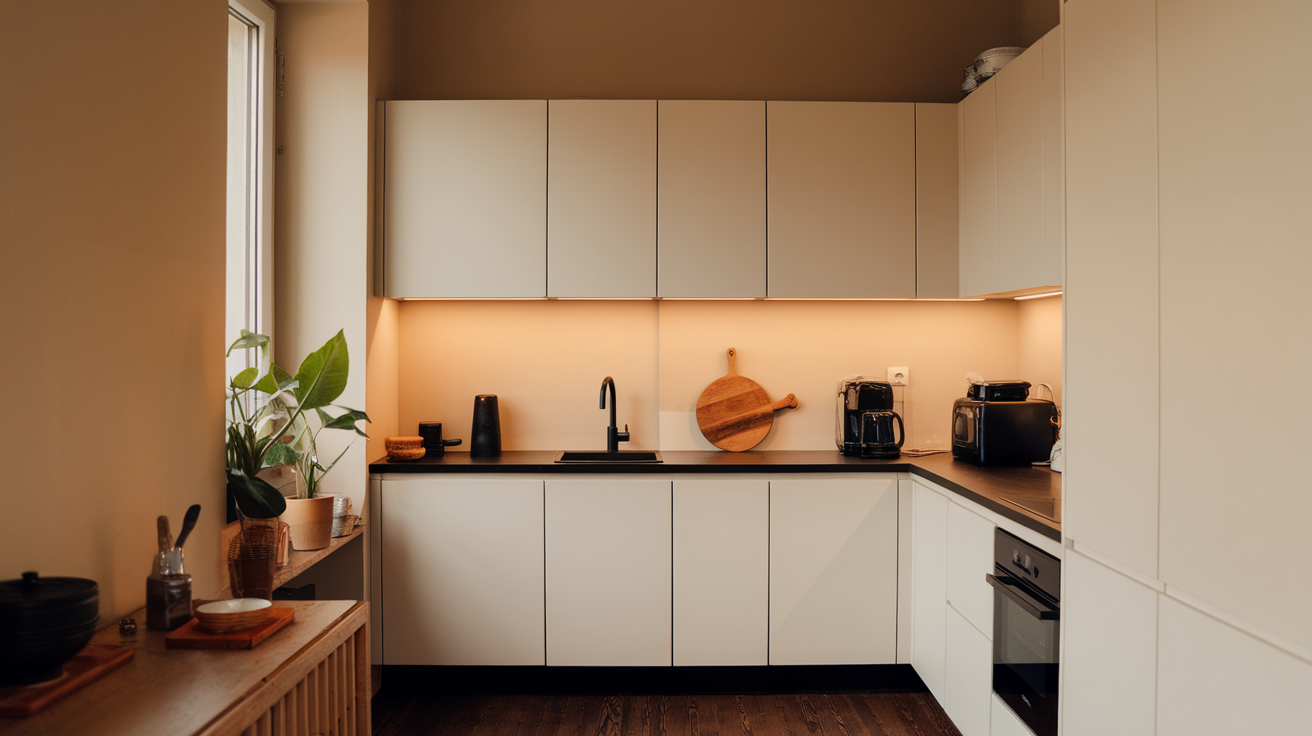
Color selection forms the foundation of any minimalist kitchen design, setting the tone for everything else that follows. The right palette creates cohesion while allowing subtle variations that prevent monotony.
Working with Neutral Foundations
Neutral colors provide the perfect backdrop for minimalist kitchens, offering versatility and longevity that trendy hues can’t match. Begin with one dominant neutral – perhaps soft white for walls and upper cabinets, or warm gray for a more grounded feel. This base color should cover approximately 60-70% of visible surfaces, creating the unified look that defines minimalism.
The beauty of neutrals extends beyond their visual calm. They reflect both natural and artificial light effectively, making spaces feel larger and brighter. Maintenance becomes simpler too, as neutral backgrounds don’t compete with food colors or draw attention to minor imperfections.
Adding Subtle Contrast Without Clutter
Once your foundation is established, introducing subtle contrast prevents the space from feeling flat or lifeless. This might mean pairing white walls with pale gray lower cabinets, or adding black hardware to cream-colored drawers. The key word here remains “subtle” – dramatic contrasts can fragment the visual flow.
Natural materials offer another avenue for gentle contrast. The grain in light oak shelving provides texture against smooth painted surfaces. Marble veining adds organic patterns without disrupting the color scheme. These natural variations bring life to the space while maintaining overall harmony.
Consider using contrast strategically to highlight specific areas or features. A darker backsplash can ground the cooking area, while lighter upper surfaces draw the eye upward, creating an impression of height.
The Power of Monochromatic Schemes
Monochromatic color schemes – using various shades of a single color – create sophisticated depth without complexity. Starting with white, you might incorporate ivory, cream, and pale gray throughout different elements. This approach maintains absolute cohesion while preventing the bland uniformity that single-color spaces sometimes suffer from.
The technique works equally well with other base colors:
- Gray Scales: From charcoal base cabinets through medium gray walls to pale silver accessories
- Beige Tones: Ranging from deep taupe to sandy cream, creating warmth without color chaos
- Black and White: Classic high contrast that still reads as monochromatic
- Soft Greens: From sage to mint, bringing nature’s calm indoors
Texture becomes crucial in monochromatic schemes, providing the visual interest that color variation might otherwise supply. Matte finishes beside glossy surfaces, smooth counters against textured walls – these subtle differences keep monochromatic spaces engaging.
Natural Materials as Color Elements
Wood, stone, and metal bring inherent color that feels organic rather than applied. These materials add warmth and authenticity that pure paint colors sometimes lack. A butcher block countertop introduces honey tones without seeming decorative. Concrete surfaces provide industrial gray with natural variation.
Select natural materials that complement your chosen palette rather than competing with it. Light woods pair beautifully with white and cream schemes. Darker woods anchor spaces with gray or charcoal foundations. Metals should coordinate too – warm brass with warm neutrals, cool chrome with cooler tones.
The patina that natural materials develop over time adds character without cluttering the aesthetic. This evolution keeps minimalist kitchens from feeling static or sterile, allowing them to age gracefully.
Coordinating Appliances with Your Palette
Appliances present unique challenges in minimalist color schemes, as their finishes must harmonize with your carefully chosen palette. Stainless steel remains popular for its neutral quality and professional appearance, but it’s not the only option.
Integrated appliances that hide behind matching cabinet panels offer the ultimate in visual continuity. When that’s not possible, choose appliance finishes that either blend or make deliberate statements. White appliances disappear against white walls. Black appliances can serve as intentional focal points in lighter schemes.
Smaller appliances deserve equal consideration. That bright red toaster might need replacement with something more subdued, or removal from countertops entirely. Coffee makers, blenders, and other daily-use items should either complement the color scheme or find homes in closed storage. The goal remains visual harmony across every element, large and small.
Which Storage Solutions Keep Surfaces Clear?
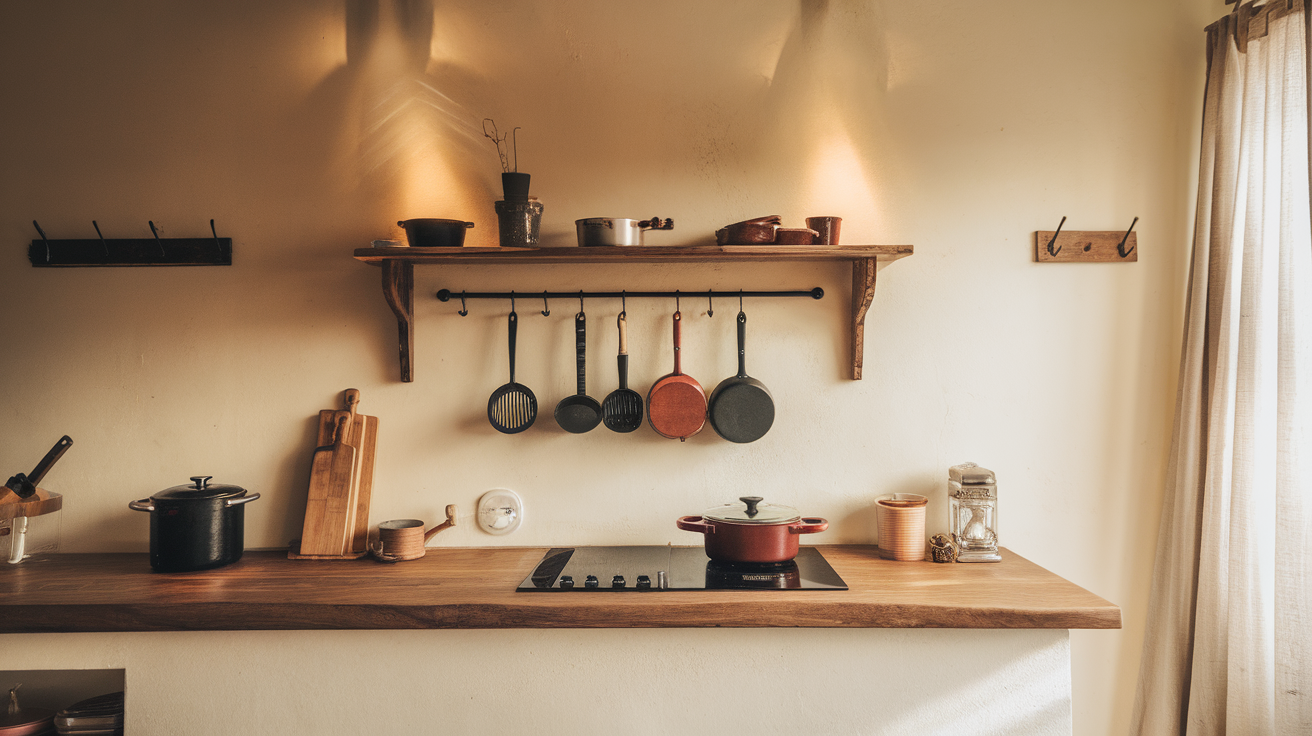
The secret to maintaining minimalist kitchen aesthetics lies in storage systems that hide necessities while keeping them accessible. Smart storage eliminates counter clutter, the enemy of clean lines and peaceful spaces.
Hidden Storage Techniques That Work
Behind smooth cabinet faces lies the real work of minimalist organization. Deep drawers equipped with dividers swallow entire sets of dishes, eliminating the need for open shelving that collects dust and visual noise. Pull-out pantries tuck into narrow spaces between appliances, maximizing every inch while maintaining flush facades.
Toe-kick drawers represent often-overlooked storage opportunities. These shallow spaces beneath base cabinets perfectly accommodate flat items like baking sheets, cutting boards, and placemats. Installing them requires minimal modification to existing cabinetry yet yields surprising capacity.
The inside of cabinet doors offers additional concealed storage through mounted racks and narrow shelves. Measuring cups, pot lids, and cleaning supplies find homes here without impacting the kitchen’s clean appearance. Magnetic strips attached inside doors hold knives or metal tools securely out of sight.
Organizing Essentials Behind Closed Doors
What goes inside cabinets matters as much as their external appearance. Systematic organization ensures you can locate items quickly without leaving doors open to search. Group items by frequency of use, placing daily essentials at eye level and occasional pieces higher or lower.
Uniform storage containers transform chaotic pantry shelves into orderly systems. Square or rectangular containers maximize space efficiency while their consistent appearance maintains visual calm even when cabinets open. Clear containers allow quick identification without labels that might disrupt the minimal aesthetic.
Smart Drawer and Cabinet Systems
Modern drawer systems revolutionize kitchen storage through sophisticated engineering and thoughtful design. Soft-close mechanisms prevent slamming that disrupts peaceful atmospheres. Full-extension slides grant access to items at the back without emptying the entire drawer.
Cabinet interiors benefit from adjustable shelving that accommodates changing needs. Rather than fixed shelves that waste vertical space, adjustable systems let you customize heights for different items. Pull-down shelves bring upper cabinet contents within easy reach, particularly helpful for those with limited mobility.
Specialized inserts maximize drawer functionality. Knife blocks that lie flat protect blades while maintaining drawer closure. Spice organizers angle bottles for easy reading. Pegboard systems allow custom configuration for dishes and bowls, preventing sliding and breaking while maximizing capacity.
The investment in quality interior fittings pays dividends through years of smooth operation and maintained organization. Cheap organizers break quickly and create frustration that leads to abandoned systems and returning clutter.
Vertical Storage Without Visual Noise
Vertical space offers vast storage potential in minimalist kitchens when approached thoughtfully. The challenge lies in utilizing height without creating busy wall surfaces that destroy the clean aesthetic.
Ceiling-mounted racks work wonderfully when positioned strategically. A simple rail above the island holds frequently used pots without cluttering sight lines from living areas. Choose minimal designs in finishes that match other kitchen elements rather than ornate versions that draw excessive attention.
Wall-mounted magnetic strips provide nearly invisible knife storage. These slim bars take virtually no visual space while keeping blades accessible and properly maintained. Position them inside cabinet sides or discrete wall areas rather than prominent locations.
Floor-to-ceiling pantry cabinets maximize storage while maintaining clean lines. These tall units provide tremendous capacity behind simple doors, eliminating the need for multiple smaller storage pieces that fragment wall surfaces. Include internal lighting to improve functionality without compromising external simplicity.
Even refrigerator tops offer storage potential when properly styled. A row of matching baskets contains rarely-used items while appearing intentional rather than cluttered. The key lies in uniformity and restraint – three identical baskets look planned, while miscellaneous items look messy.
What Lighting Creates That Sleek Look?
Lighting design profoundly impacts minimalist kitchen aesthetics, with the power to enhance clean lines or destroy carefully crafted simplicity. The right lighting scheme illuminates tasks while contributing to the overall design vision.
Layering Light for Functionality
Successful kitchen lighting combines multiple sources at different levels, creating depth and eliminating harsh shadows. Start with ambient lighting that provides overall illumination – recessed ceiling fixtures work particularly well in minimalist designs, disappearing into the architecture rather than disrupting clean ceiling planes.
Task lighting targets specific work areas without flooding the entire space. Position these focused sources above cutting boards, sinks, and cooking surfaces where precision matters most. LED strips hidden beneath upper cabinets provide shadow-free counter illumination while remaining completely invisible.
How do you determine the right amount of light for each zone? Consider the tasks performed there and the natural light available at different times. Prep areas need bright, clear illumination while dining spaces benefit from gentler, warmer tones. Installing separate switches or zones allows customization based on time of day and activity.
Pendant Lights as Sculptural Elements
In minimalist kitchens, pendant lights serve dual purposes as both illumination and art. A row of simple geometric pendants above an island creates visual interest without appearing decorative. Choose designs where form follows function – the beauty emerges from pure shapes and quality materials rather than ornamental details.
Scale matters tremendously with pendant selection. Oversized single pendants make bold statements while maintaining simplicity. Smaller multiples create rhythm through repetition. Either approach works when proportions align with surrounding elements.
Material choices for pendants should echo other kitchen finishes. Matte black metal pendants complement black hardware and appliances. Concrete or ceramic versions add texture that relates to natural stone counters. Glass pendants nearly disappear while providing sparkle and light reflection.
Under-Cabinet Lighting for Clean Lines
Under-cabinet lighting eliminates shadows on work surfaces while enhancing the floating appearance of upper cabinets. This hidden illumination creates the impression that cabinets hover against walls, reinforcing the light, airy feeling minimalist designs pursue.
LED technology revolutionizes under-cabinet lighting through slim profiles and energy efficiency. Strips as thin as quarter-inches tuck invisibly into cabinet recesses. Choose versions with diffusion lenses that eliminate individual LED dots, creating smooth, even illumination.
Color temperature significantly impacts the kitchen atmosphere. Warm white (2700-3000K) creates cozy ambiance but may alter food appearance. Cool white (4000-5000K) provides accurate color rendering for food preparation but can feel clinical. Many prefer neutral white (3500K) as a versatile compromise.
Natural Light Maximization Strategies
Nothing enhances minimalist kitchens quite like abundant natural light. Sunlight brings warmth and vitality that artificial sources cannot replicate, while connecting interior spaces to the outside world.
Window treatments should maximize light transmission while maintaining privacy when needed. Sheer roller shades disappear when raised yet diffuse harsh sunlight when lowered. Avoid heavy drapes or ornate blinds that compete with clean architectural lines.
Reflective surfaces amplify available natural light throughout the space. Glossy white cabinets, polished counters, and glass tile backsplashes bounce light into darker corners. Position mirrors strategically to redirect sunlight from windows into shadowy areas.
Sometimes structural changes prove worthwhile for increased natural light. Skylights flood kitchens with overhead illumination that changes throughout the day. Larger windows or glass doors transform dark kitchens into bright, welcoming spaces. Though these modifications require significant investment, the impact on both aesthetics and daily experience justifies the cost for many homeowners.
Dimmer Switches for Ambiance Control
Installing dimmer switches throughout the kitchen provides infinite lighting customization without adding visual complexity. Bright light for detailed cooking tasks dims to soft ambiance for intimate dinners, all through simple adjustment rather than multiple fixture types.
Smart dimmers offer even greater control through programmable scenes. Morning coffee might call for gentle warmth, while dinner prep needs bright clarity. Pre-set scenes eliminate constant adjustment while maintaining optimal illumination for each activity.
Consider these practical dimming strategies:
- Zone Control: Separate dimmers for different areas allow independent adjustment
- LED Compatibility: Ensure dimmers work with LED bulbs to prevent flickering
- Range Settings: Quality dimmers offer smooth transitions from barely visible to full brightness
- Remote Options: Smart switches enable adjustment from phones or voice commands
- Timer Functions: Automated dimming creates natural transitions throughout the day
The subtle control dimmers provide prevents the stark, laboratory feeling that sometimes plagues minimalist spaces. Soft evening light warms severe angles and hard surfaces, proving that minimalism need not sacrifice comfort for style.
How Can You Style Countertops Minimally?
Countertop styling in minimalist kitchens requires careful balance between functionality and aesthetics. These surfaces see constant use yet remain highly visible, making their appearance crucial to maintaining the overall design vision.
The Art of Selective Display
Choosing what remains on countertops defines the difference between minimal and cluttered kitchens. Each visible item should earn its position through both beauty and regular use. A handcrafted olive oil cruet serves daily while adding elegant form. A simple wooden spoon rest prevents mess while providing organic texture.
The “one of each” rule helps maintain discipline. One cutting board, not three. One knife block, not scattered blades. One beautiful bowl for fruit, not multiple containers. This restraint forces thoughtful selection of the best version of each item rather than accumulating multiples.
Questions to ask before placing anything on counters:
Do you use it at least weekly? If not, find closed storage. Does its appearance enhance the space? Purely functional items without aesthetic merit belong hidden. Can it serve multiple purposes? Items that multitask earn their counter space more readily.
Negative space – the empty areas between objects – matters as much as the objects themselves. These breathing rooms prevent even beautiful items from creating visual congestion. Aim for at least 70% clear counter space, clustering necessary items rather than spreading them evenly.
Functional Items as Decoration
Transform necessary tools into design elements through careful selection of beautiful versions. A marble mortar and pestle becomes sculpture when not grinding spices. Copper measuring cups hung from simple hooks add warmth and geometric interest. A sleek knife block provides vertical accent while organizing essential tools.
Quality matters tremendously when items serve decorative purposes. The scratched plastic cutting board needs replacement with bamboo or marble that improves with age. Mismatched utensils give way to coordinated sets that look intentional when displayed.
Consider materials that complement your kitchen’s palette. Warm wood accents suit neutral schemes. Black ceramics anchor lighter countertops. Stainless steel reinforces modern aesthetics. Consistency across displayed items creates cohesion even with minimal quantity.
Creating Breathing Room on Surfaces
Spaciousness makes kitchens feel larger and calmer, regardless of actual square footage. Strategic placement of essential items maintains this open feeling while keeping tools accessible.
Push items toward walls rather than centering them on counters. This positioning maximizes usable workspace while creating clear sight lines. Corner placement works particularly well, utilizing often-wasted space while maintaining open central areas.
Vertical solutions prevent horizontal spread. Wall-mounted paper towel holders eliminate counter rolls. Magnetic knife strips replace bulky blocks. Hanging fruit baskets free surfaces while adding dimensional interest. Each vertical choice preserves precious counter space.
Group related items to reduce visual fragmentation. Cooking oils cluster near the stove. Coffee supplies gather by the maker. This organization creates zones of activity surrounded by clear space, rather than scattered items that make surfaces appear busy regardless of actual quantity.
Small Appliance Management
Daily-use appliances present particular challenges in minimalist kitchens. The coffee maker, toaster, and blender serve important functions but can quickly dominate counter space with their bulk and cords.
Evaluate which appliances truly deserve permanent counter placement. If the stand mixer emerges monthly for occasional baking, it belongs in closed storage. The coffee maker used twice daily earns its spot. Honest assessment often reveals that fewer appliances merit display than initially assumed.
For appliances that remain visible, coordination becomes crucial:
- Matching Finishes: Select appliances in similar materials or colors for visual unity
- Compact Versions: Choose smaller models that provide needed function without overwhelming space
- Cord Management: Use adhesive clips or channels to route cords cleanly along walls
- Appliance Garages: Install tambour doors that hide appliances while maintaining easy access
- Dedicated Zones: Designate specific areas for appliances rather than scattering them
When possible, choose appliances designed with minimalist aesthetics. Clean lines, hidden controls, and simple forms integrate better than ornate or busy designs. Some manufacturers now create entire lines coordinated for visual harmony.
Fresh Elements That Don’t Add Clutter
Living elements bring vitality to minimalist kitchens without contributing to visual chaos. A single potted herb on the windowsill adds green life and practical value. One sculptural orchid provides organic beauty without the maintenance or visual weight of multiple plants.
Fresh fruit deserves special consideration. A bowl of lemons adds color and fragrance while serving practical purpose. Green apples provide subtle hue that complements most color schemes. Choose single varieties rather than mixed fruit that creates color confusion.
The container matters as much as the contents. A simple white ceramic bowl maintains clean aesthetics. A wooden bowl adds warmth without distraction. Avoid ornate or patterned vessels that compete for attention.
Rotation keeps displays fresh without accumulation. This week’s basil plant replaces last week’s rosemary. Seasonal fruit reflects natural cycles – citrus in winter, stone fruits in summer. This changing element prevents stagnation while maintaining the disciplined approach minimalism requires.
Even fresh flowers benefit from restraint. A single stem in a slim vase makes more impact than elaborate bouquets. Three white tulips create elegant simplicity. One branch of eucalyptus adds texture and scent without overwhelming the space. The key remains quality over quantity – one perfect element surpasses multiple mediocre choices.
Final Thoughts on Your Minimalist Kitchen Journey
Creating a minimalist kitchen extends beyond simple decluttering or painting everything white. This design philosophy transforms how you interact with one of your home’s most important spaces, turning daily cooking tasks into calmer, more enjoyable experiences. The principles we’ve covered – from thoughtful color selection to strategic storage solutions – work together to create kitchens that feel both sophisticated and serene.
The journey toward minimalist design often reveals that less truly becomes more when each element serves a clear purpose. Your newly streamlined kitchen will likely require less cleaning, reduce meal preparation stress, and provide a peaceful environment that makes you want to spend time there. These benefits extend beyond aesthetics, improving both the function of your space and your daily quality of life. As you implement these ideas, allow your personal style to guide decisions while maintaining the core principle of intentional simplicity.
Frequently Asked Questions
Q: Will a minimalist kitchen feel too cold or unwelcoming?
A: Not when designed thoughtfully. Minimalist kitchens feel warm through natural materials like wood and stone, soft lighting options, and carefully chosen textiles. The absence of clutter actually makes spaces feel more welcoming by creating calm environments where people want to gather.
Q: How do I maintain a minimalist kitchen with a busy family?
A: Success comes from smart storage systems that make organization effortless. Assign specific homes for everything, install easy-access storage that kids can use, and establish simple daily routines for clearing counters. Choose durable, easy-clean surfaces that handle heavy use without showing wear.
Q: Can I achieve a minimalist look without renovating completely?
A: Absolutely. Start by decluttering and organizing existing storage. Paint cabinets in a unified color, replace hardware with sleek alternatives, and remove upper cabinet doors selectively for an open feel. Small changes like consistent containers and hidden appliances make significant visual impact.
Q: What’s the biggest mistake people make when creating minimalist kitchens?
A: Going too extreme by removing items they actually need regularly. Minimalism should enhance your life, not complicate it. Keep tools and appliances you use frequently accessible, just choose beautiful versions and store them thoughtfully.
Q: How much should I budget for a minimalist kitchen makeover?
A: Costs vary dramatically based on your approach. Simple updates like painting, organizing, and selective purchases might cost under $1,000. Full renovations with custom cabinets and high-end appliances can exceed $50,000. Focus first on organization and paint – these affordable changes yield dramatic results.
Q: Do minimalist kitchens work in older homes?
A: Yes, minimalist principles adapt beautifully to any architectural style. In older homes, preserve character details like original windows or architectural molding while simplifying everything else. The contrast between historic elements and clean design creates sophisticated tension.
Q: How do I prevent my minimalist kitchen from looking boring?
A: Incorporate texture through materials like rough wood, honed stone, or brushed metals. Add interest through lighting design, single statement pieces, or one bold element like a striking backsplash. Quality materials and excellent craftsmanship provide visual interest without cluttering the aesthetic.
Q: Which countertop materials work best for minimalist designs?
A: Quartz offers consistent patterns and low maintenance. Concrete provides industrial edge with customizable finishes. Natural stones like marble or granite add organic beauty. Choose materials with subtle patterns rather than busy designs that compete for attention.